

Recreated Six-Stone Bypass Wedding Ring in Gold
$
Gold-plated sterling silver, cubic zirconia
A daughter came to us to recreate her mother's wedding ring, lost not long after her father passed away. Working from photographs alone, the design team rebuilt the six-stone bypass setting as closely as possible, and the client requested simulated stones to make the recreation work within a tighter budget. When it arrived, she wrote back simply: her mother loved it.
'We received the ring today. Nancy loved it. Thank you.' — on delivery
Quick specs
Primary Metal
Shape / Cut
Primary Stone
Accent Stones
Design Complexity
Intent: Certainty
Size
Ring size 7 US.
How they made it distinctive
-
01
Bypass wave design recreated to match the curved metal detail visible in the client's photographs of the original lost ring
-
02
Six graduated round stones set in a curved row rather than a straight line, mirroring the original's layout
-
03
Cubic zirconia chosen deliberately over diamonds to keep the recreation within a tighter budget
-
04
Gold-plated silver selected to achieve the warm yellow-gold look of the original at a more accessible cost
-
05
Size adjusted from an initial estimate to a confirmed fit after an in-person trial
How you'd make it yours
Stone type: this piece uses cubic zirconia; a new commission could use lab diamonds or moissanite for more durability and brilliance
Metal: this piece is gold-plated sterling silver; the same bypass design works in solid 14k or 18k yellow gold
Stone count: this piece uses six graduated stones; a new commission could use more or fewer stones
Stone arrangement: the graduated sizing here could instead be a uniform stone size across the row
Engraving: the inside of the band can carry a new inscription on a fresh commission
One of a kind: this exact ring was recreated for one family's lost original and is not reproduced — a new commission is an original piece inspired by this one, not a copy
Design changes made
The ring size was adjusted from 7.5 to 7 after the client's mother tried on sample rings in person and found size 7 fit better at the base of the finger. Design matched the initial brief without major changes otherwise.
Who this is for
This piece is for someone trying to bring back a ring that mattered after it was lost, especially when working from nothing but old photographs. It's especially right if budget is a real constraint and you want the look and sentiment restored without the cost of precious stones or solid gold.
How it's made
Once the client approved the photorealistic render, the design was 3D printed in wax and attached to a wax tree inside a flask. The flask was placed in a kiln to burn out the wax, leaving a hollow mold of the ring. Molten gold-plated sterling silver was then cast into that mold, producing the raw band once it cooled and was removed.
After casting, the ring was cleaned and polished to bring up the shine on the bypass wave and the band's smooth surfaces. The six round cubic zirconia stones were then hand-set in a graduated row along the curved setting, matching the stone placement visible in the client's reference photos. The gold plating was applied as the final finishing step to achieve the warm yellow-gold look of the original ring.
Key note
The ring was recreated entirely from photographs with no physical original or appraisal to work from, so the stone placement and bypass curve were reconstructed from visual reference alone.
Pricing guidance
A gold-plated silver bypass ring with six simulated stones sits at the lower end of the price range for custom recreation work. Using cubic zirconia in place of diamonds and plated silver in place of solid gold are the two biggest factors keeping this piece affordable relative to a from-scratch design in precious materials. Complexity of the bypass setting and stone count are the next largest cost drivers within this tier.
Moves price up ↑
- ↑ Upgrading from cubic zirconia to lab or natural diamonds
- ↑ Switching from gold-plated silver to solid 14k gold
- ↑ Increasing the stone count beyond six
- ↑ Using larger stones than the graduated sizes shown here
- ↑ Adding engraving inside the band
Moves price down ↓
- ↓ Reducing the stone count
- ↓ Using a single uniform stone size instead of graduated sizes
- ↓ Simplifying the bypass wave to a plain band
- ↓ Choosing sterling silver without gold plating
- ↓ Omitting the bypass detail for a straight eternity-style row
Questions people ask
Yes, this is a common request and photographs are often the only reference available. The design team builds a 3D model based on the visual details shown in the photos — stone count, setting style, and band shape — and shares a render for approval before anything is made. Without the physical ring or an appraisal, exact stone dimensions are estimated rather than measured, so minor differences from the original are normal. Most clients find the recreation captures the ring closely enough to feel like getting it back.
Cubic zirconia is a lab-created simulant that looks similar to a diamond at a glance but is chemically different — it's softer, less brilliant under close inspection, and significantly less expensive. Diamonds score a 10 on the Mohs hardness scale while cubic zirconia scores around 8 to 8.5, so CZ is more prone to surface scratching over years of daily wear. For a budget-conscious recreation where visual appearance matters more than long-term durability or resale value, CZ is a practical choice. It can be upgraded to lab or natural diamonds later if desired.
Gold-plated silver has a thin layer of gold over a sterling silver base, and that plating will gradually wear thinner with daily wear, especially at points of friction like the base of the finger. Most plated rings hold their color well for one to two years under regular use before any fading becomes noticeable. Re-plating is a straightforward and inexpensive service most jewelers offer when the time comes. It's a reasonable trade-off for achieving a gold look at a lower cost than solid gold.
A bypass-style ring with six graduated simulated stones in gold-plated silver falls at the lower end of the price range for custom work, largely because of the plated metal and CZ stone choice. The main cost drivers are the hand-setting of six individual stones and the curved bypass band construction, which requires more modeling work than a plain band. Upgrading the metal to solid gold or the stones to diamonds would move the price up substantially from this tier.
The full process typically takes five to six weeks from deposit to delivery. The first week covers the 3D design and render, which the client reviews and approves before any metal is cast. Production then takes approximately four to five weeks, covering wax printing, casting, polishing, and hand-setting the stones. The client receives updates at each major production milestone along the way.
Yes, size changes are straightforward to make before production begins. It's common for a size estimate given early in the process to shift slightly once the wearer tries on sample rings in person, and a half-size adjustment can be made with no impact to the design itself. Once production starts, resizing becomes more involved since the band has already been cast to a specific size. Confirming the final size right before production begins is the best way to avoid any delay.
Yes, the stone count on a bypass-style ring like this can be adjusted up or down depending on the look desired and the finger it's designed for. Six graduated stones create a fuller look across the front of the ring, while fewer stones would create a more minimal effect. The graduated sizing — larger stones toward the center, smaller toward the outer edges — is a specific design choice that can also be changed to a uniform stone size if preferred.
Yes, many recreation projects proceed with nothing more than photographs and a description from the client, which is exactly how this ring was approached. The design team works from what's visible in the images to estimate proportions, stone count, and setting style. The tradeoff is that exact carat weight and metal purity of the original can't be verified, so the recreation is built to match the visual appearance rather than an exact technical specification. This is a normal and common path for pieces that were lost, stolen, or otherwise unavailable to reference directly.
Check what our clients say about us

Mary Helen Gale
4 years ago
We had a duplicate of my mother's wedding ring made. We appreciated their time and effort and getting it just right. Thank you!
Explore Similar Creations
Every masterpiece starts with a spark. Explore how our clients raw ideas - sketches, heirlooms, inspirations - were transformed into bespoke works of arts.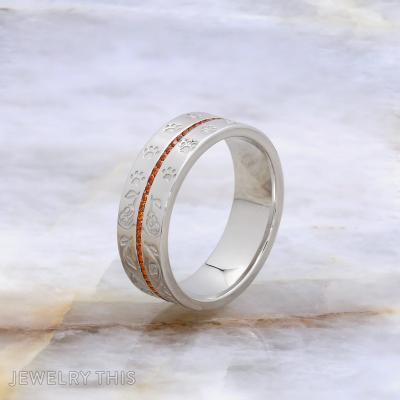
This wedding band pairs two engraved motifs on a wide sterling silver band, separated by ...

This men’s wedding band pairs a substantial platinum profile with two princess-cut blue sapphires set ...
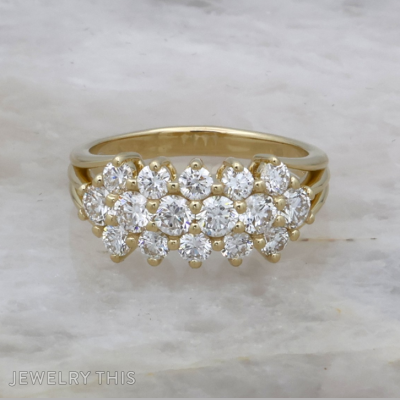
This 14k yellow gold ring recreates a wedding band that had been lost after years ...

This wedding band was built around a single requirement: it had to be safe to ...

This wedding band takes a flat-profile 14k white gold band and finishes it in black ...

This wedding band was rebuilt entirely from a client’s memory and description after the original ...

This wedding band pairs 14k rose gold with a central band of black enamel, creating ...

This wedding band was built to visually pair with an existing engagement ring rather than ...

This wedding band was rebuilt as a faithful recreation of a piece that had been ...

This wedding band pairs a rose gold, bark-textured wishbone shank with a white gold upper ...

This band recreates a wedding ring that had been worn daily on a necklace for ...

This wedding band recreates the look of an antique ring from around 1860, rebuilt in ...