


Hammered Rose Gold Wedding Band with Black Enamel Channel
$$$
14k rose gold, black rhodium plating, black enamel, moissanite
A partner wanted a matte black wedding band for her fiancé, but the design went through real refinement before it felt right — starting plain, then growing grooved edges, then an engraved idea, then finally a hammered texture after the first faceted version proved too difficult to produce. She took the lead midway through, translating her partner's vague preferences into sketches herself, and the final piece lands on rose gold with a black enamel channel and black rhodium accents around the stones. When she saw the finished mockup, she wrote: 'THIS IS PERFECT!!!!! Thank you so so so very much.'
'THIS IS PERFECT!!!!! :D Thank you so so so very much Tricia! I've enjoyed working with you to create this design.' — on design approval
Quick specs
Primary Metal
Shape / Cut
Primary Stone
Accent Stones
Design Complexity
Intent: Certainty
Size
Ring size 12 US (21.39mm). Band width 8mm.
How they made it distinctive
-
01
Black enamel channel chosen over black rhodium for the main band color because enamel holds up better over time than plating alone
-
02
Hammered edge texture adopted after a faceted edge design proved too difficult to produce reliably
-
03
Black rhodium plating added specifically around the gemstone setting, not the whole ring, to add contrast while limiting wear exposure
-
04
Band widened to 8mm specifically to suit a larger hand size
-
05
Rose gold chosen deliberately to contrast against the black elements rather than using an all-white-metal palette
How you'd make it yours
Stone type: this piece uses moissanites — a new commission could use lab or natural diamonds for a similar channel-set look
Dark accent method: this piece uses black enamel with black rhodium framing — a new piece could use black rhodium throughout or omit the plated accent
Band width: this piece is 8mm — a new commission could be made narrower or wider to suit a different hand
Edge texture: this piece has a hand-hammered edge — a new piece could use a smooth polished or satin edge instead
Metal: this piece is 14k rose gold — the same design language works in yellow or white gold
One of a kind: this exact ring was designed for one client's partner and is not reproduced — a new commission is an original piece inspired by this one, not a copy
Design changes made
The band widened from 7mm to 8mm to suit a larger hand, the beveled edge became a hammered texture after a faceted design proved too difficult to produce, and black rhodium plating was added around the channel-set stones after the client saw the first rose gold render and wanted more contrast near the gems.
Who this is for
This piece is for someone who wants a wedding band with real presence — bold, a little unconventional, and clearly not off a department store shelf. It suits a partner with a strong personal style who was willing to go through several rounds of design refinement to get the details exactly right, rather than settling for the first version that technically matched the brief.
How it's made
Once the design was approved, the piece was 3D printed in wax and attached to a wax tree inside a flask. The flask was invested in plaster and fired in a kiln to burn out the wax, leaving a hollow mold. Molten 14k rose gold was then cast into the mold under pressure and allowed to cool before the raw band was removed and prepared for finishing.
The band's edges were hand-hammered to create a textured finish, while the central channel was filled with black enamel for a flat, durable dark contrast. The metal framing the five moissanites was then black rhodium plated to deepen the contrast around the stones before the gems were channel-set in a line across the top of the band.
Key note
The edges were originally meant to be faceted, but that effect proved too difficult to produce reliably, so the hammered texture used instead is a hand-applied finish rather than a machine-cut one.
Pricing guidance
A multi-material wedding band combining enamel, plating, and channel-set stones sits toward the higher end of custom band pricing because of the number of finishing steps involved. Each additional material process — enamel application, plating, and hand-hammering — adds labor on top of the base casting and setting cost. Stone count and metal weight are the next biggest factors influencing where a piece like this lands.
Moves price up ↑
- ↑ Increasing band width beyond 8mm, which requires more metal and a larger enamel channel
- ↑ Adding black rhodium plating to additional surfaces beyond the stone framing
- ↑ Using natural diamonds instead of moissanites for the five channel-set stones
- ↑ Upgrading to 18k gold, which increases material cost for the same design
- ↑ Adding a second finishing texture (e.g. both hammered and faceted detailing)
Moves price down ↓
- ↓ Reducing the band width from 8mm to a standard 6-7mm
- ↓ Using black rhodium-plated white gold instead of enamel for the dark channel
- ↓ Reducing stone count from five to three
- ↓ Choosing a lighter-weight metal profile rather than the heavier 17-19 gram build
- ↓ Skipping the hammered texture for a smooth polished edge
Questions people ask
Yes, moissanite rates 9.25 on the Mohs hardness scale, just below diamond's 10, making it highly resistant to scratching and suitable for everyday wear. It also has excellent brilliance and holds up well in a channel setting like this one, where the stones sit protected between two walls of metal. Moissanite is a lab-created stone, so it is also typically more affordable than a natural diamond of comparable size. For an active wearer, channel setting adds extra protection since there are no raised prongs to catch or snag.
Black enamel is a glass-like coating fired onto the metal that creates a flat, glossy black surface and tends to be more durable over time than plating. Black rhodium is a very thin metallic plating applied over white or rose gold that gives a darker grey-black metallic look, but it can wear thin on high-contact areas with regular wear. In this ring, enamel was used for the main black channel because of its durability, while black rhodium was used only around the gemstone setting for contrast. Combining both allows a designer to get a deep black look where durability matters most and a more detailed metallic accent elsewhere.
Yes, a hammered texture is applied by hand after the piece is cast, using small tools to create a dimpled, dimensional surface rather than a smooth or faceted one. It's commonly used as an alternative when a faceted or angular edge proves difficult to produce reliably in metal. Hand-hammering means each ring has a slightly unique texture pattern, since it's applied by a person rather than a machine. It pairs well with a polished or black-finished center section for contrast.
A band combining enamel, plating, and channel-set stones sits toward the higher end of custom wedding band pricing because of the number of separate finishing processes involved. The base cost comes from casting and metal weight, with enamel application, plating, and texturing each adding incremental labor cost on top. Stone count and the overall width of the band are the next most significant cost factors. Simpler single-process designs in the same metal would typically cost less.
Production for a piece like this typically takes four to five weeks once the design is finalized, in addition to the initial design phase where a 3D render is created and refined. Because enamel, plating, and hand-finishing are all separate steps, pieces with multiple finish types take slightly longer than a simple polished band. The design phase itself can vary depending on how many rounds of revision are needed to get the look right. Once production begins, the piece moves through wax printing, casting, stone setting, and finishing before shipping.
In most cases, a channel-set ring can have its stones swapped for a different stone of the same size and cut, since the channel is built to a specific stone dimension. Moving from moissanite to natural diamond is a common upgrade path because the two stones can often be cut to similar proportions. However, this typically requires sending the ring back to a jeweler experienced with channel settings, since the stones are set without prongs and need to be carefully pried and reset. It's worth discussing this option with a jeweler before assuming any channel-set ring can be modified this way.
Rose gold offers a warmer tone that contrasts distinctly against black enamel or black rhodium, creating a more dramatic visual effect than white gold would provide against the same dark elements. Some clients also choose rose gold to match other jewelry they already wear regularly. The warm pink-gold hue tends to read as less cold or industrial than an all-black-and-white color scheme. It's a popular choice for couples who want a bold, dark aesthetic without losing warmth in the metal tone.
Yes, black rhodium is a surface plating, not a solid metal, so it will gradually wear thinner with regular contact and exposure, especially on raised or frequently touched areas. Most wearers see noticeable fading within one to two years of daily wear, though this varies by how much the area is handled. Re-plating is a standard service most jewelers can perform to restore the original black finish. Areas like the recessed setting around gemstones tend to hold plating longer than exposed high points of a ring.
Explore Similar Creations
Every masterpiece starts with a spark. Explore how our clients raw ideas - sketches, heirlooms, inspirations - were transformed into bespoke works of arts.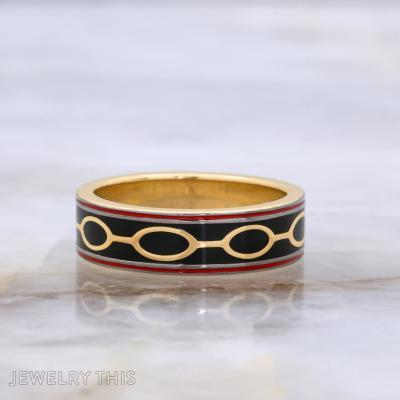
This wedding band pairs 14k yellow gold with black and red hot enamel to create ...

This wedding band was built to visually pair with an existing engagement ring rather than ...

This platinum wedding band was built as a companion piece to an existing engagement ring, ...

This men’s wedding band was built around a channel of rectangular baguette diamonds running the ...
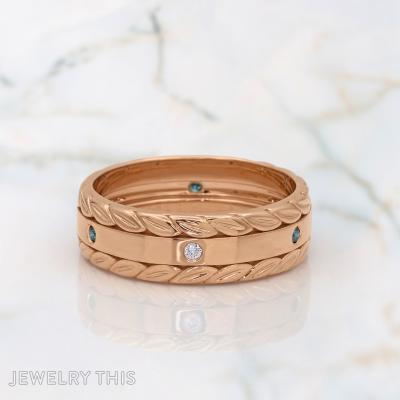
This wedding band was built around a design the client found and loved, then rebuilt ...
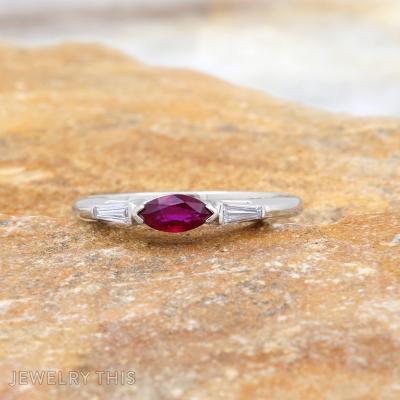
This platinum band recreates the style of a 1940s-era ring using the client’s own marquise ...
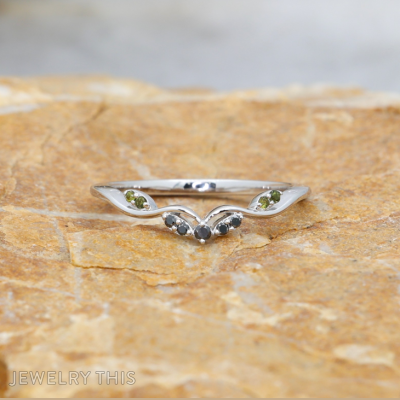
This wedding band was built to sit flush against an engagement ring that had been ...

Matching wedding bands with a unique yin and yang design that includes white and black ...
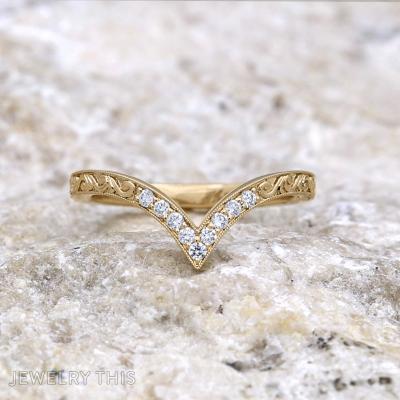
This wedding band was designed as a companion piece to an existing engagement ring, built ...
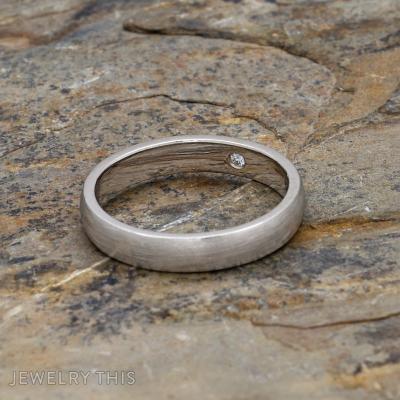
This thin men’s wedding band is crafted in 14k white gold with a soft matte ...

This platinum band is the definition of timeless elegance. The band features a sleek flat ...

This wedding band was designed to perfectly complement the client’s engagement ring. This band features ...



