


Rose Gold Wedding Band — Kite Alexandrite & Roped Edge
$$$
18k rose gold, lab alexandrite, lab diamonds
A bride-to-be wanted her fiance's wedding band to visually echo her own engagement ring rather than stand apart from it. She worked with the design team to translate the twisted edge detail and prong-set styling from her ring onto his band, down to matching kite-cut stones. When it arrived she wrote: 'The ring looks amazing.'
'The ring looks amazing.' — on delivery
Quick specs
Primary Metal
Shape / Cut
Primary Stone
Accent Stones
Design Complexity
Intent: Certainty
Size
Ring size 9 US (18.95mm). Band width 7mm.
How they made it distinctive
-
01
Kite-cut alexandrite arrangement designed specifically to echo the prong-set styling of the client's own engagement ring
-
02
Small protective prongs added to each kite-cut stone point — both a durability feature and a deliberate visual match to the engagement ring
-
03
Roped, twisted edge detail added after the client clarified the exact edge style she wanted carried over from her ring
-
04
Gothic-style inside engraving chosen to carry a personal phrase and initials
-
05
Wide 7mm rose gold band built to feel substantial while still visually pairing with a more delicate engagement ring
How you'd make it yours
Stone: this piece uses lab alexandrite; a new commission could use sapphire, moissanite, or natural alexandrite for a different look or budget
Metal: this piece is 18k rose gold; the same design language works in yellow or white gold
Edge detail: the roped/twisted edge can be simplified or made more pronounced on a new piece
Engraving: a new inscription and font style can be chosen for the inside of a fresh commission
Stone count: the number of kite-cut and round accent stones can be adjusted for a bolder or more minimal look
One of a kind: this exact ring was designed to pair with one specific engagement ring and is not reproduced — a new commission is an original piece inspired by this one, not a copy
Design changes made
The beveled edge was updated to include a roped/twisted detail after the client clarified she meant a different edge style than first modeled, and small prongs were added to the kite-cut alexandrites to protect the stone points and better match the engagement ring's prong-set look.
Who this is for
This piece is for someone who wants their partner's wedding band to feel like part of a matched set, not a separate purchase picked off a shelf. It's especially right if you have a specific design detail in your own ring — an edge, a setting, a stone shape — that you want carried over in a way that feels intentional rather than identical.
How it's made
Once the rose gold design was approved, the model was 3D printed in wax and attached to a wax tree inside a flask. The flask was placed in a kiln to burn out the wax, leaving a hollow mold, and molten 18k rose gold was poured into that mold under pressure. After cooling, the raw band was removed from the mold and prepared for the finishing stages, including cleaning and initial polishing.
The roped edge detail was refined along the outer rim before the stones were set, since the decorative edge needed to be crisp before any setting work began. Small prongs were then fabricated to secure the points of the three kite-cut alexandrites, protecting the stone tips during setting and daily wear, while the four round lab diamonds were set between them in a cross arrangement. The inside of the band was engraved last, in a gothic-style font, after the exterior finishing was complete.
Key note
The kite-cut alexandrites were given small protective prongs specifically because a kite shape has vulnerable, sharp points that are prone to chipping in a flush or bezel setting.
Pricing guidance
A wide rose gold wedding band with multiple lab-created colored stones and diamond accents sits in the mid range for custom bands of this complexity. Much of the cost comes from the number of individually set stones and the hand-finished edge detail, rather than the metal itself. Band width and stone count are what move the price most from a design like this.
Moves price up ↑
- ↑ Using natural alexandrite instead of lab-created — natural alexandrite is extremely rare and costly at any size
- ↑ Increasing band width beyond 7mm, which requires more metal and more finishing time
- ↑ Adding more kite-cut stones or diamonds beyond the current five-stone layout
- ↑ Upgrading diamond clarity or carat weight beyond VS1
- ↑ Adding a two-sided engraving or additional engraved detail
Moves price down ↓
- ↓ Narrowing the band width, which reduces both metal and labor
- ↓ Switching the round accent stones to moissanite instead of lab diamonds
- ↓ Reducing the number of kite-cut stones from three to one center stone
- ↓ Choosing a simpler edge finish without the roped/twisted detail
- ↓ Using 14k rose gold instead of 18k
Questions people ask
Yes. Lab-created alexandrite has the same chemical structure as natural alexandrite and displays the same color-change effect, typically shifting between a blue-green tone in daylight and a more purplish-red tone under incandescent light. The lab-grown version is chemically identical to its natural counterpart, just grown in a controlled environment rather than mined. This makes it a popular choice for color-change stones since natural alexandrite is extremely rare and expensive at any noticeable size. The visible color shift depends on lighting conditions, so the stone will look slightly different indoors versus outdoors.
A kite shape has two narrow points that are more vulnerable to chipping than a rounded cut, since there's less material backing up each tip. Adding small protective prongs at the points, rather than a flush or bezel setting, significantly reduces that risk by giving the tips something to rest against. With prong protection in place, a kite-cut stone can hold up well to daily wear. It's still worth having rings with pointed stone cuts checked periodically to make sure the prongs remain secure.
A 7mm rose gold band with several individually set kite-cut stones and round diamond accents falls in the mid range for custom wedding bands. The cost is driven mainly by the number of stones being hand-set and the detailed edge finishing, not by the gold alone. Band width also matters, since a wider band requires more metal and more labor to finish evenly. Simplifying the stone count or narrowing the band are the two most effective ways to bring the cost down.
Yes, this is a common request. The usual approach is to pull specific design elements from the engagement ring — an edge detail, a setting style, a stone shape — and translate them onto a band built for a different hand size and daily wear pattern. In this case, a twisted edge detail and prong-set stones were carried over from an engagement ring onto a wider men's band. The result reads as a coordinated pair without being an identical copy of the engagement ring.
Once production begins, a band with multiple hand-set stones and a decorative edge typically takes four to five weeks to complete. This covers wax printing, casting, stone setting, and finishing. The design phase before production — sketches, renders, and revisions — usually adds another one to two weeks on top of that. Custom engraving is typically one of the last steps, added after the exterior finishing is complete.
Most jewelers offer a range of font options for inside-band engraving, from clean block lettering to script and more stylized fonts like gothic lettering. The font choice is usually confirmed with the client before the engraving step, since it's one of the last things added to a finished piece. Engraving placement and orientation can vary — there's no single standard for which direction text should read when a ring is worn, since the engraving is on the inside and not visible day to day. Most people engrave facing a direction that's readable to someone looking at their own hand.
Yes. When a client wants two rings to visually relate to each other without being identical, designers often pull a signature detail — a stone shape, a setting style, an edge pattern — from one piece and rework it at a different scale for the second piece. This band used three kite-cut stones and small protective prongs to echo the prong-set styling of a separate engagement ring. The goal is visual connection, not exact duplication, since the two rings are typically different widths and shapes to begin with.
Yes, there's no issue combining different types of lab-created stones in a single design. Lab diamonds and lab alexandrite are sourced and cut separately but can be set together in the same band without any compatibility concerns. This combination is common in pieces that want both a colorless sparkle and a colored focal stone. Durability-wise, diamonds are harder than alexandrite, so standard care practices for colored stones should still be followed for the alexandrite specifically.
Explore Similar Creations
Every masterpiece starts with a spark. Explore how our clients raw ideas - sketches, heirlooms, inspirations - were transformed into bespoke works of arts.
This wedding band was designed as a companion piece to an existing engagement ring, continuing ...

This wedding band pairs a straight, flat-profile shank with a graduated row of five prong-set ...
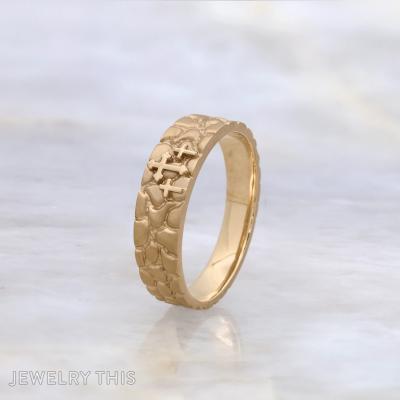
This wedding band was built around a specific request: a nugget-textured gold surface with three ...
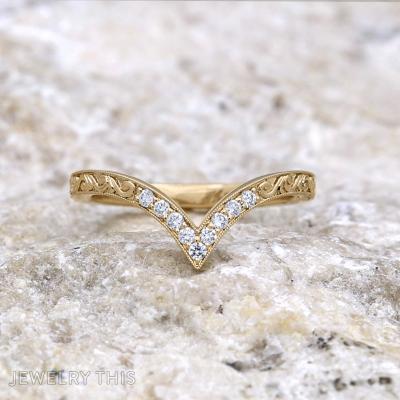
This wedding band was designed as a companion piece to an existing engagement ring, built ...

This wedding band takes a flat-profile 14k white gold band and finishes it in black ...

This wedding band recreates the look of an antique ring from around 1860, rebuilt in ...

This wedding band was designed to perfectly complement the client’s engagement ring. This band features ...
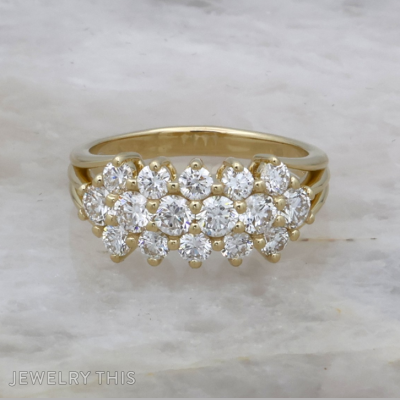
This 14k yellow gold ring recreates a wedding band that had been lost after years ...

This wedding band was designed as a companion piece to an existing engagement ring, with ...
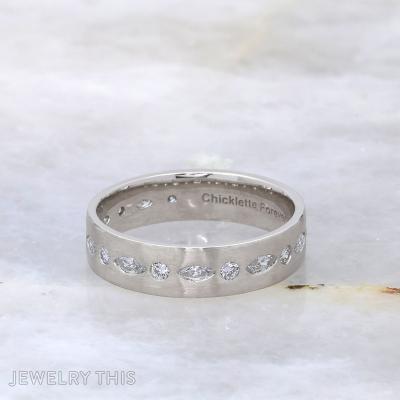
This men’s wedding band was built to mirror an existing engagement ring design, carrying the ...

Celebrate timeless love with our meticulously recreated diamond band. This exquisite piece features a milgrain ...

This wedding band uses a half-eternity layout, with marquise-cut moissanite stones set east-west along the ...



