


Antique-Style Five-Stone Wedding Band — Lab Diamond Replica
$$$
14k white gold, lab diamonds
T. wanted his wife to be able to wear the look of her antique wedding band every day, since the original — a piece from around 1860 — could no longer be safely resized for daily wear. Working from his own photographs of the original ring, the piece was rebuilt in white gold with five graduated lab diamonds mirroring the antique's rose-cut arrangement. When it arrived in time for their anniversary trip, he wrote: 'Everything is perfect! She loves the new ring!'
'Yes looks perfect' — on seeing the first render
'Everything is perfect! She loves the new ring!' — on delivery
Quick specs
Primary Metal
Shape / Cut
Primary Stone
Accent Stones
Style
Design Complexity
Intent: Certainty
Size
Ring size 6 US (16.51mm).
How they made it distinctive
-
01
Five-stone graduated arrangement mirrors the proportions of a specific circa-1860 ring the client's wife still owns
-
02
Center stone size was increased mid-project from approximately 0.85 to 1.25 carats after reviewing the rendered design
-
03
Modern lab-grown round diamonds chosen as a practical substitute for the original's rose-cut and English-cut stones
-
04
Built as a wearable daily counterpart because the antique original could no longer be safely resized
-
05
Prong height intentionally lowered during setting for a more secure, closer-to-antique profile
How you'd make it yours
Stone cut: this piece uses modern round brilliant lab diamonds; a new commission could use antique-style rose-cut or old European-cut lab diamonds for a closer period match
Center stone size: this piece uses a 1.25 carat center; a new piece could use a larger or smaller center stone depending on the look desired
Metal: this piece is 14k white gold; the same five-stone design works in 18k white gold or platinum
Stone origin: this piece uses lab diamonds throughout; a new commission could mix in natural diamonds for some or all positions
One of a kind: this exact ring was designed to match one specific antique original and is not reproduced — a new commission is an original piece inspired by this one, not a copy
Design changes made
The center stone was increased from approximately 0.85 carats to 1.25 carats after the client saw the rendered design and wanted a larger centerpiece, with the side and end stones left at their original sizes.
Who this is for
This piece is for someone who has an antique ring they love but can no longer wear safely every day. It's especially right if resizing or regular wear risks damaging a delicate old setting, and you want a faithful everyday counterpart built from photos rather than risking the original.
How it's made
Once the design was approved, a wax model of the ring was produced using a 3D printer and attached to a wax tree inside a flask. The flask was placed in a kiln to burn out the wax, leaving a hollow mold, and molten 14k white gold was poured into the mold to cast the raw band. After cooling, the piece was extracted from the mold for cleanup and finishing.
The cast band was cleaned, polished to a mirror finish, and prepared for stone setting. The five diamonds were set into shared-prong mountings across the top of the band, with the larger center stone flanked by two graduated pairs on either side, replicating the stepped-down sizing of the antique original. Prong height was adjusted down during setting from what appeared taller in the render, giving the finished piece a lower, more secure profile around each stone.
Key note
The prongs appear taller in the render than in the finished ring because prong height is trimmed down during the actual stone-setting process, after the stones are seated and secured.
Pricing guidance
A five-stone white gold band with a graduated diamond arrangement sits in the mid range for custom engagement or wedding bands of this complexity. Most of the cost comes from the diamonds themselves — carat weight across five stones adds up quickly — with labor for prong-setting five individually graduated stones as the secondary driver. Moving between lab and natural diamonds, and adjusting the center stone size, are the two levers that move the price most.
Moves price up ↑
- ↑ Increasing the center stone above 1.25 carats
- ↑ Using natural diamonds instead of lab-grown for some or all of the five stones
- ↑ Sourcing antique-style rose-cut or old European-cut lab diamonds instead of modern brilliant cuts
- ↑ Upgrading from 14k to 18k white gold
- ↑ Adding milgrain or filigree detailing to the shank to match the antique original more closely
Moves price down ↓
- ↓ Reducing the center stone size closer to 0.75–1.0 carat
- ↓ Using smaller or fewer graduated side stones
- ↓ Choosing all modern brilliant-cut lab diamonds rather than searching for period-style cuts
- ↓ Selecting 10k white gold instead of 14k
- ↓ Simplifying the shank to a plain polished band with no additional detailing
Questions people ask
Yes, this is a common request when the original stones are rose-cut or old European-cut antiques that are hard to match affordably. Modern lab-grown diamonds in a standard round brilliant cut are far more available and generally cost less than sourcing antique-style cuts, whether lab-grown or natural. Some suppliers do offer lab-grown stones cut in older styles, but they are less common and can take longer to source. Most clients choose modern brilliant cuts as a practical substitute that still captures the overall look of the original.
The most common reason is that the original ring can no longer be resized or worn safely for daily use, often because of its age or delicate antique setting. Rather than risk damaging a valuable old piece, a wearable duplicate lets the owner enjoy the look every day while the original stays protected. This is especially common with rings from the 1800s and early 1900s, where resizing can compromise fragile settings or old-cut stones. The duplicate is built from photographs and measurements of the original rather than the piece itself.
A rose cut is a flat-bottomed, domed diamond with triangular facets that produces a softer, more subdued sparkle than a modern cut. A modern round brilliant has 58 precisely angled facets engineered to maximize light return, producing much more fire and brilliance. Rose cuts were common in jewelry made before the early 1900s and are prized today for their antique character. When antique rose-cut stones aren't practical to source, a round brilliant lab diamond is a common substitute that still fits a similar antique-style setting.
A five-stone band with a larger center diamond and graduated side stones generally falls in the mid range for custom diamond jewelry, since the total cost is driven mainly by combined carat weight across five stones. Choosing lab-grown diamonds over natural stones meaningfully reduces the price at this stone count. The exact cost shifts based on center stone size, side stone sizes, and metal karat. Most of the price difference between options comes down to carat weight rather than design complexity.
The design phase, from initial sketch to an approved 3D render, typically takes about one week. Once the design is approved and a majority of the balance is paid, production takes approximately four weeks, covering wax modeling, casting, polishing, and stone setting. Rush timelines are sometimes possible for specific deadlines, such as an anniversary or trip, but should be discussed as early as possible. Total turnaround from deposit to delivery is usually five to six weeks under standard scheduling.
Yes, prongs typically appear taller in a 3D render than they do in the finished piece, because the final prong height is trimmed down after the stones are set and secured. This is a normal part of the stone-setting process rather than a design flaw in the render. If a lower profile is a priority, it's worth mentioning early so the jeweler can confirm the finished height will meet expectations. The render is meant to show stone placement and overall proportions, not the exact final prong height.
14k white gold is harder and more scratch-resistant than 18k because it contains a higher percentage of alloy metals, making it a practical choice for a band worn daily. 18k white gold has a higher pure gold content, which gives it a slightly richer tone but makes it a bit softer and more prone to surface wear over time. Both karats require occasional rhodium replating to maintain a bright white finish, since white gold is typically rhodium-plated over a naturally warmer-toned alloy. For an everyday wedding band, 14k is generally the more durable option.
Yes, some clients choose to source a mix of lab and natural stones, or combine a few antique-cut stones with modern brilliant-cut lab diamonds, when the older cuts aren't available in every size needed. This approach can help balance budget and authenticity when recreating an antique design. The visual difference between cut styles is noticeable up close but can still produce a cohesive look within a graduated five-stone arrangement. Discussing stone sourcing options early in the design process allows for the most flexibility in balancing look, cost, and availability.
Explore Similar Creations
Every masterpiece starts with a spark. Explore how our clients raw ideas - sketches, heirlooms, inspirations - were transformed into bespoke works of arts.
This wedding band was rebuilt entirely from a client’s memory and description after the original ...

This wedding band pairs a straight, flat-profile shank with a graduated row of five prong-set ...

This men’s wedding band was built around a channel of rectangular baguette diamonds running the ...
This wedding band was designed as a companion piece to an existing engagement ring, built ...
This thin men’s wedding band is crafted in 14k white gold with a soft matte ...

This wedding band was designed as a companion piece to an existing engagement ring, with ...

This 14k yellow gold stacking band takes its cue from a vine tattoo and a ...
This men’s wedding band was built to mirror an existing engagement ring design, carrying the ...
This wedding band recreates a ring lost in a lake after years of daily wear ...

This platinum wedding band was built as a companion piece to an existing engagement ring, ...

This wedding band was rebuilt as a faithful recreation of a piece that had been ...
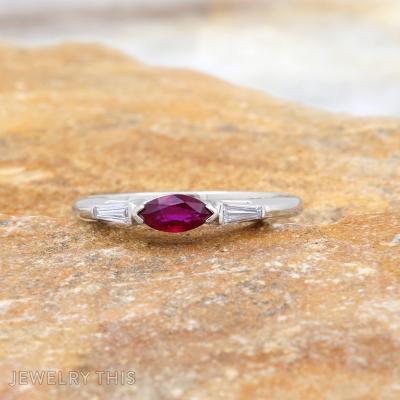
This platinum band recreates the style of a 1940s-era ring using the client’s own marquise ...



