
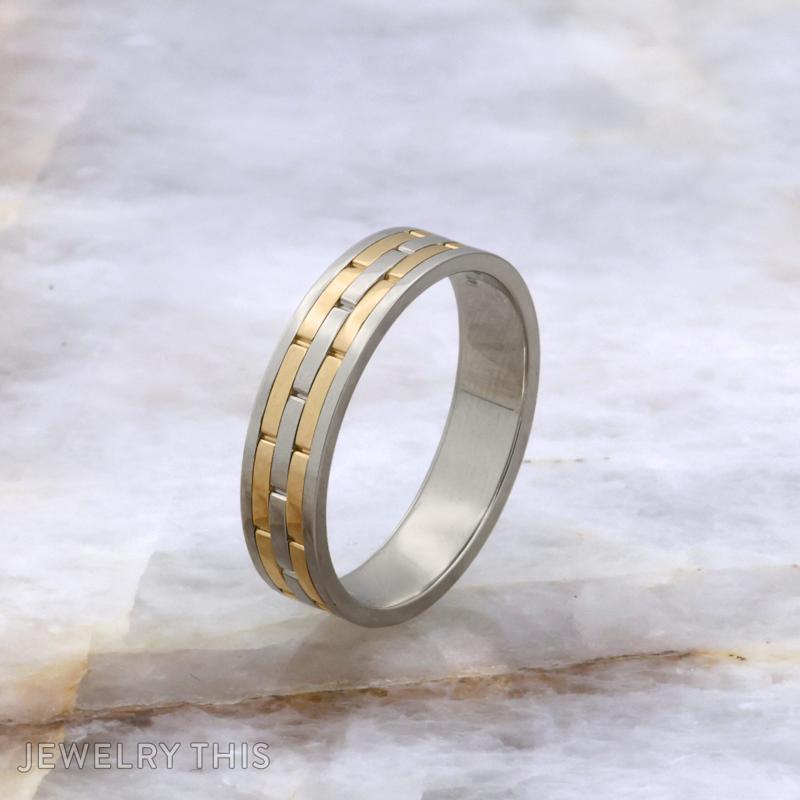
Recreated Two-Tone Wedding Band — Lost in a Lake
$$$
14k white gold (unplated), 14k yellow gold
D. lost his wedding ring in a lake while playing with his kids — it had loosened after he lost weight and slipped off before he noticed. Working from a single clear photo and a few blurrier ones of the ring on his hand, he worked through several rounds of design feedback to get the yellow-and-white gold contrast right, eventually realizing the color shift he remembered was from twelve years without rhodium retreatment rather than a different metal entirely. The final design skips the rhodium plating on the white gold base to match the warmer tone he remembered.
Quick specs
Primary Metal
Secondary Metal
Primary Stone
Accent Stones
Design Complexity
Intent: Certainty
Size
Ring size 11.5 US (20.98mm). Band width 8mm.
How they made it distinctive
-
01
Two-tone yellow and white gold segmented pattern recreated from a single clear photo and a few blurrier reference shots
-
02
White gold base deliberately left unplated rather than rhodium-finished, to match the warm tone the original ring had taken on after 12 years without replating
-
03
Segment size and spacing adjusted through multiple rounds of feedback to match the client's specific memory of the dash lengths
-
04
Band width matched to the original ring's 8mm profile
How you'd make it yours
Metal: this piece uses 14k white gold (unplated) and 14k yellow gold; a new commission could use different karats or add rose gold for a tri-tone look
Band width: this piece is 8mm; a new commission could be made narrower or wider
Plating: this piece skips rhodium plating for a warmer tone; a new piece could use standard rhodium plating for a brighter white finish
Engraving: the inside of the band can carry a new inscription on a fresh commission
One of a kind: this exact ring was designed to match one client's memory of his own lost ring and is not reproduced — a new commission is an original piece inspired by this one, not a copy
Design changes made
The first render used a mostly white gold base and shorter segment dashes, but the client clarified the original was yellow gold with contrasting lighter rungs. After further discussion, the team determined the lighter tone was actually unplated white gold worn without rhodium retreatment for years, so the final design left the white gold base unplated to recreate that exact look.
Who this is for
This piece is for someone who lost a ring that meant something and wants it back as close to the original as memory and photos allow. It's especially right for anyone who's realized their ring's color changed over years of wear and wants that same lived-in look recreated rather than a brand-new, freshly finished piece.
How it's made
After the design was approved, the team built a wax model and grouped it onto a wax tree before casting. The tree was invested in plaster and fired in a kiln to burn out the wax, leaving a hollow mold that molten 14k gold was cast into to form the raw two-tone band. A resin preview was shared with the client before this stage so he could see the design take shape ahead of metal production.
Once cast, the ring was cleaned up and polished, with particular attention paid to the contrast between the yellow gold segments and the white gold base. The white gold sections were deliberately left unplated rather than finished with the standard rhodium layer, so the band reads with the warmer, slightly golden cast the client remembered from years of wear on the original. The yellow gold rows were polished to bring out their brightness against the softer white gold tone.
Key note
Skipping the rhodium plating on the white gold sections was a deliberate choice — it recreates the warmer tone a white gold ring naturally takes on after years without replating, rather than leaving the ring looking freshly bright.
Pricing guidance
A two-tone men's wedding band combining 14k white and yellow gold sits in the mid range for custom bands of this complexity. Most of the cost comes from the two-metal construction and the hand-finishing needed to create a clean, consistent contrast between the segments. Band width and the number of contrast rows are the main variables that move the price from there.
Moves price up ↑
- ↑ Widening the band beyond 8mm, which increases metal volume and finishing time
- ↑ Adding a third precious metal (such as rose gold) for a tri-tone design
- ↑ Adding stone accents or channel-set diamonds between the gold rows
- ↑ Upgrading from 14k to 18k gold for both metals
- ↑ Adding interior engraving
Moves price down ↓
- ↓ Narrowing the band width to reduce metal and labor
- ↓ Using a single metal instead of a two-tone construction
- ↓ Simplifying the segment pattern to fewer contrast rows
- ↓ Choosing a lower karat gold such as 10k for the base metal
Questions people ask
Yes. This band was rebuilt using a single clear photo and a few blurrier photos of the ring on the client's hand, with no physical ring or appraisal to reference. The process starts with a sketch and 3D render for the client to review, then adjustments are made based on their feedback until the design matches their memory. It typically takes more than one round of revisions to nail small details like segment size and color balance, which is normal for a recreation with limited photo reference.
White gold is naturally a pale yellowish-white alloy, and most white gold jewelry is coated with a rhodium plating to give it a bright white finish. That plating wears off gradually with daily wear and is typically meant to be reapplied every one to two years by a jeweler. Without replating, the ring will slowly reveal its natural pale gold undertone, which can look like a warm or slightly yellow cast depending on the alloy. This is a completely normal result of wear, not a defect.
Yes. Some clients specifically request that white gold be left unplated so the piece shows its natural, slightly warmer tone rather than the bright white of fresh rhodium plating. This can be a deliberate stylistic choice or, as in a recreation project, a way to match the worn-in appearance of an original piece. The tradeoff is that unplated white gold has a duller, warmer look compared to a freshly rhodium-plated ring, but it also means there's no bright-white finish to maintain or lose over time.
A two-tone band combining 14k white and yellow gold in a moderately complex segmented pattern typically falls in the mid range for custom wedding bands. The main cost drivers are the two-metal construction and the hand-finishing required to keep the contrast between metals clean and consistent. Band width, the number of contrast rows, and karat choice are what move the price up or down from there.
The full process from design approval to shipping typically runs several weeks. Design usually takes about a week including render revisions, and production takes another three to five weeks depending on complexity. If a piece doesn't pass quality control, the team will remake it before shipping, which can add extra time, but the goal is always to deliver a piece that meets the approved design.
Yes, though the recreation will rely on photographs, memory, and any measurements the client can estimate, like ring size and band width. Minor differences from the original are expected since there is no physical piece or professional documentation to reference. Most clients find that after a few rounds of render feedback, the design gets very close to what they remember, even without exact original specifications.
Yes, significant weight loss is one of the most common reasons a ring that once fit snugly becomes loose enough to slip off. This is a purely mechanical issue related to finger circumference changing, not a flaw in the ring itself. Anyone experiencing this kind of fit change should have their ring resized promptly to avoid losing it, since a loose ring is much more likely to slip off unnoticed during activities like swimming or manual work.
14k gold contains about 58% pure gold mixed with other metals for strength and durability, while 18k gold contains about 75% pure gold, making it softer but with a richer color. For a two-tone ring, 14k is more common because it holds up better to daily wear and is less expensive than 18k. The visual difference in color between the two karats is subtle, but 18k yellow gold will typically look slightly richer and more saturated than 14k.
Explore Similar Creations
Every masterpiece starts with a spark. Explore how our clients raw ideas - sketches, heirlooms, inspirations - were transformed into bespoke works of arts.
This wedding band pairs a straight, flat-profile shank with a graduated row of five prong-set ...

This mesmerizing White gold band features three enchanting rows of small round stones, creating a ...
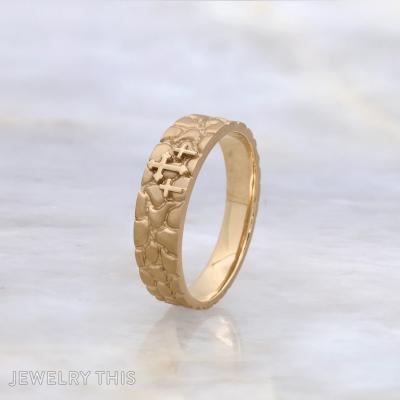
This wedding band was built around a specific request: a nugget-textured gold surface with three ...

This wedding band was designed to perfectly complement the client’s engagement ring. This band features ...

This men’s wedding band was built around a channel of rectangular baguette diamonds running the ...
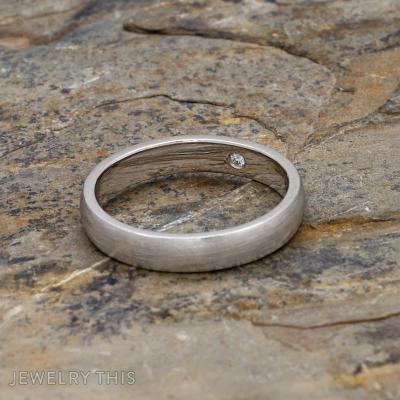
This thin men’s wedding band is crafted in 14k white gold with a soft matte ...
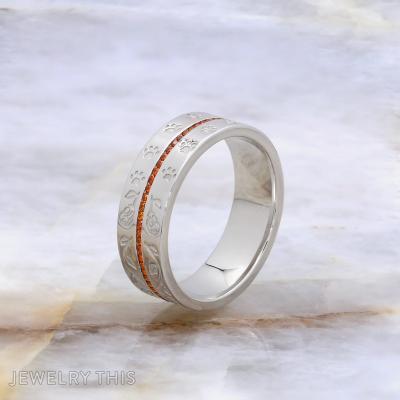
This wedding band pairs two engraved motifs on a wide sterling silver band, separated by ...

Matching wedding bands with a unique yin and yang design that includes white and black ...

Two interlocking bands made of 14k white gold with channel set with VS1 diamonds in ...
This wedding band was built to sit flush against an engagement ring that had been ...

Full eternity white diamond band set in a micro-pave setting style in 18k white gold. ...

This wedding band was thoughtfully designed to complement and enhance the beauty of an existing ...



