


Men's Palm Leaf Wedding Band with Baguette Diamonds
$$$
14k yellow gold, lab-grown diamonds
A. came to us designing a wedding band for their partner, based on a men's baguette eternity ring style he loved. The channel-set diamonds meant the palm leaf pattern he wanted couldn't sit next to the stones without damaging the setting, so the design moved the palm engraving to the inside of the band instead — a detail only he would know is there. When the finished ring shipped, the team called it out as cast just for him.
'Andy is elated about the way this looks! We love it and wouldn't change a thing.' — on seeing the 3D model
Quick specs
Primary Metal
Shape / Cut
Primary Stone
Accent Stones
Style
Design Complexity
Intent: Certainty
Size
Ring size 9.5 US. Band width 6mm.
How they made it distinctive
-
01
Palm leaf pattern engraved inside the band rather than the surface — a workaround once channel-setting constraints ruled out an exterior design
-
02
Band width increased to 6mm and the profile domed after testing a stand-in ring for comfort
-
03
Polished finish chosen over the originally referenced matte/brushed look based on direct hand-feel feedback
-
04
Diamond channel runs the full circumference of the band, referencing the specific eternity style the wearer originally admired
-
05
Resin fit model used pre-casting specifically because full-circumference stone settings are difficult to resize after the fact
How you'd make it yours
Stone type: this piece uses lab-grown baguette diamonds; a new commission could use natural baguettes for the same look at higher cost, or a different stone shape entirely
Metal: this piece is 14k yellow gold; the same channel-set design works in 18k yellow, white, or rose gold
Band width: this piece is 6mm; a new piece could be made narrower or wider depending on the wearer's hand and comfort preference
Engraving: the interior palm leaf pattern can be swapped for a different botanical design, a phrase, or left plain on a new piece
Finish: this piece is high polish; a new commission could use a matte or brushed finish for a more understated look
One of a kind: this exact ring was designed and sized for one wearer and is not reproduced — a new commission is an original piece inspired by this one, not a copy
Design changes made
The band width was increased from 4.5mm to 6mm and the flat outer edge was softened into a more domed profile after trying on a stand-in ring, and the matte finish was swapped for polished. The palm leaf pattern was also moved from the band's surface to the inside of the ring once the channel-setting constraint was explained.
Who this is for
This piece is for someone who wants a wedding band with a strong, clean exterior but still wants a personal detail woven in — just not one that's on display for everyone. It's especially right for someone who has a very specific reference ring in mind and wants a design team to work through the technical constraints with them rather than settling for something close enough.
How it's made
Once the design was finalized from the technical drawing, a 3D model was built and a resin proof was produced so the wearer could confirm fit before any metal was committed — a second resin was sent after the first came out slightly small, confirming a size 9.5. The approved model was then cast in 14k yellow gold using the lost-wax method, producing the raw band ready for stone setting and finishing.
The channel walls running around the center of the band were left flat to receive the row of rectangular baguette diamonds, which were set one at a time and then had the surrounding metal hammered down over their edges to hold them mechanically in place. After setting, the outer band was polished to a smooth, rounded finish with softened edges for comfort, while the interior surface was left for the palm leaf pattern to be engraved by hand, keeping the detail private and undamaged by the setting process.
Key note
The palm leaf pattern was engraved on the inside of the band specifically because the channel-set baguette diamonds require the metal directly beside them to stay flat and be hammered over the stone edges — any surface pattern there would have been destroyed in that process.
Pricing guidance
A men's eternity-style band with a full channel of baguette diamonds sits toward the upper end of the mid range for custom wedding bands. Baguette-cut stones set in a continuous channel require more precise, labor-intensive setting than a single center stone, which is the main cost driver here. Band width and diamond size are what move the price up or down most from there.
Moves price up ↑
- ↑ Increasing band width beyond 6mm, which requires larger baguette diamonds to fill the channel proportionally
- ↑ Switching from lab-grown to natural baguette diamonds of the same size and clarity
- ↑ Upgrading from 14k to 18k gold
- ↑ Adding a matching engraved pattern on the outer surface instead of hidden inside the band
- ↑ Running the diamond channel fully around a wider or thicker band
Moves price down ↓
- ↓ Narrowing the band width, which allows for smaller baguette diamonds and less material
- ↓ Using fewer diamonds by running the channel only partway around the band instead of a full eternity setting
- ↓ Choosing a lower diamond clarity grade
- ↓ Selecting 10k gold instead of 14k
- ↓ Simplifying the engraving to a plain polished interior with no palm pattern
Questions people ask
Channel-set baguette diamonds are one of the more secure setting styles for daily wear because the stones sit recessed into the band with metal walls on either side, rather than being held up by exposed prongs. The metal is hammered directly over the edges of each stone, which mechanically locks them in place and reduces the risk of snagging on clothing or catching on objects. Lab-grown diamonds used in a setting like this carry the same hardness rating as natural diamonds, so they resist scratching just as well. The main long-term consideration is that channel settings are harder to inspect and re-tighten than prong settings, so periodic professional checks are recommended.
Lab-grown and natural diamonds are chemically and optically identical — same hardness, same brilliance, same visual appearance to the naked eye. The only real difference is origin: natural diamonds form underground over millions of years, while lab-grown diamonds are created in a controlled lab environment in a matter of weeks. For a wedding band with multiple baguette stones, lab-grown diamonds typically cost significantly less than natural diamonds of comparable size and clarity. Many clients choose lab-grown specifically to get a larger or higher-clarity stone within the same budget.
Yes, engraving or a decorative pattern on the inside of a band is a common request and works well on rings that don't have room for surface decoration due to a stone setting. The inside of the band is engraved by hand after the ring is cast and polished, using a design the client approves in advance. It's a way to add a personal or symbolic detail — a pattern, a phrase, a date — that only the wearer knows is there. This kind of engraving does not interfere with the durability or comfort of the ring since it sits flush against the finger.
Channel setting works by leaving a flat wall of metal on either side of each stone, which is then hammered down over the stone's edges to hold it securely in place. If that metal has a raised or engraved pattern on it, the hammering process needed to secure the stones will distort or destroy the pattern. This is why decorative details on a channel-set eternity band are usually placed either before the stone row starts, after it ends, or moved to a surface that isn't structurally involved in holding the stones — like the inside of the band. It's a structural limitation, not a stylistic choice.
A men's wedding band with a full channel of baguette diamonds running around the ring sits toward the upper end of the mid-range for custom bands, mainly due to the labor involved in setting a continuous row of rectangular stones. The total cost is driven by band width, the number and size of the diamonds, and whether the stones are lab-grown or natural. Choosing lab-grown diamonds and a standard 6mm width keeps the cost more moderate than a wider band set with natural stones. Additional engraving, like an inside pattern, is typically included in the base design cost rather than priced separately.
From an approved design to a finished piece, a custom band like this typically takes several weeks. After the initial 3D render is approved, a resin model is often sent to the client to confirm fit before any metal is cast, since bands with stones running all the way around are harder to resize after the fact. Once fit is confirmed and the balance is paid, production — casting, stone setting, and finishing — generally takes about four weeks. Rings with a full diamond channel around the entire band typically take a bit longer than a band with a partial stone setting because of the sizing sensitivity.
Resizing a band with diamonds set continuously around the entire circumference is significantly more difficult than resizing a plain band, because there's no diamond-free section of metal to cut and adjust without disturbing the stones. This is why a resin fit model is strongly recommended before casting on this style of ring, so the size is confirmed while it's still easy to adjust. Once cast with a full channel of stones, only very minor size adjustments are typically possible, and larger changes may require removing and resetting stones. Clients considering a full channel-set eternity design should expect the finished ring size to be close to final before it goes into production.
This band was finished in a polished style with softened, rounded edges rather than a sharp flat profile, chosen for comfort on the hand. Matte or brushed finishes are also common alternatives and tend to show fewer everyday scratches, though they have a more understated look than a high polish. The choice between polished and matte is purely aesthetic and doesn't affect the durability of the channel-set stones. Metal finish can typically be changed during the design phase without affecting the stone-setting plan.
Explore Similar Creations
Every masterpiece starts with a spark. Explore how our clients raw ideas - sketches, heirlooms, inspirations - were transformed into bespoke works of arts.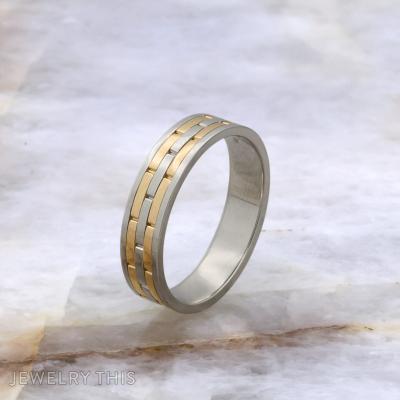
This wedding band recreates a ring lost in a lake after years of daily wear ...
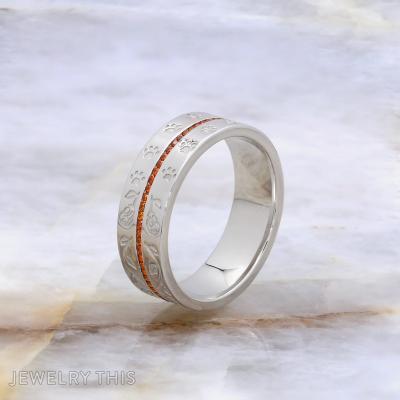
This wedding band pairs two engraved motifs on a wide sterling silver band, separated by ...

Matching wedding bands with a unique yin and yang design that includes white and black ...

This wedding band was thoughtfully designed to complement and enhance the beauty of an existing ...
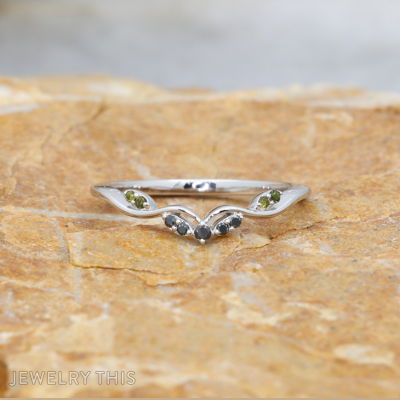
This wedding band was built to sit flush against an engagement ring that had been ...
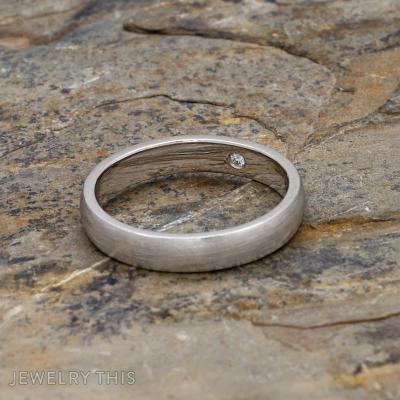
This thin men’s wedding band is crafted in 14k white gold with a soft matte ...

Celebrate timeless love with our meticulously recreated diamond band. This exquisite piece features a milgrain ...

This wedding band pairs a straight, flat-profile shank with a graduated row of five prong-set ...

This wedding band was designed to perfectly complement the client’s engagement ring. This band features ...

This platinum band is the definition of timeless elegance. The band features a sleek flat ...

Full eternity white diamond band set in a micro-pave setting style in 18k white gold. ...
This men’s wedding band was built to mirror an existing engagement ring design, carrying the ...



