


Contoured Diamond Wedding Band Made to Nest with an Engagement Ring
$$
Platinum, lab diamonds
A groom was planning a wedding with a tight timeline and wanted his partner's wedding band built specifically to nest against the engagement ring he'd already had made. He sketched by hand how he pictured the band tucking under the ring's raised profile, and that sketch became the basis for the final V-shaped design. The band shipped in time for the couple's wedding.
Quick specs
Primary Metal
Shape / Cut
Primary Stone
Accent Stones
Style
Design Complexity
Intent: Certainty
Size
Ring size 5¾ US (16.31mm).
How they made it distinctive
-
01
V-shaped peak engineered specifically to tuck under this exact engagement ring's raised wall, rather than a generic contoured band
-
02
Round diamonds used instead of the originally requested princess cut, dictated by the curve the band needed to follow
-
03
All-diamond stone pattern chosen over alternating diamonds and sapphires after comparing both renders side by side
-
04
Design based directly on the client's own hand-drawn sketch of how the two rings should nest together
-
05
Platinum chosen to match the metal and durability of the paired engagement ring
How you'd make it yours
Stone pattern: this piece uses all round diamonds; a new commission could use alternating diamonds and sapphires, or a different colored stone
Metal: this piece is platinum; the same contoured design works in 18k white gold or yellow gold
Stone type: this piece uses lab diamonds; a new commission could use natural diamonds or moissanite
Peak shape: the V-shaped notch was built for this specific engagement ring; a new piece would need its own shape worked out against the ring it's pairing with
One of a kind: this exact band was shaped around one specific engagement ring and is not reproduced as a standalone configurable product
Design changes made
The original plan called for channel-set baguette or princess-cut stones, but the band's curved profile made square or rectangular stones impossible to set cleanly, so the team moved to round stones instead. The client also switched from an alternating diamond-and-sapphire pattern to an all-diamond design after comparing both renders.
Who this is for
This is for someone getting married who already has a specific engagement ring and wants the wedding band engineered to sit against it, not just picked from a generic stacking set. It's especially right if you're working under a tight timeline and need a band that's been fitted to a particular ring's shape rather than assumed to match.
How it's made
Once the final V-shaped design was approved, a digital model was built and a wax or resin pattern was produced from it. That pattern was invested in plaster and burned out in a kiln, and molten platinum was cast into the resulting mold to form the raw band. Platinum's density and higher melting point make this step slower and more exacting than casting in gold, which is part of why the metal carries a higher baseline cost.
After casting, the band was cut from its sprue, cleaned up, and the peak area was hand-finished so its angles stayed crisp and symmetrical to match the engagement ring's profile. The band was polished to a mirror finish overall, and the round lab diamonds were then set by hand along both sides in a channel/pave arrangement, working from the peak outward so the taper stayed even on both flanks.
Key note
The band's V-shaped peak was engineered specifically to tuck under the engagement ring's raised wall, so the two rings sit flush together without any pegs or internal hardware linking them.
Pricing guidance
A platinum wedding band with a sculpted peak and diamond detailing on both sides sits in the mid range for custom wedding bands. Platinum itself carries a higher baseline cost than gold because of its density and the slower, more exacting casting process it requires. Diamond count and the complexity of matching the band's shape to a specific engagement ring are the next biggest cost drivers.
Moves price up ↑
- ↑ Switching from platinum to an even denser or rarer metal, or increasing the band's overall metal weight
- ↑ Adding more diamonds or extending the stone coverage further around the band
- ↑ Using natural diamonds instead of lab-grown diamonds at the same size and quality
- ↑ Requesting additional structural features, like interlocking pegs between the two rings
- ↑ Choosing a more elaborate stone pattern, such as alternating diamonds and sapphires
Moves price down ↓
- ↓ Switching from platinum to 14k or 18k white gold
- ↓ Reducing the diamond count or shortening how far the stones wrap around the band
- ↓ Choosing a simpler, non-contoured band shape that doesn't need to match a specific ring profile
- ↓ Using moissanite in place of lab diamonds
- ↓ Omitting the sculpted peak in favor of a plain curved profile
Questions people ask
Yes, this is a common request and it's done by designing the wedding band's profile around the specific engagement ring it needs to pair with. In this case, the band has an angular peak that was shaped to tuck underneath the engagement ring's raised wall so the two sit flush together. Getting this right usually takes a sketch or reference photo from the client and at least one design revision. The fit is tested conceptually through 3D renders before anything is cast.
Square and rectangular stones have hard corners and straight edges, which don't bend to follow a curved or contoured band shape. When a band has to follow an angled profile, like one designed to nest under another ring, round stones are the only shape that can be set cleanly along that curve. This is a structural limitation rather than a stylistic choice, and it's worth discussing with your jeweler early if your band needs to match a specific shape.
Lab-grown and natural diamonds are chemically and optically identical — same hardness, same brilliance, same durability for daily wear. The difference is origin and cost: lab-grown diamonds are typically priced significantly lower than natural diamonds of comparable size and quality. For small accent stones set along a band, most people can't tell the difference by eye, so the choice usually comes down to budget and personal preference rather than appearance.
A standard custom platinum band with diamond detailing typically takes around five to six weeks from design approval to completion, though rush timelines are possible when a wedding date requires it. The process includes finalizing the design, casting the band, hand-finishing the metal, and setting the stones. Platinum's casting process takes somewhat longer than gold because of its higher melting point and density.
Platinum is one of the most durable metals used in fine jewelry and holds up very well to daily wear. It's naturally white, so it doesn't require replating the way white gold does, and it's hypoallergenic, which makes it a good option for people with metal sensitivities. It is heavier and generally more expensive than gold, but many people prefer that weight and the fact that it ages by developing a soft patina rather than losing metal over time.
It's possible to add small pegs or notches that link a wedding band to an engagement ring, but it's not always recommended. In this case, the jeweler advised against pegs because they can be felt and feel uncomfortable against the finger when the band rotates, especially since they sit on the underside where skin contact is constant. A well-matched contoured profile, where the wedding band's shape follows the engagement ring's structure, is often enough to keep the two rings sitting close together without added hardware.
A platinum wedding band with accent diamonds set along the band generally falls in the mid range for custom wedding bands, largely because platinum itself carries a higher baseline material and labor cost than gold. The number of diamonds, whether they're natural or lab-grown, and how far the stones wrap around the band all affect the final cost from there. A band custom-shaped to match an existing ring's profile also adds some design time compared to a standard straight band.
Many custom jewelers will produce comparison renders if you're deciding between two options, such as an all-diamond look versus alternating diamonds and colored stones. Seeing both side by side as photorealistic renders makes it much easier to decide than trying to imagine the difference from a description. This step typically doesn't add significant time to the process since both versions come from the same underlying 3D model.
Explore Similar Creations
Every masterpiece starts with a spark. Explore how our clients raw ideas - sketches, heirlooms, inspirations - were transformed into bespoke works of arts.
This mesmerizing White gold band features three enchanting rows of small round stones, creating a ...

This wedding band takes a flat-profile 14k white gold band and finishes it in black ...
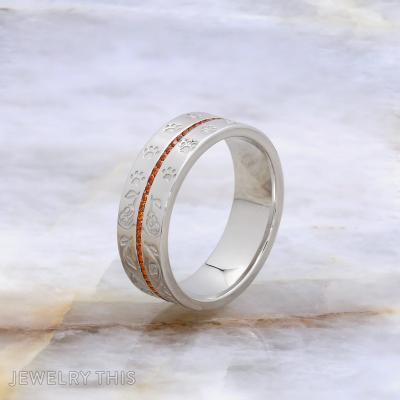
This wedding band pairs two engraved motifs on a wide sterling silver band, separated by ...

This men’s wedding band was built around a channel of rectangular baguette diamonds running the ...
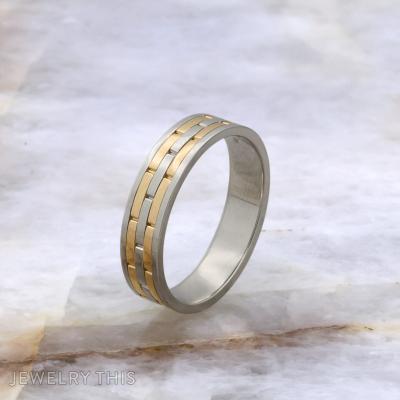
This wedding band recreates a ring lost in a lake after years of daily wear ...

This wedding band was designed as a companion piece to an existing engagement ring, continuing ...
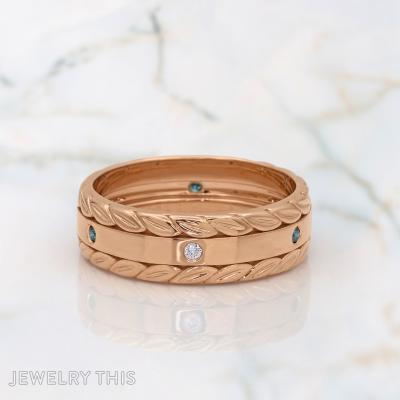
This wedding band was built around a design the client found and loved, then rebuilt ...

This platinum band is the definition of timeless elegance. The band features a sleek flat ...

This wedding band was built around a single requirement: it had to be safe to ...

This men’s wedding band is built around a single-branch design, textured to read like real ...

This 14k yellow gold stacking band takes its cue from a vine tattoo and a ...

This wedding band pairs 14k rose gold with a central band of black enamel, creating ...



