


Starburst Wedding Band in Black Rhodium White Gold
$$
14k white gold, black rhodium plating, lab-grown diamonds
R. wanted a black metal wedding band covered in stars, each one holding a tiny lab-grown diamond, based on a sketch he drew himself. During design, he and his fiancée landed on nine stars instead of eight to reference their anniversary date. When the ring was finished, he wrote simply: 'It looks fantastic.'
'Yep that looks really good! I think I'm ready to move forward with payment and getting it made!' — on design approval
'It looks fantastic.' — on delivery
Quick specs
Primary Metal
Shape / Cut
Primary Stone
Accent Stones
Design Complexity
Intent: Certainty
Size
Ring size 10.75 US. Band width 6mm, flat profile, comfort fit.
How they made it distinctive
-
01
Nine stars rather than the original eight, chosen specifically to reference the couple's anniversary date of 9/19
-
02
Star settings designed with low-profile, rounded prongs polished down after setting to reduce irritation on the hand
-
03
Black rhodium plating chosen over a lighter metal to achieve a bold, dark aesthetic on a traditional wedding band shape
-
04
Flat comfort-fit profile selected specifically to suit the stars-and-prong setting style and long-term daily wear
-
05
14k white gold chosen over sterling silver for greater durability on a piece intended for lifelong daily wear
How you'd make it yours
Stone type: this piece uses lab-grown diamonds — a new commission could use moissanite for a similar look at comparable cost at this stone size
Metal: this piece is 14k white gold with black rhodium plating — the same star design works in sterling silver with black rhodium, or in platinum
Stone count: this piece uses nine stars — a new commission could use any number spaced evenly, tied to a different meaningful number
Profile: this piece has a flat, comfort-fit profile — a new commission could use a domed profile if preferred
Engraving: the interior of a new band could carry a date or short phrase, independent of the star pattern
One of a kind: this exact ring was designed for one client's wedding and is not reproduced — a new commission is an original piece inspired by this one, not a copy
Design changes made
The star count was changed from 8 to 9 after the client and his fiancée realized 9 stars would reference their anniversary date; the spacing was adjusted in the 3D model to accommodate the extra stone without crowding the design.
Who this is for
This piece is for someone who wants a wedding band with a bold, modern finish and a personal detail worked into the design rather than a plain traditional band. It suits someone comfortable with the upkeep a plated dark finish requires over years of daily wear, and who likes the idea of a small design choice, like a stone count, carrying private meaning only they and their partner know.
How it's made
Once the design was approved, the ring was 3D printed in wax and attached to a wax tree inside a flask. The flask was placed in a kiln to burn out the wax, leaving a hollow mold, and molten 14k white gold was poured into the mold under pressure to cast the raw band. After cooling, the piece was removed from the mold and prepared for cleaning and finishing.
The band was polished to a smooth, flat-profile surface with a comfort-fit interior, then plated in black rhodium to achieve the dark finish. Each of the nine round lab-grown diamonds was set into its star-shaped recess using small prongs pushed over the stone's edges, then those prongs were polished smooth and brought down in height so they sit close to the band's surface.
Key note
The small prongs holding each stone are deliberately polished down after setting so they sit close to the band's surface, reducing the raised profile that could otherwise catch or irritate skin during daily wear.
Pricing guidance
A black-rhodium-plated white gold band with multiple small stone-set accents sits in the mid range for custom wedding bands of moderate complexity. Most of the cost comes from the labor of setting multiple individually spaced stones rather than the stones themselves, since each stone is small. Metal choice and stone count are the biggest levers on price from there.
Moves price up ↑
- ↑ Increasing the stone count beyond nine evenly spaced stars
- ↑ Upgrading from lab-grown diamonds to natural diamonds of the same size
- ↑ Choosing platinum instead of white gold as the base metal
- ↑ Adding a domed profile that requires more hand-finishing than a flat band
- ↑ Widening the band beyond 6mm, which increases metal and finishing time
Moves price down ↓
- ↓ Reducing the stone count from nine to six or seven
- ↓ Choosing sterling silver instead of 14k white gold as the base metal
- ↓ Switching to moissanite, which is comparably priced at this stone size but offers flexibility
- ↓ Narrowing the band width to reduce material and finishing time
- ↓ Skipping the black rhodium plating in favor of a natural white gold finish
Questions people ask
Yes. Black rhodium is a surface plating applied over a base metal like white gold or sterling silver, and it will gradually wear with daily use. Areas with the most contact and friction, such as where a ring rubs against another ring or against surfaces during the day, wear faster than the rest of the band. Most wearers see noticeable wear within a year or two of regular use, sometimes sooner if the ring contacts another metal ring often. Re-plating is a straightforward service that restores the original dark finish.
Yes, black rhodium plating can be stripped and reapplied once it starts to wear. This is a standard service most jewelers who work with plated finishes can perform. Because the color comes from a surface coating rather than the metal itself, re-plating fully restores the original dark appearance rather than just touching it up. How often re-plating is needed depends on how the ring is worn and whether it regularly contacts other metal jewelry.
Lab-grown diamonds are chemically and physically identical to natural diamonds, with the same hardness and sparkle, so they perform the same way in a ring regardless of size. For small accent stones like the ones used in a star-set band, lab-grown diamonds typically cost significantly less than natural diamonds of equivalent size and clarity. Moissanite is also a viable alternative at very small stone sizes, since the visual difference becomes harder to detect the smaller the stone is. The choice mostly comes down to preference and budget rather than any meaningful difference in appearance.
A comfort-fit band has a slightly rounded or domed interior surface instead of a flat one, which allows the ring to slide on and off more easily and reduces pressure on the finger during wear. Because less of the band's interior surface touches the finger at any given point, comfort-fit rings often feel like they fit a touch looser than a standard flat-interior band of the same marked size. This is part of why ring sizing can shift between a standard band and a wider comfort-fit band. It's a popular choice for wider bands meant for daily, long-term wear.
Yes, a band like this can generally be resized within a standard range after it's made. Because the stones are set individually in their own star settings rather than in a continuous row, resizing will shift the spacing between two of the stones slightly rather than disrupting the whole pattern. In most cases the spacing change is subtle enough that only the wearer notices it, not people looking at the ring casually. Larger resizes may shift the spacing more noticeably than smaller adjustments.
A band with this level of complexity — a dark plated finish, a flat comfort-fit profile, and nine individually set small stones — tends to fall in the mid range for custom wedding bands. The primary cost driver is the labor of setting multiple stones individually rather than the material cost of the stones themselves, since the diamonds used are small. Base metal choice, whether sterling silver, white gold, or platinum, has a notable effect on the final price, as does the total stone count.
White gold is a more durable base metal than sterling silver, which matters for a ring intended for decades of daily wear, like a wedding band. Both metals can take a black rhodium plating equally well, so the visual result is similar either way. The main tradeoffs are durability and cost: white gold holds up better to long-term wear but costs more than sterling silver. Many people choose white gold specifically for a piece they intend to wear every day indefinitely, like a wedding ring.
Any two rings worn together will show some surface wear over time simply from metal rubbing against metal, regardless of the specific metals or karats involved. Gold rings of different karats worn against each other don't cause any unusual or accelerated wear beyond normal metal-on-metal contact. The bigger mismatch to watch for is platinum worn against gold, since the two metals behave differently under friction. A thin spacer, such as a narrow silicone band, can be worn between two rings to reduce direct contact and surface wear.
Explore Similar Creations
Every masterpiece starts with a spark. Explore how our clients raw ideas - sketches, heirlooms, inspirations - were transformed into bespoke works of arts.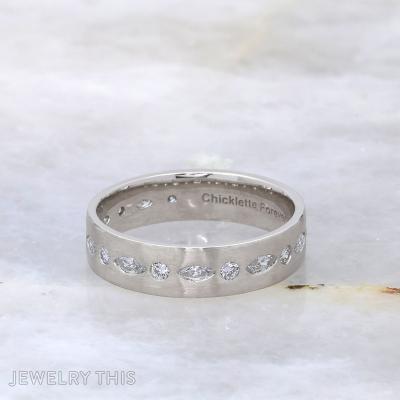
This men’s wedding band was built to mirror an existing engagement ring design, carrying the ...

This wedding band was designed as a companion piece to an existing engagement ring, continuing ...

This wedding band was built around a single requirement: it had to be safe to ...
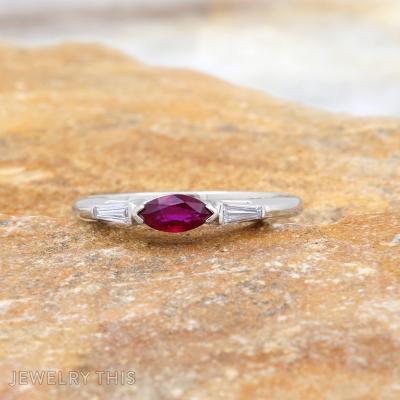
This platinum band recreates the style of a 1940s-era ring using the client’s own marquise ...
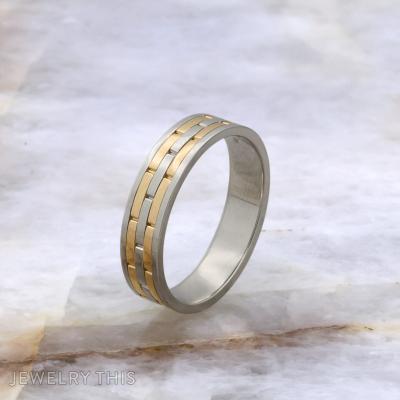
This wedding band recreates a ring lost in a lake after years of daily wear ...
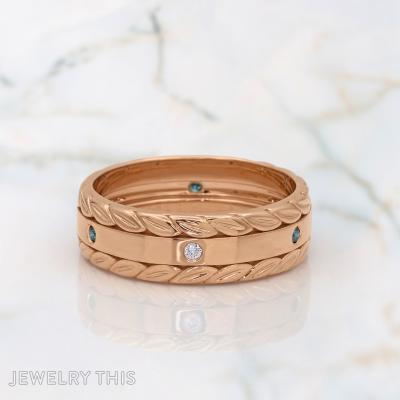
This wedding band was built around a design the client found and loved, then rebuilt ...
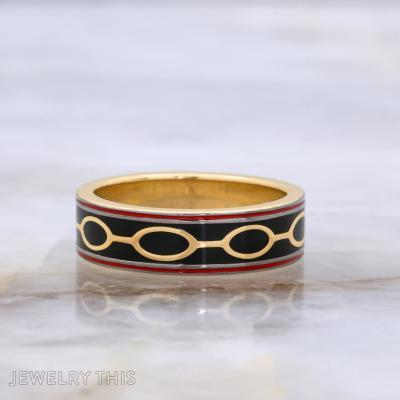
This wedding band pairs 14k yellow gold with black and red hot enamel to create ...

This wedding band recreates the look of an antique ring from around 1860, rebuilt in ...

This platinum band is the definition of timeless elegance. The band features a sleek flat ...
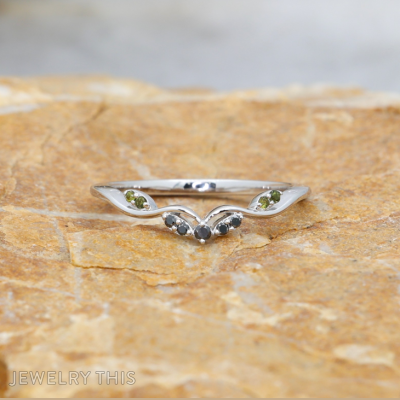
This wedding band was built to sit flush against an engagement ring that had been ...

This wedding band was designed as a companion piece to an existing engagement ring, with ...

Matching wedding bands with a unique yin and yang design that includes white and black ...



