

Recreated Diamond Cluster Wedding Band in 14k Gold
$$$
14k yellow gold, lab-created diamonds
S. came to us to recreate her grandmother's wedding ring, lost after the ring loosened from weight loss and slipped away. Working from a single photograph and her memory, the design went through several rounds of adjustment — the diamonds sized up, the setting widened, the posts lengthened — until the proportions finally matched what she remembered. She wrote when the rebuilt version was on its way: "Amazing thank you, I can't wait to see it."
"That's perfect. Amazing work. I don't think there's anything I would change, except the posts like you said.. Thank you so much." — on seeing the first render
"Amazing thank you, I can't wait to see it" — on delivery of the remade ring
Quick specs
Primary Metal
Shape / Cut
Primary Stone
Accent Stones
Design Complexity
Intent: Certainty
Size
Ring size 6 US. Band branches into three rows of round diamonds: top row 5, middle row 6, bottom row 5 (16 total).
How they made it distinctive
-
01
Three-row diamond cluster rebuilt from a single reference photograph with no original piece to measure against
-
02
Diamond size and setting width increased in a full redesign after the first version read smaller than the original
-
03
Prong posts specifically shaped and lengthened to match the way the original ring's setting spanned the finger
-
04
Sixteen round diamonds arranged five-six-five across the rows to recreate the original's cluster silhouette
-
05
A resin trial was used to confirm final sizing before the redesigned version was cast
How you'd make it yours
Stone type: this piece uses lab-created diamonds; a new commission could use natural diamonds or moissanite for a different look or price point
Stone count and size: this piece uses sixteen diamonds in a five-six-five arrangement; a new piece could use fewer, larger stones or more, smaller ones
Metal: this piece is 14k yellow gold; the same cluster design works in 18k yellow gold, white gold, or rose gold
Band width: this piece's band was widened during redesign to support the cluster; a new commission's width is set to its own wearer's proportions
One of a kind: this exact ring was rebuilt for one client's grandmother's ring and is not reproduced — a new commission is an original piece inspired by this one, not a copy
Design changes made
After the first version came back noticeably smaller than the original, the diamonds were upsized and the setting widened so it would span the finger the way the original ring did, and the prong posts were lengthened to better frame each stone.
Who this is for
This piece is for someone rebuilding a piece of family history from nothing more than a photo and a memory, who is willing to go through a few rounds of adjustment to get the proportions genuinely right. It's especially for someone who wants the finished ring to feel like an honest match to what they remember, not just a similar-looking substitute.
How it's made
Once the design was approved, the piece moved through a three-stage design process — sketch, 3D CAD model, and photorealistic render — before any metal was committed. A resin model was 3D-printed from the final CAD file so the proportions and diamond scale could be confirmed by hand before casting. The approved model was then invested and cast in 14k yellow gold, producing the raw band with its branching three-row structure ready for finishing.
After casting, the band was cleaned up and polished to a bright finish, with particular attention to the prong posts, which were trimmed and shaped after casting to sit close against each stone. The sixteen round lab-created diamonds were then set by hand across the three rows — five on top, six in the center, five below — with the center row's stones set fractionally forward to create the cluster's slightly domed profile.
Key note
The final version used a wider setting and larger diamonds than the first casting specifically because the original ring's setting had spanned the wearer's finger, a detail only confirmed after the first resin and casting round came back too narrow.
Pricing guidance
A three-row diamond cluster wedding band in 14k gold sits in the mid-to-upper range for custom recreation work, largely because of the sixteen individually set stones and the hand-finishing needed to shape prongs around each one. Diamond size and count are the biggest cost drivers on a design like this, with labor for multi-row stone setting close behind.
Moves price up ↑
- ↑ Increasing individual diamond size across all three rows
- ↑ Switching from lab-created to natural diamonds
- ↑ Upgrading from 14k to 18k gold
- ↑ Adding more rows or increasing total stone count beyond sixteen
- ↑ Choosing a wider band to support a larger cluster
Moves price down ↓
- ↓ Reducing the diamond size or total stone count
- ↓ Using a single row of diamonds instead of three
- ↓ Choosing a narrower band width
- ↓ Selecting moissanite in place of diamonds
- ↓ Simplifying the prong-setting detail to a shared-prong or channel arrangement
Questions people ask
Yes, though it takes some back-and-forth to get right. A single photo gives the designer a starting reference for shape and proportion, but details like exact diamond size, setting width, and metal color often need refinement through a 3D render and, ideally, a physical resin model you can try on before casting. Multiple rounds of feedback are normal for a photo-only recreation, since there's no original piece to measure against. The resin stage is particularly useful because it lets you judge scale in person rather than on a screen.
When a ring is rebuilt from a single photo rather than the physical piece, initial estimates of stone size and setting width can come out smaller than the original, especially if the photo doesn't clearly show scale. This is a normal part of the photo-recreation process and is typically resolved by comparing the render or resin side-by-side with the reference photo and adjusting diamond size and setting width until it matches. It's worth flagging early if a design looks off in scale so adjustments can be made before casting rather than after.
Lab-created and natural diamonds are chemically and visually identical — same hardness, same brilliance, same clarity grading system. The difference is origin and cost: lab-created diamonds are typically significantly less expensive than natural diamonds of the same size and quality. For a design using sixteen stones across three rows, choosing lab-created keeps the overall cost more manageable while still delivering a full diamond look.
A standard timeline runs about one week for design approval followed by three to four weeks of production, so five to six weeks total from deposit to shipping. If the design needs revision rounds — including a resin fit test — the timeline extends accordingly, since each round of feedback adds time for redesign and reprinting. Multi-row stone-set pieces like this one also take slightly longer to set by hand than a single-stone ring.
Yes, a resin model is a 3D-printed, stoneless preview of the exact design before it's cast in metal, and it's the best way to judge size and proportion in person rather than on a screen. You can try it on to check ring size and see how the setting sits on your finger, though keep in mind it won't include any stones. If something feels off — too narrow, too wide, wrong size — this is the point to flag it, since changes after casting are far more involved.
Yes, a three-row cluster setting can be adjusted in overall width and diamond size to cover more or less of the finger, since the rows are built around the stone sizing rather than a fixed frame. Making it wider generally means either larger stones or an adjusted arrangement so the cluster still reads proportionally. This kind of adjustment is best made at the design or resin stage, before the final casting, since resetting a finished piece to a different width means substantial rework.
Ring resizing is a standard service and is usually straightforward on a band like this, since the shank can be cut and adjusted without disturbing the stone setting itself. If your ring size has changed since your original measurement, it's worth mentioning this before the piece is finalized so the correct size is used from the start. Resizing after the fact is possible but adds an extra step, so catching it early is preferable.
Multi-row prong-set diamond rings benefit from periodic prong checks, since the prongs that are shaped and trimmed after casting can loosen slightly with years of wear, especially with sixteen stones sharing the load. Regular at-home cleaning with mild soap and a soft brush keeps the stones bright, and an annual check by a jeweler catches any prongs that need retightening before a stone is at risk of falling out. Beyond that, they hold up well to daily wear since diamonds themselves are extremely durable.
Explore Similar Creations
Every masterpiece starts with a spark. Explore how our clients raw ideas - sketches, heirlooms, inspirations - were transformed into bespoke works of arts.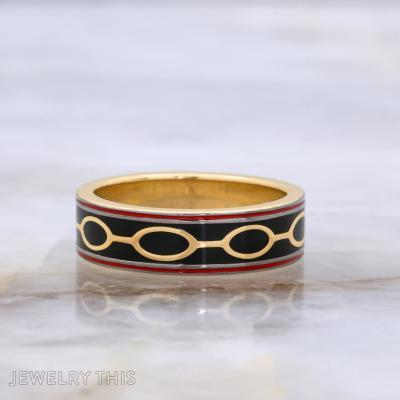
This wedding band pairs 14k yellow gold with black and red hot enamel to create ...

Full eternity white diamond band set in a micro-pave setting style in 18k white gold. ...

Matching wedding bands with a unique yin and yang design that includes white and black ...
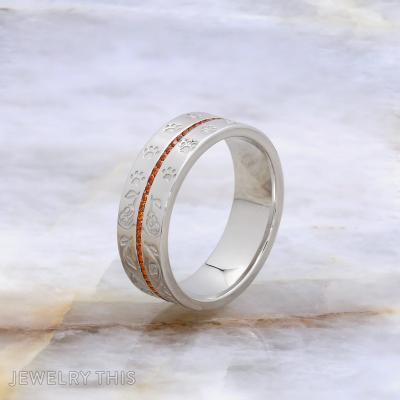
This wedding band pairs two engraved motifs on a wide sterling silver band, separated by ...
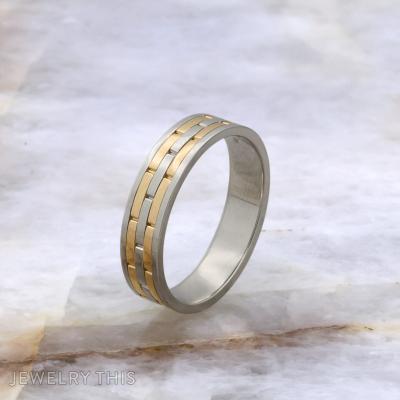
This wedding band recreates a ring lost in a lake after years of daily wear ...

This wedding band pairs a straight, flat-profile shank with a graduated row of five prong-set ...

This mesmerizing White gold band features three enchanting rows of small round stones, creating a ...
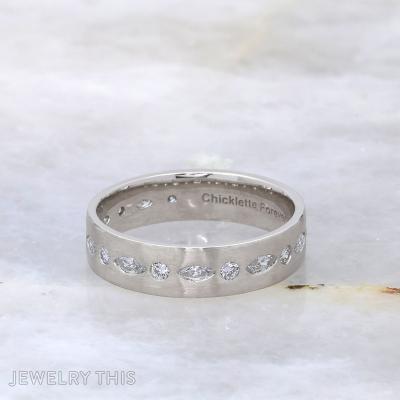
This men’s wedding band was built to mirror an existing engagement ring design, carrying the ...

This platinum band is the definition of timeless elegance. The band features a sleek flat ...
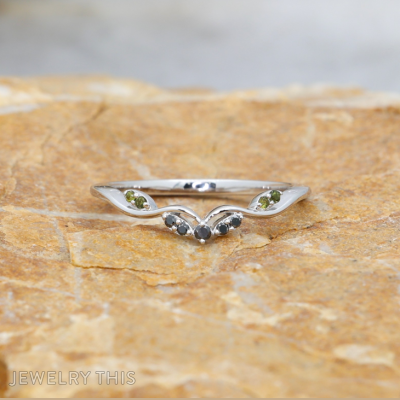
This wedding band was built to sit flush against an engagement ring that had been ...
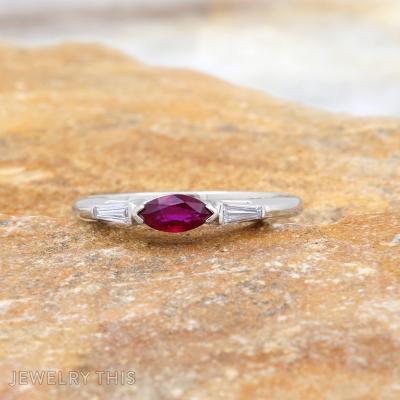
This platinum band recreates the style of a 1940s-era ring using the client’s own marquise ...
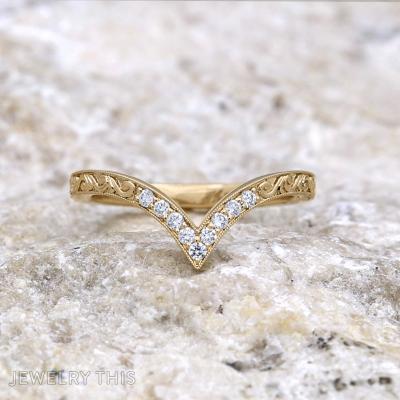
This wedding band was designed as a companion piece to an existing engagement ring, built ...



