


Men's Platinum Wedding Band with Channel Sapphires
$$$
Platinum, sapphires
A groom designing his own wedding band wanted something classic on the outside with a private detail on the inside — a Claddagh symbol and a short phrase in Irish, chosen to echo his partner's matching band. He worked through stone proportions, a finish change, and an engraving layout that still leaves room for a future resize, all before the wedding date. The rings were completed and shipped in time for the ceremony.
Quick specs
Primary Metal
Shape / Cut
Primary Stone
Accent Stones
Design Complexity
Intent: Certainty
Size
Ring size 10 US. Band width approximately 5.3mm. Two 2.5mm square sapphires channel set.
How they made it distinctive
-
01
Band width increased slightly beyond standard 5mm specifically to proportion two princess-cut sapphires correctly, rather than forcing a narrower setting
-
02
Brushed finish chosen over the original polished render for a quieter, more textured everyday look
-
03
Interior engraving deliberately placed off-center with the bottom of the band left clear, preserving the option to resize later without disturbing the design
-
04
Drainage holes beneath the channel-set stones shaped where a design element could and couldn't be placed, turning a technical constraint into part of the layout
-
05
Designed as a complementary pair with a matching partner band, sharing a symbol and phrase across both pieces
How you'd make it yours
Stone: this piece uses two princess-cut sapphires; a new commission could use a single stone, more stones, or a different colored gem in the same channel setting
Metal: this piece is platinum; the same channel-set band design works in 18k white gold at a lower material cost
Finish: this piece has a brushed surface; a new commission could use a high polish or a heavier sandblasted texture
Engraving: the interior engraving placement and wording are specific to this piece; a new commission can carry its own text, symbol, or phrase
Band width: this piece sits at approximately 5.3mm; a new commission can be made narrower or wider depending on stone choice
One of a kind: this exact ring was designed for one client's wedding and is not reproduced — a new commission is an original piece inspired by this one, not a copy
Design changes made
The band width was widened slightly beyond 5mm to properly proportion two larger princess-cut sapphires, and the polished finish from the first render was changed to a brushed texture at the client's request. The interior engraving layout was also reworked so the claddagh symbol and text sit off-center, leaving the bottom of the band clear for a future resize.
Who this is for
This piece is for someone who wants a wedding band that reads as clean and classic from the outside but carries something personal only they know about on the inside. It fits someone designing their own band who cares about getting proportions and finish exactly right, and who wants the design itself to quietly plan ahead for a future resize rather than treating that as an afterthought.
How it's made
The approved 3D design was used to produce a platinum casting, built to the finished band width and profile confirmed with the client during the design phase. Platinum's density and workability made it well suited to the clean, flat-profile band and the channel setting the design called for.
After casting, the band was cleaned up and brought to a brushed surface finish rather than a high polish, giving the metal a quieter, textured look the client preferred over the original render. The two princess-cut sapphires were channel-set near the top of the band, with small drainage holes placed beneath the stones to allow the setting to be cleaned. The personal interior engraving was applied afterward, as a separate finishing step once the final wording and placement were confirmed.
Key note
The small holes set beneath the channel-set sapphires aren't a flaw — they're a deliberate drainage feature that lets the setting be cleaned from underneath, and it's also why a design element couldn't be centered directly beneath the stones.
Pricing guidance
A platinum men's band with channel-set sapphires and custom interior engraving sits toward the upper end of the mid range for custom wedding bands. Platinum itself carries a higher baseline cost than gold at the same volume, and the channel-set stone pair adds setting labor beyond a plain band. Engraving complexity and band width are the next biggest variables.
Moves price up ↑
- ↑ Upgrading from platinum to a larger total stone carat weight or additional stones beyond the pair
- ↑ Increasing band width further, which requires more platinum by weight
- ↑ Adding engraving directly into the 3D model rather than as a separate laser-engraving step
- ↑ Choosing a fully hand-finished or sandblasted texture rather than a standard brushed finish
Moves price down ↓
- ↓ Switching from platinum to 14k or 18k white gold for a similar look at a lower metal cost
- ↓ Reducing to a single stone or using smaller stones in the channel
- ↓ Choosing a standard polished finish instead of a custom brushed or sandblasted texture
- ↓ Simplifying or omitting the interior engraving
Questions people ask
Yes, platinum bands with channel-set stones can generally be resized, though the stones themselves require care during the process since they sit within a cut channel rather than under prongs. On a ring with interior engraving, resizing can affect the engraved text depending on how much the size needs to change and where the engraving sits on the band. Leaving a clear, unengraved section at the bottom of the band is a common way to preserve room for a future resize. It's worth discussing resizing tolerance with your jeweler before finalizing an engraving layout.
Platinum is denser and more durable than white gold, and it doesn't require rhodium replating to stay white over time since it's naturally white at its core. It's also hypoallergenic, which matters for anyone with sensitive skin. The tradeoff is weight and cost — platinum is heavier on the hand and carries a higher material cost than gold at the same volume. For a daily-wear band that will see years of use, many people find the lower maintenance worth the difference.
A polished finish is reflective and mirror-like, while a brushed finish uses fine, directional abrasion to create a soft, matte-ish texture that diffuses light instead of reflecting it sharply. Brushed finishes tend to show fingerprints and light scratching less than a high polish. Over time, a brushed finish can be restored by a jeweler if it picks up noticeable wear. The choice is purely aesthetic — both finishes perform the same structurally.
Sapphires rate a 9 on the Mohs hardness scale, just below diamond, making them one of the most durable gemstone choices for daily wear. Channel setting, where the stones sit flush within a cut groove in the metal, offers good physical protection since there's no raised edge to catch or chip. This combination of hardness and protective setting style makes sapphires a practical choice for a men's band intended for everyday use. Blue sapphire also resists fading or color change over time under normal wear conditions.
A platinum band with a pair of channel-set sapphires and custom interior engraving falls toward the upper end of the mid-range tier for custom wedding bands. Platinum's higher material cost relative to gold is the biggest single driver, with stone setting and engraving adding smaller incremental costs. Band width also factors in, since a wider band requires more metal. Simpler finishes and a single stone instead of a pair are the most effective ways to bring the cost down.
Yes, interior engraving is a common request and can include text, symbols, or a combination of both, though very small or intricate fonts can be a challenge to reproduce accurately at that scale. Laser engraving is typically used for finer detail work after the ring itself has been cast and finished. It's worth discussing placement in advance, especially if the ring may need resizing later, since engraving near the bottom of the band is the area most affected by a size adjustment. Simpler fonts and symbols tend to translate most reliably to a small engraved surface.
A standard custom wedding band typically takes about one week for the design phase, including a 3D render for approval, followed by three to four weeks of production. Design changes, such as adjusting a finish or reworking an engraving layout, can add time within that same general window if they're resolved promptly. Tight deadlines, like a wedding date, are achievable but benefit from finalizing design details as early in the process as possible. Engraving is sometimes handled as a final step after the ring itself is complete, which can occasionally extend timing if the engraving details are still being finalized.
Yes, matching or complementary bands for two people are a common request and can be produced as a coordinated pair, even when the two designs differ in width, metal weight, or detail to suit each wearer. The two pieces are typically developed in parallel so design decisions on one can inform the other where relevant. This approach works well for couples who want a shared design language — like a shared symbol or phrase — expressed differently across two bands.
Explore Similar Creations
Every masterpiece starts with a spark. Explore how our clients raw ideas - sketches, heirlooms, inspirations - were transformed into bespoke works of arts.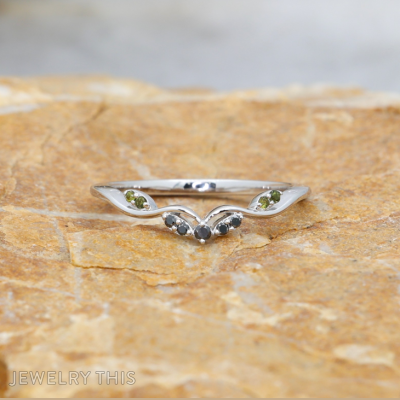
This wedding band was built to sit flush against an engagement ring that had been ...
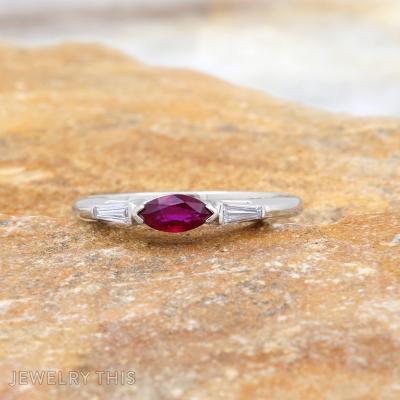
This platinum band recreates the style of a 1940s-era ring using the client’s own marquise ...
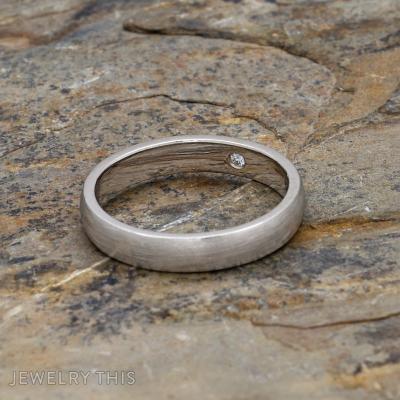
This thin men’s wedding band is crafted in 14k white gold with a soft matte ...

This mesmerizing White gold band features three enchanting rows of small round stones, creating a ...
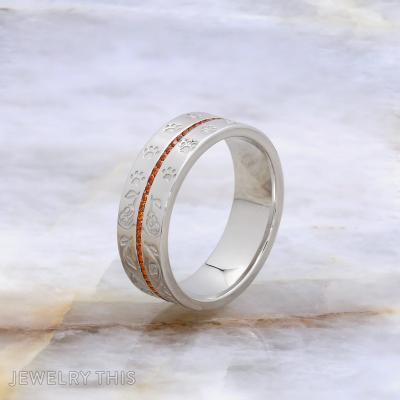
This wedding band pairs two engraved motifs on a wide sterling silver band, separated by ...

This men’s wedding band is built around a single-branch design, textured to read like real ...

This platinum wedding band was built as a companion piece to an existing engagement ring, ...

This 14k yellow gold stacking band takes its cue from a vine tattoo and a ...

This wedding band was rebuilt as a faithful recreation of a piece that had been ...

This wedding band pairs a rose gold, bark-textured wishbone shank with a white gold upper ...
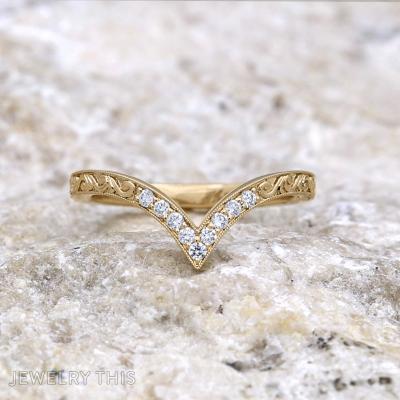
This wedding band was designed as a companion piece to an existing engagement ring, built ...

Matching wedding bands with a unique yin and yang design that includes white and black ...



