


Emerald & Sapphire Rose Gold Bridal Set
$$$
14k rose gold, 14k white gold prong head, lab emerald, lab sapphires, lab diamonds
A returning client asked us to build a companion wedding band for an engagement ring she'd had made with us previously, using the same twisted-vine design language but swapping the center stone to an emerald and alternating the band stones between lab sapphires and lab diamonds. She approved the render right away: "It looks amazing and I love it and my fiancé also loves it." When the finished set finally reached her after some shipping setbacks, she wrote back: "They look so beautiful."
"It looks amazing and I love it and my fiancé also loves it." — on seeing the render
"They look so beautiful." — on delivery
Quick specs
Primary Metal
Secondary Metal
Shape / Cut
Primary Stone
Design Complexity
Intent: Certainty
Size
Ring size 5¾ US (16.1mm). Center stone 6mm round; accent stones 3mm round.
How they made it distinctive
-
01
Center stone changed to a lab emerald on this build, departing from the more traditional diamond center of a typical engagement ring
-
02
White gold prong head set into an otherwise all rose gold ring, protecting the emerald's color from being warmed by rose gold
-
03
Wedding band alternates lab sapphires and lab diamonds rather than using a single stone type, echoing the emerald's cool tone while keeping brightness
-
04
Twisted, crisscrossing band structure shared across both rings so they visually connect as one set when stacked
-
05
Designed as a companion piece to an engagement ring from an earlier order, extending an existing design language rather than starting from scratch
How you'd make it yours
Center stone: this piece uses a lab emerald; a new commission could use a sapphire, ruby, or diamond for a different look
Stone type in the band: this piece alternates lab sapphires and lab diamonds; a new piece could use a single stone type or a different pairing
Metal: this piece is 14k rose gold with a white gold prong head; the same twisted design works in all yellow or all white gold
Stone count: this band uses five accent stones; a new commission could use fewer or more depending on preference
Engraving: the inside of either band can carry a new inscription on a fresh commission
One of a kind: this exact ring set was designed for one client and is not reproduced — a new commission is an original piece inspired by this one, not a copy
Design changes made
Design matched the initial brief without major changes — the client approved the first render as presented.
Who this is for
This set is for someone who already loves the shape of a ring they own and wants to build onto it rather than start over. It's especially right for a bride who wants her engagement ring and wedding band to read as one continuous piece, with color and stone choices that echo each other rather than match exactly.
How it's made
Once the design was approved and resized to 5¾, a wax or resin model of each ring was produced from the finalized 3D file and reviewed internally before casting. The models were invested and cast in 14k rose gold, with a separate white gold prong head cast for the engagement ring's center setting. After casting, both rings were cleaned up and prepared for stone setting and finishing.
The engagement ring's emerald was set into the white gold prong head first, since that head sits in a different metal than the surrounding rose gold shank. The wedding band's five stones — alternating lab sapphires and lab diamonds — were then set by hand into shared rose gold prongs across the top of the band, followed by polishing of both pieces to a uniform rose gold finish.
Key note
The engagement ring's center setting is cast in white gold while the rest of the band is rose gold, so the stone sits in a metal that won't warm its color the way rose gold prongs would.
Pricing guidance
A two-ring rose gold bridal set with a lab emerald center stone and a multi-stone sapphire-and-diamond wedding band sits in the mid range for custom bridal sets of this complexity. Much of the baseline cost comes from producing two coordinated rings with a shared design language, plus the mixed-metal prong head on the engagement ring. Stone count and the decision to use lab versus natural stones are the biggest levers on price from there.
Moves price up ↑
- ↑ Using natural emerald, sapphires, and diamonds instead of lab-grown versions of each
- ↑ Increasing the center stone size beyond 6mm
- ↑ Adding more accent stones to the wedding band beyond the current five
- ↑ Upgrading the band metal from 14k to 18k rose gold
- ↑ Adding pavé or halo detailing around the center emerald
Moves price down ↓
- ↓ Reducing the wedding band to three accent stones instead of five
- ↓ Choosing a single stone type (all sapphires or all diamonds) rather than alternating two
- ↓ Making the engagement ring as a single-metal piece rather than a mixed white-and-rose gold build
- ↓ Using a smaller center stone
- ↓ Simplifying the twisted band structure to a plain shank
Questions people ask
Yes, lab-grown emeralds work well as center stones and are commonly requested as diamond alternatives for clients who want color. They have the same chemical composition and optical properties as natural emeralds, just grown in a controlled lab setting rather than mined. Emerald is softer than diamond or sapphire, so a protective prong setting like the white gold head used here helps keep the stone secure during daily wear. Lab emeralds are also typically more consistent in color and clarity than natural emeralds at a similar size.
This is a common technique when a center stone benefits from a whiter metal backdrop — rose gold can subtly warm the appearance of a stone's color, which isn't always desirable for green or blue stones. By casting just the prong head in white gold and the rest of the band in rose gold, the stone sits in a neutral-toned setting while the rest of the ring keeps its warm rose gold color. The two metals are soldered together during assembly so the ring still functions and wears as one piece.
Sapphire ranks 9 on the Mohs hardness scale, second only to diamond, so it holds up extremely well to daily wear including knocks and scrapes. Lab-grown sapphires have identical hardness and durability to natural sapphires since they share the same crystal structure. This makes sapphire one of the best choices for a wedding band that will be worn constantly, especially when alternated with diamonds as seen in this design. The main thing to watch is the prong settings over time, since any set stone can loosen with years of wear and should be checked periodically.
A matching engagement ring and wedding band set with a colored center stone and multiple accent stones generally falls in the mid range for custom bridal work. The cost reflects designing and casting two coordinated rings rather than one, plus the labor of setting multiple stones across both pieces. Choosing lab-grown stones over natural ones is one of the more significant ways to manage cost without changing the look, since lab stones of this type are generally less expensive than mined equivalents at a comparable size.
A standard custom bridal set typically takes about one week for the design phase, where the 3D model and render are reviewed and approved, followed by roughly four to five weeks for casting, stone setting, and finishing. Sourcing specific lab-grown stones in particular sizes can add time if they are not already in stock. Complex sets with multiple coordinated pieces, like an engagement ring and matching wedding band, sometimes run slightly longer than a single ring due to the need to keep both pieces visually consistent.
Yes, alternating two stone types across a band is a well-established design approach and works especially well when the stones share a similar size and cut, as with the round sapphires and diamonds in this band. The main consideration is making sure the prong style accommodates both stone types securely, since different gems can have slightly different depths. This alternating pattern also pairs nicely with a colored center stone on a matching engagement ring, since it echoes the color without overwhelming it.
Yes, this is a common request, especially when a client wants to add a wedding band sometime after the engagement ring was originally made. The key to a successful match is carrying over the same structural design language — in this case, a twisted, crisscrossing band silhouette — so the two rings read as one connected set when worn together. Stone choices can also echo the engagement ring's palette, as seen here with the sapphires picking up the emerald's cool tone while the diamonds keep the set bright.
14k gold (in any color) is a common choice for everyday wear because it balances durability with workability better than higher purity golds like 18k or 24k, which are softer. Rose gold specifically gets some added durability from its copper content, which makes the alloy a bit harder than pure yellow gold at the same karat. For a two-ring stacked set like this one, matching both rings in the same 14k rose gold also ensures they wear at the same rate and keep a consistent color over years of daily use.
Explore Similar Creations
Every masterpiece starts with a spark. Explore how our clients raw ideas - sketches, heirlooms, inspirations - were transformed into bespoke works of arts.
This wedding band recreates the look of an antique ring from around 1860, rebuilt in ...

This men’s wedding band is built around a single-branch design, textured to read like real ...
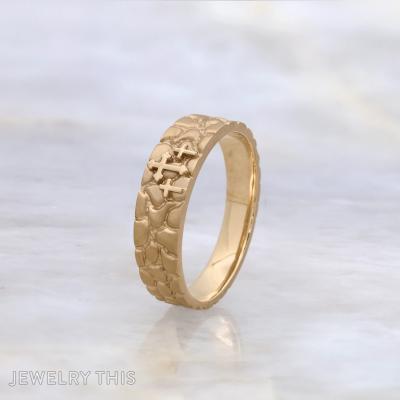
This wedding band was built around a specific request: a nugget-textured gold surface with three ...

This wedding band takes a flat-profile 14k white gold band and finishes it in black ...
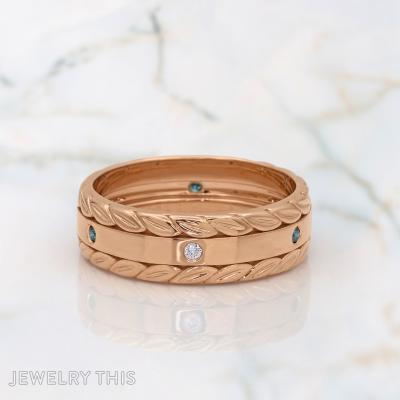
This wedding band was built around a design the client found and loved, then rebuilt ...

This wedding band was designed as a companion piece to an existing engagement ring, with ...

This platinum wedding band was built as a companion piece to an existing engagement ring, ...

Celebrate timeless love with our meticulously recreated diamond band. This exquisite piece features a milgrain ...

This wedding band pairs a straight, flat-profile shank with a graduated row of five prong-set ...

This wedding band was rebuilt as a faithful recreation of a piece that had been ...
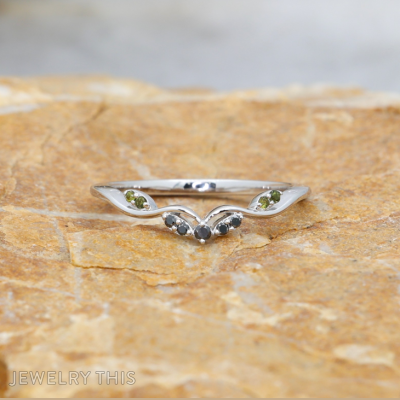
This wedding band was built to sit flush against an engagement ring that had been ...
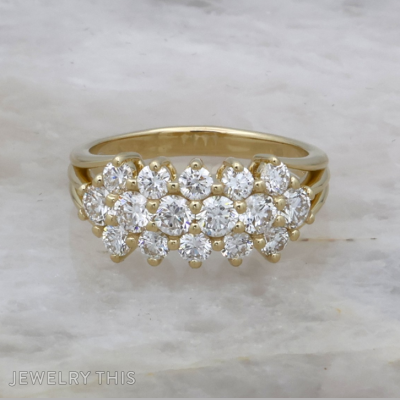
This 14k yellow gold ring recreates a wedding band that had been lost after years ...



