


Celtic Infinity Pattern Men's Wedding Band in White Gold
$$
14k white gold, black rhodium plating
J. wanted her husband's wedding band to echo the design language of her own ring, built around a repeating knot pattern rather than a plain surface. Through several rounds of review, she refined the pattern until the symbols connected seamlessly all the way around the band with no visible break. She confirmed near the end that the final width matched what she'd pictured, and chose to keep the design stone-free to let the pattern stand on its own.
'That looks amazing!' — on seeing the first sketch
'Great we will split into 3 payments starting on the first :)' — on confirming the width and moving to production
Quick specs
Primary Metal
Primary Stone
Accent Stones
Design Complexity
Intent: Certainty
Size
Ring size 7 US (17.32mm). Band width 5mm.
How they made it distinctive
-
01
Recessed knot pattern connects seamlessly around the full circumference with no visible gap, achieved after a specific request to remove the space between repeats
-
02
Black rhodium plating matched to the color of the client's own ring so the two bands coordinate as a set
-
03
Flat, low-profile band shape chosen to keep the surface smooth and catch-free for daily wear
-
04
Pattern recessed rather than raised, which helps the plating wear more evenly over time
-
05
Left intentionally stone-free so the knotwork pattern is the sole visual focus
How you'd make it yours
Pattern: this piece uses a connected repeating knot motif; a new commission could use a different repeating symbol or a single centered motif
Plating: this piece is black rhodium plated; a new piece could stay natural white gold or use standard bright rhodium
Metal: this piece is 14k white gold; the same pattern language works in 18k white gold or yellow gold
Width: this piece is 5mm; a new commission could be made narrower or wider
Stones: this piece has no stones; a new piece could add small diamonds between the repeating symbols
One of a kind: this exact band was designed to match one couple's rings and is not reproduced; a new commission is an original piece inspired by this one
Design changes made
The client asked for the repeating knot pattern to run continuously around the entire band with the symbols connected and no gap between them, rather than stopping partway as in the first sketch. She also declined the option to add small diamonds between the symbols, keeping the design stone-free.
Who this is for
This piece is for someone who wants a wedding band with quiet symbolic detail rather than a plain surface or a stone-heavy design. It's especially right for a couple designing matching or complementary bands, where the pattern and finish on one ring are meant to echo the other without either looking identical.
How it's made
Once the connected knot pattern was approved, a 3D wax model was produced from the digital design and used to create an investment mold. Molten 14k white gold was cast into the mold, producing the raw band with the recessed knot pattern already defined in the metal surface before any finishing began.
After casting, the band was cleaned up and the surface prepared in two zones: the raised border and outer band were polished to a bright finish, while the recessed knot pattern was left textured to hold plating evenly. Black rhodium plating was then applied over the entire band, filling the recessed pattern with a dark contrast against the polished white gold edges, matching the color of the client's own ring.
Key note
The knot pattern is recessed rather than raised specifically so the black rhodium plating pools evenly in the pattern instead of wearing unevenly off a raised surface, which keeps the contrast crisp over time.
Pricing guidance
A patterned men's wedding band with black rhodium plating and no center stone sits in the lower-to-mid range for custom bands. Most of the cost comes from the CAD modeling needed to make a repeating pattern connect seamlessly around the full circumference, plus the plating step itself. Band width and metal karat are the main levers from there.
Moves price up ↑
- ↑ Upgrading from 14k to 18k white gold
- ↑ Adding small diamonds or other stones set between the repeating symbols
- ↑ Widening the band beyond 5-6mm, which increases surface area to pattern and plate
- ↑ Adding a two-tone finish instead of a single rhodium-plated color
- ↑ Hand-finishing a more intricate or asymmetrical pattern instead of a uniform repeat
Moves price down ↓
- ↓ Narrowing the band width, reducing surface area and plating cost
- ↓ Leaving the band in its natural white gold color rather than black rhodium plating
- ↓ Simplifying the pattern to a single motif rather than a connected repeating design
- ↓ Choosing a lower-karat gold or a non-precious metal alternative
- ↓ Reducing the pattern to cover only part of the band rather than the full circumference
Questions people ask
Black rhodium is a surface plating applied over white gold, and like any plating it wears gradually with daily contact, especially on the inside of the band and other high-friction areas. Most wearers see it hold up well for one to two years before it starts to fade and needs re-plating. On a design like this, where the rhodium fills a recessed pattern rather than sitting on a raised surface, the plating tends to wear more evenly because it's somewhat protected from direct abrasion. Re-plating is a standard jewelry service and not a difficult fix when it's time.
Yes, a repeating pattern can be designed to wrap continuously around the full circumference of a band with no visible seam or gap. This requires adjusting the spacing of the repeating element during the CAD design phase so it connects cleanly at the point where the pattern meets itself. It typically takes a round or two of review to get the connection point looking seamless. The result is a band where the pattern reads as one continuous design rather than a motif that starts and stops.
A band like this, with a recessed repeating pattern and black rhodium plating but no stones, sits in the lower-to-mid price range for custom wedding bands. The main cost driver is the CAD design work required to make the pattern repeat seamlessly, not the metal or plating itself. Band width and gold karat shift the price somewhat, but the design complexity is the bigger factor for a patterned piece like this.
The design phase typically takes about a week once a deposit is paid, including sketches and a 3D render for review and adjustment. After the design is approved and a majority of the balance is paid, production typically takes about four weeks to complete, covering casting, finishing, and plating. Total turnaround from deposit to shipping is usually around five to six weeks, though it can run longer if multiple rounds of design revisions are requested.
14k white gold is a solid choice for daily wear because it's more durable than higher-karat gold while still having enough precious metal content to hold its structure and finish over time. It's also a common base for rhodium plating, which is how white gold gets its bright white color in the first place, regardless of whether a client chooses standard rhodium or a black rhodium variant. The main maintenance consideration is that rhodium plating of any color will wear over years of daily contact and may eventually need to be reapplied. For a band with a recessed design like this one, the plating is somewhat shielded in the pattern area, which can extend how long it looks fresh.
Yes, a patterned band like this works well with no stones at all, letting the recessed knot design and the plating contrast carry the visual interest instead of a center stone. Some clients choose to add small diamonds between the repeating symbols for extra sparkle, but it's just as common to leave the pattern stone-free for a cleaner, more subtle look. Removing stones also simplifies production since there's no setting work required. The choice mostly comes down to whether you want the band to read as quietly detailed or more overtly sparkly.
Yes, when a client is having a matching or companion band made, the plating color and metal can be matched to an existing piece so the two rings coordinate. This is common for wedding sets where one ring was made first and the second is designed afterward to complement it. The rep can reference the color and finish of the original piece to replicate it on the new band as closely as possible. Minor variation is possible between plating batches, but the overall color family will match closely.
A raised pattern sits above the surface of the band, meaning any plating or finish on it is exposed directly to contact and wears faster. A recessed pattern, like the knot design on this band, is cut into the metal surface so the pattern sits below the outer edge of the band, which gives the plating inside it some natural protection from everyday abrasion. Recessed designs also tend to have a flatter overall profile, which some wearers prefer because there's less texture to catch on clothing or gloves. The visual effect is similar either way, but the recessed approach generally holds up a bit better over time.
Explore Similar Creations
Every masterpiece starts with a spark. Explore how our clients raw ideas - sketches, heirlooms, inspirations - were transformed into bespoke works of arts.
This wedding band was built to sit flush against an engagement ring that had been ...

This wedding band pairs a straight, flat-profile shank with a graduated row of five prong-set ...
This 14k yellow gold ring recreates a wedding band that had been lost after years ...

This wedding band was designed as a companion piece to an existing engagement ring, continuing ...

This platinum wedding band was built as a companion piece to an existing engagement ring, ...
This thin men’s wedding band is crafted in 14k white gold with a soft matte ...

Celebrate timeless love with our meticulously recreated diamond band. This exquisite piece features a milgrain ...
This wedding band recreates a ring lost in a lake after years of daily wear ...

This wedding band takes a flat-profile 14k white gold band and finishes it in black ...
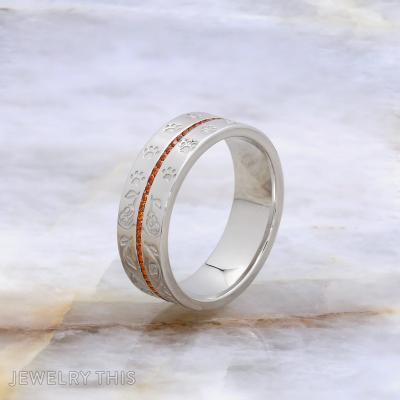
This wedding band pairs two engraved motifs on a wide sterling silver band, separated by ...

This bridal set reimagines a previous engagement ring design as a matching pair: an emerald ...

This wedding band was rebuilt entirely from a client’s memory and description after the original ...



