


Recreated Vintage Filigree Ring — Lost Heirloom Reborn
$
Sterling silver, white rhodium plating
A ring given by an uncle to his mother had been lost, and both of the people connected to it had since passed — leaving only a memory and a couple of photographs to work from. There was no appraisal or paperwork, just a description of a plain silver band with a small cut-out where the top and bottom met. After reviewing the first render, the client asked for the oval face to be widened slightly to match her memory more closely, and once that adjustment was made she wrote: 'I absolutely LOVE it and am so impressed with how it looks.' On delivery she added: 'It's perfect and I haven't taken it off since I got it.'
'Yes, that does look amazing! The design is so spot on.' — on seeing the first render
'I absolutely LOVE it and am so impressed with how it looks. I think it's perfect.' — on design approval
'I absolutely LOVE it! It's perfect and I haven't taken it off since I got it.' — on delivery
Quick specs
Primary Metal
Primary Stone
Accent Stones
Design Complexity
Intent: Certainty
Size
Ring size 6.5 US. Top oval widens to 3/8 inch at its widest point.
How they made it distinctive
-
01
Oval face widened after the client measured the remembered original against a ruler — a direct, deliberate refinement of memory into measurement
-
02
Small cut-outs preserved at the point where the top and bottom bands meet, confirmed from a side-view photo of the original ring
-
03
East-west oriented oval with a scalloped, filigree-style border recreated with no paperwork or appraisal to reference
-
04
White rhodium-plated sterling silver chosen to keep the recreation close in material feel to the original silver band
-
05
Smooth, uninterrupted shank on either side of the decorative face, matching the plain band the client described
How you'd make it yours
Metal: this piece is sterling silver with white rhodium plating; a new commission could use 14k gold for a warmer tone or added durability
Stone: this piece has no stone; a new commission could add a center stone or small accents to the oval face
Face width: this piece's oval widens to 3/8 inch; a new piece could be sized narrower or wider to its own wearer's preference
Filigree detail: the scalloped border pattern could be simplified or made more elaborate on a new design
One of a kind: this exact ring was recreated for one client from a specific remembered original and is not reproduced — a new commission is an original piece inspired by this one, not a copy
Design changes made
The oval face was widened from roughly a quarter inch to three-eighths of an inch after the client measured the original's proportions against a ruler, bringing the design closer to her memory of the piece.
Who this is for
This piece is for someone trying to bring back a ring that only exists in memory and a few photographs, with no paperwork to rely on. It's especially right if you're comfortable refining small details — like width or proportion — as the design comes together, rather than expecting a perfect match on the first try.
How it's made
Once the design was approved, the ring was 3D printed as a wax model, which was then attached to a wax tree and placed in a flask. The flask went into a kiln, where the wax was burned out to leave a hollow mold. Molten sterling silver was then cast into that mold, producing the raw ring, which was cooled and removed before finishing began.
After casting, the ring was cleaned and polished to bring out the scalloped detail across the oval face, and the small cut-outs where the top and bottom bands meet were cleared and refined by hand. The piece was then finished with white rhodium plating over the sterling silver to give it a bright, consistent silver-white tone. A resin version of the model was shared with the client partway through production as a preview before the metal piece was finished.
Key note
The small cut-outs where the top and bottom bands meet were the one structural detail carried over directly from the original ring, confirmed from a side-view photo before the design was finalized.
Pricing guidance
A vintage-style sterling silver signet ring with filigree detailing and rhodium plating sits toward the lower end of the price range for custom recreation work. Most of the cost is in the 3D design and hand-finishing of the decorative oval face rather than the metal itself. Moving to a solid gold version or adding stones would shift this considerably higher.
Moves price up ↑
- ↑ Upgrading from sterling silver to 14k gold or gold vermeil
- ↑ Adding a center stone or accent stones to the oval face
- ↑ Requesting hand engraving on the shank or underside
- ↑ Increasing the width or dimensional depth of the filigree detailing
- ↑ Expedited or rush production timeline
Moves price down ↓
- ↓ Simplifying the filigree pattern to fewer decorative elements
- ↓ Omitting the rhodium plating and leaving the silver in its natural finish
- ↓ Choosing a smaller overall face size
- ↓ Keeping the band fully solid with no cut-out detailing
Questions people ask
Yes, this is a common request and does not require an appraisal or paperwork. The process starts with gathering as much visual reference as possible — even a blurry side-view photo can confirm details like cut-outs or band thickness. A 3D render is then created for review, and small adjustments like width or proportion can be made before anything is cast. Most clients find that one or two rounds of feedback get the design very close to what they remember.
Sterling silver is a .925 alloy, meaning it is 92.5% pure silver mixed with other metals for strength, and it holds up well to regular daily wear. It is softer than gold or platinum, so it can pick up surface scratches over time, but these can be polished out. White rhodium plating, which is often applied over sterling silver, adds a bright white-silver finish and some additional surface protection, though the plating itself will wear gradually and can be reapplied. For a ring worn every day, occasional re-polishing or re-plating keeps it looking fresh.
A sterling silver ring with this level of filigree and cut-out detailing typically falls toward the lower end of the price range for custom recreation work. The main cost driver is the design and hand-finishing time needed to recreate decorative detail like a scalloped border or cut-out sides, not the raw silver itself. Choosing a precious metal upgrade or adding stones would move the price into a higher tier.
A standard timeline runs about five to six weeks from first conversation to delivery. The design phase — including the 3D render and any revisions — typically takes about a week. Once the design is approved, production including casting, finishing, and plating takes roughly three to four more weeks.
Yes, this is a normal part of the design process. In this case, the client compared the rendered oval against the remembered size of the original using a ruler and asked to widen it slightly, and the design team produced a revised render for comparison. It's common for clients to fine-tune proportions like this once they see the first 3D version, since it's often easier to judge scale from a rendered image than from memory alone.
White rhodium plating is a thin layer of rhodium metal applied over sterling silver (or white gold) to give it a bright, reflective white finish and add a layer of surface protection. Over time and with regular wear, the plating will gradually thin, especially in high-contact areas, and may need to be reapplied every one to two years depending on how often the ring is worn. This is a normal maintenance step for rhodium-plated jewelry and is a straightforward service most jewelers can perform. The underlying silver remains intact underneath the plating the whole time.
Yes, a center stone or small accent stones could be added to the oval face of a design like this without changing the overall silhouette. This would typically increase the cost depending on the stone type chosen, with options ranging from cubic zirconia to lab-created or natural gemstones. It's worth discussing the stone size and setting style early, since the scalloped border detailing would need to be adjusted slightly to accommodate a setting.
This design shares some characteristics with a signet ring, particularly the flat, face-forward oval oriented east-west across the finger, but it does not have a flat engravable table — the surface is decorative with a scalloped, filigree-style pattern instead. It falls more generally into the vintage-inspired fashion ring category. The east-west orientation and raised oval silhouette are the main traits it shares with traditional signet styles.
Explore Similar Creations
Every masterpiece starts with a spark. Explore how our clients raw ideas - sketches, heirlooms, inspirations - were transformed into bespoke works of arts.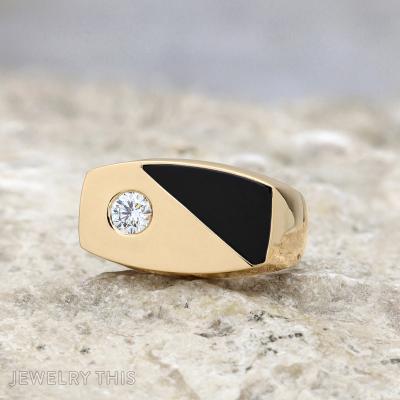
This ring reimagines a family piece in a trimmed, more wearable scale. An asymmetrical top ...

This white gold signet-style ring exudes a powerful and regal presence. The ring’s flat oval ...

This distinctive pair of yellow gold signet-style rings blends personal significance with timeless style. The ...
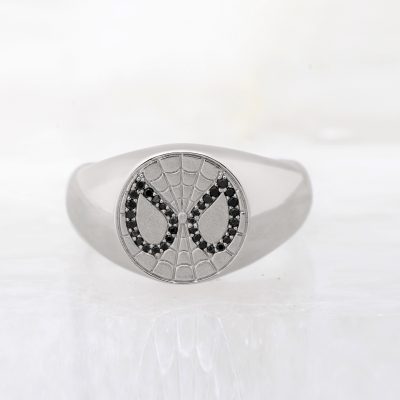
This Sterling Silver ring is perfect for the individual who wants to show off their ...

This ring recreates the wearer’s original piece in 18k white gold, replacing the standard-cut center ...

This pinky ring was designed around an oval black star sapphire cabochon, set in claw-style ...
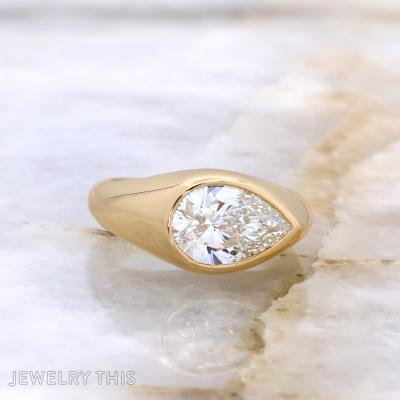
This ring centers a large pear-shaped lab diamond set sideways in a sculptural bezel of ...

Sterling silver ring with geometric design. Rose gold plated top with silver accents. Personalized engraving ...
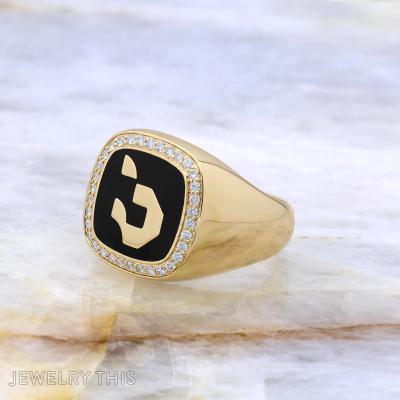
This signet-style ring was designed around a company’s logo, rendered in raised 14k yellow gold ...

This 14k yellow gold signet ring centers on a custom family crest: a raised dragon ...
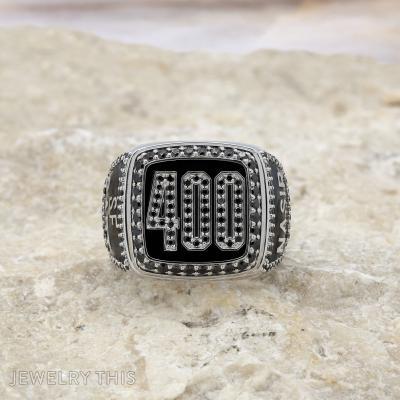
This signet-style ring centers on the number 400 set against a black enamel background and ...

Meticulously crafted in 14K gold, this men’s ring is a stunning combination of classic style ...



