


Boxing Championship Ring — Two-Tone Gold & Silver Signet
$$$
Sterling silver, 14k yellow gold accents, lab diamonds
A client came to us wanting a second championship-style ring to match one he'd already commissioned, built around a boxer figure from his own design and lettering honoring his gym and his service in the Marine Corps. After he adjusted the figure to match his original reference and asked for black finishing to make the raised gold details pop, he had it rushed to make a boxing alumni convention. When it arrived he wrote: 'Everyone notices and makes a comment to me! I never take them off!'
'Yes! After looking back it is basically the same. It was a dark gold color which made it look different. Continue with the ring! I know it will look great!' — on design approval
'Everyone notices and makes a comment to me! I tell them all about your company and how easy and fun it was to design these beautiful rings. Thank you for getting them to me fast! I never take them off!' — on delivery
Quick specs
Primary Metal
Secondary Metal
Shape / Cut
Primary Stone
Accent Stones
Design Complexity
Intent: Certainty
Size
Ring size 13 US (22.2mm).
How they made it distinctive
-
01
Sculpted boxer figure in high-relief 14k gold — revised after casting to match the client's own original reference photo
-
02
Two-tone silver-and-gold construction with eight separately cast gold accent pieces soldered onto a silver base
-
03
Lettering references both a boxing gym affiliation and USMC military service in the same design
-
04
Black finishing worked selectively into recessed areas so the raised gold lettering and figure stand out
-
05
Designed as a matching companion piece to a second championship ring in the same color combination
-
06
Rush-prioritized production so the client could wear it to a boxing alumni convention
How you'd make it yours
Figure: this piece uses a sculpted boxer in a fighting stance; a new commission could use a different sport or activity figure
Metal: this piece pairs a silver base with 14k gold accents; the same two-tone language works with white gold or a different accent karat
Stones: this piece uses two princess-cut diamonds; a new commission could use a different cut or a colored stone for contrast
Lettering: the gym and service references are specific to this piece; a new commission would carry its own text
Finishing: the black accenting is applied to recessed areas on this piece; it could be used more sparingly or more broadly
One of a kind: this exact ring was designed for one client and is not reproduced — a new commission is an original piece inspired by this one, not a copy
Design changes made
The boxer figure was revised to match the client's original reference image after he felt the first render didn't look quite right, and black finishing was added around the raised top and side elements to make the gold details stand out against the silver.
Who this is for
This piece is for someone who has more than one part of their life story worth putting into metal — an athletic achievement and a branch of service, a gym and a title. It's especially right if you want a bold, sculptural ring that reads clearly from across a room, not a subtle accent piece.
How it's made
The ring base was cast in sterling silver while eight separate accent pieces — the top figure plate, lettering, and side panels — were cast in 14k yellow gold. Each gold piece was hand-polished and finished individually before being soldered and assembled onto the silver base, a two-metal construction that lets the raised gold details stand out against the textured silver body.
Once assembled, two SI1 princess-cut diamonds were hand-set into the top plate flanking the boxer figure. The figure itself received additional hand engraving and fine polishing to sharpen details that don't translate fully from a 3D render. A black finish was then worked into the recessed areas around the top and side panels, darkening the background so the raised gold lettering and figure read with more contrast.
Key note
The boxer figure looked noticeably different in the first render than in the client's reference photo mainly because of lighting and metal reflections — the final hand-engraving and polishing pass is what actually brings the sculpted figure in line with the original.
Pricing guidance
A two-tone championship ring with a sculpted figure, multiple cast gold accent pieces, and diamond accents sits toward the higher end for custom rings of this style. Most of the cost comes from the number of individually cast and finished gold pieces combined with the hand-engraving needed on a sculptural figure. Diamond selection and the number of accent pieces are the next biggest cost drivers after that base labor.
Moves price up ↑
- ↑ Adding more individually cast gold accent pieces beyond the current eight
- ↑ Upgrading the princess-cut diamonds to a higher clarity grade or larger size
- ↑ Adding personalized engraving inside the band
- ↑ Increasing the level of hand-detailing on the sculpted figure
- ↑ Using 18k gold instead of 14k for the accent pieces
Moves price down ↓
- ↓ Reducing the number of separate cast gold accent pieces
- ↓ Using lab-grown moissanite instead of diamonds for the accent stones
- ↓ Simplifying the figure to a flatter, less sculptural relief
- ↓ Skipping the black finishing step on the recessed areas
- ↓ Using a single metal throughout instead of a two-tone silver-and-gold build
Questions people ask
Yes, sculptural figures like a boxer in a fighting stance can be cast in high relief as part of a championship-style ring design. The figure is typically modeled digitally first, then refined with hand engraving and polishing after casting since fine details like musculature and stance don't always translate perfectly from a 3D render. This hand-finishing step is what gives the figure its final sharpness and resemblance to a reference photo. It's a common approach for rings based on athletic or military achievements.
In a two-tone build like this, the main ring base is cast in sterling silver, while accent pieces like lettering, panels, and a central figure are cast separately in 14k yellow gold and then soldered onto the silver base. This combination lets the gold elements stand out visually against the silver without the cost or weight of an all-gold ring. The gold accents behave like solid 14k gold in terms of durability and color retention, while the silver base is more affordable than a solid gold ring of the same size. Over time, the silver portion may need occasional polishing to maintain its shine, while the gold will hold its color well.
Princess-cut diamonds have sharp, pointed corners that are more vulnerable to chipping than rounded cuts, so the corners are typically protected by the surrounding metal or prongs in the setting. SI1 clarity diamonds are eye-clean, meaning any internal characteristics are not visible without magnification, and they offer solid durability for everyday wear. In a design like this, with the diamonds set into a raised metal plate alongside other design elements, the surrounding structure helps shield the stone corners from impact. Regular wear is generally fine, though any ring with pointed-cut stones benefits from occasional inspection to make sure the setting remains secure.
A two-tone championship ring with multiple individually cast gold accent pieces, a sculpted figure, and diamond accents falls toward the higher end for custom ring pricing. The bulk of the cost comes from the labor involved in casting and finishing each separate gold piece, plus the hand-engraving needed to refine a sculptural figure after casting. Diamond selection and the total number of accent pieces are the next biggest factors. Simpler single-metal designs with fewer cast elements cost meaningfully less.
A design with this level of detail — multiple cast gold pieces, a sculpted figure, and diamond setting — typically takes several weeks from approved design to finished ring, covering casting, hand-finishing, stone setting, and final polishing. Rush timelines are possible when there's a specific deadline, such as an event date, but they compress the finishing steps rather than skip them. The hand-engraving and polishing stage on a sculptural figure like this one is usually the step that takes the most care and time. Clients should expect the finishing and detailing work to be the longest phase, not the initial casting.
Yes — once a design has been fully created and approved, the design files and specifications are kept on record, so a ring like this can be remade without starting the design process over from scratch. This is especially useful for complex, multi-piece designs where recreating all the details from memory would be difficult. The remake uses the same confirmed specifications, including ring size, metal choices, and diamond details. This makes replacing a lost or stolen piece considerably more straightforward than an entirely new commission.
Yes, black finishing can be selectively applied to recessed or background areas of a ring while leaving raised details in their natural metal color. This is typically done after the piece is cast and assembled, with the dark finish worked into the lower areas so that raised lettering, figures, or other design elements stand out in contrast. It's a common technique for championship and commemorative rings where legibility and visual pop matter. The finish can wear over time with heavy daily use, similar to other surface treatments like plating.
Yes, a single ring design can incorporate multiple areas of personal significance, such as a military branch reference alongside an athletic achievement like a boxing title or gym affiliation. These are usually arranged with the central figure or main lettering representing the primary achievement, while side panels or smaller text carry the secondary references. This kind of layered design is common in championship-style rings where the wearer wants more than one part of their story represented. The layout can be adjusted so no single element overwhelms the others.
Explore Similar Creations
Every masterpiece starts with a spark. Explore how our clients raw ideas - sketches, heirlooms, inspirations - were transformed into bespoke works of arts.
This 14k yellow gold band recreates a design the client’s father already wears, rebuilt from ...

This men’s wedding band takes an octagonal, faceted profile rather than a traditional rounded band, ...
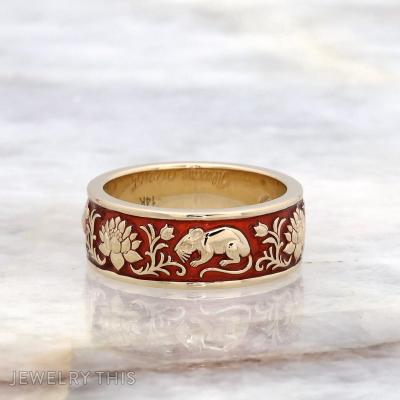
This wide men’s band was built around a Chinese zodiac rat and lotus flower motif, ...

This men’s wedding band is built around a simple idea: two colors, kept deliberately apart. ...

This wedding band is a beautifully remade version of a cherished piece that originally symbolized ...
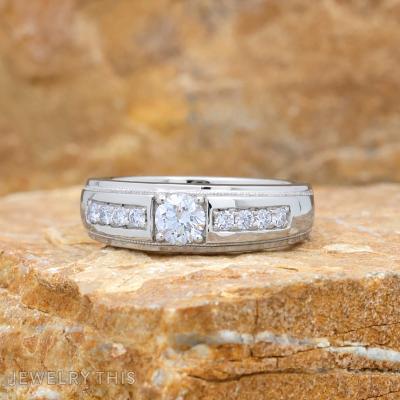
This men’s wedding band was designed to capture the look of a specific ring the ...
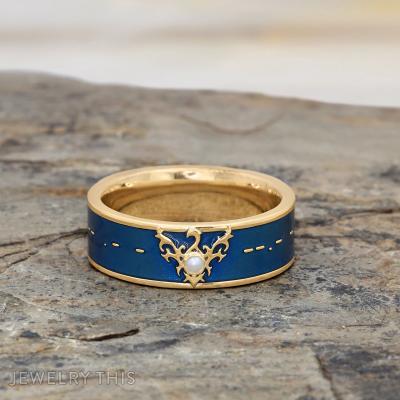
This sterling silver band translates a favorite video game ring into a piece meant for ...

This men’s wedding band was built to bring back a ring that had been lost ...
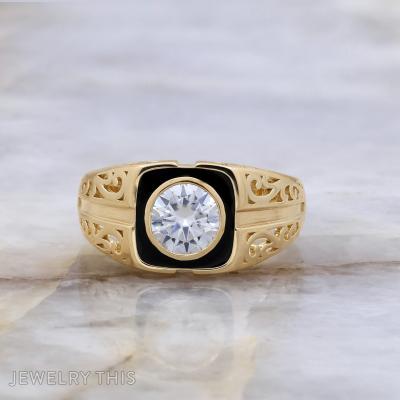
This men’s ring was designed as a gift, built around a bold square silhouette that ...

This custom ring is a timeless tribute to family heritage and tradition. Crafted in 14k ...

his personalized signet ring is a symbol of individuality and character. Its square top boasts ...
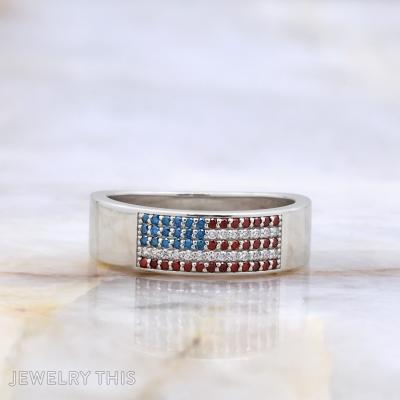
This wide 14k white gold band carries a pave-set American flag across its face, built ...



