
Black Enamel Statement Ring — Bold Gold Filigree Band
$$$
Sterling silver, 14k yellow gold plating, moissanite, black enamel
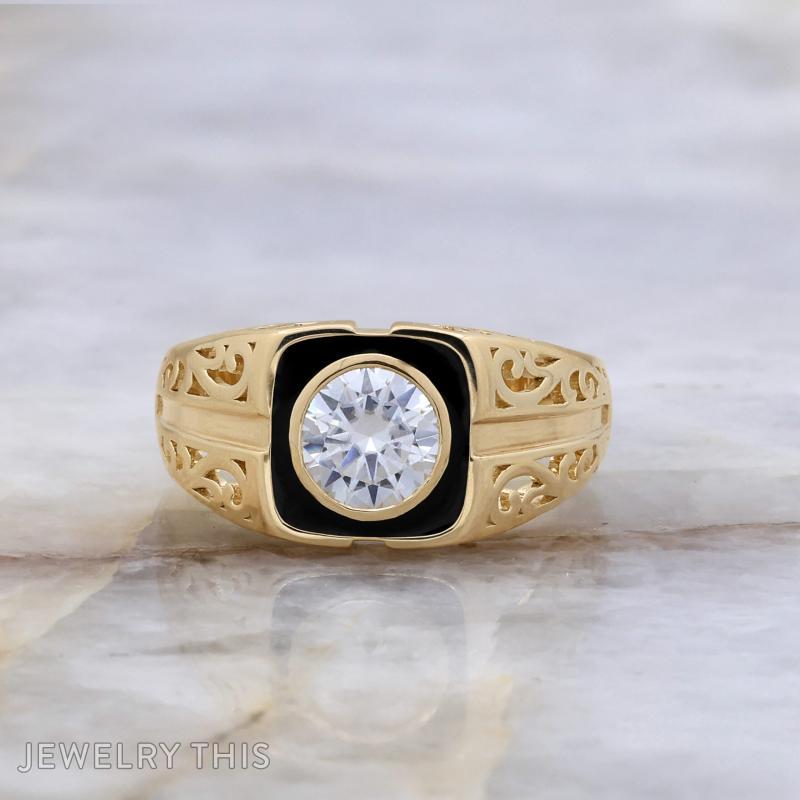
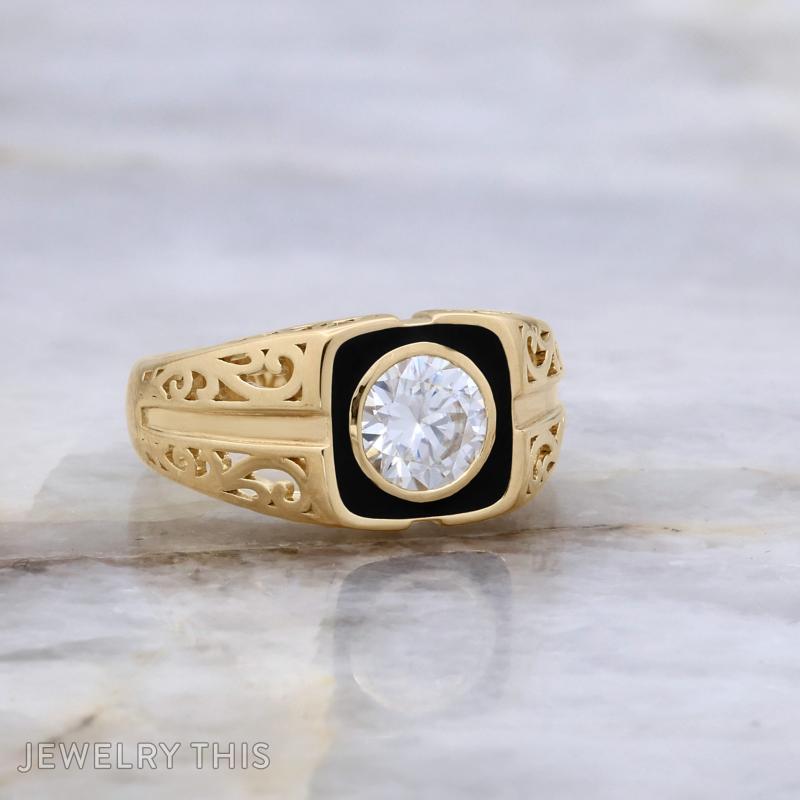
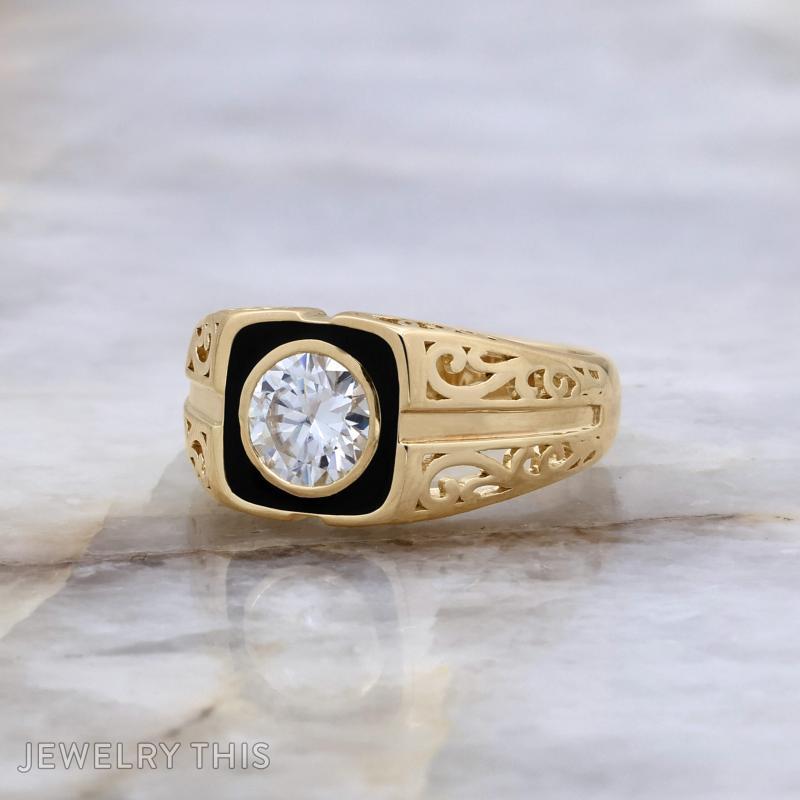
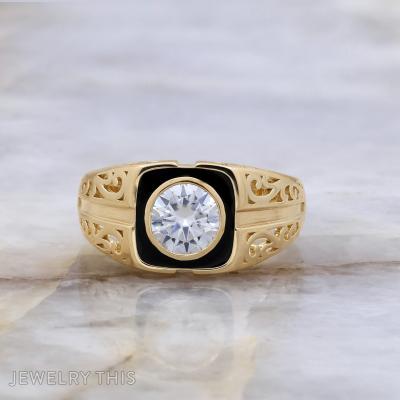
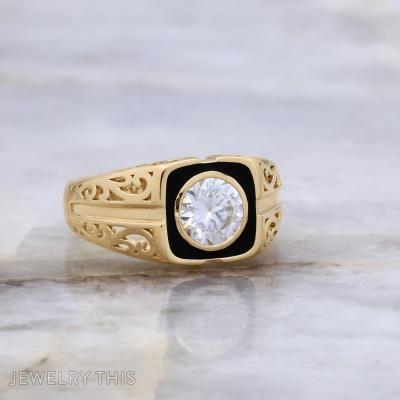
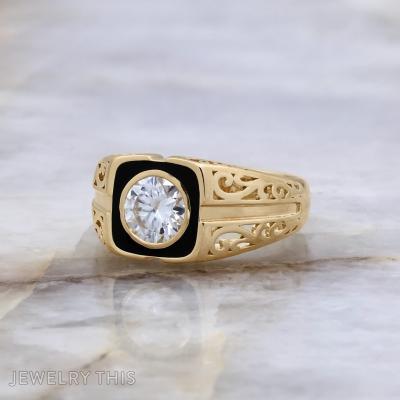
A client came to us wanting to recreate a men's ring style she'd found online, as a holiday gift. Working from a reference photo, the design was adjusted to a black enamel frame with a bezel-set moissanite in place of the original stone, sized up significantly at the last stage to fit the recipient's hand. When it arrived just before the deadline, she wrote: 'You got it finished in record time. Very very nice.'
'I love it Holly! It looks really great.' — on seeing the first render
'You got it finished in record time. Very very nice. The design and finished quality are very nice. It was an easy process.' — on delivery
Quick specs
Primary Metal
Shape / Cut
Primary Stone
Accent Stones
Design Complexity
Intent: Certainty
Size
Ring size 12 US (21.4mm).
How they made it distinctive
-
01
Square black enamel frame chosen instead of a cut onyx stone, achieving the same bold contrast look within a tighter production timeline
-
02
Bezel setting selected for the center stone, giving a secure, low-profile hold suited to a men's ring
-
03
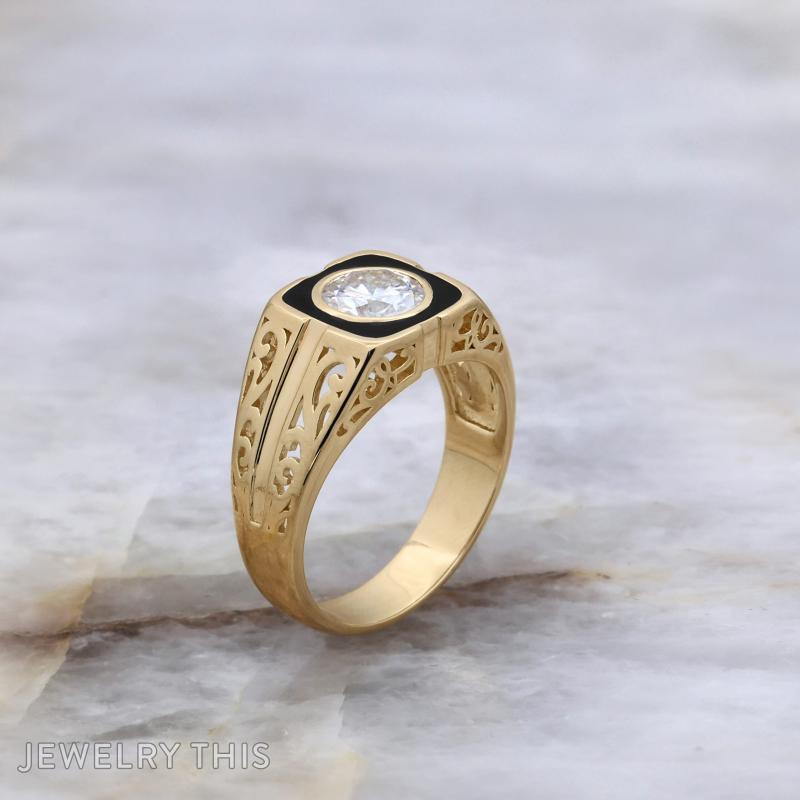
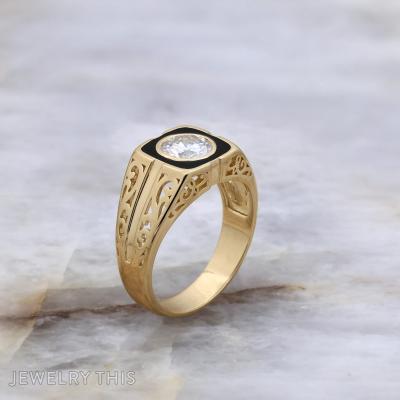
Scrollwork filigree cutouts on both shoulders add dimensional detail visible from the side, not just from above
-
04
Ring size increased by more than a full size late in the process to properly fit the recipient's hand
-
05
Moissanite chosen over a custom-cut diamond to keep the center stone bright and durable without the extended lead time custom cutting would require
How you'd make it yours
Stone: this piece uses a round moissanite; a new commission could use a lab diamond, natural diamond, or colored gemstone for a different look
Frame material: this piece uses black enamel; a new commission could use fitted black onyx for a similar look with a different texture
Metal: this piece is gold-plated silver; the same design works in solid 14k or 18k gold for a piece intended for long-term heavy wear
Shoulder detail: the scrollwork filigree could be simplified to a plain polished band or made more elaborate
Engraving: the inside of the band can carry a new inscription on a fresh commission
One of a kind: this exact ring was designed for one client and is not reproduced — a new commission is an original piece inspired by this one, not a copy
Design changes made
The center stone was changed from a custom-cut diamond to a moissanite, and the black onyx originally requested was switched to black enamel — both changes made to keep the piece achievable within the holiday deadline. The ring size was also increased significantly late in the process after the client confirmed a larger fit was needed.
Who this is for
This piece is for someone who wants a men's ring with real presence — a bold graphic look up close, not just a big stone from a distance. It's especially right for a gift-giver who found a reference image they loved and wants it recreated thoughtfully rather than copied exactly, and who is working against a real deadline like a holiday delivery.
How it's made
Once the design was approved, the model was refined and prepared for casting. A wax resin model was produced first — the tangible 3D-printed guide used to create the mold — and shared with the client as a preview before any metal was committed. That model was invested in plaster and fired to burn out the wax, leaving a hollow cavity, and molten gold-plated silver was cast into the mold under pressure to form the raw ring.
After casting, the piece was cleaned up and polished to bring out the shine on the gold surfaces and the scrollwork detail in the shoulders. The square frame was filled with black enamel to create the contrasting border, and the moissanite was then bezel-set into the center, with the metal rim burnished down evenly around the stone to hold it securely.
Key note
The ring size was increased by more than a full size after the resin stage, which meant reworking the model rather than simply adjusting it — a size jump of that scale changes the shank's proportions, not just its circumference.
Pricing guidance
A men's ring with a bezel-set stone, enamel inlay, and cutout filigree detailing on the shoulders sits toward the lower end of mid-range custom work. Most of the cost comes from the labor of the enamel application and the hand-finishing of the openwork sides, rather than the center stone itself. Metal choice and stone type are what move the price most from there.
Moves price up ↑
- ↑ Upgrading from gold-plated silver to solid 14k or 18k gold
- ↑ Choosing a natural or lab diamond instead of moissanite for the center stone
- ↑ Adding stones into the filigree cutout sections rather than leaving them open
- ↑ Increasing the ring size significantly, which requires more metal and a wider band
- ↑ Using black onyx (a cut, fitted stone) instead of black enamel, which requires custom lapidary work
Moves price down ↓
- ↓ Simplifying the shoulder detail to a plain polished band instead of cutout filigree
- ↓ Reducing the center stone size
- ↓ Choosing a smaller, more standard ring size closer to the average range
- ↓ Using a simpler bezel without the black enamel frame
- ↓ Sourcing a smaller moissanite in place of a 1.5–2 carat stone
Questions people ask
Moissanite is a lab-created stone that is harder than almost every natural gemstone except diamond, rating 9.25 on the Mohs scale versus a diamond's 10. It has a higher refractive index than diamond, which means it throws off more colorful sparkle in direct light rather than diamond's whiter brilliance. For a bezel-set center stone like this one, moissanite holds up extremely well to daily wear and resists scratching. It is a common substitute when a client wants the look of a colorless faceted stone without the cost of a natural or lab diamond.
Gold-plated silver is a sterling silver base with a layer of gold, usually 14k or 18k, electroplated onto the surface. The plating is a thin coating rather than solid gold through the piece, so it can wear thin over time with regular skin contact, moisture, and friction against other surfaces. Most people find the plating holds up well for one to two years of regular wear before it starts to show thinning, especially on high-contact areas like the underside of the band. When it does fade, the piece can typically be sent back to be re-plated rather than replaced.
Yes, a ring with a solid metal band like this one can generally be resized up or down within a reasonable range, though a very large size change can affect how the surrounding design elements sit on the finger. Because this ring has an enamel-filled frame and filigree cutouts along the shoulders, a bigger resize is more complex than it would be on a plain band, since the proportions of the decorative sections need to be reworked rather than simply stretched. Small adjustments of a half size or so are usually straightforward. It's best to confirm sizing as early as possible in the design process to avoid rework later.
A ring at this level of detail — a bezel-set center stone, a black enamel frame, and cutout scrollwork on the shoulders — typically falls toward the lower end of the mid-range for custom work. The enamel application and the hand-finishing required for the openwork sides are the main labor costs, more so than the center stone itself. Choosing solid gold instead of gold-plated silver, or upgrading the center stone to a diamond, would be the biggest factors in moving the price up from there.
A standard custom ring like this typically takes about one week for the design phase — sketch, 3D model, and rendered preview for approval — followed by roughly three to four weeks of production once the design is approved. Production includes creating a wax resin model, casting the metal, polishing, applying the enamel, and setting the center stone. Rush timelines are possible when there's a firm deadline, but they compress the review windows and leave less room for design changes like a late sizing adjustment.
Yes, black onyx can be used in place of black enamel, but it requires the stone to be cut and fitted to the exact shape of the frame, which is a different and more time-intensive process than filling the frame with enamel. If the design also calls for a center stone set into the middle of the onyx itself, that requires custom stone cutting, which adds meaningfully to both cost and production time. Black enamel achieves a similar bold contrast look and is typically faster and less costly to produce, especially under a tight deadline.
Yes, a bezel setting is generally considered more durable and secure than a prong setting because the metal fully surrounds the stone's edge rather than holding it with a few thin claws. This makes bezel settings a common choice for men's rings and for anyone with an active lifestyle, since there are no raised prongs to catch on clothing or snag during daily activities. The tradeoff is that a bezel setting shows slightly less of the stone's total surface area compared to an open prong setting. For a statement ring like this one, the bezel also reinforces the bold, graphic look of the design.
Weight depends on the metal used — a gold-plated silver ring will generally feel lighter than the same design made in solid gold at a thicker gauge, since the wall thickness is calculated to balance material cost with structural strength. Some wearers who are used to heavier rings may notice the difference and prefer a more substantial feel. If weight is a priority, requesting a thicker band or a heavier gauge of metal during the design phase is the way to address it before production, since it is much harder to add weight after a piece is cast.
Explore Similar Creations
Every masterpiece starts with a spark. Explore how our clients raw ideas - sketches, heirlooms, inspirations - were transformed into bespoke works of arts.
Crafted for the adventurous soul, this sterling silver ring features a captivating eagle with intricate ...
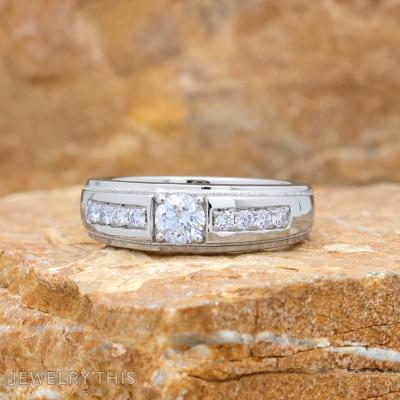
This men’s wedding band was designed to capture the look of a specific ring the ...
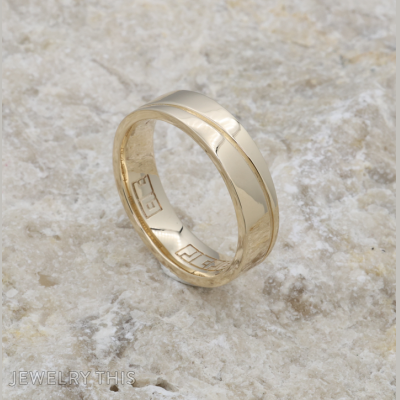
This custom wedding band is a sophisticated tribute to a shared journey, blending modern design ...

This wide 14k white gold band translates a favorite piece of pop-culture design into a ...
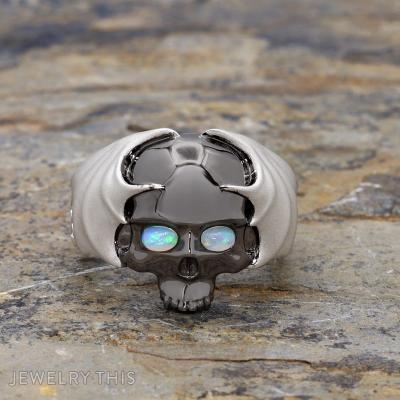
This sterling silver ring centers on a dimensional skull motif finished in black rhodium plating, ...

This custom ring is a timeless tribute to family heritage and tradition. Crafted in 14k ...

This men’s wedding band was built to bring back a ring that had been lost ...
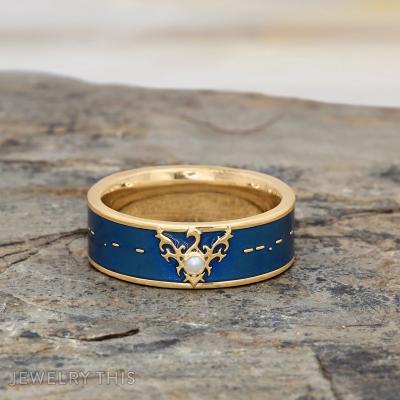
This sterling silver band translates a favorite video game ring into a piece meant for ...

Celebrate lasting love with our men’s slim comfort fit Wedding Band in platinum. Meticulously crafted, ...
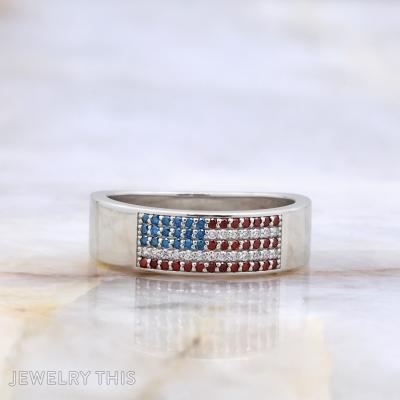
This wide 14k white gold band carries a pave-set American flag across its face, built ...

This 14k yellow gold band recreates a design the client’s father already wears, rebuilt from ...

A deeply personal and symbolic expression of love, this wedding band embodies the unique connection ...



