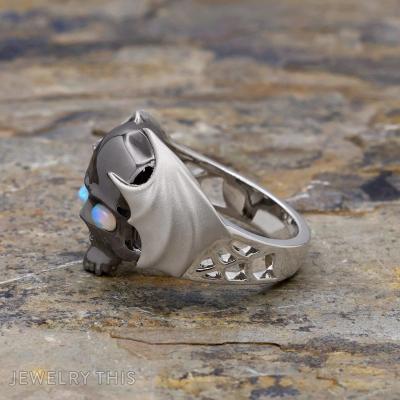
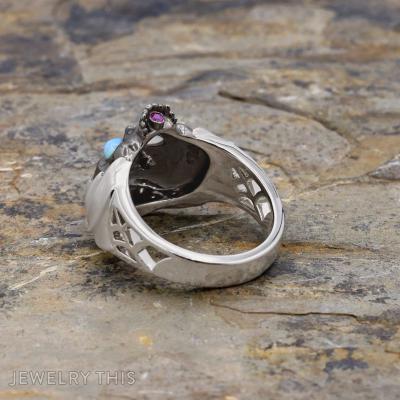
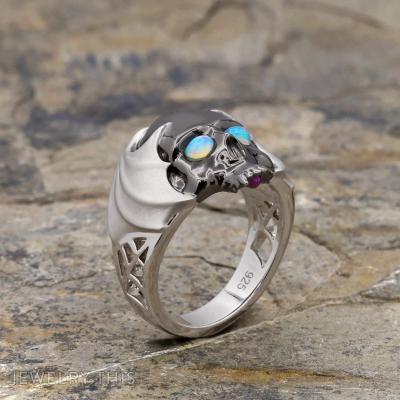
Gothic Skull Ring with Opal Eyes — Black Rhodium Silver
$$
Sterling silver, black rhodium plating, natural opal, natural ruby
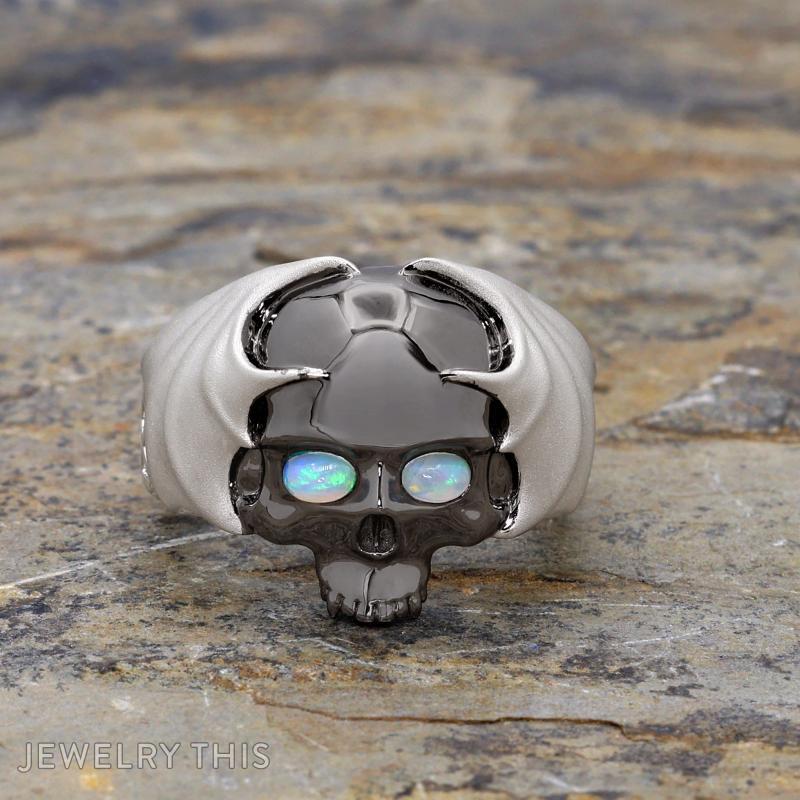
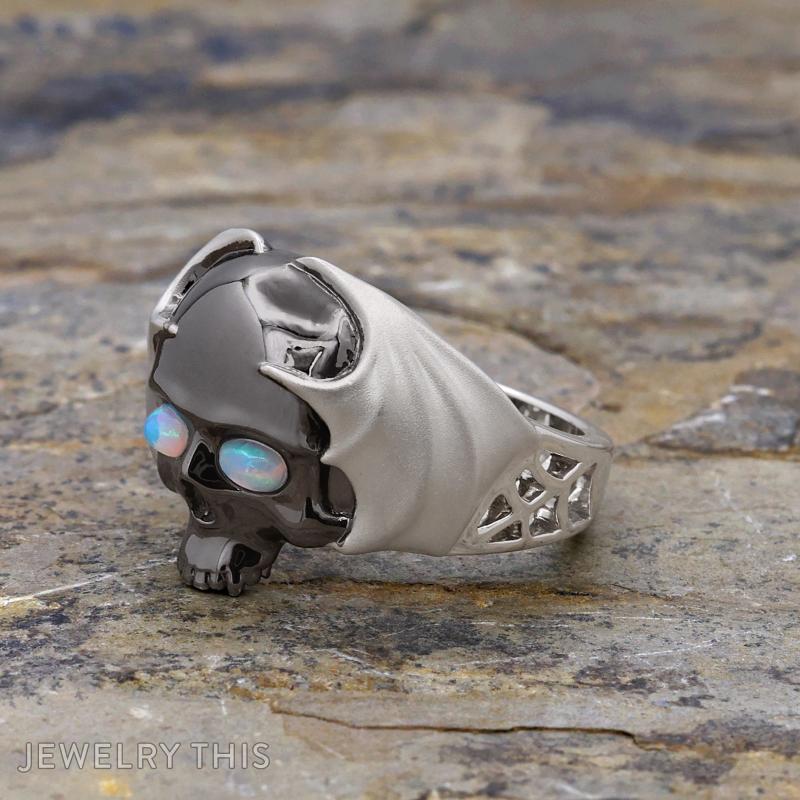
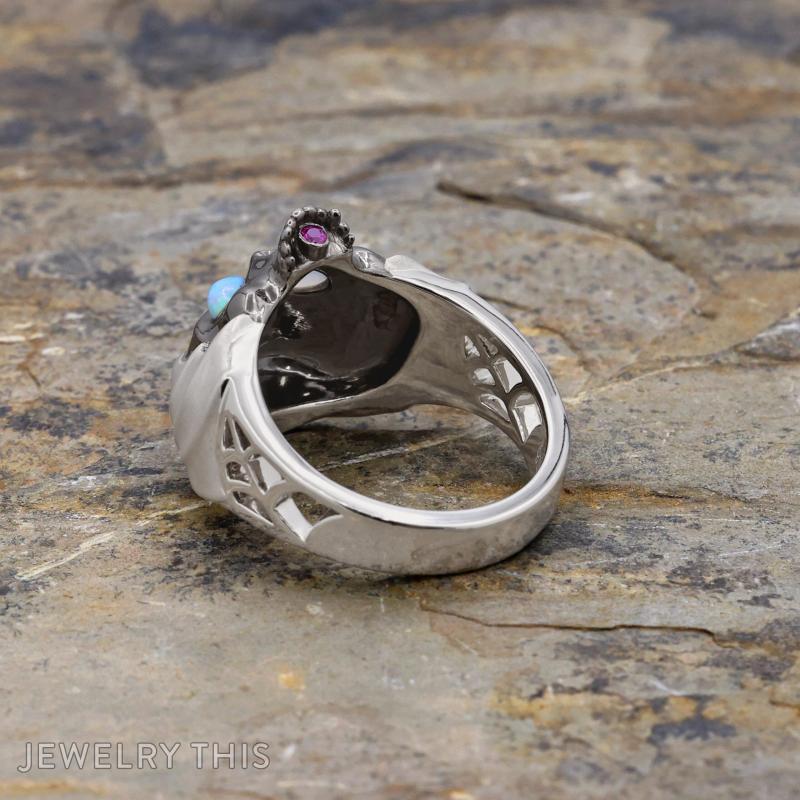
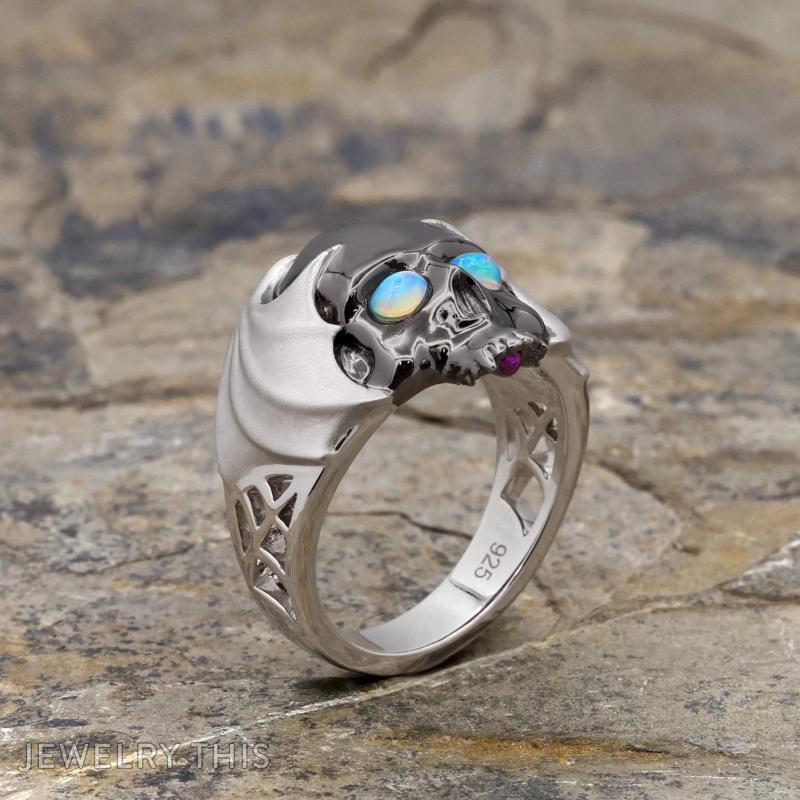
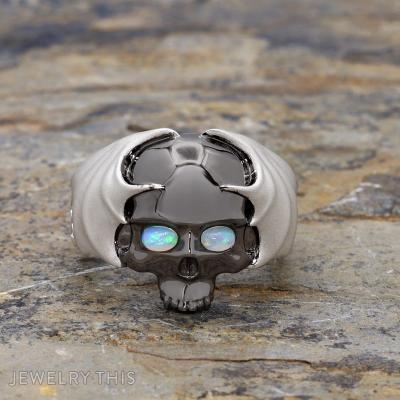
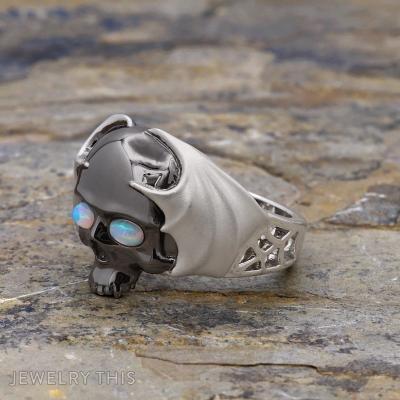
A. came to us wanting to surprise his partner with a gothic-style ring that matched her personal style exactly — a skull, a bat motif, and a spiderweb pattern, all built around natural opal. Opal carving in the size needed wasn't structurally practical, so the design shifted to a metal skull with opal eyes instead, and the sharp points that would have caught on things were smoothed down. When it arrived, he wrote: 'It couldn't possibly be any more perfect. She was so happy and excited to get it.'
'This ring incorporates her goth style very perfectly. I honestly don't think I could be happier.' — on seeing the first sketch
'It couldn't possibly be any more perfect. She was so happy and excited to get it.' — on delivery
Quick specs
Primary Metal
Shape / Cut
Primary Stone
Accent Stones
Design Complexity
Intent
Intent: Certainty
Size
Ring size 9.5 US.
How they made it distinctive
-
01
Skull rendered in metal rather than carved opal — a dimensional opal skull wasn't structurally available at the size needed, so the design pivoted to a black rhodium metal skull instead
-
02
Opal used specifically for the eyes — the stone the recipient loves most, incorporated even after the original all-opal concept had to change
-
03
Sharp skull points smoothed down after the first sketch — the client flagged that pointed details catch on things, a known issue with the recipient's other jewelry
-
04
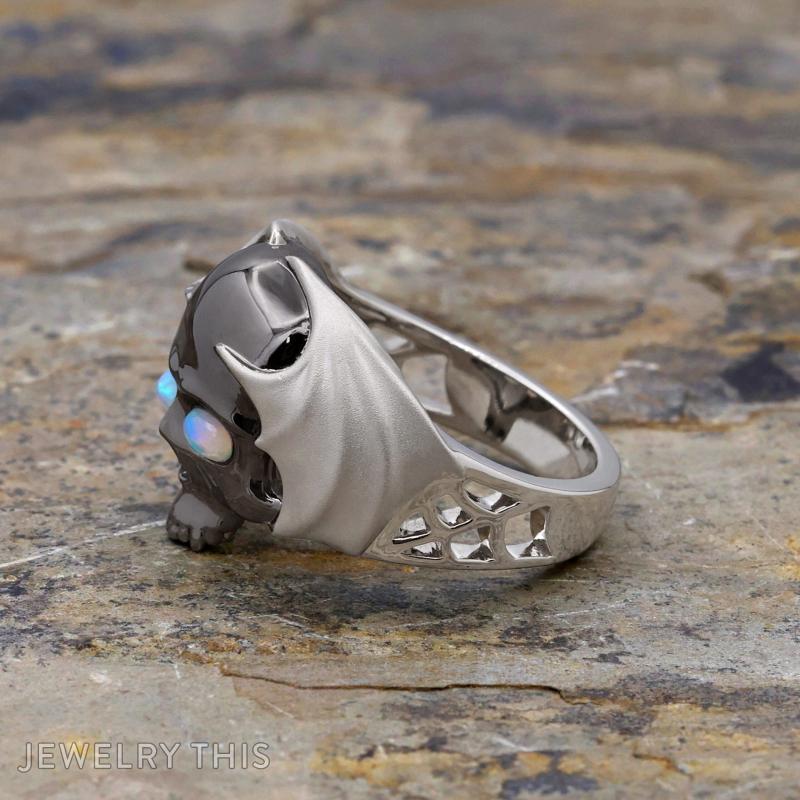
Three distinct finishes on one piece — black rhodium skull, matte wing panels, and a polished band, sequenced so the delicate plating goes on last
-
05
Open lattice cut-out shank inspired by a spiderweb, keeping the bold front design from feeling heavy on the hand
How you'd make it yours
Center motif: this piece uses a metal skull with opal eyes; a new commission could use a different sculptural subject in the same gothic style
Stone: this piece uses natural opal eyes and a natural ruby accent; a new piece could use lab-grown stones or a different colored gem
Metal: this piece is sterling silver with black rhodium plating; the same design language could be done in white gold with the same plating approach
Finish combination: this piece mixes matte, polished, and black rhodium in three zones; a new piece could use fewer or different finish contrasts
Shank pattern: the spiderweb-inspired cut-out lattice can be made denser, sparser, or reshaped into a different motif
One of a kind: this exact ring was designed for one client's partner and is not reproduced — a new commission is an original piece inspired by this one, not a copy
Design changes made
The original concept called for opal carved into a skull and a bat shape, but a dimensional opal skull small enough for a ring wasn't available, so the design shifted to a metal skull with opal eyes instead. The finish was also refined through several rounds of feedback, landing on a black rhodium skull, matte wing panels, and a polished band for contrast.
Who this is for
This piece is for someone whose personal style leans gothic or alternative, and who wants jewelry that looks like it was actually designed around who they are rather than picked off a shelf. It's especially right for a partner planning a proposal or commitment piece who knows the recipient's aesthetic in specific detail — down to the stone, the motif, and the small practical fixes (like smoothing sharp points) that make a statement piece wearable every day.
How it's made
Once the finishes and details were approved, the design moved to a resin (wax) model — the first physical form of the ring, shared as a photo before any metal was involved. The wax model was arranged on a wax tree, invested in plaster, and fired in a kiln to burn away the wax and leave a hollow mold. Molten sterling silver was then poured into that mold to cast the raw ring, which was cleaned up and prepared for finishing.
The cast ring received three distinct finishes in sequence: the wing-like side panels were given a matte finish, the band was polished to a bright shine, and the skull was plated in black rhodium last, since plating is applied only after all mechanical polishing is complete. The two opal eyes and the small ruby accent were then set by hand into the skull's recessed sockets.
Key note
The black rhodium is applied only to the skull and only after every other finish is complete, because the plating is a delicate surface coat that would be damaged by any later polishing.
Pricing guidance
A detailed sculptural ring like this — a dimensional skull motif with mixed finishes and cut-out shank work — sits in the mid range for custom silver work of this complexity. Most of the cost comes from the hand-finishing and multi-step surface treatment rather than the metal itself. Stone selection has a smaller effect on price at this scale, since the accent stones are small.
Moves price up ↑
- ↑ Upgrading the base metal from sterling silver to white gold or platinum
- ↑ Using a larger or more elaborate carved center stone rather than small accent stones
- ↑ Adding more surface texture or hand-finishing detail to the wing panels
- ↑ Choosing a fully dimensional carved gemstone skull instead of a metal one
- ↑ Adding additional cut-out or engraved detail across more of the band
Moves price down ↓
- ↓ Simplifying to a single finish instead of three distinct zones (matte, polished, black rhodium)
- ↓ Using lab-grown stones instead of natural stones for the accents
- ↓ Reducing the cut-out lattice detail on the shank to a plain band
- ↓ Omitting the accent stone and using opal eyes only
- ↓ Choosing a smaller, less dimensional skull design
Questions people ask
Opal is softer than many other gemstones, rating around 5.5–6.5 on the Mohs hardness scale, which means it can scratch or chip more easily than diamond or sapphire. It's more vulnerable to sudden impact and to drying out over time, which can cause fine cracking. For a ring worn daily, opal accent stones set in protective settings like small eye-shaped cabochons hold up reasonably well, but occasional care and avoiding hard knocks will extend its life significantly. Many owners choose opal specifically for its unique color play despite the added care it requires.
Natural stones form in the earth over long periods of time and carry small individual variations, while lab-grown stones are chemically identical but produced in a controlled setting, typically at a lower cost. For opal specifically, natural stones are standard since large-scale lab opal isn't common in fine jewelry. For accent stones like ruby, the price difference between natural and lab-grown is usually modest, and lab-grown offers the same look with fewer inclusions. The choice mostly comes down to personal preference and budget rather than a meaningful visual difference.
Black rhodium is a surface plating applied over the base metal, and it is not permanent. With regular daily wear, most people see it start to wear on high-contact areas — like the underside of the band — within one to two years. Re-plating is a straightforward service most jewelers can perform to restore the black finish. Areas that get more surface friction, like the inside of the band against the finger, will wear faster than raised or protected areas.
Yes — sharp points and raised details are the main culprits, so a jeweler can round or dull any protruding elements during the design phase before the piece is cast. This is a common request for gothic-style rings that include sculptural elements like claws, spikes, or wings. Once identified in the design review stage, these adjustments are simple to make without changing the overall look of the piece. It's worth flagging any pointed details early, since it's much easier to fix in the digital design than after casting.
A ring with this level of detail — a dimensional skull, cut-out shank work, and multiple finish zones — typically falls in the mid range for custom silver work. The cost is driven mainly by the hand-finishing labor required for the multiple textures and the black rhodium plating process, not by the metal itself since sterling silver is a relatively affordable base. Stone costs stay modest when the accent stones are small, as they are here. Metal upgrades or more elaborate stone work are what typically push a similar piece into a higher price range.
The full process typically starts with a technical sketch, which takes about one to two weeks to finalize based on client feedback. From there, a 3D render is built and refined until approved, which can take another one to two weeks depending on how many revisions are needed. Once the design is approved and paid to the required threshold, production — casting, finishing, and stone setting — typically takes about four weeks. Total time from first deposit to delivery commonly runs eight to ten weeks for a piece with this many design rounds.
Yes, mixing finishes on a single piece is a common technique — black rhodium plating, matte texturing, and high polish can all be applied to different sections of the same ring to create contrast. Because black rhodium is delicate, it's always applied last, after all polishing and mechanical work on the other finishes is complete. This lets a design have a bold, dark focal element next to bright or textured surfaces without one finish damaging another during production. The sequencing matters more than the finishes themselves for a clean final result.
Yes, an open lattice or cut-out pattern on the shank is a design choice that can be made denser, sparser, or reshaped into a different motif depending on what fits the overall design language. A spiderweb-inspired lattice, for example, can be adjusted in how many strands it has or how open the pattern feels. These adjustments are made at the digital design stage before casting, so they don't add significant time once decided. The main consideration is structural — the band still needs enough solid metal to maintain strength for daily wear.
Check what our clients say about us

Amber Rushton
8 months ago
This is an absolutely amazing process creating this special wedding ring. From step 1 they had my back and was able to give me insights to really help the design process. Carrie and our team were absolutely amazing! I couldnt have asked for a better experience or outcome ♥️♥️
Explore Similar Creations
Every masterpiece starts with a spark. Explore how our clients raw ideas - sketches, heirlooms, inspirations - were transformed into bespoke works of arts.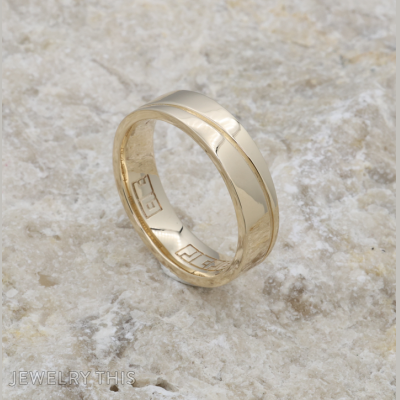
This custom wedding band is a sophisticated tribute to a shared journey, blending modern design ...

This men’s wedding band was built to bring back a ring that had been lost ...
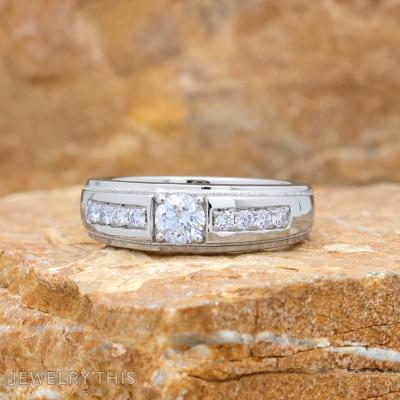
This men’s wedding band was designed to capture the look of a specific ring the ...

This wedding band is a beautifully remade version of a cherished piece that originally symbolized ...
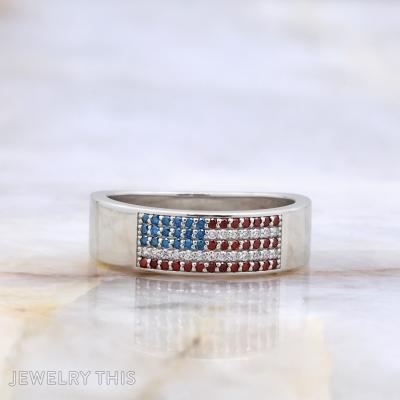
This wide 14k white gold band carries a pave-set American flag across its face, built ...
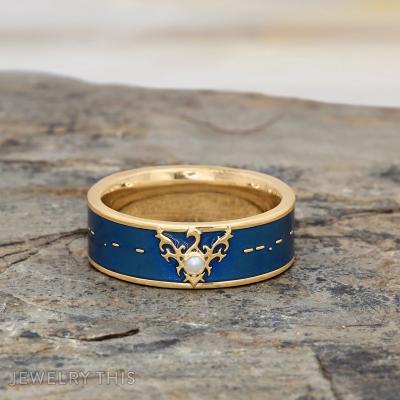
This sterling silver band translates a favorite video game ring into a piece meant for ...

his personalized signet ring is a symbol of individuality and character. Its square top boasts ...

Crafted for the adventurous soul, this sterling silver ring features a captivating eagle with intricate ...

Celebrate lasting love with our men’s slim comfort fit Wedding Band in platinum. Meticulously crafted, ...
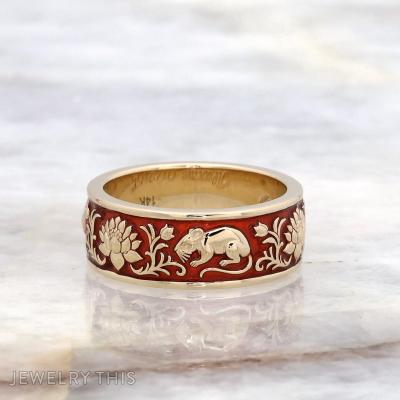
This wide men’s band was built around a Chinese zodiac rat and lotus flower motif, ...
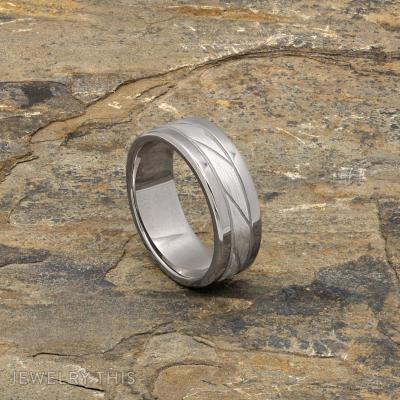
This custom wedding band is a thoughtfully recreated piece, transformed from an alternative metal design ...
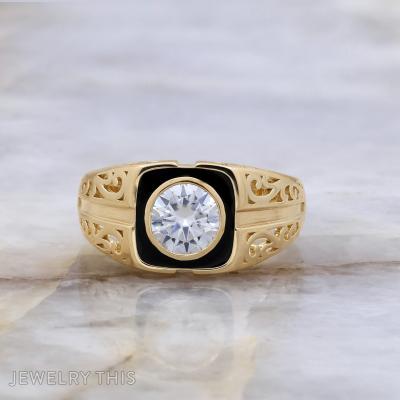
This men’s ring was designed as a gift, built around a bold square silhouette that ...