


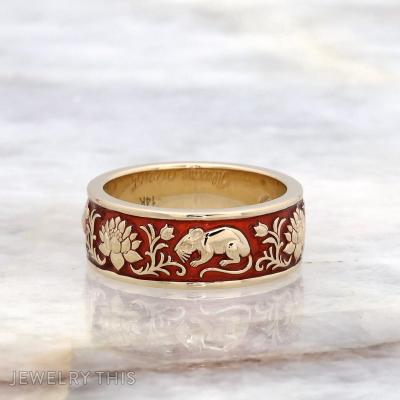


Zodiac Rat & Lotus Wedding Band in Red Enamel Gold
$$$
14k yellow gold, red enamel
A client designed this band as a surprise gift for her husband, built around his Chinese zodiac sign — the rat — paired with lotus flowers, a combination she wanted rendered as a symmetrical, repeating pattern. Not knowing his exact ring size since it was meant to be a surprise, she worked out an estimate from her own ring size and had the band built with a smooth resizing section on the back so a local jeweler could adjust it if needed. She wrote afterward: 'Wish me luck for the next step — the presentation.'
'Wish me luck for the next step — the presentation.' — on delivery
Quick specs
Primary Metal
Primary Stone
Accent Stones
Design Complexity
Intent: Certainty
Size
Ring size 9.25 US; band width 8.5mm. Resizing allowance built into the back of the band.
How they made it distinctive
-
01
Chinese zodiac rat and lotus flower combined into one symmetrical repeating pattern, chosen specifically because both elements carried personal meaning for the recipient
-
02
Red cold enamel background selected over glass enamel to preserve the fine raised carving without risking heat distortion during firing
-
03
Smooth resizing section built into the back of the band specifically because the buyer was estimating the recipient's ring size for a surprise gift
-
04
Pattern simplified from a fully continuous rat-and-lotus repeat to one rat and two lotus flowers with connecting root detail, balancing density with resizability
-
05
Private inscription engraved on the interior, invisible when worn
How you'd make it yours
Metal: this piece is 14k yellow gold — the same carved design language works in 18k yellow gold or white gold
Enamel color: this piece uses a red cold enamel background — other colors are possible with the same cold enamel process
Band width: this piece is 8.5mm — a new commission could be made narrower or wider depending on the wearer's hand
Motif: the rat and lotus combination is specific to this client's request — a new commission could use a different zodiac animal or botanical pairing
Engraving: the interior of a new piece can carry its own private inscription
One of a kind: this exact ring was designed for one recipient's zodiac sign and surprise-gift constraints, and is not reproduced — a new commission is an original piece inspired by this one, not a copy
Design changes made
The original concept had rats and lotus flowers spaced continuously around the full circumference, but because the ring size was an estimate and the piece needed to remain resizable, the pattern was adjusted to one rat and two lotus flowers with trailing root details, leaving a smooth section on the back for future sizing.
Who this is for
This piece is for someone who wants a design that carries real personal or cultural meaning without looking delicate or ornamental — something a man can wear every day. It's especially right if you're working with an estimated size for a surprise gift and need a practical way to adjust later without disturbing the design.
How it's made
Once the design was approved, a wax model was 3D-printed on a resin printer and attached to a wax tree inside a flask. The flask was invested in plaster and placed in a kiln to burn out the wax, leaving a hollow mold. Molten 14k yellow gold was then cast into the mold, cooled, and the raw band was extracted for cleanup and finishing.
After casting, the band's edges were polished smooth to keep focus on the raised rat and lotus detail, while the recessed background areas were prepared for color. A cold enamel process was used to fill the background with red, rather than glass enamel, which requires high-heat firing that would risk the cast detail. The interior was finished last with the private inscription engraved into the polished gold surface.
Key note
The red background uses a cold enamel process rather than glass enamel, since cold enamel cures without the high heat that could distort the raised gold detail.
Pricing guidance
A wide men's band with dimensional carving, cultural motif detail, and an enamel background sits toward the higher end of custom band pricing. Most of the added cost comes from the hand-finishing required to keep the raised pattern crisp against the enamel fill, plus the metal weight of a wider profile. Metal karat and the extent of enamel coverage are the biggest levers on price from there.
Moves price up ↑
- ↑ Increasing band width beyond 8.5mm, which adds more metal weight and surface area to hand-finish
- ↑ Adding enamel to both the front and back of the band rather than one section
- ↑ Upgrading from 14k to 18k gold, which increases material cost at the same weight
- ↑ Adding a hand-carved rather than smooth resizing section, increasing pattern complexity
- ↑ Adding stones to the lotus centers or rat eyes for accent detail
Moves price down ↓
- ↓ Reducing band width to a narrower, lighter profile
- ↓ Choosing 10k gold instead of 14k for a lower material cost at the same design
- ↓ Simplifying the pattern to a single motif repeated fewer times
- ↓ Omitting the enamel background in favor of a plain polished or matte finish
- ↓ Skipping the interior engraving
Questions people ask
Cold enamel, which is what was used on this band, is more vulnerable to chipping and wear than glass (hot-fired) enamel, especially at edges and high-contact points. It holds up reasonably well for daily wear but is not indestructible, and heavy impact or abrasion can chip it over time. Most cold enamel pieces last for years with normal care, though avoiding activities with heavy hand impact will extend its life. If it does chip, a jeweler can typically touch up or refill small areas.
It's more difficult than resizing a plain band, because stretching or compressing the metal can distort the raised pattern and crack or separate the enamel fill. One workaround, used on this piece, is to leave a smooth, undecorated section on the band specifically for future sizing adjustments. This keeps the decorated portion untouched while still allowing a jeweler to adjust the overall circumference. It's worth discussing with your jeweler in advance if you expect the size to change.
Glass, or hot, enamel is powdered glass that is fired in a kiln at high temperatures to fuse permanently to the metal, producing a very hard and long-lasting glass-like surface. Cold enamel is a resin-based fill that cures without high heat, which makes it a better choice for pieces with fine raised metalwork that could warp or distort under kiln temperatures. Cold enamel is generally considered less durable than glass enamel over the long term but is the safer option for detailed cast designs. The choice usually comes down to the complexity of the piece's metalwork versus how much long-term durability is prioritized.
A wide band with dimensional carving, a cultural motif, and an enamel background falls toward the higher end of custom band pricing because of the hand-finishing labor involved. The width of the band, the gold karat, and how much surface area is covered in enamel are the main cost drivers. A narrower band, lower karat gold, or a simpler pattern would bring the cost down from a piece like this.
The full process typically runs five to six weeks from approved design to shipping, though a design with enamel and hand-finished carving can run slightly longer. The first week or so covers the sketch and 3D render stage, where the design is refined based on feedback. Once approved, casting and finishing — including the enamel application — typically take four to five weeks. Complex enamel work can add extra time if touch-ups are needed after curing.
Yes, with the right adjustments. A fully continuous repeating pattern around a ring can be visually dense, so a common approach is to space fewer motifs (such as one central figure and two flanking elements) and use connecting details like vines or roots to fill the remaining space more subtly. This keeps the design readable rather than crowded, while still achieving a wraparound, balanced look. It also tends to make resizing easier since it leaves room for a smooth section.
14k gold has a higher precious metal content and a warmer, richer color than 10k, but 10k is more affordable and slightly harder, which can help it resist scratching on a wide daily-wear band. For a piece with fine carved detail, either karat can hold the pattern, but 14k is generally preferred for a piece meant to feel more substantial. The choice mostly comes down to budget and personal preference for color richness versus a small durability trade-off.
Yes, combining a zodiac animal with a botanical element like a lotus is a common way to build a design that carries personal or cultural meaning while still reading as a cohesive pattern. The two elements are usually balanced by placing the animal as a focal point and using the flower and its stems or roots to fill and connect the surrounding space. This approach works well on wider bands where there's enough surface area to let both elements read clearly.
Explore Similar Creations
Every masterpiece starts with a spark. Explore how our clients raw ideas - sketches, heirlooms, inspirations - were transformed into bespoke works of arts.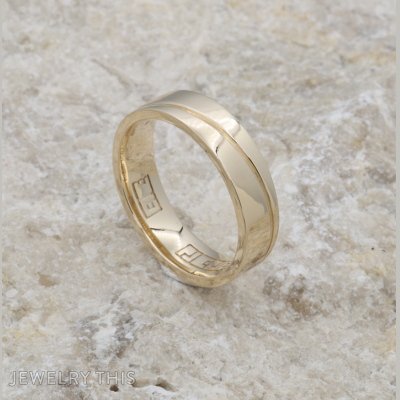
This custom wedding band is a sophisticated tribute to a shared journey, blending modern design ...

This 14k yellow gold band recreates a design the client’s father already wears, rebuilt from ...

This wedding band is a beautifully remade version of a cherished piece that originally symbolized ...

Crafted for the adventurous soul, this sterling silver ring features a captivating eagle with intricate ...

This men’s wedding band was built to bring back a ring that had been lost ...
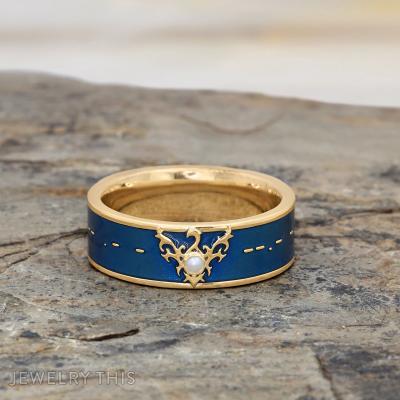
This sterling silver band translates a favorite video game ring into a piece meant for ...

A deeply personal and symbolic expression of love, this wedding band embodies the unique connection ...
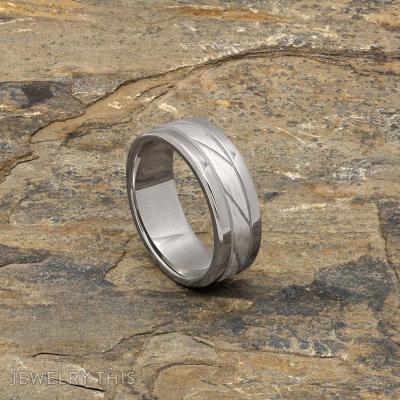
This custom wedding band is a thoughtfully recreated piece, transformed from an alternative metal design ...

This wide 14k white gold band translates a favorite piece of pop-culture design into a ...
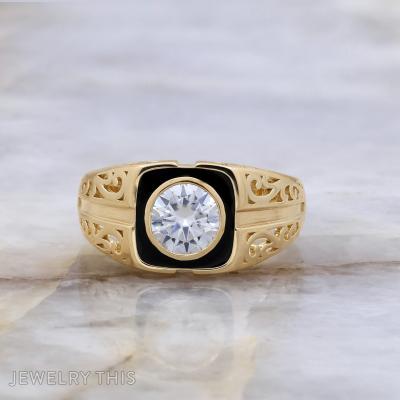
This men’s ring was designed as a gift, built around a bold square silhouette that ...
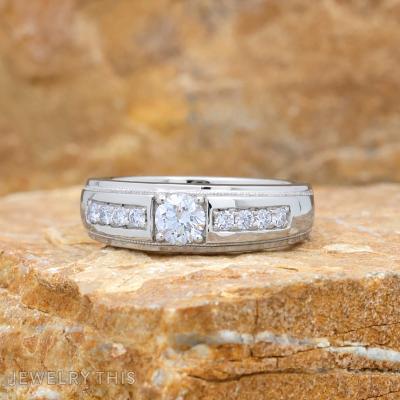
This men’s wedding band was designed to capture the look of a specific ring the ...
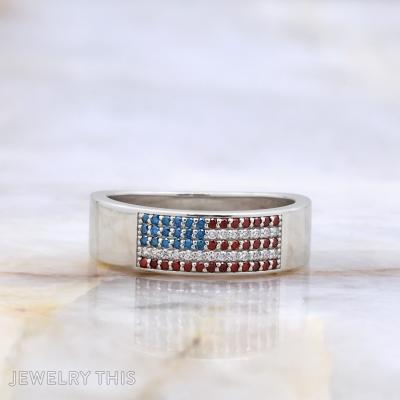
This wide 14k white gold band carries a pave-set American flag across its face, built ...



