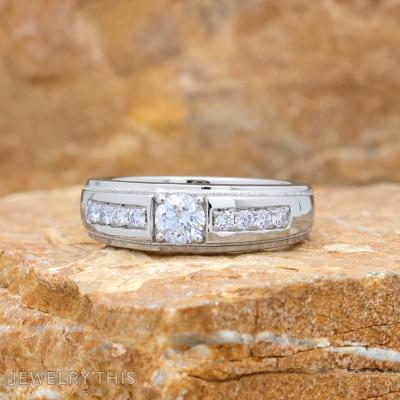
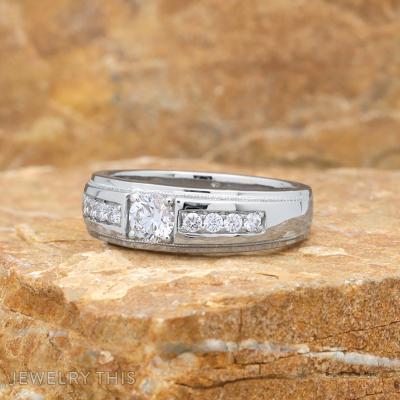
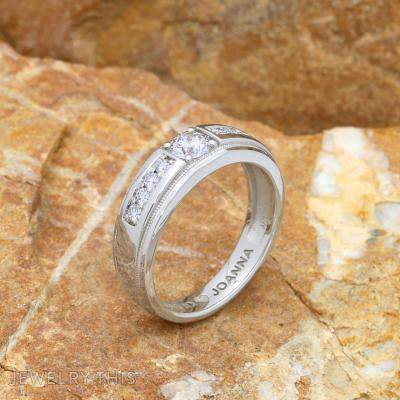
Men's Diamond Wedding Band — White Gold Anniversary Ring
$$$
14k white gold, lab diamonds
A client had been watching a specific men's diamond wedding band online for months, waiting for it to go on sale — only to find it sold out days after the price finally dropped. She brought a photo and product description to have the same design recreated in time for their anniversary, choosing lab diamonds to keep the piece within budget. When the tracking update arrived close to the deadline, she wrote back: 'Oh my goodness!!!! See the photo is making me sooooo excited!!!'
'I loooooove it!!!!' — on seeing the first render
'Oh my goodness!!!! See the photo is making me sooooo excited!!!' — on shipping confirmation
Quick specs
Primary Metal
Shape / Cut
Primary Stone
Accent Stones
Design Complexity
Intent: Certainty
Size
Ring size 10 US (19.76mm).
How they made it distinctive
-
01
Design recreated from a specific reference ring the client had watched for months before it sold out
-
02
Lab-created diamonds selected specifically to keep the total cost within the client's budget
-
03
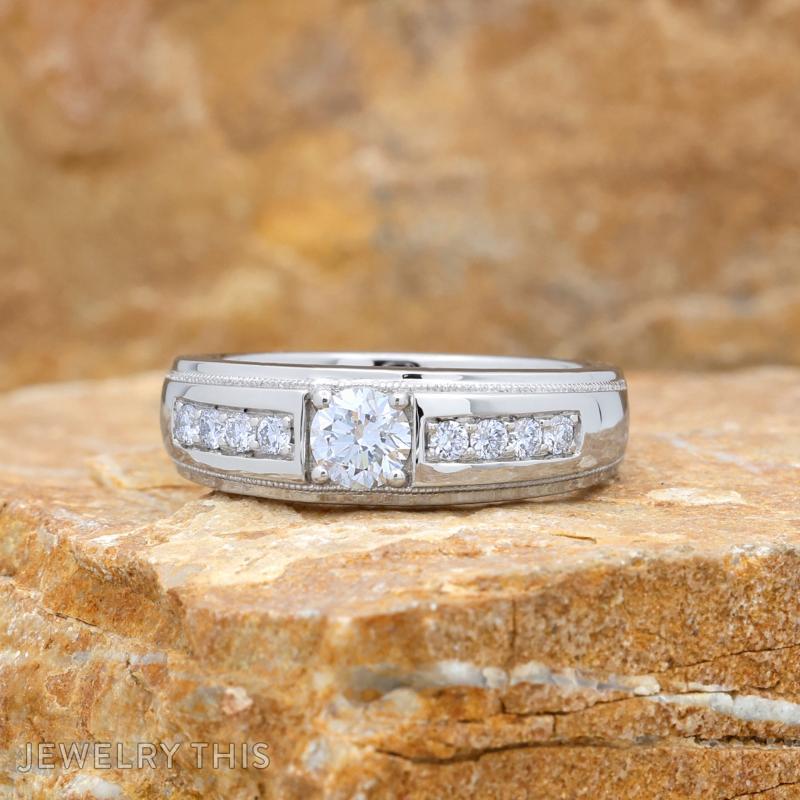
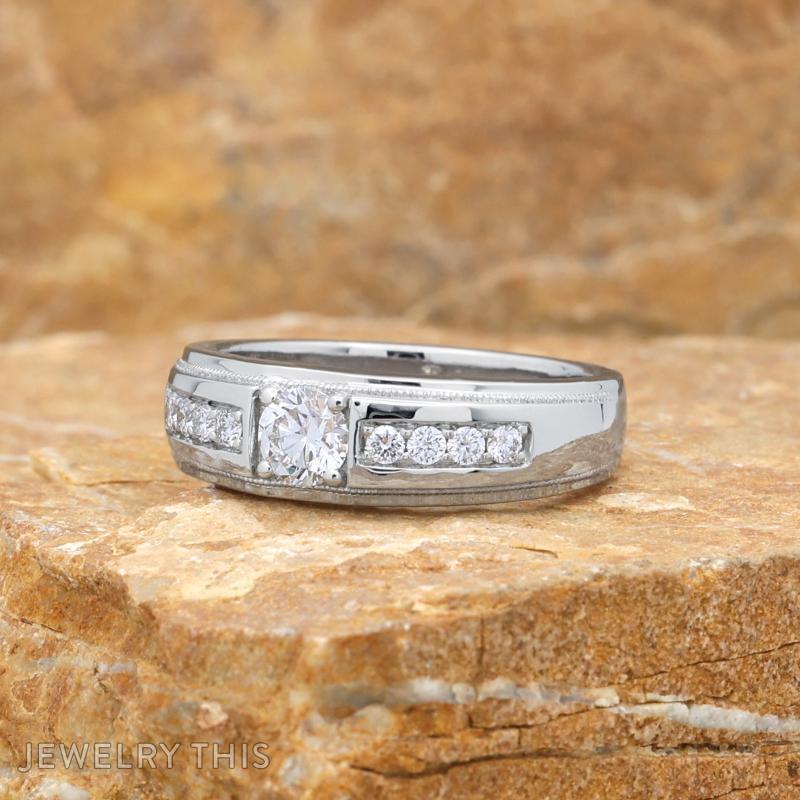
Milgrain beading traces the stepped edges, adding detail without changing the profile
-
04
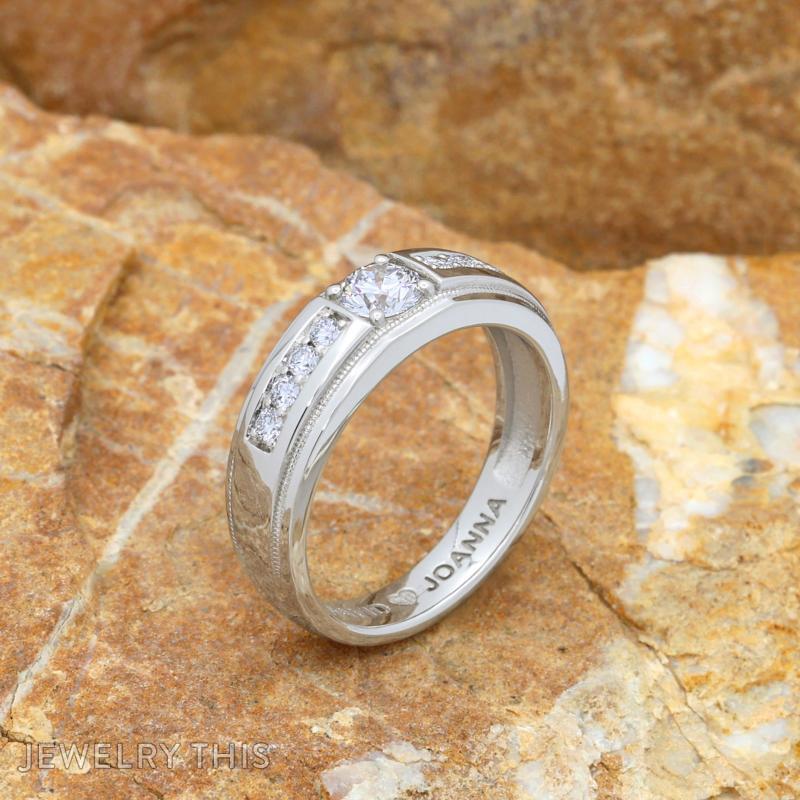
Interior engraving completed as the final production step so it isn't disturbed by polishing or setting
-
05
Built with heavier metal weight and more durable construction than a comparable mass-produced band
How you'd make it yours
Stone: this piece uses lab diamonds; a new commission could use natural diamonds for the same look at a higher cost, or a different center stone entirely
Metal: this piece is 14k white gold; the same stepped milgrain design works in 18k white gold, yellow gold, or rose gold
Center stone shape: this piece uses a round center diamond; a new commission could use princess or cushion cut with adjusted flanking rows
Engraving: the interior of the band can carry a new inscription, name, or short phrase on a fresh commission
Band width: this piece's proportions could be made narrower or wider on a new piece
One of a kind: this exact ring was designed for one client and is not reproduced — a new commission is an original piece inspired by this one, not a copy
Design changes made
Design matched the initial brief without major changes.
Who this is for
This piece is for someone who found a design they loved somewhere else and wants it made properly rather than settling for a substitute. It's especially right if you have a clear reference in mind and want a heavier, more durable version built specifically to your size, with a personal engraving that makes it yours.
How it's made
Once the design was approved from the client's reference photo, the team built a 3D CAD model and rendered it for review before any metal was cast. After approval, the ring was cast in 14k white gold, producing the raw band with its stepped, milgrain-edged profile ready for finishing.
The cast band was hand polished to a mirror finish across the stepped surfaces, then the center round diamond was set first, followed by the flanking rows of smaller round diamonds set into the stepped channels on either side. Milgrain beading was applied along the edges of the stepped sections as part of the finishing sequence. The inside of the band was engraved last, once the setting and polishing were complete, to avoid disturbing the finished surface.
Key note
The engraving is added as the final production step, after setting and polishing, so the personalized text is never at risk from the mechanical finishing process.
Pricing guidance
A men's diamond wedding band with a stepped, milgrain-detailed setting and multiple pave rows sits in the mid range for custom bands of this complexity. Diamond count and total carat weight are the primary cost drivers here, more so than the band's overall design. Choosing lab versus natural diamonds is the single biggest lever on the final price for a piece like this.
Moves price up ↑
- ↑ Choosing natural diamonds instead of lab-created diamonds for the same total carat weight
- ↑ Increasing the total diamond weight beyond 3/4 carat
- ↑ Upgrading to 18k gold instead of 14k
- ↑ Adding diamonds to the flanking rows on both the top and side profiles
- ↑ Requesting a wider band width for a heavier, more substantial feel
Moves price down ↓
- ↓ Reducing the number of accent diamonds in the flanking rows
- ↓ Choosing a lower total carat weight for the center stone
- ↓ Selecting a lower diamond clarity grade within the eye-clean range
- ↓ Omitting the milgrain detailing along the stepped edges
- ↓ Choosing a narrower band width
Questions people ask
Lab-created and natural diamonds have identical chemical composition, hardness, and sparkle — the only real difference is where they were formed, underground versus in a lab. Visually there is no distinguishable difference between the two in a finished piece like this band. The main practical difference for buyers is cost, with lab diamonds typically running lower than natural diamonds of the same size and clarity. Durability and daily wear performance are identical between the two.
A standard custom band like this typically takes around four weeks from design approval to completion, covering CAD modeling, casting, stone setting, and finishing. Rush timelines are possible when needed but require the design to be approved very quickly to leave enough production time. The process includes a 3D render for approval before any metal is cast, so you can see the design before committing to production. Engraving and final polishing are completed as the last steps before shipping.
Yes, a specific ring design can be used as visual reference to build a custom version from scratch. The team translates the photo and description into a 3D CAD model and render for approval before any material is cast. The resulting piece is not a mass-produced copy — it is custom built, typically with heavier metal weight and more durable construction than a retail equivalent. Small variations in stone placement or proportion between the reference photo and the final piece are normal.
A band in this style and complexity — round center diamond, pave side rows, milgrain edges, 14k white gold — sits in the mid range for custom bands. The largest cost factor is typically whether the diamonds are lab-created or natural, followed by total carat weight. Setting complexity and metal karat also contribute, but usually to a lesser degree than the stone choice.
On a band like this, an interior engraving of up to 10-15 characters was included in the design cost at no additional charge. Engraving is typically added as the final production step after setting and polishing so it doesn't get disturbed by the finishing process. Longer engravings or more elaborate lettering styles may affect cost or turnaround on other pieces, so it's worth confirming character limits upfront. Placement is almost always on the interior of the band for a men's wedding band.
A band with pave-set stones along the top and sides has more limited resizing range than a plain band, because the stone-set sections cannot be stretched or compressed without disturbing the setting. Minor adjustments of about half a size in either direction are usually possible without issue. Larger resizing may require removing and resetting stones near the shank, which adds cost and time. It's best to confirm sizing carefully before the ring is cast.
14k white gold is a durable choice for daily wear, and milgrain beading is a decorative texture applied to the metal's edge rather than a separate fragile element, so it holds up well under normal use. Like all white gold, the rhodium plating that gives it its bright white finish will wear over years of daily wear and can be professionally re-plated when needed. The pave-set diamonds along the sides are secured in a stepped channel design that protects them reasonably well from daily knocks. Overall this band is built for daily wear rather than occasional use.
Yes, a design like this could be adapted to use a different center stone shape such as princess or cushion cut, though the flanking pave rows and stepped milgrain edges would need to be adjusted to complement the new shape. A round center stone is the most common choice for this style because it pairs naturally with round pave accents. Changing the center stone shape is a design decision best made early, since it affects the proportions of the surrounding setting.
Explore Similar Creations
Every masterpiece starts with a spark. Explore how our clients raw ideas - sketches, heirlooms, inspirations - were transformed into bespoke works of arts.
This wedding band is a beautifully remade version of a cherished piece that originally symbolized ...

This men’s wedding band was built to bring back a ring that had been lost ...

A deeply personal and symbolic expression of love, this wedding band embodies the unique connection ...

his personalized signet ring is a symbol of individuality and character. Its square top boasts ...
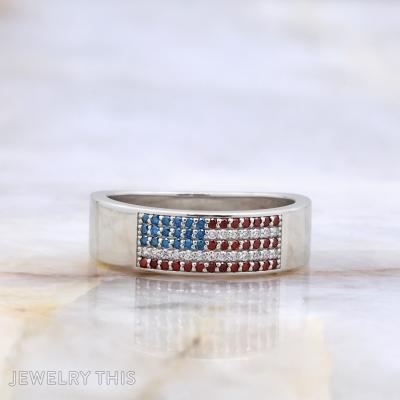
This wide 14k white gold band carries a pave-set American flag across its face, built ...

Celebrate lasting love with our men’s slim comfort fit Wedding Band in platinum. Meticulously crafted, ...
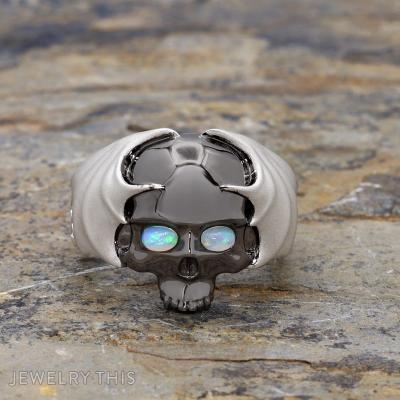
This sterling silver ring centers on a dimensional skull motif finished in black rhodium plating, ...

This wide 14k white gold band translates a favorite piece of pop-culture design into a ...

This 14k yellow gold band recreates a design the client’s father already wears, rebuilt from ...
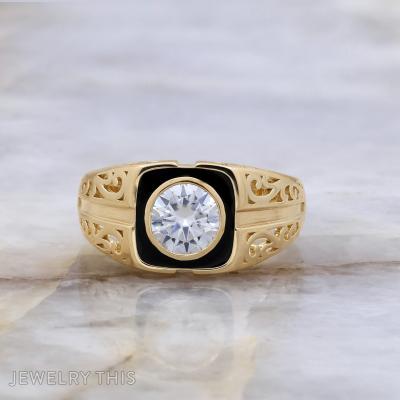
This men’s ring was designed as a gift, built around a bold square silhouette that ...
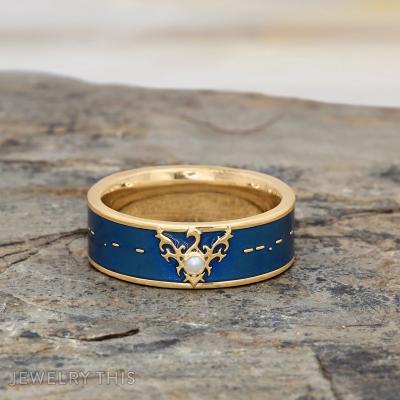
This sterling silver band translates a favorite video game ring into a piece meant for ...
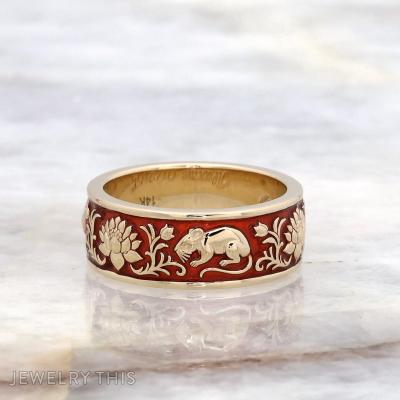
This wide men’s band was built around a Chinese zodiac rat and lotus flower motif, ...