


Octagonal Channel-Set Diamond Band in 14k Yellow Gold
$$$
14k yellow gold, lab-grown diamonds
A client wanted a men's wedding band inspired by a ring he'd seen in photos, originally designed at a larger finger size with a heavier stone weight. Working from those reference images alone, the design was rebuilt and scaled to his own size, with several rounds of adjustment to get the diamond sizing as close as possible to his target weight within the constraints of the smaller band. When it arrived, he wrote: 'Ring came out exactly how I wanted it.'
'Ring came out exactly how I wanted it. Thanks so much.' — on delivery
Quick specs
Primary Metal
Shape / Cut
Primary Stone
Accent Stones
Style
Design Complexity
Intent: Certainty
Size
Ring size 6.25 US (16.71mm). Band width approximately 7–7.5mm. Approximately 1.7 total carat weight across 15 channel-set top stones (2.8mm each) and 30 smaller side-wall stones.
How they made it distinctive
-
01
Octagonal faceted profile chosen to recreate a reference ring's geometric look rather than a standard rounded band
-
02
Stone sizing increased across two design revisions to push total carat weight as close to the client's 2ct target as the smaller finger size allowed
-
03
Visible negative space cut between the channel-set top diamonds at the client's request, rather than a flush continuous line
-
04
Diamonds set on both the top channel and all angled side walls, so sparkle continues around the full profile, not just the top
How you'd make it yours
Stone type: this piece uses lab-grown diamonds — a new commission could use natural diamonds or moissanite for a different look or budget
Metal: this piece is 14k yellow gold — the same faceted design works in white gold or rose gold
Band width: this piece is 7–7.5mm — a new piece could be narrower or wider depending on stone size preference
Facet count: this piece has eight facets — a new commission could use a different facet count for a more subtle or more pronounced geometric effect
Engraving: the inside of the band can carry a new inscription on a fresh commission
One of a kind: this exact ring was built to one client's finger size and stone preferences and is not reproduced — a new commission is an original piece inspired by this one
Design changes made
The center and side-wall diamonds were enlarged across two rounds of revision to push the total carat weight closer to the client's 2ct target, which in turn widened the band from 6.5mm to 7–7.5mm; the channel stones were also adjusted to show visible negative space between each diamond rather than sitting flush together.
Who this is for
This piece is for someone who wants a wedding band with real geometric presence rather than a plain rounded profile, and who likes the idea of working from a reference image they already love. It suits someone comfortable going back and forth on stone sizing to get the proportions right, rather than approving the first draft without question.
How it's made
Once the design was approved, the model was 3D printed in wax and attached to a wax tree within a flask. The flask was invested in plaster and fired in a kiln to burn out the wax, leaving a hollow mold. Molten 14k yellow gold was then cast into the mold under pressure and allowed to cool before the raw ring was removed for finishing.
After casting, the octagonal facets were cleaned up and polished to a uniform finish across all eight sides. The channel-set diamonds were set first along the top surface, with space carved between each stone per the client's request, followed by the smaller bead-set diamonds along each angled side wall. A final hand polish was applied after all stones were secured.
Key note
The negative space between the channel-set diamonds on top was a deliberate post-casting correction — the client caught that the diamonds looked flush together in the render and asked for visible gaps, which were cut in during the polishing stage.
Pricing guidance
A faceted octagonal men's wedding band with channel-set and bead-set diamonds across all eight facets sits in the mid range for custom diamond bands of this complexity. Most of the cost comes from the stone count and the labor of setting diamonds into angled, faceted surfaces rather than a flat or rounded band. Total carat weight and diamond origin (lab versus natural) are the biggest levers on price from there.
Moves price up ↑
- ↑ Increasing total carat weight closer to or beyond 2ct, which requires larger stones and a wider band
- ↑ Switching from lab-grown to natural/mined diamonds of the same clarity and color grade
- ↑ Upgrading diamond clarity or color grade beyond VS/F-G
- ↑ Widening the band further, which increases both metal weight and the number of facets to set
- ↑ Adding personal engraving inside the band
Moves price down ↓
- ↓ Reducing total carat weight below the 1.7–2ct range
- ↓ Choosing moissanite in place of diamonds across the channel and side walls
- ↓ Narrowing the band width, which reduces both stone count and metal weight
- ↓ Reducing the number of facets from eight to a simpler geometric profile
- ↓ Choosing a lower diamond clarity or color grade
Questions people ask
Yes. Lab-grown diamonds are chemically and structurally identical to natural diamonds, including the same 10 rating on the Mohs hardness scale. This means they hold up to daily wear exactly the same way a natural diamond would, including resistance to scratching. The only real difference between lab-grown and natural diamonds is origin, not durability or appearance.
Lab-grown diamonds typically cost significantly less than natural diamonds of the same carat weight, clarity, and color grade, because they can be produced in a controlled environment rather than mined. In this band, the lab-grown version came in well below the natural/mined quote for the exact same 15 top stones and 30 side-wall stones at VS clarity and F-G color. The visual appearance and durability are the same between the two options, so the price difference comes down to origin only.
A faceted, fully stone-set band like this is more limited in resizing range than a plain band, because the facets and channel-set stones run continuously around the piece. Small adjustments are usually possible, but a significant size change can distort the geometric proportions or require re-setting stones near the resized section. It's best to confirm ring size carefully before production on a design like this rather than relying on post-delivery resizing.
This particular band uses 15 diamonds channel-set along the top surface and 30 smaller diamonds bead-set along the two angled side walls, for 45 stones total. The top stones are larger at 2.8mm each, while the side-wall stones are smaller to fit the narrower facet width. Stone count and size are balanced against the band's overall width to reach a target total carat weight.
The design phase for a faceted, multi-stone band like this typically takes about a week to produce the first 3D render, with additional rounds of revision if stone sizing or proportions need adjustment. Once the design is approved, production runs approximately three to four weeks, covering wax printing, casting, polishing, and hand-setting all of the stones. Total turnaround from deposit to delivery is usually five to eight weeks depending on how many design revisions are needed.
Yes. A ring design can be rebuilt from clear reference photos showing multiple angles, which is enough to recreate the facet count, stone layout, and overall proportions. What photos can't reliably convey is exact stone size or carat weight relative to a different finger size, so those details get refined through a 3D render and client feedback rather than assumed from the images alone. Scaling a design down to a smaller ring size, as happened here, often means revisiting stone sizing to hit a target carat weight within the new proportions.
Some clients prefer to see individual stones clearly defined rather than a continuous flush line of diamonds, which is a matter of personal taste rather than a durability concern. Cutting small gaps between channel-set stones is a finishing-stage adjustment that can be done after the initial casting if requested. Both styles — flush-set and gapped — are structurally sound channel-setting approaches; the choice is purely aesthetic.
Finger size has a direct effect on how large the stones can be in a fully stone-set band, because smaller fingers mean shorter facets and less room per stone. On this size 6.25 band, the maximum achievable total weight within a 7–7.5mm width came to approximately 1.7 carats using 2.8mm top stones. A larger finger size could accommodate bigger stones and reach a higher carat total within the same design.
Explore Similar Creations
Every masterpiece starts with a spark. Explore how our clients raw ideas - sketches, heirlooms, inspirations - were transformed into bespoke works of arts.
Celebrate lasting love with our men’s slim comfort fit Wedding Band in platinum. Meticulously crafted, ...
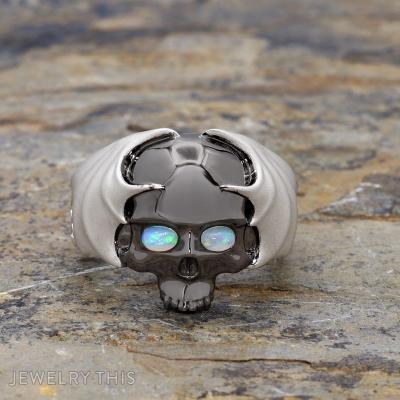
This sterling silver ring centers on a dimensional skull motif finished in black rhodium plating, ...

his personalized signet ring is a symbol of individuality and character. Its square top boasts ...
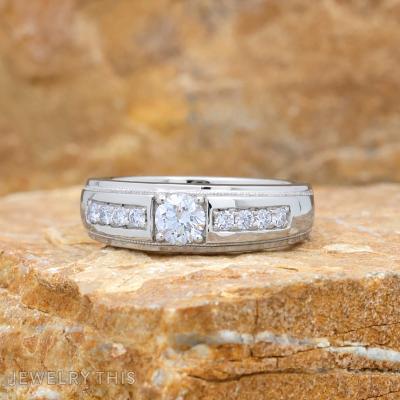
This men’s wedding band was designed to capture the look of a specific ring the ...

This men’s wedding band is built around a simple idea: two colors, kept deliberately apart. ...
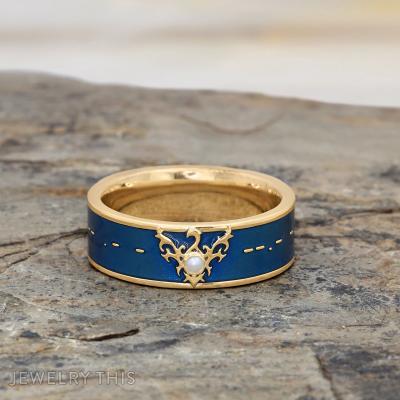
This sterling silver band translates a favorite video game ring into a piece meant for ...

This wide 14k white gold band translates a favorite piece of pop-culture design into a ...
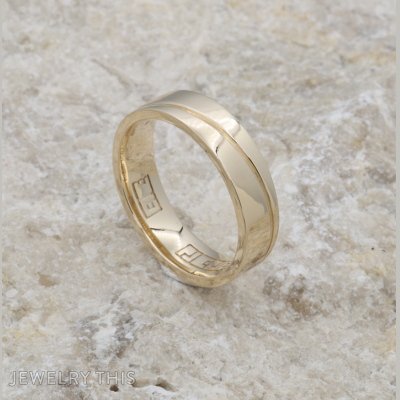
This custom wedding band is a sophisticated tribute to a shared journey, blending modern design ...
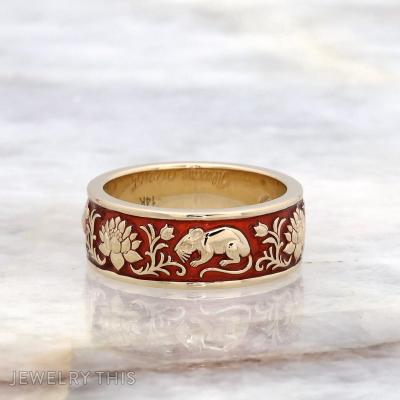
This wide men’s band was built around a Chinese zodiac rat and lotus flower motif, ...

This 14k yellow gold band recreates a design the client’s father already wears, rebuilt from ...

This custom ring is a timeless tribute to family heritage and tradition. Crafted in 14k ...

Crafted for the adventurous soul, this sterling silver ring features a captivating eagle with intricate ...



