


Recreated Heirloom Band — Vintage Cutout Pattern in Gold
$$
14k yellow gold, 14k white gold (unplated), natural diamonds
A woman set out to recreate her grandmother's ring after it was stolen — a piece over 50 years old with no paperwork, no appraisal, and only one faded photograph to work from. She pushed back on several early details in the render until the band read as smooth and continuous, the way she remembered it. When it arrived, she wrote: 'I totally love the ring. It is almost identical to the other ring. I am so impressed and extremely happy with the end result.'
'I totally love the ring. It is almost identical to the other ring. I am so impressed and extremely happy with the end result. Thank you so much!!' — on delivery
Quick specs
Design type
Primary Metal
Secondary Metal
Shape / Cut
Primary Stone
Accent Stones
Design Complexity
Intent: Certainty
Size
Ring size 6 US (16.51mm). Band width 6mm.
How they made it distinctive
-
01
Two-tone gold construction recreated specifically to match the darker outer edge and lighter center seen in the client's original photo
-
02
Cut-out pattern refined over several rounds until it read as one continuous solid surface rather than pieced-together sections
-
03
White gold left unplated by design, so it reads with a warm yellow hue rather than bright white — matching the aged look of the 50-year-old original
-
04
Round diamond chips set into each cut-out recess, corrected from an earlier render that showed a different stone shape
-
05
Decorative line work removed from around each stone per client feedback, for a smoother, simpler finished look
How you'd make it yours
Stone type: this piece uses natural diamond chips; a new commission could use lab diamonds for the same look at lower cost
Metal tone: this piece uses two-tone yellow and unplated white gold; a new commission could use a single tone or add rhodium plating for a brighter white
Band width: this piece is 6mm; a new commission could be made narrower or wider
Cut-out pattern density: the marquise cut-out spacing could be adjusted to be more or less frequent around the band
One of a kind: this exact ring was recreated for one client from her own heirloom photograph and is not reproduced — a new commission is an original piece inspired by this one, not a copy
Design changes made
The client requested the cut-out sections be filled in so the band reads as one solid, continuous surface instead of appearing pieced together, and asked that the decorative line work around each stone be removed for a smoother look. The diamond shape was also corrected to round after the first render showed a different shape.
Who this is for
This piece is for someone trying to bring back a piece of family history that's been lost, even when all they have is one old, imperfect photo to work from. It's especially right for someone who is particular about getting the details true to memory — willing to go through a few rounds of feedback until the proportions, pattern, and finish feel right.
How it's made
Once the design was approved, the jewelry model was 3D printed in wax and attached to a wax tree inside a flask. The flask was placed in a kiln to burn out the wax, leaving a hollow mold, and molten 14k gold was cast into that mold under pressure. After cooling, the raw band was removed from the mold and prepared for the finishing stages.
The two-tone effect was achieved by using a warmer yellow gold on the outer edges of the band and a paler, unplated white-toned gold in the center section where the cut-out pattern sits. The continuous marquise cut-outs were cleaned and refined by hand so the pattern reads as one smooth surface with no visible gaps, and the small round diamonds were then set individually into each cut-out recess.
Key note
The center gold is intentionally left without rhodium plating, so it reads as a soft warm tone rather than bright white — a deliberate match to the aged, unplated look of the original ring in the client's photograph.
Pricing guidance
A two-tone gold eternity-style band with a continuous cut-out pattern and small accent diamonds sits in the lower-to-mid range for custom recreation work. Most of the cost comes from the hand-finishing needed to make a cut-out pattern read as clean and continuous, plus the labor of setting diamonds into each individual recess. Metal weight and diamond grade are the next biggest factors in the final cost.
Moves price up ↑
- ↑ Using larger or higher-clarity diamonds instead of small accent chips
- ↑ Adding rhodium plating to the white gold sections for a brighter white contrast
- ↑ Increasing the band width beyond 6mm, which adds more metal and more surface to finish
- ↑ Using 18k gold instead of 14k for both tones
- ↑ Extending the cut-out pattern with more intricate detailing per section
Moves price down ↓
- ↓ Using a single gold tone instead of a two-tone construction
- ↓ Reducing the number of diamond accents
- ↓ Choosing lab diamonds instead of natural diamonds for the accent stones
- ↓ Simplifying the cut-out pattern to fewer repeating sections
- ↓ Narrowing the band width to reduce metal and finishing time
Questions people ask
Yes, this is a common request and it is possible, though it requires close collaboration between the client and the design team. The process starts with a 3D render based on the photo and the client's description, and that render is then refined through several rounds of feedback until it matches what the client remembers. The more specific the client can be about small details — like whether a surface is flat or has texture, or what shape the stones are — the closer the final piece will be to the original. Because photo-based recreation involves some interpretation, especially with older or lower-quality images, a few rounds of adjustment are normal.
Unplated white gold has a naturally warm, slightly yellow-toned hue rather than the bright white most people associate with white gold jewelry. The bright white look comes from a rhodium plating process applied after casting, and without that plating, the white gold alloy shows its natural warmer tone. Some clients choose to skip rhodium plating specifically to match the softer, aged look of an older piece. If a brighter white finish is wanted, rhodium plating can be added, though it will wear over time and need periodic reapplication.
A two-tone gold band with a continuous cut-out pattern and small accent diamonds typically falls in the lower-to-mid range for custom recreation work. The main cost driver is the hand-finishing required to make the cut-out pattern read as clean and seamless, along with the labor of setting several individual stones. Diamond size and clarity, band width, and karat of gold are the variables that move the price up or down from there.
Small diamonds, even accent-sized chips, rate a 10 on the Mohs hardness scale, making them extremely resistant to scratching and suitable for daily wear. The more relevant durability concern for a ring like this is the setting itself — diamonds set into cut-out recesses benefit from periodic inspection to confirm the metal holding them hasn't worn thin over decades of wear, since that is likely what happened to the original ring over 50-plus years. With normal care, this type of setting holds up well for long-term daily wear.
The process typically takes about five to six weeks from first render to finished piece, assuming the design is approved without extensive back-and-forth. The initial 3D render usually takes about a week to produce, and if the client requests changes to match their memory of the original, each round of revision adds a few more days. Once a final design is approved, casting and finishing typically take four to five weeks.
Yes, revision rounds are a standard part of the design process, especially for recreation projects based on limited reference material. It's common for a client to request several specific adjustments — like removing extra decorative lines, changing a stone shape, or filling in gaps in a pattern — before the design matches their memory. Being as specific as possible, including marking up a photo with notes or arrows, helps the design team understand exactly what to adjust.
Yes, this is expected and worth knowing going in. A piece that was worn daily for decades will have softened edges, faded detail lines, and a worn patina that a newly cast piece will not have. A recreation is built from the approved 3D render, which captures the design as it originally looked rather than how it aged, so the new piece will likely look crisper and more defined than the worn original did.
In most cut-out or recessed-style settings, the stones can be removed and replaced with larger or higher-grade diamonds by a jeweler, provided the recess is cut to accommodate the new size. This kind of upgrade is a separate service from the original production and should be evaluated by a jeweler in person to confirm the setting can safely accommodate a larger stone without weakening the surrounding metal.
Check what our clients say about us

Barbara Rice
4 years ago
I am so incredibly pleased with the outcome of my ring. My ring was stolen and I only had a blurry picture for them to work from. The ring was over 50 years old and very precious to me. They recreated the ring and with some feedback from me they were able to make the ring almost identical to the one that was stolen. I highly recommend JewelryThis to anyone who needs something replicated or even if you have a vision of what kind of jewelry you would like made. The turnaround time was pretty quick, once the design was finalized. They are professional, patient (I questioned everything), and very creative.
Explore Similar Creations
Every masterpiece starts with a spark. Explore how our clients raw ideas - sketches, heirlooms, inspirations - were transformed into bespoke works of arts.
This eternity-style band is built from a continuous run of heart-shaped links, each face polished ...

This eternity band pairs two December birthstones — faceted blue topaz and cabochon-cut turquoise — ...

This 14k white gold eternity band was designed to be worn every day without feeling ...

This curved eternity-style band was built to solve a specific stacking problem: finding a colored-stone ...

This 14k yellow gold band was built around an open, branch-like leaf pattern that runs ...

This wedding band was built to complete a set, matched in metal, stone grade, and ...
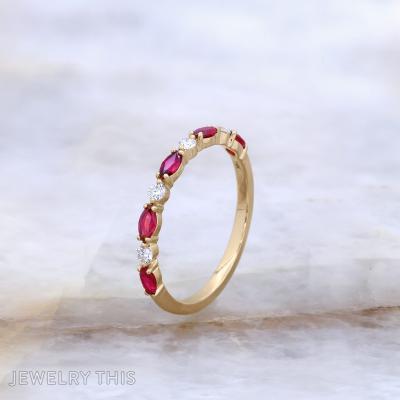
This 14k yellow gold band alternates five marquise-cut natural rubies with four round natural diamonds, ...

This eternity band pairs a full circumference of pavé-set round lab diamonds with a distinctive ...

Experience timeless elegance with this exquisite custom eternity ring crafted in luxurious 14K yellow gold. ...



