


Recreated Marquise Engagement Ring with Wave Band
$$
14k white gold, moissanite
A. wanted to recreate an engagement ring designed especially for her 29 years ago, after the original went missing and only the matching wedding band remained. Working from a photo and her own memory of its upswept, sculptural line, she chose to rebuild it in white gold this time instead of the original yellow. When the wax resin arrived for her to try on, she wrote: 'It is a perfect fit and looks fabulous.'
'It is a perfect fit and looks fabulous.' — on receiving the wax resin model
'It looks gorgeous, and I can't wait to see it in person!' — on shipping notification for the engagement ring
Quick specs
Design type
Primary Metal
Shape / Cut
Primary Stone
Accent Stones
Design Complexity
Intent: Certainty
Size
Ring size 7 US (17.32mm). Center stone 8x4mm marquise.
How they made it distinctive
-
01
Upswept bypass-shank design recreated from a 29-year-old original known to the client as one-of-a-kind
-
02
Marquise stone set at the peak of the angled shank rather than in a traditional centered setting
-
03
Wedding band hand-carved directly against the finished engagement ring for a seamless, custom-contoured fit
-
04
Rebuilt in white gold instead of the original yellow gold, making this exact color combination the only one of its kind
-
05
Moissanite selected in place of the original cubic zirconia for added durability and sparkle
How you'd make it yours
Stone: this piece uses a marquise moissanite; a new commission could use a diamond or a different fancy-cut stone in the same bypass setting
Metal: this piece is 14k white gold; the same sculptural shank works equally well in yellow or rose gold
Stone shape: the marquise cut can be swapped for oval, pear, or round on a new piece without changing the setting style
Band pairing: a wedding band can be hand-carved to nest against any uniquely shaped engagement ring, not only this design
One of a kind: this exact set was designed for one client as a recreation of her own original rings and is not reproduced — a new commission is an original piece inspired by this one
Design changes made
The piece was recreated in 14k white gold rather than the original yellow gold, a deliberate choice the client made for her skin tone rather than a correction to the design itself. The marquise center stone was also updated from the original cubic zirconia to moissanite.
Who this is for
This set is for someone who had a piece that was truly their own design and wants that same individuality back, not a replacement off a shelf. It's especially right if you're working from nothing but a photo and memory, and you want the new piece to feel distinctly yours rather than a generic recreation of 'a ring like that one.'
How it's made
Once the engagement ring's design was approved from a wax resin try-on, the piece was 3D printed in wax, attached to a tree, and invested in plaster. The flask was fired in a kiln to burn out the wax, leaving a hollow mold, and molten 14k white gold was cast into the mold under pressure. After the engagement ring was cast, cleaned, and polished, the master jeweler hand-carved a wax model for the wedding band directly against the finished ring to ensure the two pieces would nest together.
The marquise moissanite was set into a prong head that was soldered onto the cast band after casting, rather than cast as one piece with the shank. Both rings received a high-polish finish to match the mirrored, fluid look of the original sculptural design. The prong head was later replaced and the stone reset after a bent prong was identified during normal wear.
Key note
The prong head holding the center stone is soldered on as a separate piece after the main band is cast, rather than cast in one piece with the shank, which is why it could later be replaced without recasting the entire ring.
Pricing guidance
A sculptural bypass-style engagement ring with a marquise center stone and a hand-fitted wedding band sits in the lower-to-mid range for custom bridal sets. Most of the cost comes from the hand-carving required to shape a band that nests precisely against an already-cast ring, plus the labor of soldering and setting a separate prong head. Metal karat and center stone choice are what move the price most from there.
Moves price up ↑
- ↑ Upgrading the center stone from moissanite to a natural or lab diamond of comparable size
- ↑ Choosing 18k gold instead of 14k for either ring
- ↑ Adding pave or accent stones along the bypass shank
- ↑ Increasing the marquise stone size beyond 8x4mm
- ↑ Adding milgrain or engraved detail to the sculptural line
Moves price down ↓
- ↓ Choosing 10k gold instead of 14k for the non-prong portions of the band
- ↓ Selecting a smaller center stone
- ↓ Using cubic zirconia instead of moissanite for the center stone
- ↓ Simplifying the bypass shank to a single smooth band
- ↓ Pricing the wedding band separately rather than as a custom-fitted companion piece
Questions people ask
Yes, this exact set was rebuilt using only a photograph and the client's memory of the original design, which had been lost. The process starts with a sketch and 3D render for approval, followed by a wax resin model the client can physically try on before anything is cast in metal. This lets you confirm the fit and shape match what you remember before any metal commitment is made. Small adjustments can be made at the render or resin stage if something doesn't look quite right.
Moissanite is a lab-created gemstone made of silicon carbide, and it is significantly more affordable than a natural or lab diamond of comparable size. It ranks 9.25 on the Mohs hardness scale, just below diamond's 10, making it very durable for daily wear. Moissanite has a higher refractive index than diamond, which gives it noticeably more fire and rainbow-colored sparkle in direct light. Many people choose it specifically for that extra sparkle rather than as a simple diamond substitute.
White gold is gold alloyed with white metals like palladium or nickel and then typically finished with a rhodium plating for extra brightness, while yellow gold keeps gold's natural warm tone. The choice usually comes down to skin tone preference and personal style rather than durability, since both are equally strong at the same karat. White gold is sometimes priced slightly higher than yellow gold of the same karat because of the additional alloying and plating process involved. Rhodium plating on white gold will need to be reapplied every one to two years with regular wear to keep its bright white finish.
For a sculptural or irregularly shaped engagement ring like this one, the wedding band is typically hand-carved in wax directly against the finished engagement ring rather than designed independently. This ensures the two pieces nest together without gaps once both are cast in metal. The engagement ring must be cast and finished first so the jeweler has the exact physical shape to carve against. This approach takes more time than ordering a standard straight band but produces a noticeably better fit against a shaped ring.
A two-piece custom bridal set with a sculptural bypass design and a marquise center stone typically falls in the lower-to-mid price range for custom work, especially when a lab-created stone like moissanite is used instead of a diamond. The main cost drivers are the hand-carving needed to fit the band to an irregular ring shape and the labor of setting a separately soldered prong head. Metal karat, stone type, and stone size are the primary variables that shift the price from there. Because the two rings are priced as separate stages of one project, the total reflects both the engagement ring casting and the custom-fitted band.
Yes, a bent prong is a common and repairable issue, especially on a ring with a raised prong head holding a marquise or other fancy-cut stone. The standard repair is to replace the prong head entirely and reset the stone, rather than attempting to bend the original prongs back into place, since repeated bending can weaken the metal. This kind of repair typically takes a few weeks including return shipping. Catching a loose or rattling stone early and having it repaired promptly is the best way to avoid losing the stone altogether.
The engagement ring itself typically takes a few weeks from design approval to completion, including the wax resin review stage. The matching wedding band is a separate production step that begins only after the engagement ring is cast and finished, since the band is carved directly against it for a precise fit. Altogether, a two-piece set like this takes longer than a single ring because of this sequential process. Clients receive the engagement ring and the wedding band as two separate shipments rather than together.
Yes, the marquise shape is specific to this design, but the same bypass-style setting could be adapted to hold an oval, pear, or round stone with adjustments to the prong head. The marquise cut was chosen here to match the original ring's design exactly, since the piece was a recreation. On a new commission inspired by this design, the stone shape is one of the most flexible elements to change without altering the overall sculptural line of the band.
Explore Similar Creations
Every masterpiece starts with a spark. Explore how our clients raw ideas - sketches, heirlooms, inspirations - were transformed into bespoke works of arts.
This enchanting 14 karat rose gold ring captures the beauty of nature and the promise ...
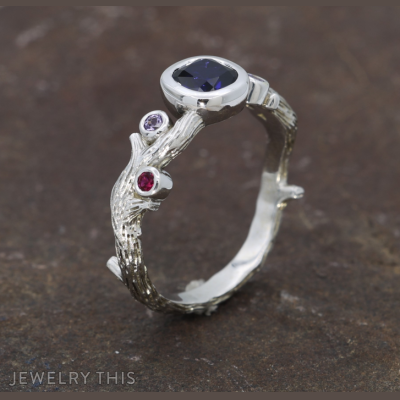
This exquisite engagement ring tells a story of love, individuality, and resilience—crafted to reflect the ...

This engagement ring reimagines a familiar silhouette with the colors flipped: a colorless oval center ...

This is a custom-designed travel ring created to replicate the client’s original engagement ring. The ...

This elegant white gold wedding set features a vibrant round brilliant-cut lab-grown emerald at the ...

Embrace the timeless beauty of this custom engagement ring, that features a 6mm cushion-cut amethyst. ...

This engagement ring was built around a center oval jade cabochon set in a bezel, ...

This raw diamond custom engagement ring is an absolute masterpiece. Crafted in 14k yellow gold ...

This engagement ring pairs a round moissanite solitaire with a 3mm white gold band engraved ...
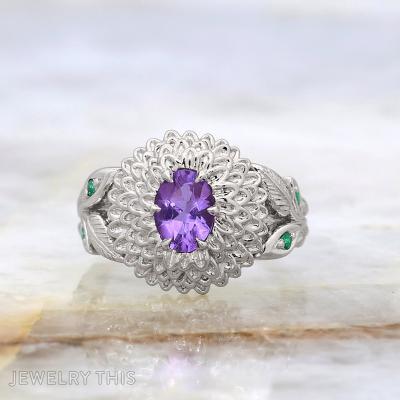
This engagement ring was designed around a lavender amethyst center stone, set within a densely ...

This bridal set recreates a wedding ring that had been lost — originally a grandmother’s ...
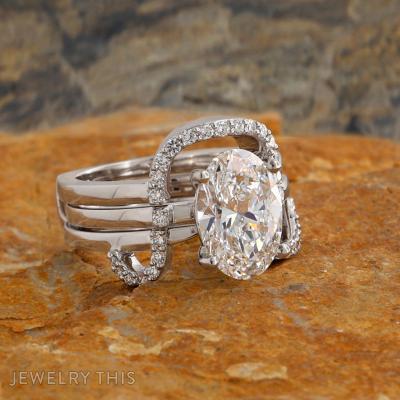
This engagement ring set is built from three interlocking bands in 14k white gold, designed ...



