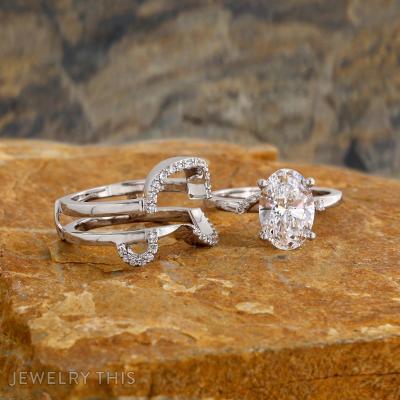
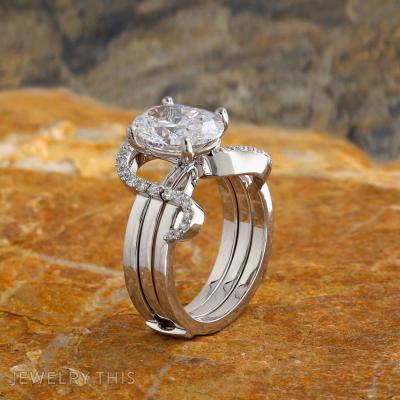
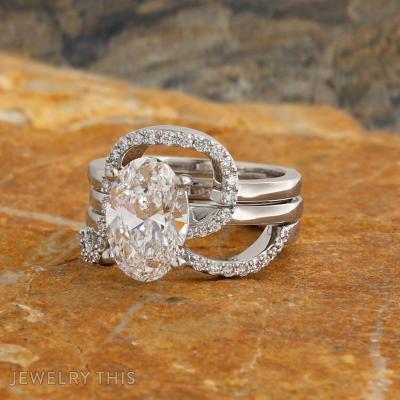
Abstract Letter Ring Guard Engagement Set in White Gold
$$$$
14k white gold, rhodium plating, lab-grown diamond, lab-grown diamonds
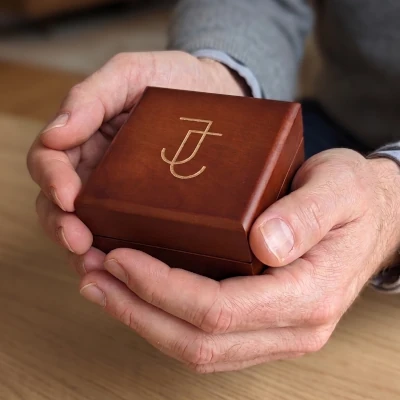
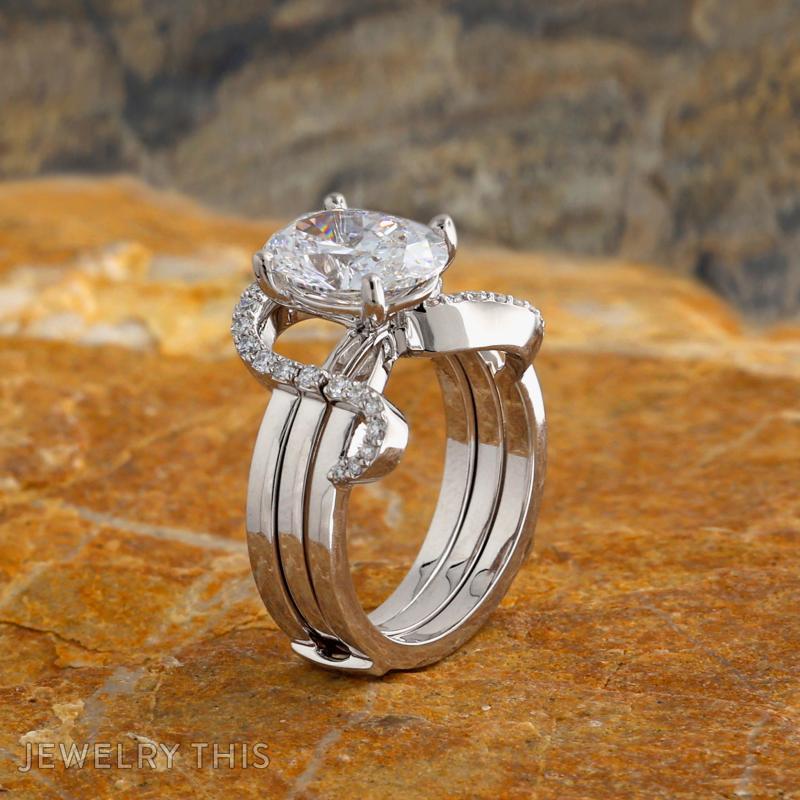
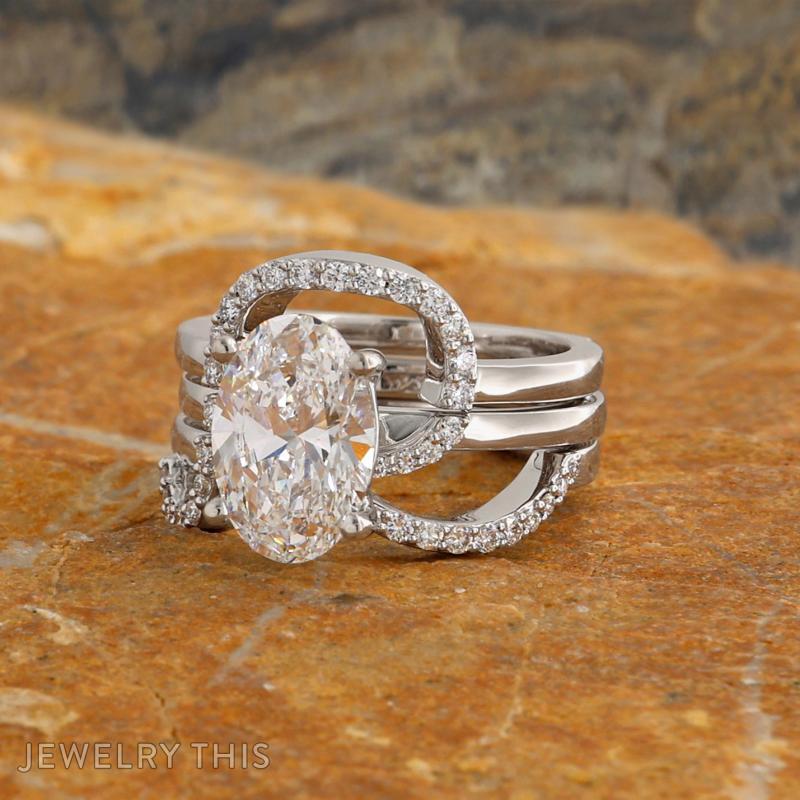
R. spent months working with our design team to translate a personal initial into a ring that didn't look like a letter at all. The first sketches used a literal R shape, but he kept refining the idea — turning it sideways, then upright, then abstracting the curves — until the letter dissolved into a set of loops that only reveal their meaning once you know what you're looking for. When the finished rings arrived, he wrote: 'It turned out perfect! Thank you so much for the special touches. I can't wait to give it to her.'
'It looks amazing.' — on seeing the first photorealistic render
'It turned out perfect! Thank you so much for the special touches. I can't wait to give it to her.' — on delivery
Quick specs
Design type
Primary Metal
Shape / Cut
Primary Stone
Accent Stones
Design Complexity
Intent: Certainty
Size
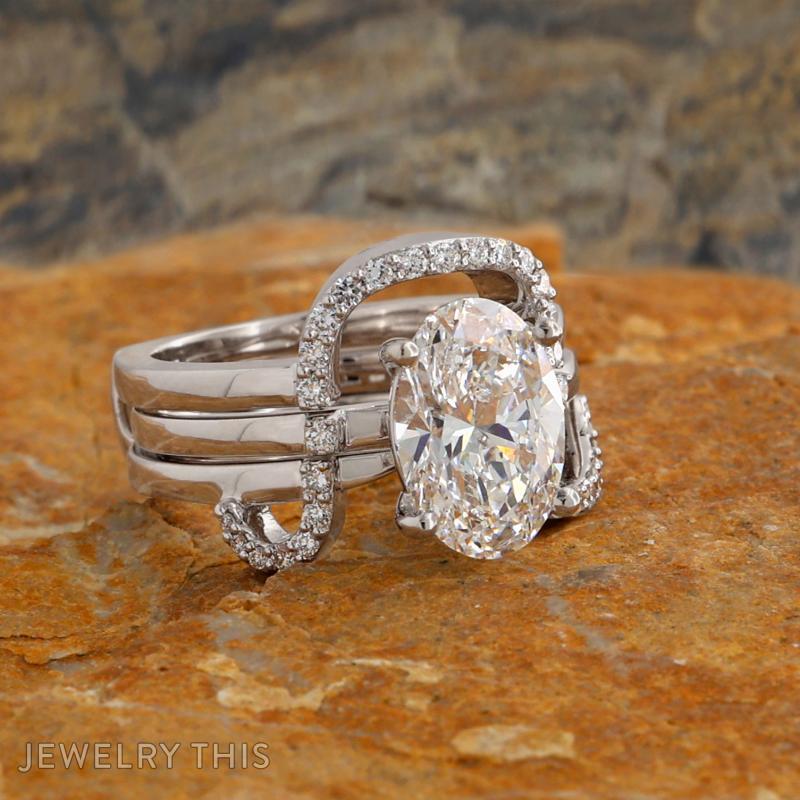
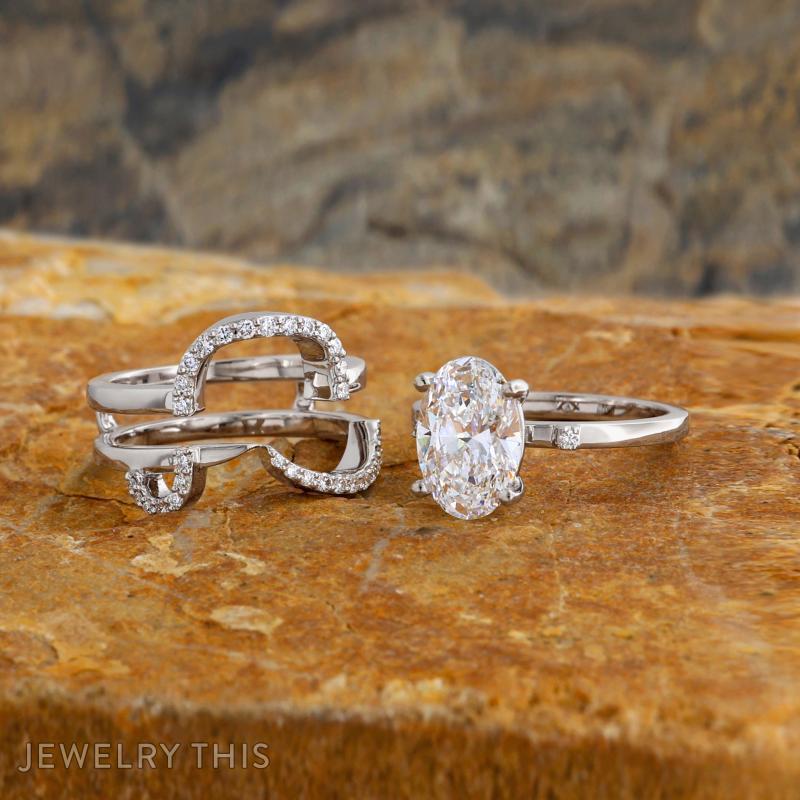
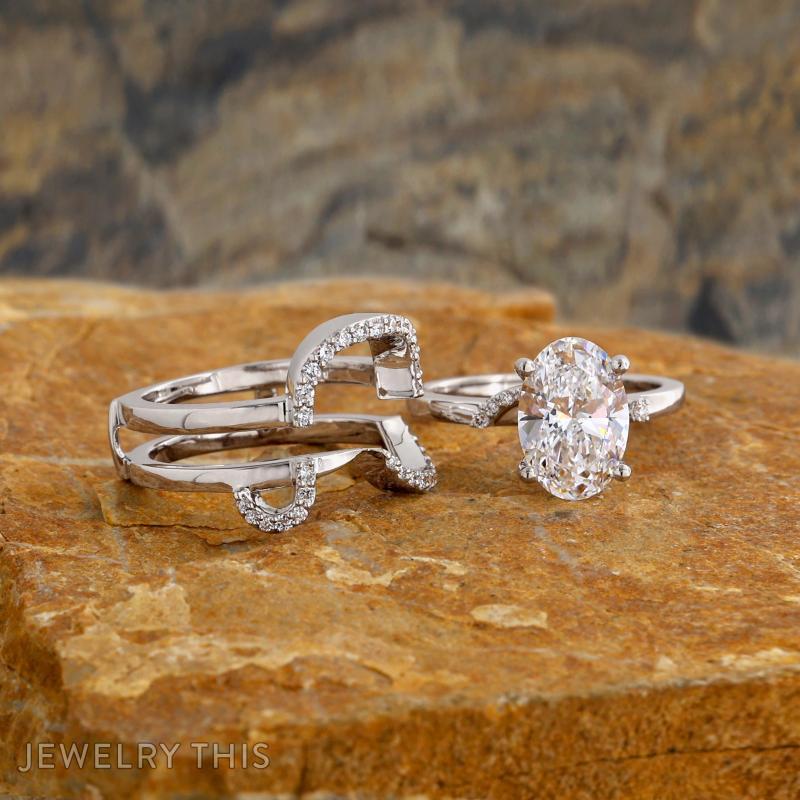
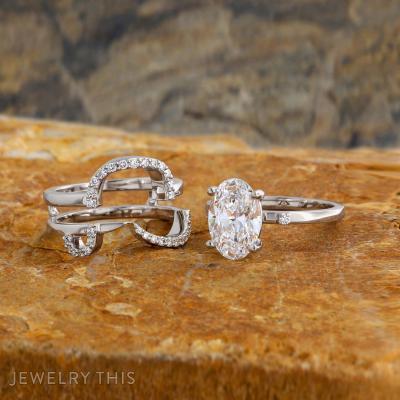
Ring size 5.5 US. Three-ring set: center solitaire plus connected two-loop ring guard worn together as one piece.
How they made it distinctive
-
01
Ring guard loops are shaped into an abstract letter form — deliberately obscured so the personal meaning stays private
-
02
Sharp terminal points on the original letter concept were rounded specifically to prevent catching on clothing during daily wear
-
03
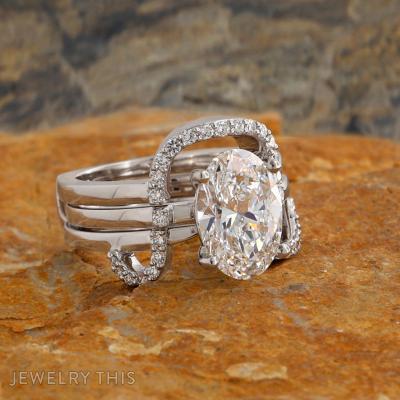
Three separate bands are engineered to function and wear as a single connected ring
-
04
Accent diamonds placed only on the ring guard, keeping the solitaire band clean and letting the guard carry the detail
-
05
2.51-carat oval lab-grown diamond chosen at a size the jeweler specifically calibrated against the design's proportions
How you'd make it yours
Stone shape: this piece uses an oval center diamond; a new commission could use round, cushion, or pear for a different look
Stone origin: this piece uses a lab-grown diamond; a natural diamond of the same cut and grade is also possible
Metal: this piece is 14k white gold; the same three-band structure works in platinum or yellow gold
Hidden motif: this piece abstracts a single letter; a new commission could hide a different initial, symbol, or shape in the same way
Accent placement: this piece sets diamonds only on the ring guard; a new piece could add or remove accent coverage on the solitaire band
One of a kind: this exact three-ring set was designed around one client's chosen letter and is not reproduced — a new commission is an original piece inspired by this one, not a copy
Design changes made
The design went through several rounds of change: the initial literal R shape was rounded to remove sharp points that could catch on fabric, the orientation shifted from sideways to upright, the center stone changed from round to oval, and the accent diamonds were moved off the band and onto the guard only. The three-ring structure was also finalized late in the process, connecting two outer loops into a ring guard so the solitaire could slide in between and the whole set wears as one piece.
Who this is for
This piece is for someone who wants a personal detail built into the engineering of the ring, not just its surface decoration. It's especially right if you like the idea of a design that only reveals its full meaning to the person who knows the story behind it, and who wants that meaning present every single day.
How it's made
Once the abstract design was finalized, the master jeweler's technical drawing was used to build a 3D model, which was reviewed and adjusted before a resin wax model was produced as a physical preview. That wax model was affixed to a wax tree, invested in plaster, and fired in a kiln to burn out the wax. Molten 14k white gold was then cast into the resulting mold for each of the three bands, producing the raw pieces ready for finishing.
After casting, each band was cleaned, filed, and polished to a mirror finish. The oval solitaire was set into a prong setting on its own band, while the small lab-grown accent diamonds were hand-set along the curved loops of the connecting ring guard. Finally, the white gold was rhodium plated to achieve the bright white finish standard for white gold jewelry, and the three rings were quality-checked together to confirm proper alignment when worn as one set.
Key note
The ring guard's loops were deliberately rounded rather than left with sharp terminal points specifically to prevent the design from catching on clothing during daily wear.
Pricing guidance
A three-band engagement ring set with a large center stone and a custom sculptural ring guard sits toward the higher end for engagement ring commissions of this complexity. Most of the added cost comes from the multi-band construction and the hand-finishing needed to align three separate rings so they sit correctly together, on top of the center diamond itself. Diamond carat weight and metal choice are the next largest cost drivers.
Moves price up ↑
- ↑ Increasing the center stone from 2.5+ carats to 3 carats or larger
- ↑ Choosing a natural diamond instead of a lab-grown diamond of the same size and grade
- ↑ Upgrading from 14k white gold to platinum for all three bands
- ↑ Adding more accent diamonds or coverage across additional band surfaces
- ↑ Choosing a higher color and clarity grade for the center stone
Moves price down ↓
- ↓ Reducing the center stone size to 1.5–2 carats
- ↓ Simplifying the design to a two-ring set rather than a three-ring interlocking structure
- ↓ Choosing a rounder, simpler accent pattern rather than one custom-shaped to spell a hidden letter
- ↓ Selecting 10k white gold instead of 14k
- ↓ Using fewer or smaller accent diamonds on the guard
Questions people ask
Yes, this is done by abstracting the letterform into curves and loops that read as a decorative pattern rather than a legible letter. The design typically goes through several rounds of sketches to find the right balance between recognizability and abstraction. A jeweler will usually round any sharp points in the letter's shape so the final design is also comfortable and catch-free to wear. The result is a piece that carries personal meaning invisible to anyone who doesn't know the story.
Lab-grown and natural diamonds are chemically, physically, and optically identical — both are pure carbon crystallized into the same structure. The only real difference is origin: one forms underground over millions of years, the other is grown in a controlled lab environment in weeks. Lab-grown diamonds typically cost significantly less than natural diamonds of the same carat, color, and clarity grade. Because they're indistinguishable to the eye, choosing lab-grown is primarily a budget and values decision, not a quality tradeoff.
A three-band set like this — a solitaire plus a connected ring guard — sits toward the higher end of custom engagement ring pricing because of the multi-band construction and the hand-finishing required to align three separate rings into one wearable unit. The center diamond's carat weight, color, and clarity are usually the single largest cost factor. Metal choice (14k white gold versus platinum, for example) and the amount of accent stone coverage also move the price meaningfully.
For a complex multi-band design, the design phase alone can take several weeks to a few months, especially if the concept goes through multiple rounds of sketches and revisions. Once a final 3D model is approved, production typically takes about four weeks from casting through stone setting and final polishing. Highly custom pieces with an evolving design concept, like a hidden-letter ring guard, often take longer on the design side than standard engagement ring styles.
Yes, this is a common technique when a client wants a solitaire to sit securely centered between decorative side bands. The two outer loops are cast and fabricated as one connected unit, called a ring guard, with a gap sized to hold the solitaire band snugly in place. This keeps all the design elements aligned every time the rings are worn, rather than shifting independently on the finger. It also means the three-piece set functions and feels like a single ring once worn together.
14k white gold is more durable than 18k because it contains a higher percentage of alloy metals, which is an advantage for a ring worn daily. Visually, the two are nearly indistinguishable because white gold's bright white color comes from rhodium plating applied to both karats, not from the gold itself. Since 18k doesn't offer a meaningful visual advantage and is softer, most people choose 14k for a ring that will see everyday wear. Platinum is the other common option — it's naturally white and more durable long-term, but denser and more expensive to work with.
Yes, white gold jewelry is plated with rhodium to achieve its bright white finish, and that plating wears down gradually with daily contact and friction. Most wearers notice the need for re-plating after one to a few years, depending on how often the piece is worn. Re-plating is a routine service most jewelers offer and restores the original bright white look. Without re-plating, the ring will gradually take on the warmer, slightly yellow undertone of the gold underneath.
Yes, accent stone placement is a flexible design choice — stones can be set along an entire band, only on a decorative element like a ring guard, or omitted from certain sections entirely. In this set, the accent diamonds were placed only on the connecting ring guard loops rather than on the solitaire band, keeping the center ring simple and letting the guard carry the detail. This kind of decision is often made after seeing a render, since it affects how busy or clean the overall set looks. It's a common late-stage adjustment during the design process.
Explore Similar Creations
Every masterpiece starts with a spark. Explore how our clients raw ideas - sketches, heirlooms, inspirations - were transformed into bespoke works of arts.
A contemporary masterpiece the Multi-Row Crossover Wedding Ring. A stunning symbol of love and commitment ...
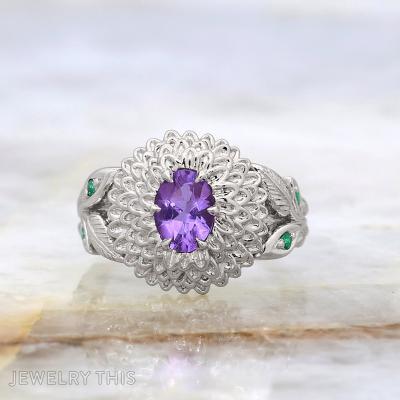
This enchanting white gold engagement ring is designed in the shape of a blooming chrysanthemum ...

This engagement ring was built around a request for a masculine design that still felt ...

This engagement ring recreates a stolen original as closely as possible from photographs alone — ...
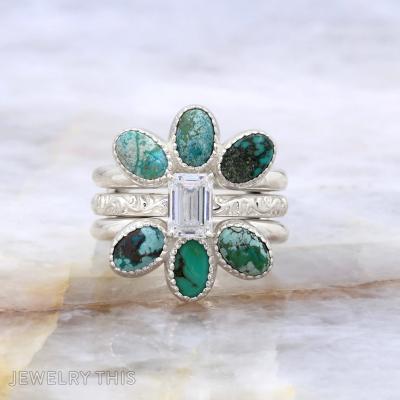
This artisanal sterling silver wedding set is a stunning fusion of modern brilliance and rustic, ...
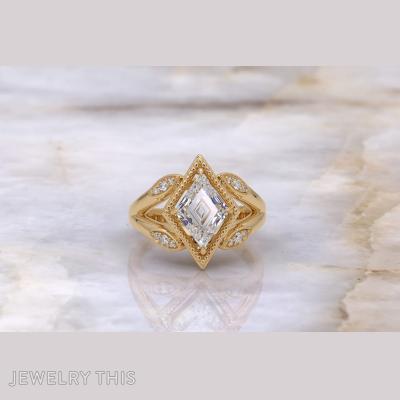
This engagement ring centers a 2.01-carat kite-shaped lab-grown diamond, set in a milgrain-edged bezel that ...
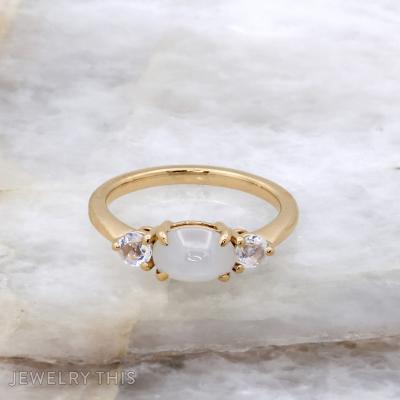
This elegant yellow gold ring features a mesmerizing oval white star sapphire cabochon set horizontally ...

This Yellow gold ring is a celebration of beauty and craftsmanship. At its heart lies ...

This white gold ring draws you in immediately with the captivating 9 carat rose cut ...

This stunning wedding set is crafted from 18karat and features a breathtaking 2.8carat Round Diamond ...

This custom engagement ring exudes elegance and sophistication with its unique design. At its center ...

This exquisite 14k white gold ring is adorned with a stunning center oval aquamarine stone, ...