


Nature-Inspired Rose Gold Engagement Ring with Purple Sapphire
$$$
14k rose gold, lab-created purple sapphire, diamonds
R. came to us wanting a ring inspired by his girlfriend's love of the outdoors — something that looked like it was made of branches and vines. The design went through several real changes: an initial render felt too wide and the flowers didn't work, so the band was narrowed and the florals were scaled down; the center stone moved from moss agate to amethyst to, finally, a lab-created oval purple sapphire for durability and color. When it arrived, he wrote: 'It looks wonderful. Very excited to pop the question in the coming months.' Months later he returned to say she said yes.
'It looks wonderful. Very excited to pop the question in the coming months.' — on delivery
'Hi Tricia, long time. She said yes!' — on returning months later to start the wedding band
Quick specs
Design type
Primary Metal
Shape / Cut
Primary Stone
Accent Stones
Design Complexity
Intent: Certainty
Size
Ring size 8½ US (18.54mm). Band width approximately 8mm at the side, 13mm at the top across the floral cluster. Center stone 1 carat oval.
How they made it distinctive
-
01
Twisting branch and vine texture wraps the band instead of a plain shank, matching the wearer's love of the outdoors
-
02
Center stone changed from moss agate to amethyst to a lab-created oval purple sapphire specifically to balance color preference with everyday durability
-
03
Center setting was custom-built around the actual stone after it was received and scanned, rather than fit to a generic oval template
-
04
Flower clusters set with tiny diamonds were scaled down and reduced in number after the client felt the first render ran too wide
-
05
Band narrowed from an original wider profile to better suit the wearer's hand while keeping the nature-inspired detail
How you'd make it yours
Center stone: this piece uses a lab-created oval purple sapphire; a new commission could use a natural sapphire, amethyst, or a different colored stone in the same cut
Metal: this piece is 14k rose gold; the same branch-and-vine language works in white or yellow gold
Flower cluster count: this piece uses a reduced, scaled-down set; a new commission could use more or fewer clusters depending on band width
Band width: this piece was narrowed to a slimmer profile; a wider band could carry more vine detail on a new piece
One of a kind: this exact ring was designed for one client and is not reproduced — a new commission is an original piece inspired by this one, not a copy
Design changes made
After seeing the first render, the band was narrowed and the flower clusters were scaled down and reduced in number because the original design felt too wide for the wearer's hand. The center stone also changed from the initially requested moss agate to amethyst, and finally to a 1-carat oval lab-created purple sapphire for better durability and a closer color match to what the client wanted.
Who this is for
This piece is for someone who wants their engagement ring to feel like it grew rather than was built — organic, textured, a little wild at the edges. It's especially right if the person you're designing for loves the outdoors and wants color at the center instead of a traditional diamond, but still needs a stone durable enough for daily wear.
How it's made
Once the design was approved, a 3D-printed resin model was produced and shared with the client as a preview before any metal was committed — a physical stand-in for the final ring. The resin was then invested in plaster and fired in a kiln to burn out the pattern, leaving a hollow mold. Molten 14k rose gold was cast into that mold, producing the raw ring body ready for finishing.
Because the center stone was changed late in the process to an oval cut, the center setting was rebuilt specifically to the sapphire's actual dimensions rather than a generic oval head — the stone was received and scanned first, then the prong setting was shaped around it for a precise fit. After casting, the branch and vine texture was hand-finished to keep the detail crisp at the narrowed width, the flower clusters were cleaned up, and the small round diamonds were set by hand into each flower center before final polishing.
Key note
The center setting wasn't modeled from a standard oval template — it was built around the actual sapphire after the stone was received and scanned, which is why the fit reads so precise in the finished ring.
Pricing guidance
A nature-inspired rose gold engagement ring with a colored center stone and hand-finished branch and floral detailing sits in the mid-to-upper range for custom engagement rings of this complexity. Most of the cost comes from the hand-finishing required to keep delicate vine and flower detail crisp after casting, plus the labor of building a custom setting around a non-standard oval stone. Center stone choice and accent stone count are the two biggest levers on price from there.
Moves price up ↑
- ↑ Upgrading the center stone from lab-created to a natural purple sapphire of comparable size and clarity
- ↑ Increasing the number of diamond-set flower clusters along the band
- ↑ Choosing a larger center stone than 1 carat
- ↑ Adding matching detail to a wedding band designed to nest against this ring
- ↑ Selecting platinum instead of 14k rose gold for the band
Moves price down ↓
- ↓ Reducing the number of flower clusters or simplifying the vine texture
- ↓ Using a round stone instead of a custom-fit oval, which avoids rebuilding the center setting from scratch
- ↓ Choosing a smaller center stone carat weight
- ↓ Replacing the diamond accents with lab-created white sapphires or moissanite
- ↓ Narrowing the band further to reduce metal and finishing labor
Questions people ask
Yes. Lab-created sapphire has the same hardness as natural sapphire — a 9 on the Mohs scale, second only to diamond — so it holds up very well to daily wear. The main difference from a natural stone is origin, not durability or appearance; a lab-created stone is grown in a controlled setting rather than mined. For a design like this, where color and durability both mattered, a lab-created purple sapphire gives a saturated, consistent color at a more accessible size than many natural options.
Moss agate and amethyst are both significantly softer than sapphire — moss agate is a quartz variety around 7 on the Mohs scale, and amethyst is similar, while sapphire sits at 9. For an engagement ring worn every day, that difference matters over years of wear, since softer stones are more prone to scratching and chipping. Sapphire also holds a deeper, more saturated color across a wider range of purples than amethyst typically offers. It's a common substitution when a client loves a colored stone aesthetic but wants it to hold up long-term.
Yes, but it requires rebuilding the center setting rather than simply resizing an existing one. A setting designed for a round stone has a different prong arrangement and head shape than one built for an oval, so the stone needs to be sourced and scanned first, and the setting is then shaped specifically around its actual dimensions. This adds a short amount of time to production but results in a more precise, secure fit than trying to adapt a round setting to a different shape.
A ring with this level of detail — twisting vine and branch texture, multiple diamond-set flower clusters, and a custom-built setting for a colored center stone — sits in the mid-to-upper range for custom engagement rings. The main cost driver is labor: hand-finishing organic detail after casting takes considerably more time than polishing a plain band. Center stone choice and the number of accent stones are the next biggest factors in the final price.
From design approval to shipping, a ring like this typically takes around four to five weeks in production, following one to two weeks of design refinement before that. When a center stone needs to be sourced and scanned before the setting can be finalized, as happened here, that adds some time to the design phase specifically. Changes requested mid-design, like switching stone shapes or adjusting the band width, also add time before production begins.
Yes — band width is one of the more flexible elements on a nature-inspired ring like this. In this design, the band was actually narrowed partway through the process because the original width felt too bold for the wearer's hand, and the flower clusters were scaled down to match. A narrower band generally means less metal and somewhat less finishing time, while a wider band gives more room for detail like vine texture or additional stones.
A ring with texture and detail concentrated at the top of the band, like this one, can typically be resized within a standard range without disturbing the design, since the back and sides of the shank are usually smoother and easier to work with. Larger resizes may require more careful handling around the textured and flower-cluster sections. It's always worth having any resize done by someone experienced with detailed custom bands rather than a general resize service.
Small accent diamonds set into flower details are generally secure and low-maintenance, since they're set low and protected by the surrounding metalwork rather than raised and exposed like a solitaire. Routine cleaning with mild soap and a soft brush is usually enough to keep them bright. It's worth having the prongs checked periodically by a jeweler, as with any set stone, to make sure nothing has loosened over years of wear.
Check what our clients say about us

Ryan Larson
2 years ago
Designing jewelry, especially when it is not for yourself, can be difficult. You change your mind and have to work on what you think "looks" best. Tricia and the team at JewelryThis was incredibly kind, patient, knowledgeable, and a true pleasure to work with. Their process works very well to walk you through how to create your picture perfect custome piece.
Explore Similar Creations
Every masterpiece starts with a spark. Explore how our clients raw ideas - sketches, heirlooms, inspirations - were transformed into bespoke works of arts.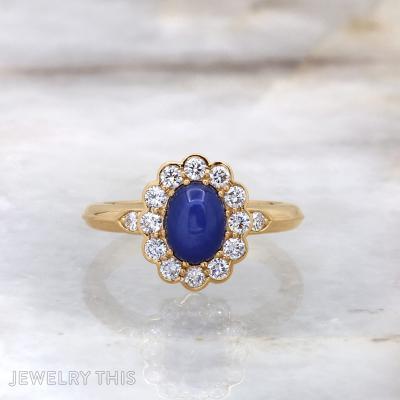
This romantic yellow gold engagement ring centers around a mesmerizing oval cabochon-cut lab grown blue ...
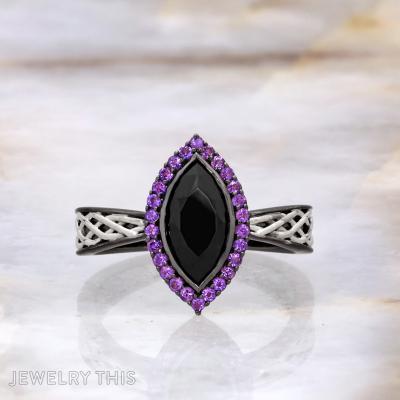
This engagement ring centers a custom-cut marquise black spinel, bezel-set and surrounded by a halo ...

A modern marvel is found in the striking three-stone engagement ring. At its center is ...

This exquisite art-deco inspired engagement ring features a beautiful round Diamond as its focal point. ...
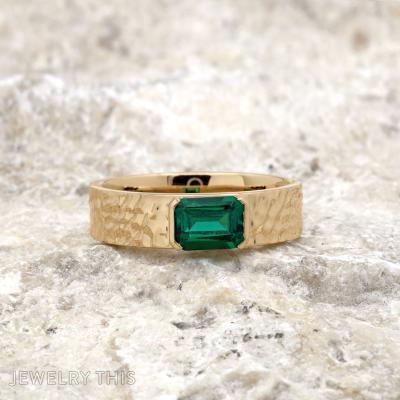
This striking 14-karat yellow gold band offers a bold, handcrafted aesthetic that balances rugged texture ...
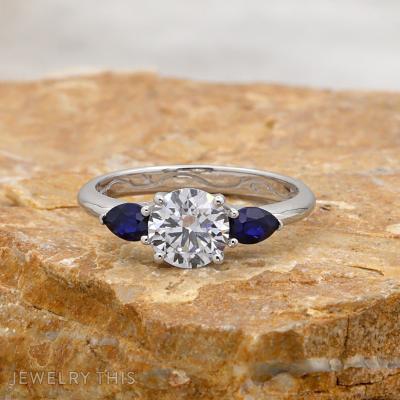
This engagement ring centers a round lab-grown diamond flanked by two pear-shaped sapphires, chosen in ...
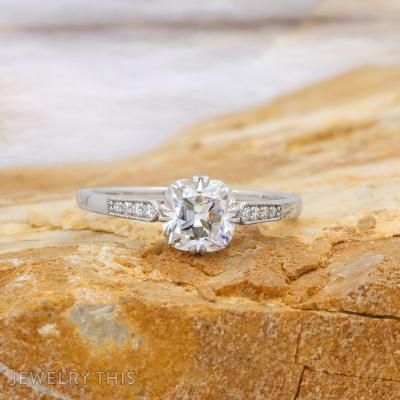
This engagement ring draws on Victorian-era design language, built around a cushion-shaped old mine cut ...
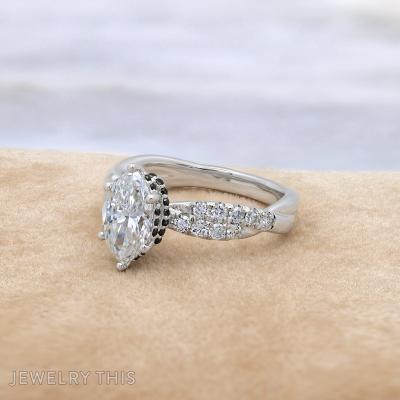
This striking white gold engagement ring features a captivating marquise-shaped diamond set at the center, ...

Introducing this Nature Lover’s Engagement Ring. The ultimate dream engagement ring for nature lovers. Crafted ...

This white gold ring draws you in immediately with the captivating 9 carat rose cut ...

This three-stone ring pairs a round center Montana sapphire with two smaller round sapphires in ...

This engagement ring replaces one that was lost, recreated as closely as possible to the ...



