


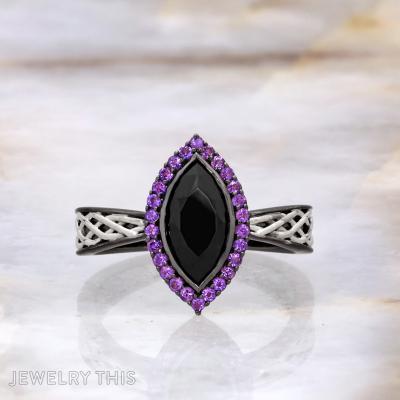


Gothic Celtic Engagement Ring with Black Spinel & Amethyst Halo
$$$
14k white gold, black rhodium plating, black spinel, amethyst
A client came to us wanting an engagement ring built around a black center stone and a halo of purple accent stones, inspired by a design he found and loved. The piece went through several stone options — onyx, black diamond, and a custom-cut black spinel — before landing on the spinel for its luster, paired with a black rhodium finish over an open Celtic-knot band. When it arrived, he wrote simply: 'My wife loves the ring.'
'My wife loves the ring.' — on delivery
Quick specs
Design type
Primary Metal
Shape / Cut
Primary Stone
Accent Stones
Design Complexity
Intent: Certainty
Size
Ring size 9½ US (19.35mm). Center stone custom cut to 12mm x 6mm marquise.
How they made it distinctive
-
01
Center stone custom-cut to a 12mm x 6mm marquise shape specifically to achieve the scale the client wanted
-
02
Black rhodium plating applied only to the band and bezel, with the Celtic knotwork masked off and left in polished white gold for contrast
-
03
Bezel setting chosen for the center stone to protect the marquise edges during daily wear
-
04
Purple halo stones selected to complement the black center stone rather than a traditional diamond halo
-
05
Open Celtic-knot weave running the full length of both shoulders rather than a solid band
How you'd make it yours
Center stone: this piece uses a custom-cut black spinel; a new commission could use black onyx for a similar look at lower cost, or black diamond for more brilliance and hardness
Halo stones: this piece uses round amethyst; a new commission could use purple sapphire for more durability in daily wear
Metal: this piece is 14k white gold with black rhodium plating; the same Celtic design works in sterling silver or left unplated in natural white gold
Engraving: the interior of the band can carry a new inscription on a fresh commission
Band finish: the two-tone black-and-white contrast from the masked plating is a distinctive choice, but a new piece could be finished entirely in black rhodium or left fully polished
One of a kind: this exact ring was designed for one client and is not reproduced — a new commission is an original piece inspired by this one, not a copy
Design changes made
The client considered black onyx and black diamond before settling on a custom-cut black spinel for the center stone, chosen for its luster. The entire band was finished in black rhodium plating rather than left in white gold, with the Celtic-knot weave left exposed in polished white metal for contrast.
Who this is for
This piece is for someone drawn to a gothic or alternative aesthetic who still wants a ring built for everyday wear. It's especially right if you want a dark, symbolic center stone without giving up the structure and durability of a traditional setting style.
How it's made
Once the design was approved, a 3D model was built and printed in wax, then attached to a wax tree and invested in plaster before being fired in a kiln to burn out the wax and leave a mold. Molten 14k white gold was then cast into the mold, cooled, and extracted as the raw ring. The custom-cut black spinel was sourced and cut to the required marquise dimensions before stone setting.
After casting, the ring was cleaned and polished, with the open Celtic-knot weave on each shoulder finished bright and left in polished white gold. Black rhodium plating was then applied over the remaining band and bezel setting, creating the two-tone contrast between the dark plated areas and the bright woven metalwork. The black spinel was bezel-set in the center, and the small round purple accent stones were set by hand around it to form the halo.
Key note
The Celtic-knot weave on the shoulders was deliberately masked and left unplated so the black rhodium would only coat the bezel and band, creating the two-tone effect in a single plating pass.
Pricing guidance
A sterling silver or white gold ring with a custom-cut center stone, a halo, black rhodium plating, and an openwork Celtic band sits toward the higher end for a piece of this complexity. Custom-cutting a stone to a specific shape and size, rather than sourcing one from standard inventory, is one of the larger cost drivers here, along with the plating and the openwork metalwork on both shoulders. Metal choice between sterling silver and 14k white gold is the next biggest swing factor.
Moves price up ↑
- ↑ Custom-cutting the center stone to a non-standard size or shape rather than using standard inventory
- ↑ Upgrading from sterling silver to 14k or 18k white gold
- ↑ Using a black diamond instead of a colored stone like spinel or onyx for the center
- ↑ Adding black rhodium plating across the full band rather than partial coverage
- ↑ Increasing the halo stone count or upgrading to natural sapphires instead of amethyst
Moves price down ↓
- ↓ Using black onyx instead of a custom-cut spinel for the center stone
- ↓ Choosing sterling silver instead of 14k white gold
- ↓ Simplifying the Celtic knotwork to a plain or less detailed band
- ↓ Reducing the number of halo accent stones
- ↓ Skipping the black rhodium plating and leaving the metal in its natural color
Questions people ask
Black spinel rates about 8 on the Mohs hardness scale, which makes it a reasonably durable choice for daily wear in a ring. It's harder than opal or turquoise but softer than sapphire or diamond, so it can still pick up surface wear over years of use. A bezel setting, which wraps metal around the stone's edge rather than holding it with prongs, offers extra protection against chipping. Most jewelers consider 8 and above suitable for ring use with reasonable care.
Black onyx is an opaque quartz variety that's the most affordable of the three and has a flat, matte-to-glossy black appearance. Black spinel is a naturally occurring gemstone with more visible luster and brilliance since it's faceted rather than cabochon-cut, and it sits in the middle price range. Black diamond is the most expensive option and the hardest at a 10 on the Mohs scale, with a unique sparkle from its internal inclusions. All three can be cut into a marquise shape, though spinel and diamond often require custom cutting to hit a specific size since black marquise stones aren't common off-the-shelf inventory.
Black rhodium is a surface plating applied over white gold or silver, and like any plating, it will gradually wear with daily contact, especially on the underside of the band and anywhere it rubs against other surfaces. Most wearers see noticeable fading within one to two years of regular wear, though this varies with how the ring is worn and cared for. Re-plating is a standard jewelry service and can restore the black finish when it fades. Many people also find the natural wear pattern becomes part of the ring's character over time.
A ring with a custom-cut center stone, a gemstone halo, black rhodium plating, and an openwork Celtic band falls toward the higher end of custom engagement ring pricing. The custom stone-cutting process and the detailed open metalwork on the band are the main cost drivers, since both require extra sourcing time and hand-finishing labor. Metal choice (sterling silver versus 14k white gold) is the next largest factor in the final price. Simpler versions using stock-cut stones and a plain band bring the cost down significantly.
Custom-cutting a stone to a specific shape and size typically adds a couple of weeks to the timeline beyond a standard build, since the stone has to be sourced and cut to order rather than pulled from existing inventory. Once the stone is ready and fitted to the setting, production of the ring itself generally takes three to four weeks from design approval. The full process, including design revisions and stone sourcing, often runs several weeks longer than a standard ring build. Weekly updates are typical during the production phase so the client can track progress.
Yes, this is achievable by masking the areas meant to stay white gold before the black rhodium plating is applied, so the plating only coats the exposed metal. It requires careful attention during the finishing stage because of how detailed openwork patterns can be, but it produces a clear two-tone contrast between the bright polished knotwork and the black plated band. This approach works especially well on an open, carved design where the raised and recessed areas are easy to distinguish during masking. The exact result can vary slightly depending on the complexity of the knotwork.
Yes, a matching wedding band can be designed to sit flush against a ring with an off-center or large marquise setting. Because a straight band typically can't tuck neatly against a wide or raised center stone, a common solution is a U-shaped or contoured band with an open section where the head of the engagement ring rests. This keeps the pair sitting level on the finger when worn together. The band can carry the same Celtic knotwork and finish as the engagement ring for a cohesive look.
Scratches are a normal part of daily wear for any ring, regardless of metal or plating, and tend to show up most on the underside of the band where it contacts surfaces throughout the day. White gold and black rhodium plating will both show fine surface marks over time, and the plated areas may show wear slightly sooner than solid metal. This is cosmetic and doesn't affect the ring's structural integrity. Many wearers find that the marks that build up over years of wear become part of what makes the piece feel personal.
Explore Similar Creations
Every masterpiece starts with a spark. Explore how our clients raw ideas - sketches, heirlooms, inspirations - were transformed into bespoke works of arts.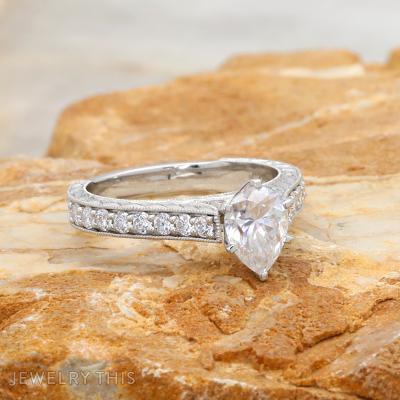
This engagement ring replica was built to stand in for a treasured original the client ...

This wedding set is made sterling silver and set with a center round moonstone with ...
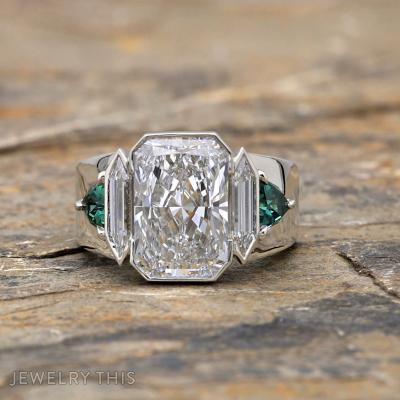
This engagement ring pairs a large elongated radiant center stone with a pair of custom ...

Elegance and grace converge in this exquisite yellow gold engagement ring, showcasing a 1.2carat marquise ...

This modern 14k rose gold ring features a unique wrapping design that splits at the ...

Crafted in white gold, this enchanting engagement ring features an oval diamond at its center, ...

This timeless three stone engagement ring is crafted in 14k white gold and features a ...
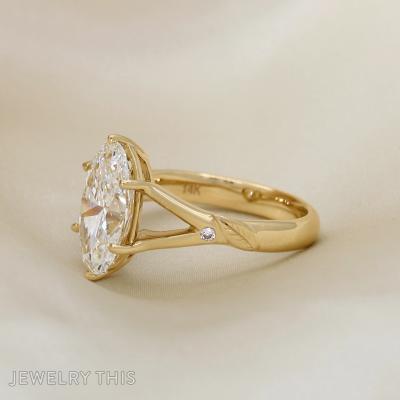
This engagement ring pairs a bold elongated oval center diamond with a softly split yellow ...

This enchanting platinum engagement ring showcases a striking hexagonal-shaped teal sapphire at its center, chosen ...
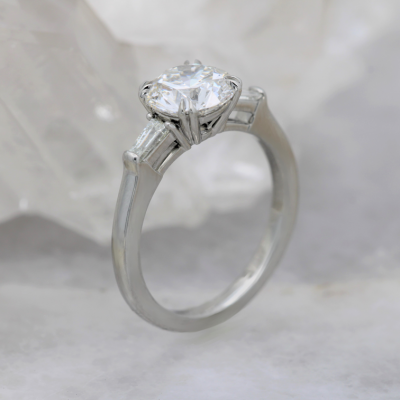
This engagement ring centers a 2-carat round brilliant lab-created diamond held in a four-prong setting, ...

This yellow gold ring centers on a brilliant marquise diamond, elegantly framed by two smaller ...
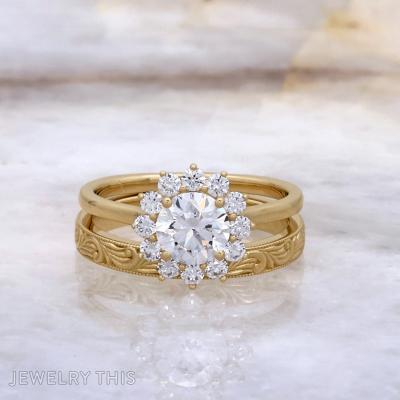
This exquisite 14K yellow gold wedding set seamlessly blends timeless romanticism with modern ethical luxury. ...



