


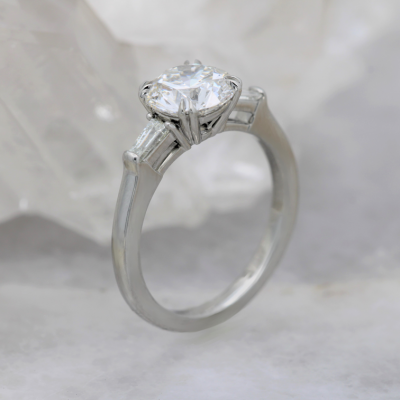


Platinum Solitaire Engagement Ring with Baguette Accents
$$$
Platinum, lab diamond, mined diamond baguettes
A client came to us with a clear vision for a classic engagement ring: a 2-carat round solitaire flanked by tapered baguettes, set in platinum. He chose his own center diamond from sourced options before the design moved forward, then approved the first render without any changes. When it arrived, he wrote simply: 'It looks beautiful... thank you for all of your help.'
'It does look fantastic.' — on seeing the first render
'It looks beautiful... thank you for all of your help.' — on delivery
Quick specs
Design type
Primary Metal
Shape / Cut
Primary Stone
Accent Stones
Design Complexity
Intent: Certainty
Size
Ring size 6½ US (16.92mm). Band width 2mm. Center stone 2.00ct.
How they made it distinctive
-
01
Four-prong setting chosen specifically to showcase more of the 2-carat round brilliant's surface area
-
02
Tapered baguette side stones sized and proportioned only after the center diamond was physically received
-
03
Platinum selected for its durability and natural white color, avoiding the need for future rhodium replating
-
04
Client personally selected the center diamond from sourced options before the design process began
How you'd make it yours
Stone: this piece uses a lab-created round diamond; a new commission could use a natural diamond, moissanite, or a colored stone like sapphire
Metal: this piece is platinum; the same three-stone silhouette works in 18k white gold or yellow gold
Side stones: this piece uses tapered baguettes; a new commission could use trillions, half-moons, or a pavé band instead
Setting: this piece uses a four-prong head; a six-prong setting is available for additional security on a large center stone
One of a kind: this exact ring was designed around one client's chosen diamond and is not reproduced — a new commission is an original piece inspired by this one, not a copy
Design changes made
Design matched the initial brief without major changes.
Who this is for
This piece is for someone who already has a clear, classic vision in mind and wants to see it built around a diamond they chose themselves. It suits a wearer who values a traditional three-stone silhouette with clean lines over an elaborate or trend-driven design.
How it's made
Once the client approved the 3D render, the design was 3D printed in wax and attached to a tree within a casting flask. The flask was heated in a kiln to burn out the wax, leaving a hollow mold, and molten platinum was poured into the cavity to form the raw ring. After cooling, the piece was removed from the mold and prepared for finishing.
The band was cleaned and polished to a mirror finish along its full length. The center diamond was set into the four-prong head first, followed by the two tapered baguette diamonds set into the shoulders on either side, proportioned specifically to flank the 2-carat center stone. The result is a continuous polished platinum surface with no competing finish zones, keeping all visual attention on the stones.
Key note
The baguette side stones were sourced and proportioned only after the center diamond was received, so their taper and length were cut to match this specific stone rather than a standard pre-set size.
Pricing guidance
A platinum three-stone solitaire with a 2-carat center diamond and baguette accents sits toward the higher end for engagement rings of this complexity, largely because of the platinum content and the center stone size. Most of the cost is driven by the center diamond itself, with the metal and baguette sourcing as secondary factors.
Moves price up ↑
- ↑ Choosing a natural mined diamond over a lab-created center stone of the same size and grade
- ↑ Increasing the center stone's carat weight beyond 2 carats
- ↑ Upgrading the baguettes to a higher clarity or larger carat total weight
- ↑ Selecting a higher color grade (D-F) for the center stone
- ↑ Adding milgrain or filigree detailing to the shoulders
Moves price down ↓
- ↓ Choosing 18k white gold instead of platinum for the band
- ↓ Selecting a smaller center stone, such as 1 to 1.5 carats
- ↓ Using lab-created baguettes instead of mined baguettes
- ↓ Accepting a lower clarity grade such as SI1 or SI2 for the center stone
- ↓ Simplifying to a plain two-prong or six-prong setting without side stones
Questions people ask
Lab-created and mined diamonds are chemically and optically identical — both are pure carbon with the same hardness, brilliance, and fire. The only difference is origin: one is grown in a controlled lab environment, the other is mined from the earth over geological time. For a 2-carat center stone, choosing lab-created typically costs significantly less than a mined diamond of the same carat weight, color, and clarity. Visually, there is no way to tell them apart without specialized equipment.
Platinum is naturally white and does not require rhodium plating to stay bright, unlike white gold, which needs periodic replating as the plating wears. Platinum is also denser and more durable over decades of daily wear, making it a common choice for pieces intended to last a lifetime. It is hypoallergenic, which matters for wearers with sensitive skin. The tradeoff is that platinum typically costs more than white gold due to both the metal's higher market price and its density, which means more material by weight for the same ring size.
A baguette is a rectangular step-cut diamond, commonly used to flank a center stone in a three-stone ring design. Tapered baguettes narrow from one end to the other, which allows them to follow the curve of the shoulder next to a round center stone. They are prized for their clean architectural lines, which contrast with and frame a round brilliant center stone without competing for attention. In this design, the baguettes were cut and sized specifically to match the dimensions of the 2-carat center diamond.
A platinum solitaire with baguette side stones and a 2-carat lab-created center diamond generally falls toward the higher end of engagement ring pricing, due to the platinum content and the size of the center stone. The center diamond itself is usually the largest cost driver, followed by the platinum used in the band. Choosing a mined center stone instead of lab-created would increase the cost further, while a smaller center stone or a different metal would bring it down.
The design phase typically takes about a week, during which a 3D render is created and refined based on feedback before approval. Once the design is approved, production takes approximately four to five weeks under standard timelines, covering wax modeling, casting, and finishing. Rush timelines can sometimes be accommodated for a specific deadline, such as a holiday or anniversary, if arranged in advance. Total turnaround from first approval to delivery is typically five to six weeks under standard scheduling.
Yes, a client can select and secure their own center diamond before the full ring design is completed. Once the center stone is received and measured, the setting and any side stones are sized and proportioned specifically around that stone's actual dimensions. This approach ensures the prongs, baguettes, or other accent stones fit the exact stone rather than a generic size estimate. It does mean the side-stone sourcing happens after the center stone arrives, which is a normal part of the process.
A platinum solitaire with a four-prong head and baguette side stones can typically be resized within a modest range, similar to most platinum rings, though the side stones add some complexity compared to a plain band. Platinum is a dense metal that holds up well to the resizing process without weakening significantly within normal size adjustments. Larger resizing jumps are more involved with baguette side stones in place, since the shoulders must be reshaped carefully around them. It's best to confirm your ring size as precisely as possible before the final casting to minimize the need for resizing later.
A four-prong setting is a standard, secure way to hold a round brilliant diamond of this size, distributing pressure evenly across four contact points. It shows slightly more of the diamond than a six-prong setting would, which many people prefer for a cleaner look on a larger center stone. Platinum prongs are also more resistant to wear than gold prongs, holding their shape longer under daily use. Routine prong checks every year or two are recommended for any prong-set ring, particularly with a larger center stone.
Explore Similar Creations
Every masterpiece starts with a spark. Explore how our clients raw ideas - sketches, heirlooms, inspirations - were transformed into bespoke works of arts.
This bridal set recreates a wedding ring that had been lost — originally a grandmother’s ...

Elegance meets heritage in this 14k white gold art deco-inspired ring. The centerpiece, a cherished ...
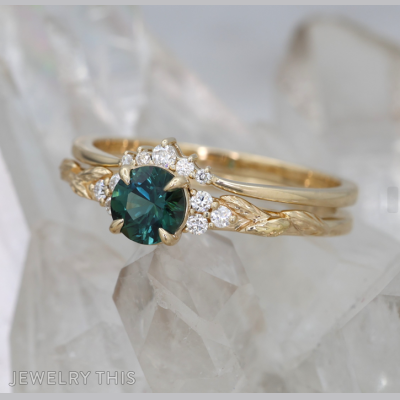
This enchanting engagement ring is a celebration of timeless love and individuality. At its heart ...
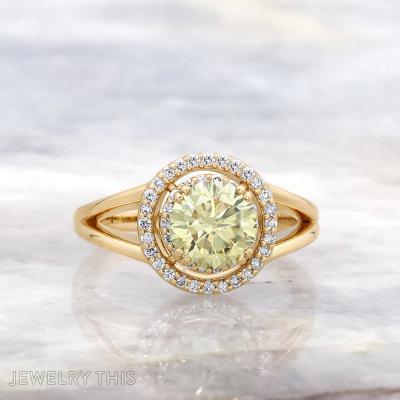
Crafted as a beautiful and cost-effective tribute to a cherished original, this yellow gold engagement ...

This Platinum ring is a symbol of life’s vibrant connections. At its heart, a 1 ...

This captivating yellow gold engagement ring features a stunning pear-shaped diamond as its centerpiece. The ...

These exquisite wedding sets, each carefully customized, reflect the unique journey of the couple. They ...
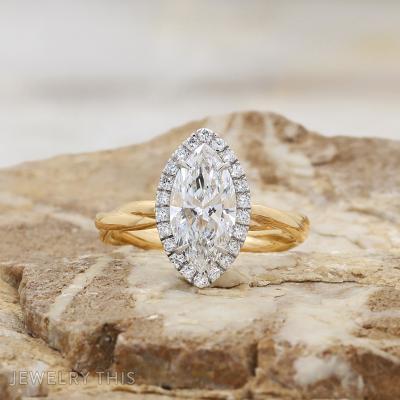
This elegant two-tone engagement ring beautifully combines modern brilliance with timeless design. At its heart, ...

Elevate your love story with this exquisite custom engagement ring, a testament to timeless beauty ...

This engagement ring centers a bi-color teal-green emerald-cut Montana sapphire, set in a four-prong mounting ...
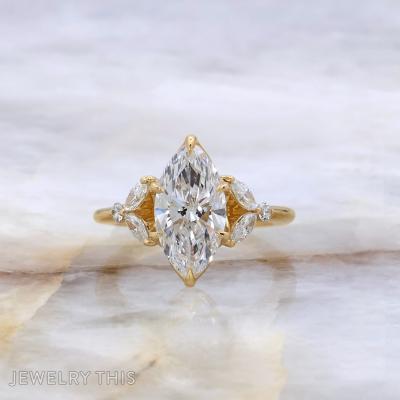
This breathtaking yellow gold engagement ring is a masterclass in asymmetrical, nature-inspired design. At its ...
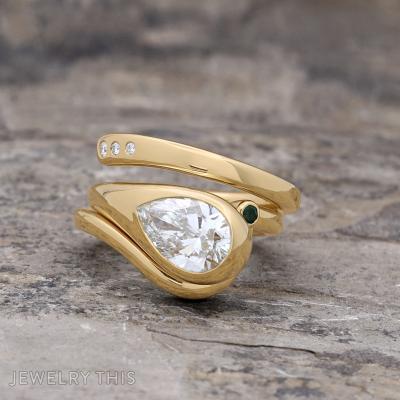
This breathtaking yellow gold wedding set is a masterclass in organic, bypass-style design. The engagement ...



