


Teal Montana Sapphire Engagement Ring with Tapered Diamonds
$$$
14k yellow gold, natural sapphire, lab-grown diamonds
A. came to us wanting a Montana sapphire engagement ring built around a teal-green stone she'd specifically chosen for its color shift, with room built into the design for a wedding band to stack flush against it later. Partway through, she and her partner saw a more dramatic elongated diamond shape they liked better than the original baguettes, and the side stones were custom-cut to match. When it arrived, she wrote: 'It came out amazing! It's so beautiful. I love it and I think my partner will too.'
'Oh my gosh! It's amazing!! It's perfect!!' — on seeing the finished ring photo before shipping
'It came out amazing! It's so beautiful. I love it and I think my partner will too.' — on delivery
Quick specs
Design type
Primary Metal
Shape / Cut
Primary Stone
Accent Stones
Design Complexity
Intent: Certainty
Size
Ring size 6½ US (16.92mm). Center stone approximately 1.61ct emerald cut.
How they made it distinctive
-
01
Center stone is a bi-color teal-green Montana sapphire chosen specifically for its natural color shift rather than a traditional blue sapphire or diamond
-
02
Side walls built flatter and flush specifically so a wedding band can sit against the ring without gapping, for future stacking
-
03
Side accent diamonds custom-cut to an elongated shape after the client requested a more dramatic silhouette than the original tapered baguettes
-
04
Four-prong setting chosen to protect the emerald-cut sapphire's corners from daily wear
-
05
Interior hand-engraved with a single initial as a personal finishing touch
How you'd make it yours
Stone type: this piece uses a Montana sapphire; a new commission could use a different colored sapphire, moissanite, or a diamond center stone
Side stones: this piece uses custom-cut elongated diamonds; a new design could use standard tapered baguettes, round accents, or a different custom shape
Metal: this piece is 14k yellow gold; the same three-stone design works in 18k gold, white gold, or rose gold
Engraving: the interior band can carry a new initial, date, or short phrase on a fresh commission
One of a kind: this exact ring was designed for one client's chosen stone and is not reproduced — a new commission is an original piece inspired by this one, not a copy
Design changes made
The side accent stones were changed from standard tapered baguettes to a custom elongated kite shape after the client and her partner saw a style they preferred partway through production, requiring a custom cutting order from the stone cutter.
Who this is for
This piece is for someone who wants a colored center stone with real personality rather than a traditional diamond solitaire, and who already has an eye on the bigger picture — building a setting that can carry a wedding band flush against it down the road. It's especially right for someone willing to work through the details slowly, refining stone shapes and settings until the design feels exactly right rather than settling for the first option.
How it's made
Once the center sapphire and the design were finalized, the setting was built as a 3D digital model and shared as a photorealistic render for approval before any metal was cast. The ring was then cast in 14k yellow gold using a lost-wax casting process, with the side walls built flatter than a standard rounded shank so a wedding band can later sit flush against it.
After casting, the band was polished to a bright finish and the prongs were prepared for stone setting. The center sapphire was set first into its four-prong mounting, followed by the two custom-cut elongated diamonds set into the tapered channel on either side. An initial was then hand-engraved on the interior of the band as a final finishing step.
Key note
The side diamonds were custom-cut to an elongated shape rather than pulled from standard tapered baguette inventory, since the narrower, more dramatic silhouette the client wanted doesn't exist in calibrated stock sizes.
Pricing guidance
A three-stone sapphire engagement ring with custom-cut diamond accents sits in the higher end of the mid range for custom engagement work. Colored center stones of this size and a flush-set side wall built for stacking add labor beyond a standard solitaire mounting, and custom-cut accent stones push the cost up further than stones pulled from existing inventory.
Moves price up ↑
- ↑ Custom-cutting the side stones to a non-standard elongated shape rather than using calibrated tapered baguettes
- ↑ Choosing natural mined diamonds over lab-grown for the side accents
- ↑ Increasing the center sapphire's carat weight or selecting a rarer color
- ↑ Adding a matching engraved wedding band designed to stack flush against this setting
- ↑ Upgrading from 14k to 18k gold
Moves price down ↓
- ↓ Using standard calibrated tapered baguettes instead of custom-cut accent stones
- ↓ Choosing moissanite instead of lab-grown diamonds for the side stones
- ↓ Selecting a smaller carat weight center sapphire
- ↓ Skipping the flush side-wall modification if stacking isn't a priority
- ↓ Omitting the interior engraving
Questions people ask
Yes. Sapphires rate a 9 on the Mohs hardness scale, second only to diamond, which makes them one of the most durable gemstone choices for a ring worn daily. Montana sapphires specifically are known for natural, often bi-color teal and green-blue tones that don't require heavy treatment to achieve their color. They resist scratching extremely well, though like any stone they can chip if struck directly at an angle, so a protective setting like a four-prong mount is a sensible choice. Regular cleaning and periodic prong checks are the only real maintenance needed.
Lab-grown and natural diamonds are chemically, physically, and optically identical — the only differences are origin and price. A trained gemologist cannot visually distinguish one from the other without specialized equipment, and even then it comes down to tracing growth patterns rather than any visible difference. Lab-grown diamonds typically cost significantly less than natural diamonds of comparable size and quality. For side accent stones like tapered baguettes or custom elongated shapes, most people choose lab-grown since the visual result is the same.
Yes, though it requires working directly with a stone cutter rather than pulling from existing calibrated inventory. Standard tapered baguettes come in set proportions, but an elongated or more dramatically tapered shape has to be cut specifically to the dimensions the design calls for. This adds cost and lead time — typically four to five weeks for a custom pair — compared to sourcing stones already cut to standard shapes. It's a worthwhile option when a very specific silhouette matters more than turnaround time.
A three-stone ring with a sapphire center stone and diamond side accents generally falls in the mid-to-upper range for custom engagement work, driven mostly by the center stone's carat weight and color quality. Custom-cut accent stones add noticeably more than stones pulled from standard inventory, since they require a dedicated cutting order. Metal karat, with 14k generally costing less than 18k, and the choice between lab-grown and natural diamonds for the sides are the two biggest variables after the center stone itself. The setting style, including features like a flattened side wall for stacking, also factors into labor cost.
The design phase, from finalizing the center stone to an approved 3D render, typically takes about a week once the stone is secured. Production after design approval generally runs three to four weeks, though custom-cut accent stones can add four to five weeks on top of that since they require a separate order with a stone cutter. Sourcing a specific colored center stone can also add time if the exact one chosen needs to be secured from a cutter in advance. Altogether, a ring with custom elements like this one is reasonably classified as an extended timeline project.
Yes, this is a common request and is addressed at the design stage by building the side walls of the setting flatter rather than fully rounded. A flat or flush side wall gives a wedding band something even to rest against, avoiding a gap between the two rings. This detail needs to be decided before casting, since it affects the overall shank geometry, so it's worth raising early if stacking is part of the long-term plan. It does not affect the durability or comfort of the engagement ring worn on its own.
Yes, the interior of the band can be hand-engraved with a letter, initials, date, or short phrase as one of the final finishing steps before the ring ships. Single letters or short initials are straightforward to accommodate on most band widths. More elaborate requests, like inlaid materials such as a pearl set into the band interior, aren't structurally sound since round stones can't be securely set using traditional methods in that location — epoxy alone isn't durable enough for daily wear. A jeweler can usually tell you quickly whether a specific engraving idea is structurally feasible.
An emerald cut is a rectangular step-cut that shows off a stone's color and clarity differently than a brilliant cut like round or oval, since its broad, flat facets create a glassy, mirror-like effect rather than maximum sparkle. For a bi-color stone like a teal-green Montana sapphire, this cut lets the color variation within the stone read clearly rather than breaking it up with heavy faceting. It also pairs naturally with tapered or elongated side stones in a three-stone design, since the rectangular outline complements narrow flanking shapes. The tradeoff is less overall brilliance compared to a round brilliant cut, which is a matter of personal preference.
Explore Similar Creations
Every masterpiece starts with a spark. Explore how our clients raw ideas - sketches, heirlooms, inspirations - were transformed into bespoke works of arts.
This engagement ring featuring an oval Australian opal, nestled within an 18k yellow gold setting. ...

This White gold engagement ring is a mesmerizing ode to love’s enchantement. Nestled at the ...
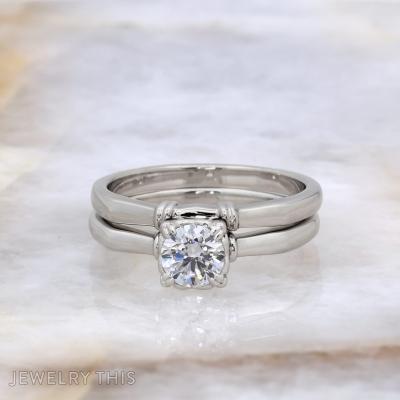
This engagement ring and wedding band were recreated as a single soldered piece in 14k ...
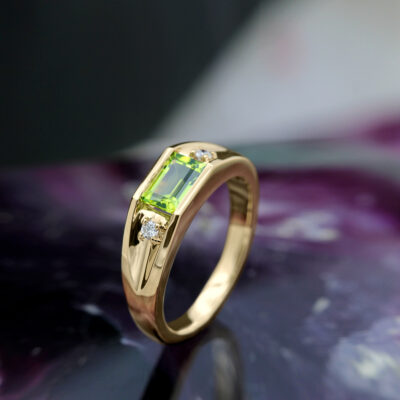

This captivating 14K white gold engagement ring features a center 0.75 carat round moissanite.The center ...

This platinum ring recreates a family piece that existed only in a handful of photographs. ...

This engagement ring was designed as a close interpretation of a ring the client admired, ...

This exquisite Platinum Moissanite And Sapphire Wedding Set. A harmonious blend of elegance and sophistication. ...
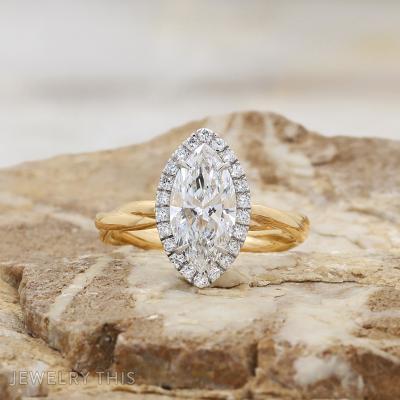
This elegant two-tone engagement ring beautifully combines modern brilliance with timeless design. At its heart, ...

This custom engagement ring is the perfect symbol of never-ending love. The centerpiece of the ...
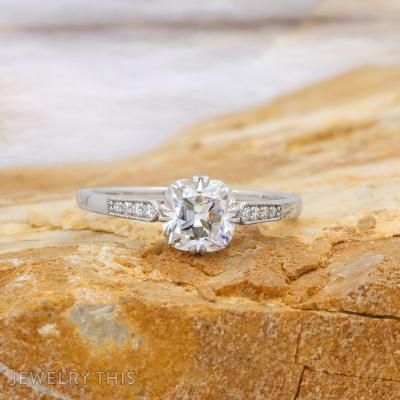
This engagement ring draws on Victorian-era design language, built around a cushion-shaped old mine cut ...

This elegant white gold wedding set features a vibrant round brilliant-cut lab-grown emerald at the ...



