
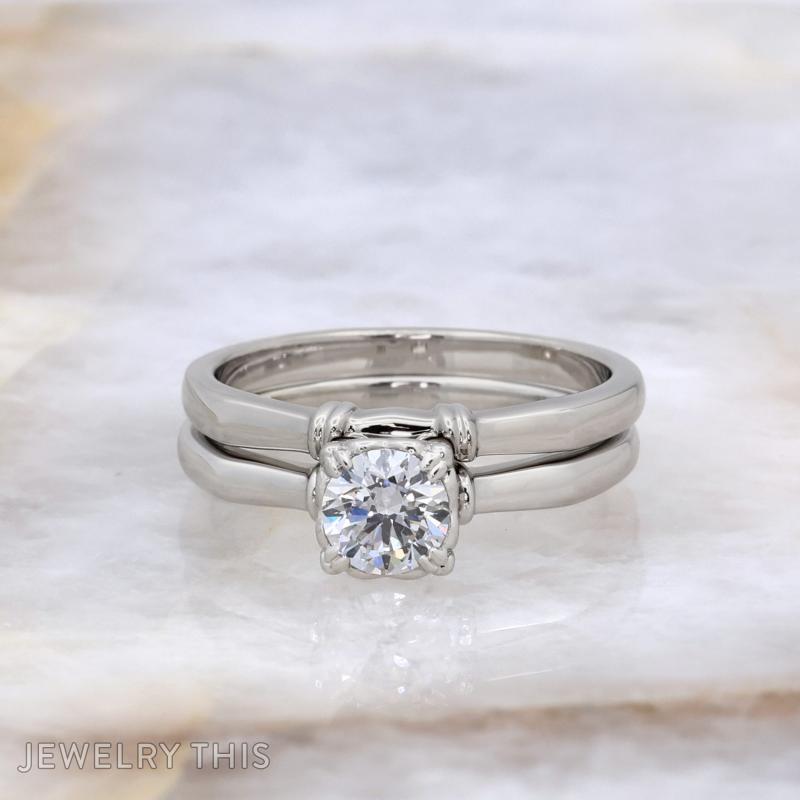
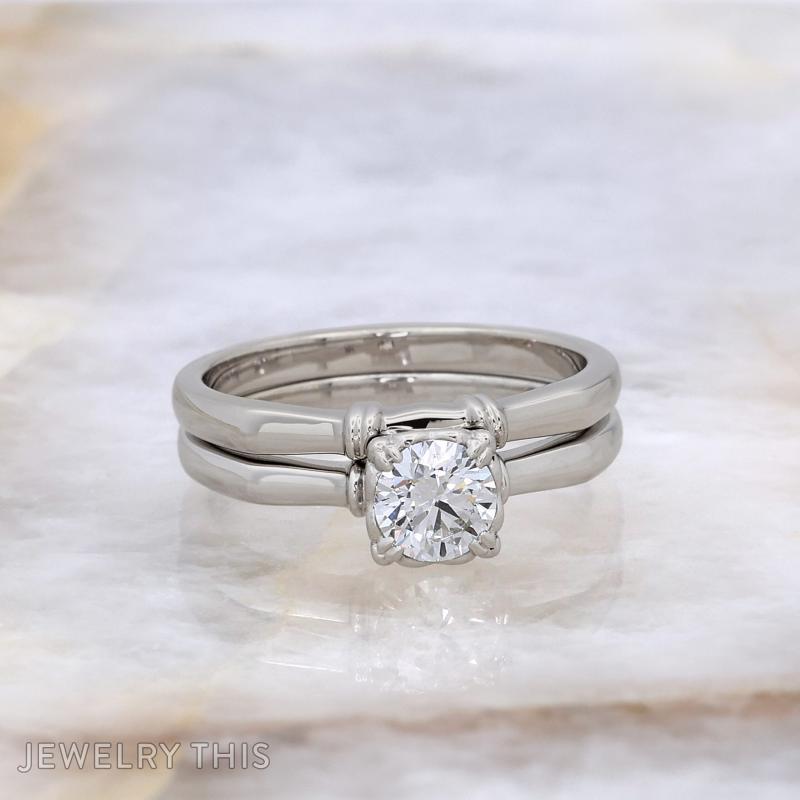
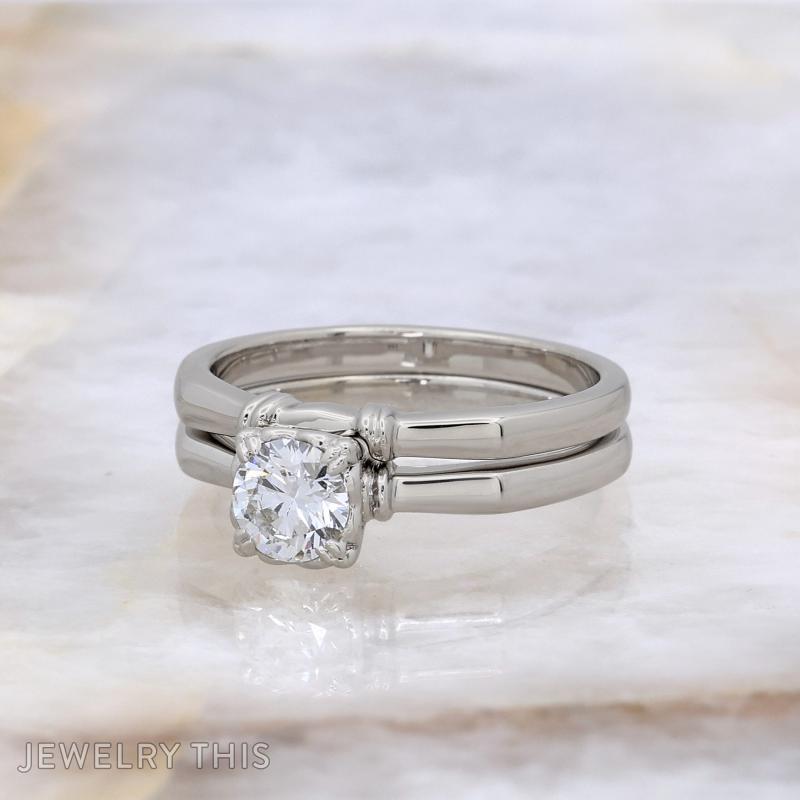
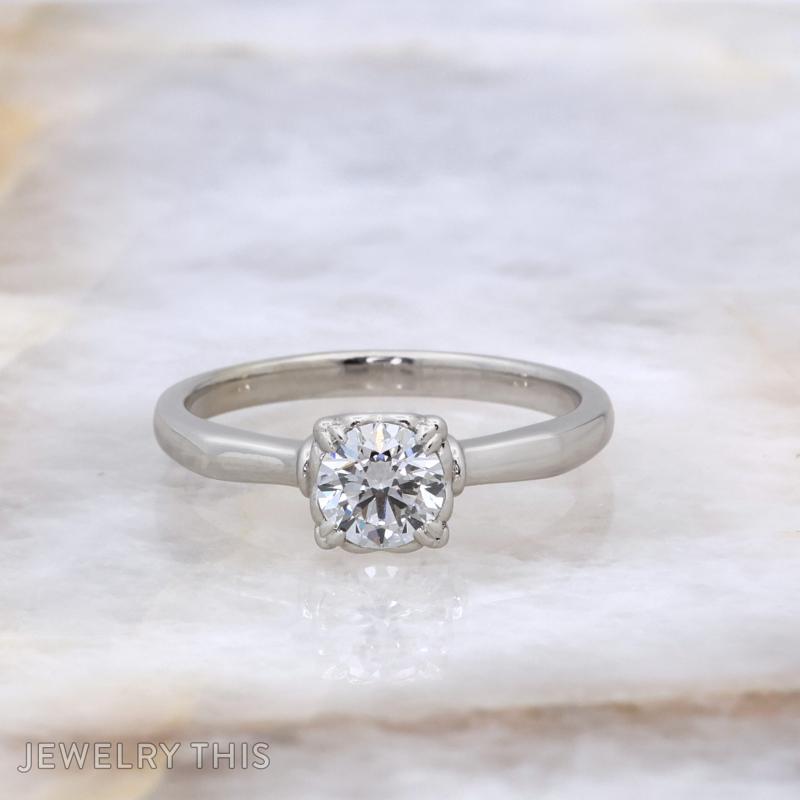
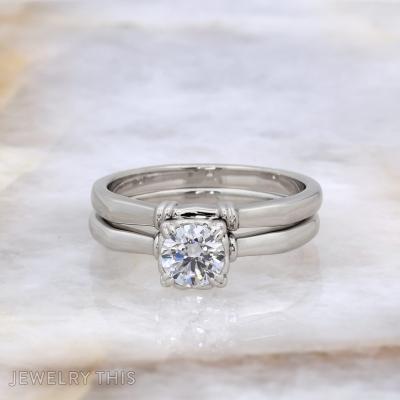
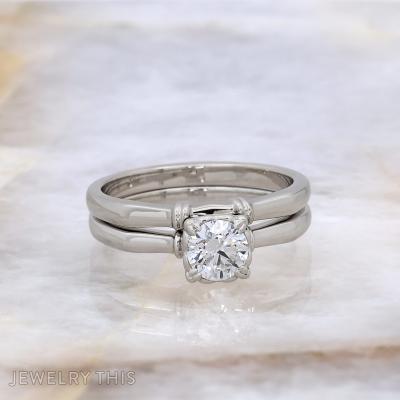
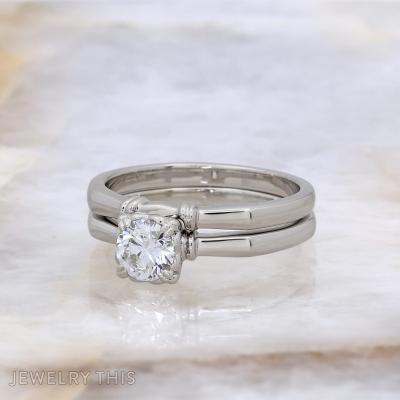
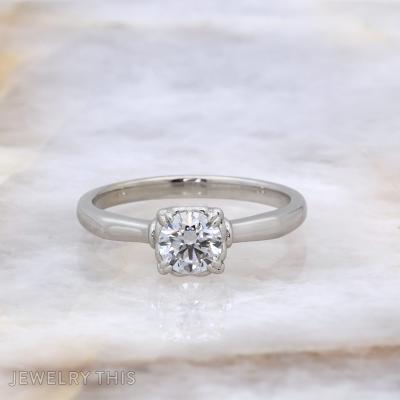
Recreated Bridal Set — Lost Engagement Ring, Lab Diamond
$$$
14k white gold, lab diamond
A client wanted to recreate her engagement ring and wedding band after they went missing at work almost two years ago, despite an extensive search. She hadn't wanted an engagement ring at all until this particular one — sourced through her mother — won her over, and she wanted the recreation to carry forward that same connection. On delivery, she wrote simply: 'It's beautiful.'
'I think it looks great! Thank you so much' — on seeing the first render
'It's beautiful' — on delivery
Quick specs
Design type
Primary Metal
Shape / Cut
Primary Stone
Accent Stones
Style
Design Complexity
Intent: Certainty
Size
Ring size 8.5 US. Two bands soldered together as one ring (engagement ring + wedding band).
How they made it distinctive
-
01
Two separate bands cast and finished individually, then soldered together to recreate the original slip-on set exactly as remembered
-
02
Lab diamond chosen over natural diamond to keep the look identical to the original stone at a different price point
-
03
Low-profile four-prong solitaire setting kept simple and classic rather than adding halo or pave detail, matching the client's memory of the original
-
04
Recreated entirely from memory and general description with no paperwork or photos of the original stone to reference
-
05
Ring sized to 8.5 US to fit the wearer exactly as the lost original had
How you'd make it yours
Stone: this piece uses a round lab diamond; a new commission could use a natural diamond for the same look, or a different cut such as oval or cushion
Metal: this piece is 14k white gold; the same soldered two-band design works in 18k white gold, yellow gold, or rose gold
Band configuration: this piece solders two bands into one slip-on ring; a new commission could keep the bands separate instead
Setting style: this piece uses a simple four-prong head; a new piece could add a halo or pave accents around the center stone
Engraving: the inside of either band can carry a new inscription on a fresh commission
One of a kind: this exact ring was designed for one client and is not reproduced — a new commission is an original piece inspired by this one, not a copy
Design changes made
Design matched the initial brief without major changes.
Who this is for
This piece is for someone who lost a ring that meant more to them than they expected it to, and wants it back in a form they can wear every day without worrying about it going missing again. It's especially right for someone who values a simple, classic solitaire over an elaborate setting, and who wants the look of their original stone without needing it to be a natural diamond.
How it's made
Once the render was approved, the design moved to a 3D-printed resin model — a physical preview of the ring at true scale before any metal was involved, shared with the client as a photo. The resin was then used to create a mold: burned out in a kiln after being set in investment plaster, leaving a cavity that molten 14k white gold was cast into. The two bands were cast separately to allow the setting to be finished properly on the top ring before the two were joined.
After casting, each band was cleaned, polished, and refined by hand, with particular attention to the prong tips on the top band so they sat flush against the stone rather than raised above it, as shown in the earlier render. The round lab diamond was then set by hand into the four-prong head, and the two bands were soldered together at the shoulders to form the single slip-on ring the client requested.
Key note
The two bands were cast and finished as separate pieces before being permanently soldered together — a sequencing choice that let the stone setting on the top band be completed cleanly before the two rings became one.
Pricing guidance
A soldered two-band engagement ring and wedding set in 14k white gold with a round lab diamond solitaire sits toward the lower-to-mid range for engagement ring work of this kind. Because the design is a simple, low-profile solitaire, most of the cost comes from the metal and stone rather than complex hand-finishing. Joining two bands into one soldered unit adds a modest amount of labor compared to a single band.
Moves price up ↑
- ↑ Increasing the center stone size beyond three-quarters of a carat
- ↑ Switching from a lab diamond to a natural diamond of the same size and grade
- ↑ Adding a halo or pave accent stones around the center stone
- ↑ Upgrading from 14k to 18k white gold
- ↑ Adding milgrain or engraved detail to the shoulders or band
Moves price down ↓
- ↓ Choosing a smaller center stone
- ↓ Keeping the two rings separate rather than soldering them into one unit
- ↓ Selecting a lower-clarity or slightly warmer color grade lab diamond
- ↓ Using sterling silver or gold-plated silver in place of solid white gold
- ↓ Simplifying the prong head to a basic four-prong without side detailing
Questions people ask
Yes, recreations like this are done from client memory, photos, and a general description when no paperwork exists. The rep works with the client to estimate stone size and confirm the metal, style, and setting details based on what is remembered and any available images. A 3D render is shared before production so the client can confirm the design matches their memory as closely as possible. Minor differences from the original are normal since the actual carat weight and stone quality typically cannot be verified without documentation.
Lab diamonds and natural diamonds are chemically and optically identical — same hardness, same brilliance, same visual appearance to the naked eye. The only difference is where they come from: natural diamonds are mined from the earth, lab diamonds are grown in a controlled setting. Lab diamonds typically cost significantly less than a natural diamond of the same size and grade. For a solitaire like this, the choice comes down to origin and budget rather than appearance.
Yes, two bands can be cast separately and then permanently soldered together at the shoulders to form a single ring that goes on and off as one piece. This is a common request when a client wants the look of a two-band set without managing two separate rings day to day. Each band is finished individually before joining so the stone setting and polishing can be done cleanly. Once soldered, resizing requires both bands to be adjusted together.
The design phase — sketch, 3D model, and render for approval — typically takes about one week. Once the design is approved, production including casting, stone setting, and finishing generally takes three to four weeks. Total turnaround from deposit to shipping is usually five to six weeks on a standard timeline, though this can shift depending on design revisions or stone sourcing.
A soldered engagement ring and wedding band set in 14k white gold with a round lab diamond solitaire around three-quarters of a carat sits toward the lower-to-mid range for custom engagement ring work. The main cost drivers are the metal weight and the diamond itself, since the setting style here is a simple low-profile solitaire rather than an elaborate design. Adding stones, upgrading metal karat, or increasing the center stone size would move the price higher.
Yes, prong height and fit are refined by hand after casting, and this is a normal part of the finishing process. In some cases the prongs appear slightly raised in an early 3D render but are adjusted to sit flush against the stone in the finished piece. This kind of hand-finishing ensures the stone is held securely and sits properly within the setting. Any concerns about prong fit can be addressed with the jeweler during finishing before the piece ships.
White gold is a durable and popular choice for daily-wear engagement rings, though it typically has a rhodium plating over the base gold to achieve its bright white color. That plating will wear gradually over years of daily wear and can be re-plated by a jeweler to restore its original brightness. The gold underneath remains structurally solid regardless of plating wear. 14k white gold in particular balances durability with workability for detailed settings like prongs.
Yes, but because the two bands are permanently joined, both need to be resized together rather than independently. This is slightly more involved than resizing a single band, since the jeweler has to account for the solder joints at the shoulders. It's a standard service most jewelers can perform, though it's worth mentioning to whoever does the resizing that the rings are soldered as one unit.
Explore Similar Creations
Every masterpiece starts with a spark. Explore how our clients raw ideas - sketches, heirlooms, inspirations - were transformed into bespoke works of arts.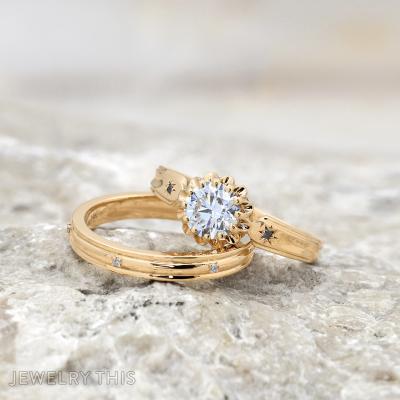
This 14k yellow gold engagement ring and wedding band set takes its cue from an ...

This yellow gold ring features a captivating oval rose cut diamond at its center, delicately ...

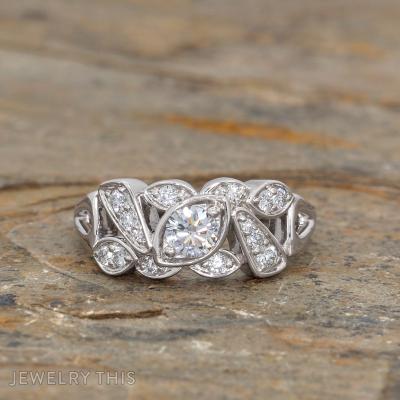
This exquisite engagement ring is a heartfelt recreation of a cherished vintage heirloom from 1925, ...
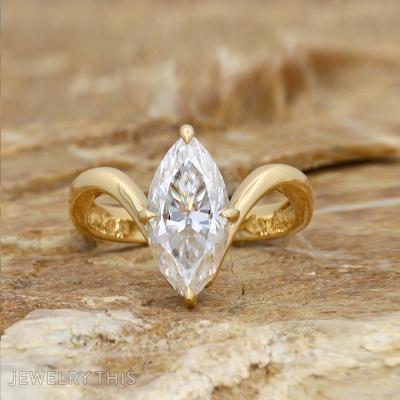
This engagement ring centers a marquise-cut moissanite in a four-prong setting, with pointed claw-style prongs ...
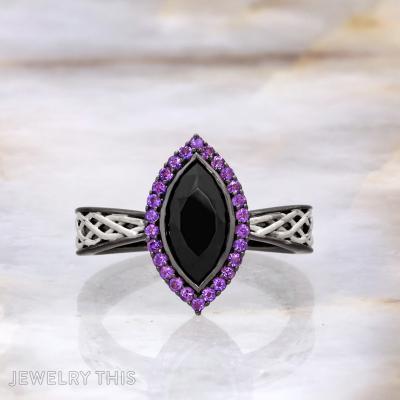
This white gold engagement ring offers a bold and symbolic design, highlighted by the striking ...

This custom wedding set exudes romance and sophistication. The engagement ring, inspired by the classic ...
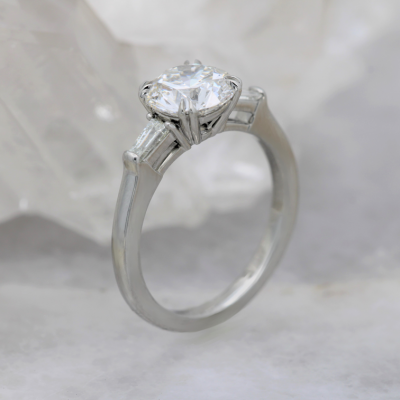
Presenting an extraordinary custom three stone engagement ring, a masterpiece of refined elegance. This enchanting ...

Introducing our captivating twist on a classic style, the 2.13 carat Emerald Cut Lab Created ...
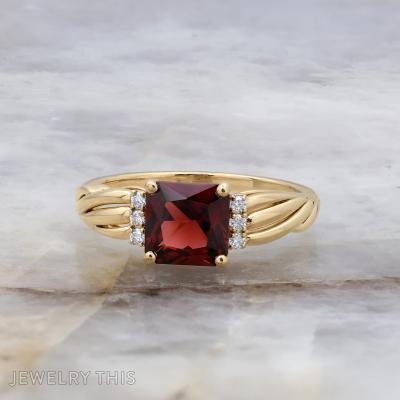
This exquisite engagement ring tells a story of love that is as deep and vibrant ...
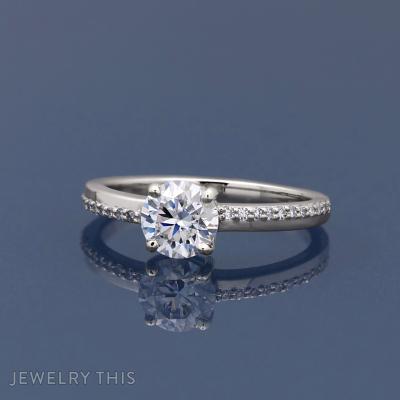
This timeless engagement ring features a brilliant round diamond at its center. The band offers ...

This custom wedding band is a sentimental recreation of the original ring, bringing back cherished ...



