
Low-Profile Vintage-Inspired Engagement Ring & Band
$$$
14k yellow gold, lab diamond, salt-and-pepper lab diamonds, colorless lab diamonds
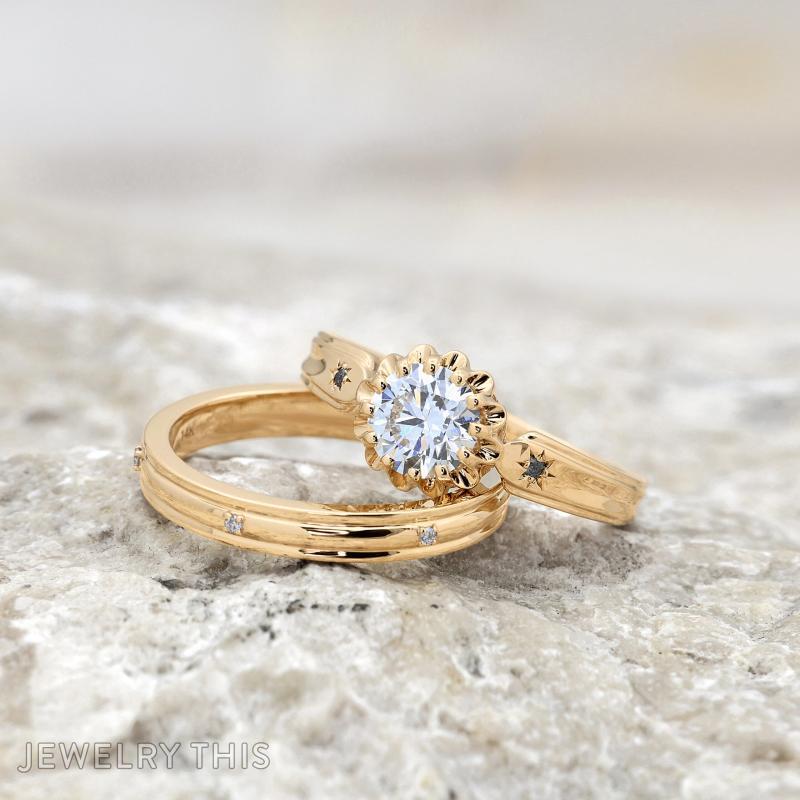
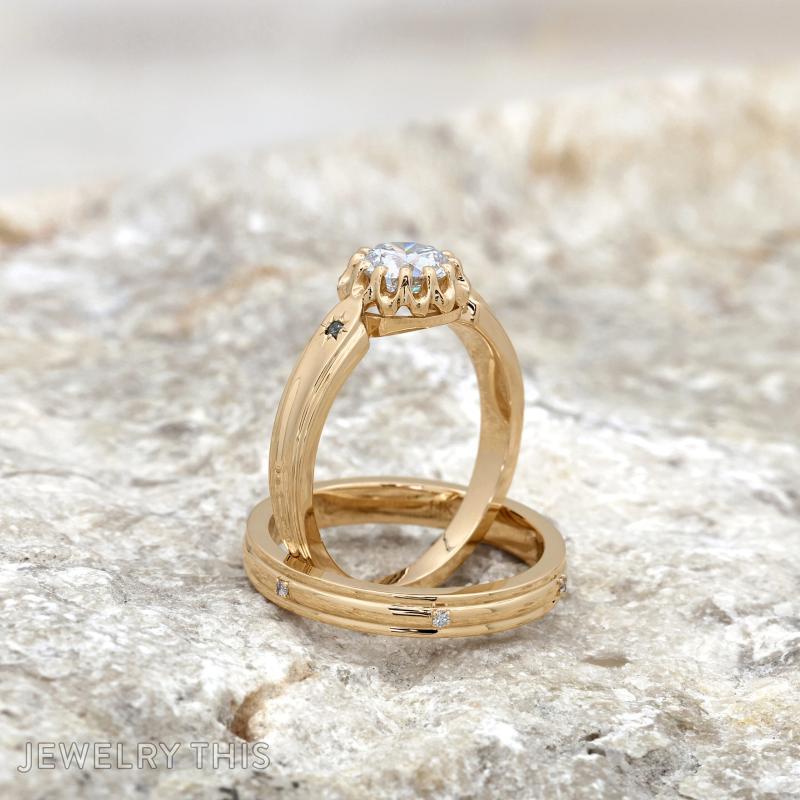
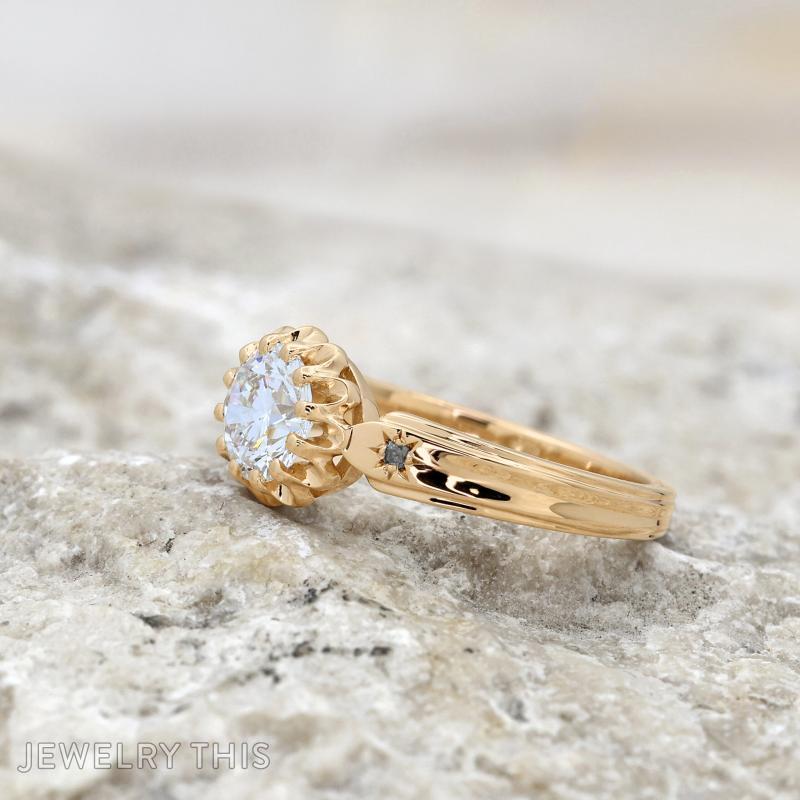
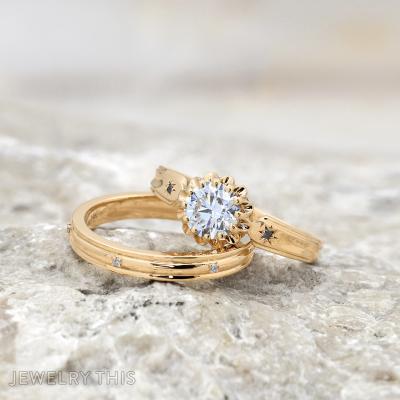
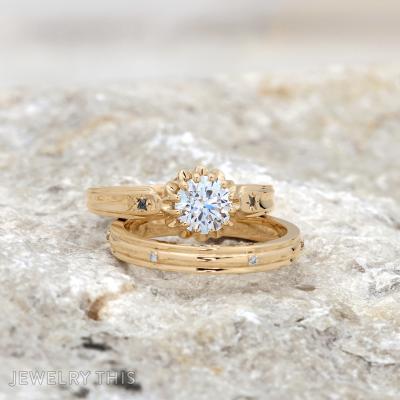
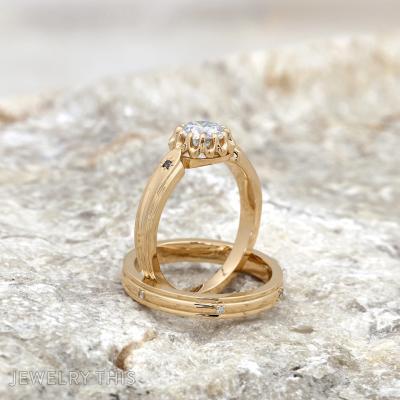
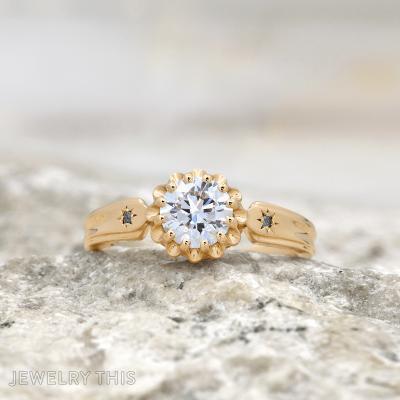
Z. had been eyeing a vintage-style engagement ring for a while before deciding to have it made custom instead. He worked closely through the design to get a flower-shaped setting that stayed low on the finger for his active partner, and to keep the antique feel of tiny star-set diamonds and short, feminine prongs. When it arrived, he wrote: 'It turned out beautiful!'
'It turned out beautiful!' — on delivery
Quick specs
Design type
Primary Metal
Shape / Cut
Primary Stone
Accent Stones
Design Complexity
Intent: Certainty
Size
Ring size 6½ US (16.92mm). Wedding band width 3mm; engagement ring band widened proportionally to the flower-style setting.
How they made it distinctive
-
01
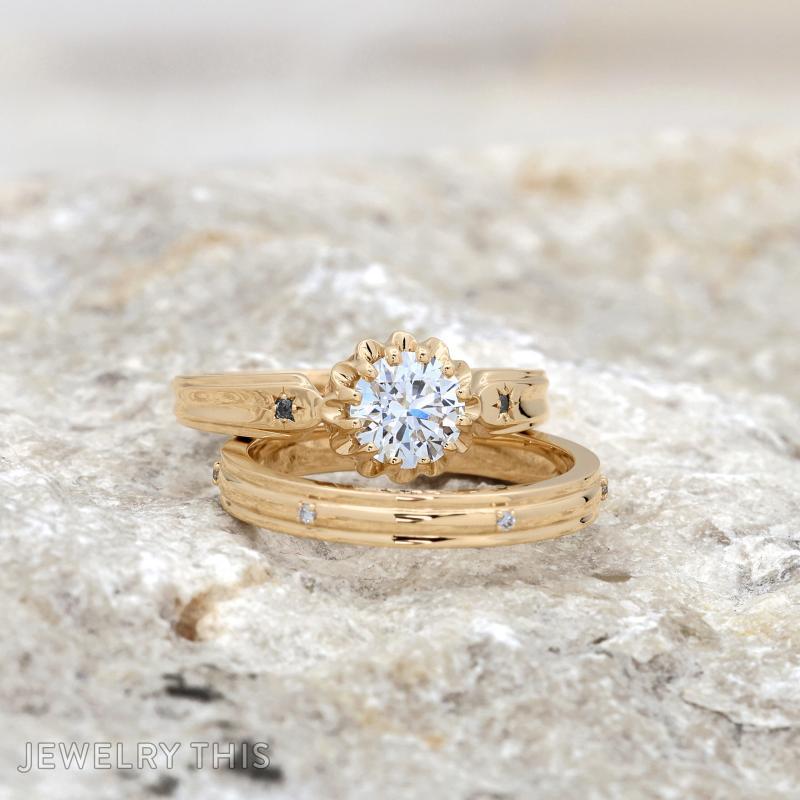
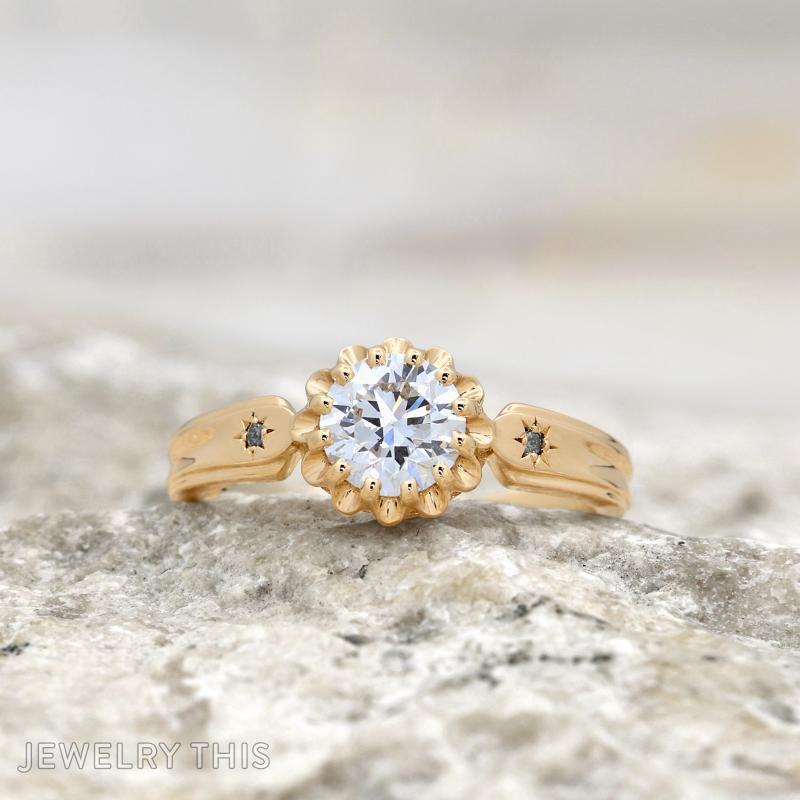
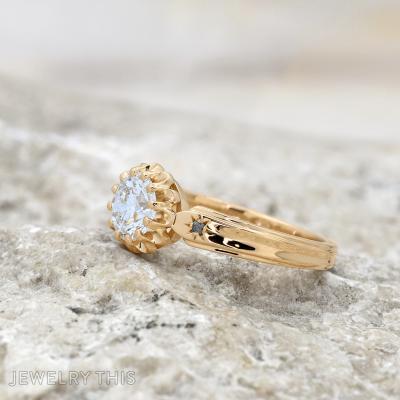
Fluted flower-style setting chosen to echo an antique ring the client loved, rebuilt around a modern round brilliant lab diamond for a lower, more secure profile
-
02
Prongs finished short and bent flush over the stone's edge specifically to preserve the delicate, feminine antique look while keeping the mount solid
-
03
Small star-set salt-and-pepper diamonds flank the center stone as a quiet nod to the antique reference without adding visual weight
-
04
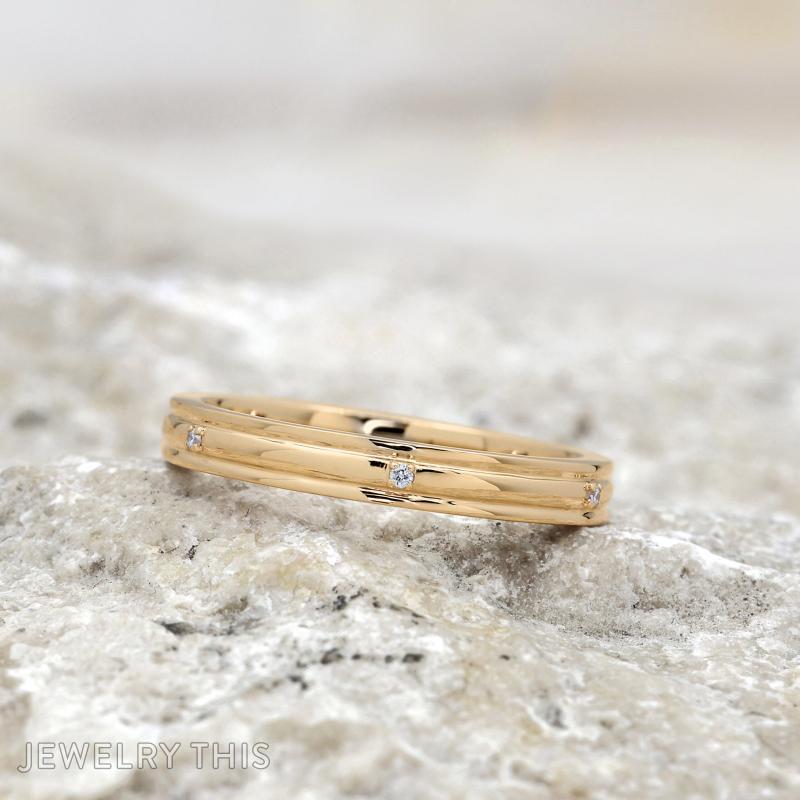
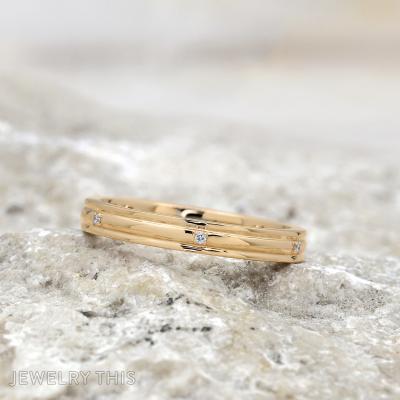
Wedding band widened to 3mm and set with six alternating colorless lab diamonds after a mockup showed a star-setting pattern wouldn't read clearly at that scale
-
05
Engagement ring band intentionally kept at a safe minimum thickness rather than tapered thinner, prioritizing durability for an active wearer over a slimmer look
How you'd make it yours
Stone: this piece uses a round lab diamond and salt-and-pepper diamond accents; a new commission could use natural diamonds, moissanite, or a different accent stone color
Metal: this piece is 14k yellow gold; the same fluted flower-setting language works in 18k yellow gold or rose gold
Band width: this wedding band is 3mm; a new commission could go narrower or wider depending on the wearer's hand
Accent stone count: this band has six spaced diamonds; a new piece could use fewer, more, or a continuous row instead
Engraving: the inside of a new commission's band can carry its own inscription
One of a kind: this exact ring and band were designed for one client and are not reproduced — a new commission is an original piece inspired by this one, not a copy
Design changes made
The engagement ring's back shank was kept at a safe minimum thickness rather than tapered thinner (to prevent bending), while the wedding band was widened from about 2.25mm to 3mm and its prongs shortened after the client saw the first render, matching the antique reference more closely. A planned star setting for small diamonds in the wedding band was dropped in favor of six alternating colorless lab diamonds spaced around the band, after a mockup showed the star pattern wouldn't have enough surface room to read clearly.
Who this is for
This set is for someone drawn to an antique-style setting but who needs it to hold up to an active daily life — someone who wants the romance of a vintage flower setting without the trade-offs of an antique stone cut. It's especially right if you have a specific reference piece in mind and want it reinterpreted rather than copied exactly.
How it's made
Once the design was approved, a 3D-printed wax model was produced for each ring and affixed to a wax tree inside a flask. The flask was placed in a kiln to burn out the wax, leaving a hollow mold, and molten 14k yellow gold was cast into the mold under pressure. After cooling, each piece was extracted from the mold, cleaned, and prepared for hand-finishing.
The engagement ring's fluted flower setting was finished and its prongs bent and softened by hand over the center stone's edge to hold it low and secure. The round lab diamond was set first, followed by the two small star-set salt-and-pepper diamonds flanking the setting. The wedding band was finished with its two-groove profile intact, and six small colorless lab diamonds were set by hand at even intervals around the convex center rail.
Key note
The prongs are deliberately finished short and bent flush over the stone's edge rather than left tall, since shortening them after casting is what gives the setting its antique, low-profile look while still holding the diamond securely.
Pricing guidance
A vintage-style engagement ring and matching wedding band in 14k gold with a lab diamond center and small accent diamonds sits in the mid range for a custom two-ring set of this complexity. Most of the cost comes from the hand-finishing needed for the fluted setting and the labor of setting eight small stones across two rings, rather than from the center stone itself. Center stone size and the number of accent stones are what move the price most from there.
Moves price up ↑
- ↑ Increasing the center diamond size beyond .85 carats
- ↑ Choosing natural diamonds over lab-grown for the center and accent stones
- ↑ Adding more than six accent diamonds to the wedding band
- ↑ Upgrading to 18k gold from 14k
- ↑ Adding a star-point setting detail around each accent stone if space allows
Moves price down ↓
- ↓ Reducing the number of accent diamonds in the wedding band
- ↓ Choosing a smaller center stone under .5 carats
- ↓ Simplifying the flower setting to a plain prong setting
- ↓ Omitting the accent diamonds in the engagement ring band entirely
- ↓ Using moissanite in place of a lab diamond for the center stone
Questions people ask
Yes. This ring uses a vintage flower-style fluted setting and short, delicate prongs to capture an antique look, but was built around a modern round brilliant cut lab diamond so it could sit lower on the finger than an old mine cut stone typically allows. Old mine cut diamonds have a deep, tall profile that sits higher off the finger, while brilliant cuts are shallower and easier to set low. The design and setting style carry the vintage feeling even though the stone cut is modern. This kind of hybrid approach is common when clients want the aesthetic of an antique piece without its wearability tradeoffs.
How low a center stone sits depends mainly on the depth of the diamond itself, not just the setting style. A round brilliant cut is shallower than an old mine or old European cut, which makes it easier to set close to the finger. Prongs can also be finished short and bent flush over the stone's edge after casting, rather than left tall, to reduce how far the stone stands off the hand. There are limits based on stone depth and prong security, but a low-profile result is achievable with the right stone cut and finishing approach.
Black diamonds get their color from dense internal inclusions, and while their facets do reflect some light, very little brilliance escapes because the stone is so dark. Salt-and-pepper diamonds have a mix of white, grey, and black inclusions, which gives them a bit more sparkle and visual variation at very small sizes. For tiny accent stones, salt-and-pepper diamonds tend to read as more lively than solid black diamonds of the same size. Both are natural or lab options depending on sourcing, and the choice usually comes down to how dark and uniform a look the wearer wants.
Yes, lab diamonds can be used throughout a ring, including as the center stone and as small accent stones in different colors, such as colorless and salt-and-pepper. Lab diamonds are chemically and optically identical to natural diamonds, just grown in a controlled environment rather than mined. For very small accent stones, lab-grown salt-and-pepper diamonds can be harder to source in a way that shows clear color variation at that scale, so colorless is sometimes recommended instead for the smallest stones. Mixing stone types across a ring is common and doesn't affect durability or setting method.
A two-ring custom set like this — a fluted vintage-style engagement ring with a lab diamond center plus a matching wedding band with small accent diamonds — sits in the mid range for custom bridal work. Most of the cost comes from the hand-finishing and stone-setting labor across both rings rather than the metal itself, since 14k gold is the more accessible metal choice. Center stone carat weight and the number of accent stones are the biggest variables. Two rings designed and produced together as a set is more efficient than two separate single-ring commissions.
A typical custom engagement ring and wedding band set takes about four to six weeks from deposit to delivery, assuming no delays in stone sourcing or design revisions. The first one to two weeks usually cover the design phase — sketch, 3D model, and rendered images for review and adjustment. Once the design is approved and production begins, casting, stone setting, and finishing generally take another three to four weeks. Delays can occur if a center stone needs to be specially sourced or if a jeweler is unavailable, so it's worth building in some buffer before a firm deadline.
Yes, but it depends on the shape of the engagement ring's setting. If the engagement ring has a wide or elevated basket at the base of the center stone, a straight wedding band may not sit perfectly flush against it, leaving a small gap. A curved or contoured band can be shaped to follow the engagement ring's profile and close that gap, but a straight band is often preferred by people who want to wear the wedding band alone sometimes, since a curved band can look asymmetrical on its own. Some gap between a straight band and an engagement ring is a normal characteristic of many vintage-inspired designs.
It depends on the band's width and how the stones are spaced. A very thin band, under about 2.5mm, often doesn't leave enough room for stones without them running into the edges. Widening the band slightly, and spacing a small number of stones evenly around it rather than setting them in a continuous row, usually gives a balanced look that doesn't feel overloaded. Testing a mockup image before finalizing the 3D model is a useful way to judge whether the spacing feels right before committing to production.
Explore Similar Creations
Every masterpiece starts with a spark. Explore how our clients raw ideas - sketches, heirlooms, inspirations - were transformed into bespoke works of arts.
This Platinum ring is a symbol of life’s vibrant connections. At its heart, a 1 ...
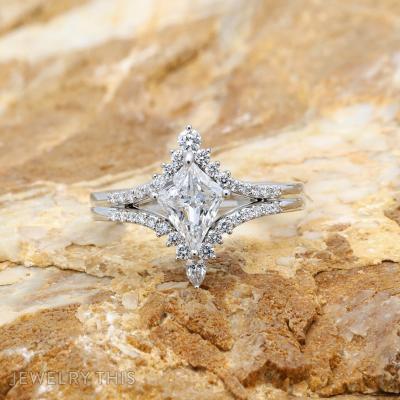
This striking white gold engagement ring features a kite-shaped lab-grown diamond as its bold center. ...
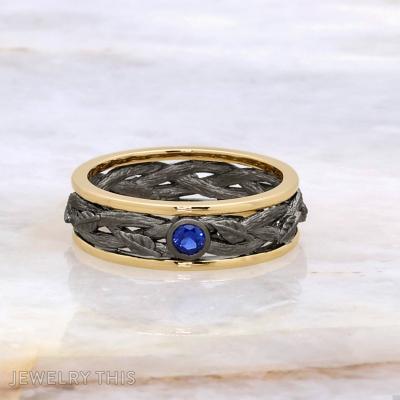
This engagement ring combines a dark, textured center band with two polished 14k yellow gold ...

Celebrate your love with this stunning 14k yellow gold engagement ring, designed to make a ...
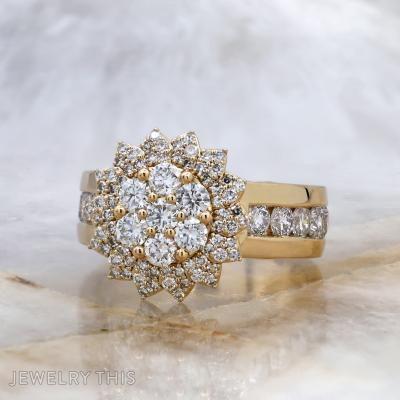
This engagement ring centers on a round flower-shaped cluster of lab-grown diamonds, designed as a ...

This elegant 18karat gold engagement ring features a mesmerizing oval shaped 2.5carat Aquamarine at the ...
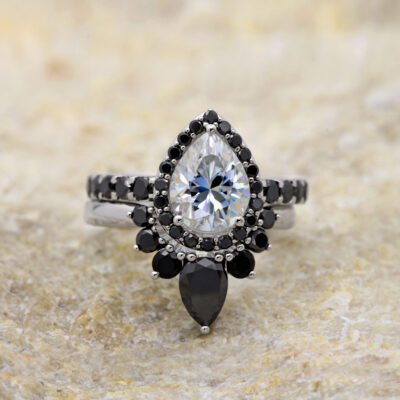
Exquisitely unique, this white gold wedding set weaves a tale of contrast. The engagement ring ...
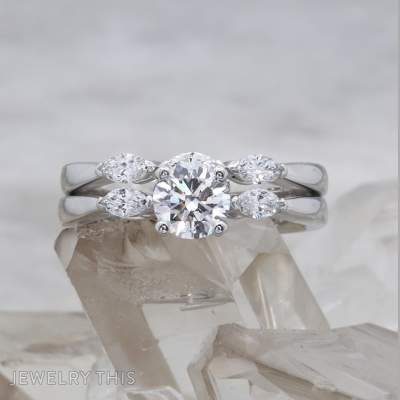
This white gold wedding set was lovingly created to replicate an original set that was ...

Exquisite and timeless, this ring boasts a captivating design featuring two marquise-shaped stones set in ...
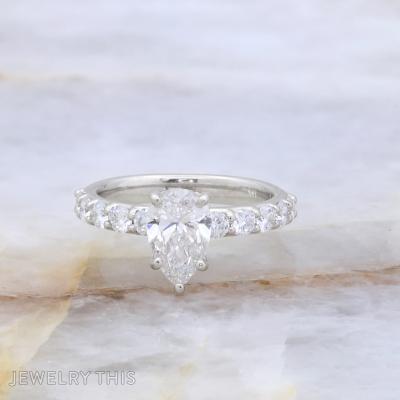
This engagement ring centers a pear-shaped lab-grown diamond set high above a hidden halo, with ...
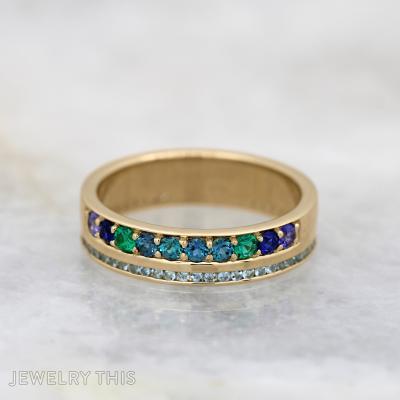
This stunning yellow-gold ring features two dazzling rows of stones. The top row showcases an ...

This yellow gold ring is a heartfelt recreation of a cherished, lost engagement ring. At ...



