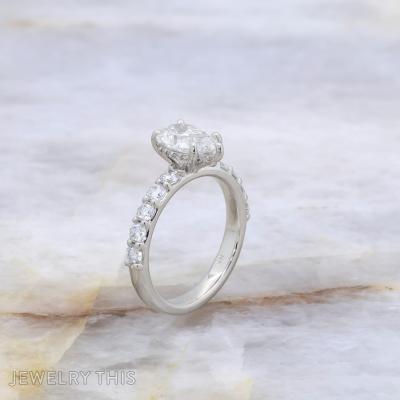
Pear-Shaped Hidden Halo Engagement Ring in White Gold
$$$
14k white gold, lab-grown diamond, moissanite
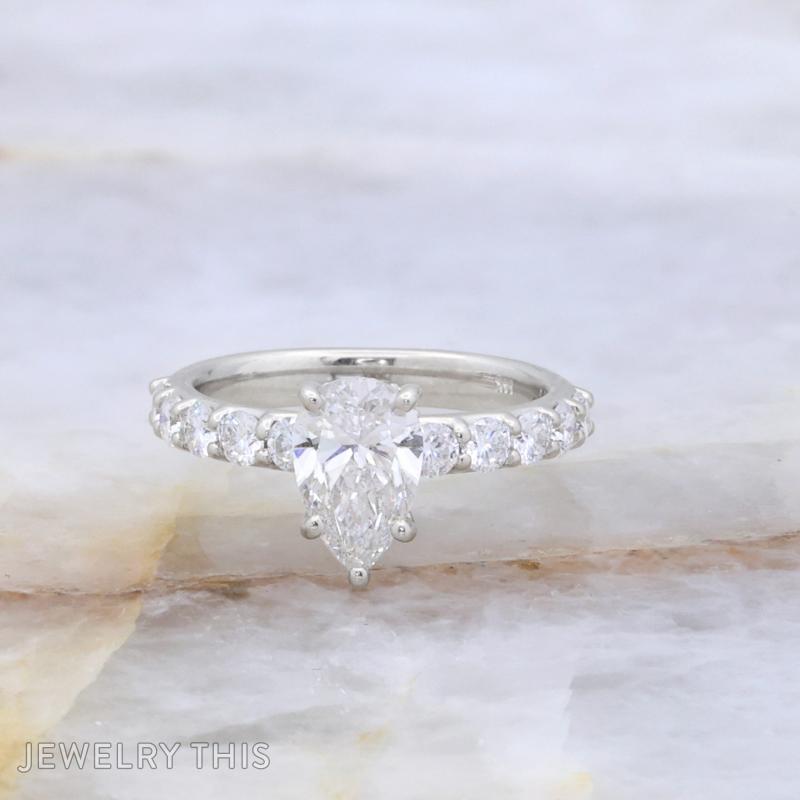
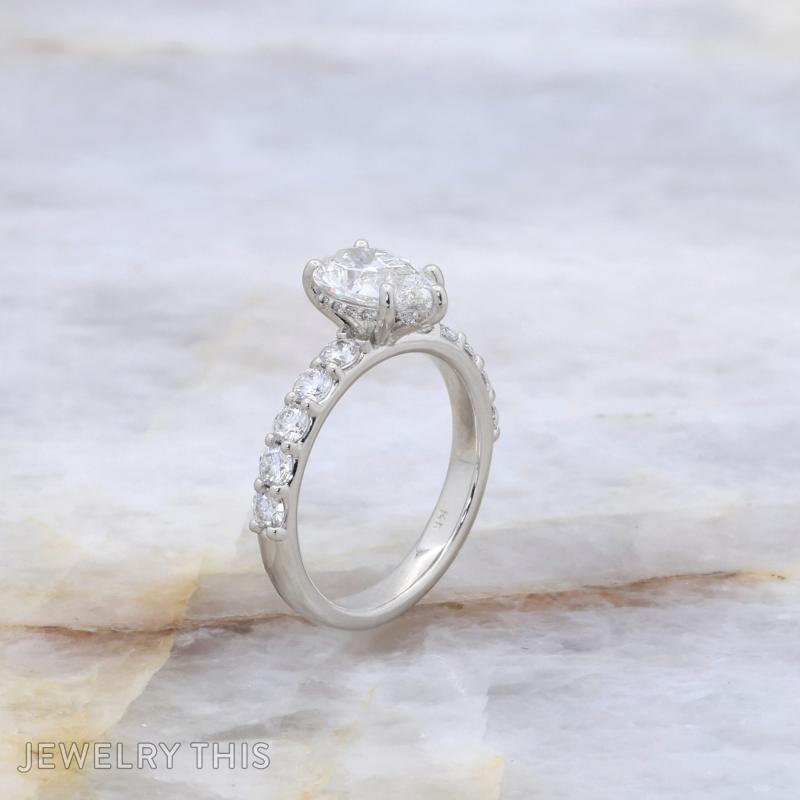
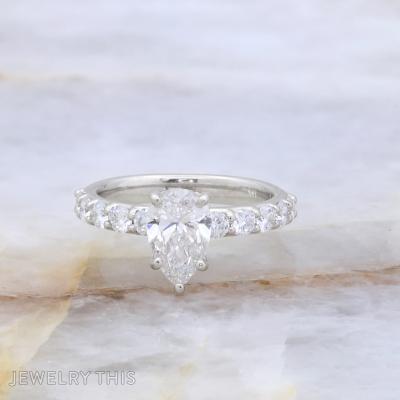
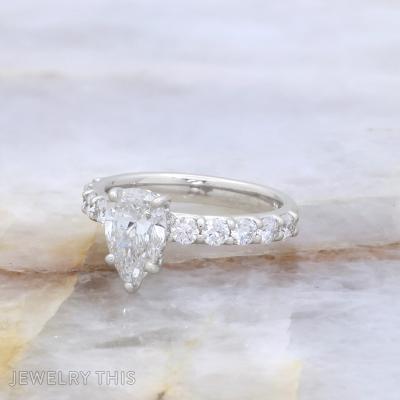
A client worked with our team to design an engagement ring for his partner, based on reference photos she had shared. The design centered on a pear-shaped stone with a hidden halo and a high-profile setting, and the band was widened partway through the process to better suit the stone size. When it was finished, he wrote simply that it looked amazing.
'Your ring is all finished and looks amazing' — on delivery
Quick specs
Design type
Primary Metal
Shape / Cut
Primary Stone
Accent Stones
Style
Design Complexity
Intent: Certainty
Size
Ring size 6.75 US. Band width 2.5mm.
How they made it distinctive
-
01
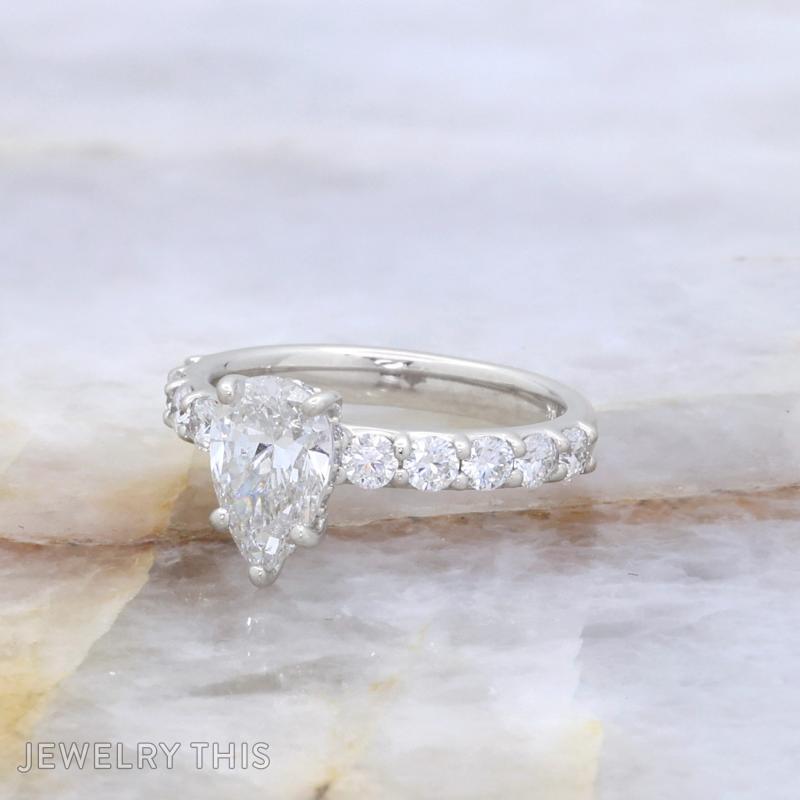
Pear-shaped center stone paired with a hidden halo for added brilliance without altering the silhouette
-
02
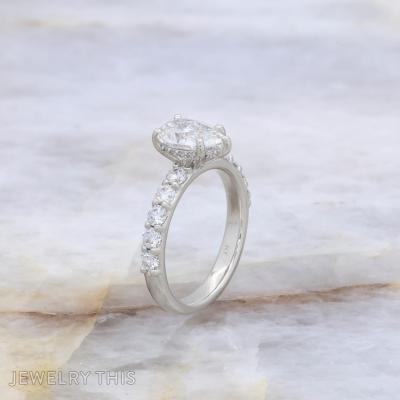
High-profile setting chosen to give the pear shape more presence and light performance
-
03
Band widened from 2mm to 2.5mm partway through design, sized specifically to better proportion the center stone
-
04
Lab-grown diamond center combined with moissanite accent stones, balancing durability and design preference
-
05
Shared-prong accent stone row continues the line of brilliance from the center stone down both sides of the band
How you'd make it yours
Stone type: currently a lab-grown diamond center with moissanite accents — a new commission could use all lab diamonds, all moissanite, or a natural diamond center
Metal: currently 14k white gold — the same design language works in 18k white gold, yellow gold, or platinum
Band width: currently 2.5mm — could be made narrower for a delicate look or wider for a bolder profile
Halo: the hidden halo is integral to this design's added sparkle, though a fully visible halo could be used instead on a new piece
Engraving: the inside of the band can carry a date, initials, or a short phrase on a new commission
Design changes made
The band was widened from 2mm to 2.5mm after the first render, which also allowed the accent stones to be sized up slightly. The center and accent stone combination was also adjusted from an all-lab-grown quote to a lab-grown center paired with moissanite accents, matching the client's original preference.
Who this is for
This piece is for someone who wants the elegant, elongated look of a pear-shaped solitaire but also wants extra brilliance built into the setting itself. It's especially right if you like the idea of a hidden detail — a halo that boosts sparkle without changing the ring's outline from above.
How it's made
Once the design was approved, a resin model was produced and shown to the client as a preview of the ring's exact proportions before any metal was committed. The model was then used to build a mold, which was fired to remove the resin, leaving a hollow cavity. Molten 14k white gold was cast into the mold, producing the raw ring, which was then cleaned up and prepared for stone setting and finishing.
After casting, the band was polished to a mirror finish along its full length. The pear-shaped lab-grown diamond was set high above a hidden halo positioned beneath the crown, keeping the halo's sparkle visible without altering the stone's outline from above. The round moissanite accent stones were then set in a shared-prong row down both sides of the band, finishing the ring's continuous line of brilliance from the center stone to the shank.
Key note
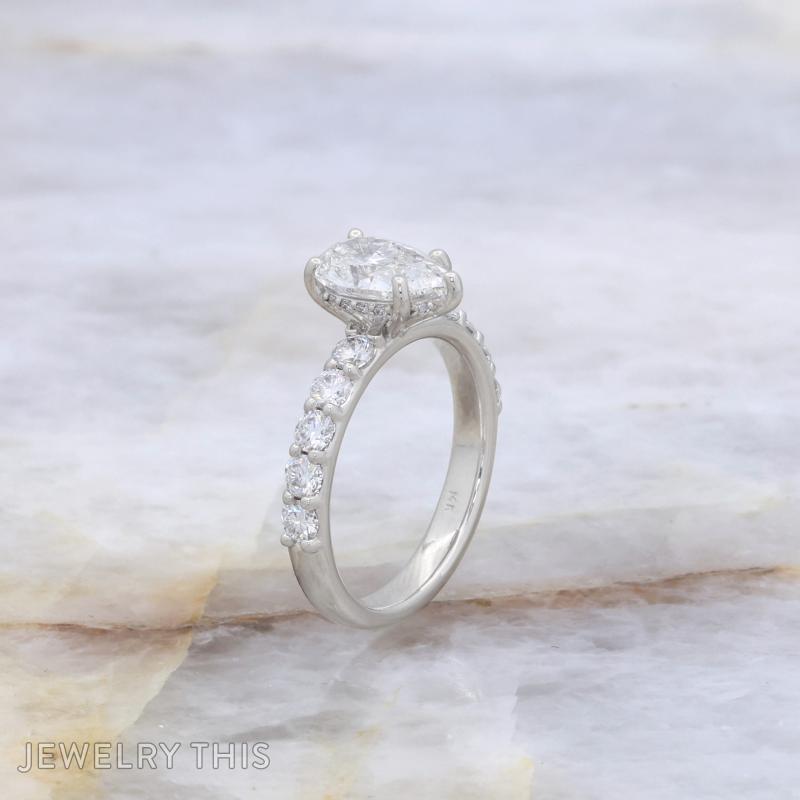
The hidden halo sits beneath the pear-shaped stone rather than around its visible outline, so it adds brilliance underneath the diamond without changing the silhouette seen from above.
Pricing guidance
A pear-shaped solitaire engagement ring with a hidden halo and accent stones down the band sits in the mid range for engagement rings of moderate complexity. The center stone choice and whether accent stones are lab-grown diamonds or moissanite are the primary cost drivers. Band width and total stone count also move the price from there.
Moves price up ↑
- ↑ Upgrading the center stone from lab-grown to natural diamond of the same carat weight
- ↑ Switching the accent stones from moissanite to lab-grown diamonds
- ↑ Increasing the center stone carat weight beyond 1.5 carats
- ↑ Choosing a higher color or clarity grade for the center stone
- ↑ Widening the band further, which increases both metal and stone-setting costs
Moves price down ↓
- ↓ Reducing the center stone size below 1.5 carats
- ↓ Using moissanite for both the center and accent stones instead of a lab diamond center
- ↓ Narrowing the band width back to a slimmer profile
- ↓ Removing the hidden halo to simplify the setting
- ↓ Choosing 10k white gold instead of 14k
Questions people ask
A hidden halo sits beneath the center stone rather than around its visible outline, so it adds extra sparkle and a larger look without changing the pear shape's silhouette from above. It's a popular choice for people who want more brilliance without a fully visible halo ring look. Because it's tucked under the crown, it also doesn't add much to the overall footprint of the setting. Many people choose it specifically because it enhances the center stone's presence when viewed from the side or at an angle.
Lab-grown diamonds are chemically identical to natural diamonds, just grown in a controlled lab environment rather than mined, and they rate a 10 on the Mohs hardness scale. Moissanite is a different mineral entirely, rating 9.25 on the Mohs scale, and it has a higher refractive index than diamond, which gives it a slightly different, more colorful sparkle in direct light. Combining a lab diamond center with moissanite accents, as in this ring, is a common way to balance cost and durability since both stones hold up well to daily wear. Visually, the difference is most noticeable to a trained eye or under close light comparison.
A ring with a pear-shaped center stone, hidden halo, and a row of accent stones down the band falls in the mid range for engagement rings of this complexity. The biggest cost factor is the center stone choice — lab-grown diamond versus moissanite — followed by the accent stone material and total carat weight. Band width and metal karat also play a role in the final price.
The design phase, including the initial sketch, 3D render, and any adjustments, typically takes about one week. Once the design is approved, production takes approximately 4 to 5 weeks, covering casting, stone setting, and finishing. So from approved design to a finished ring is usually about 5 to 6 weeks total, though sourcing certain stone combinations can occasionally extend that slightly.
Yes, a ring like this can typically be resized within a standard range without disturbing the hidden halo or the accent stones, since resizing work is done on the plain portion of the shank at the back of the ring. Larger size adjustments may require more careful work around the accent stone row if it wraps close to the sides. It's always worth having a jeweler confirm the exact resizing range for a specific piece before committing to a size change.
Yes, band width is one of the more flexible elements on a ring like this. A narrower band gives a more delicate look, while a wider band can accommodate larger accent stones and give the ring a bolder presence. Widening the band typically means slightly larger accent stones fit proportionally along the sides, which is a common adjustment made during the design review stage.
14k white gold is a durable, cost-effective choice for a ring like this and is rhodium plated to achieve its bright white finish, though the plating will need to be periodically refreshed over years of daily wear. Platinum doesn't require rhodium plating and develops a natural patina instead, but it's a denser metal and adds noticeably more weight for the same design. Either metal holds a pear-shaped stone and accent stone row securely; the choice mostly comes down to maintenance preference and desired weight.
Yes, adding a row of accent stones down the band is a common way to bring more sparkle to a solitaire setting without changing the center stone. The stones are typically set in a shared-prong style, where neighboring stones share a single prong, which keeps the row looking continuous. This can be done at any width the band supports, though wider bands allow for slightly larger accent stones.
Explore Similar Creations
Every masterpiece starts with a spark. Explore how our clients raw ideas - sketches, heirlooms, inspirations - were transformed into bespoke works of arts.
This elegant engagement ring captures the beauty of cultural symbolism and timeless style. At its ...

This engagement ring was designed as a close interpretation of a ring the client admired, ...
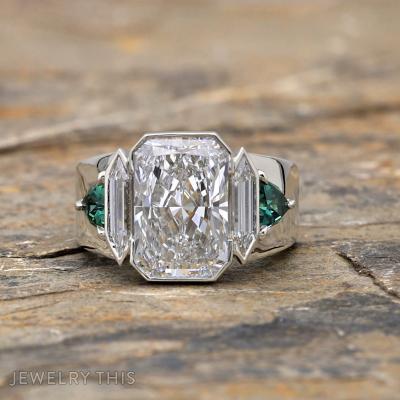
This commanding platinum engagement ring is a architectural masterpiece that seamlessly blends sharp geometric lines ...

Crafted for the superhero enthusiast, this custom engagement ring seamlessly merges elegance with fandom. Cast ...

Exquisite and timeless, this ring boasts a captivating design featuring two marquise-shaped stones set in ...
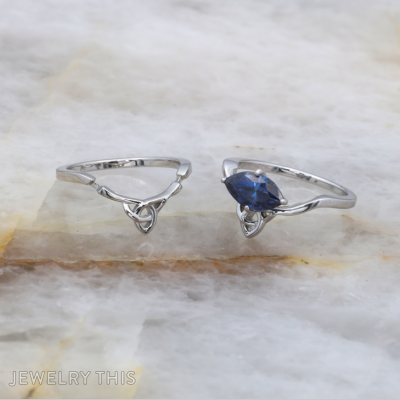
This captivating white gold wedding set features a harmonious design rich in meaning and artistry. ...
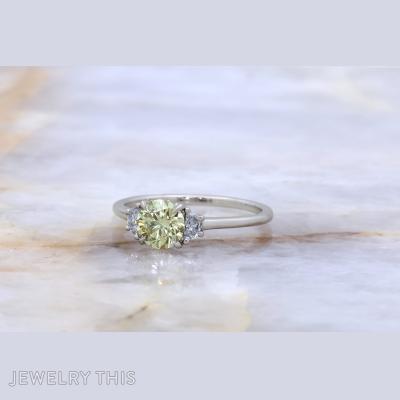
This sophisticated white gold three-stone engagement ring is a masterful blend of classic silhouette and ...

Introducing a Mushroom Lover’s Custom Engagement Ring dream. A unique and enchanting symbol of love ...

This wedding set is made sterling silver and set with a center round moonstone with ...

This stunning rose gold ring features a captivating center oval-shaped opal cabochon that’s perfectly bezel ...

This sterling silver ring is timeless in style, exudes beauty and elegance. With its classic ...

This yellow gold ring centers on a brilliant marquise diamond, elegantly framed by two smaller ...