


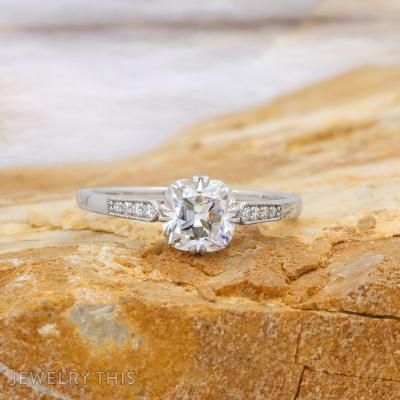


Victorian-Style Moissanite Engagement Ring in White Gold
$$$
14k white gold, moissanite, lab-grown diamonds
A client came to us with a reference photo of a Victorian-style engagement ring and asked for something as close to it as possible. The design shifted from the original yellow gold version to white metal partway through, and after seeing the finished render he wrote simply: 'It looks fantastic.' When the ring arrived, he confirmed he was very pleased with how it turned out.
'It looks fantastic.' — on seeing the first render
'I am very pleased.' — on delivery
Quick specs
Design type
Primary Metal
Shape / Cut
Primary Stone
Accent Stones
Design Complexity
Intent: Certainty
Size
Ring size 8 US (18.14mm).
How they made it distinctive
-
01
Old mine cut moissanite chosen specifically to echo the warmer, softer glow of antique diamonds rather than modern brilliance
-
02
Accent stones switched from moissanite to small lab-grown diamonds because diamonds cut more precisely at tiny sizes and set more securely
-
03
Milgrain edging along the tapered shoulders references period-correct Victorian detailing rather than a modern clean edge
-
04
Design adapted from a client-supplied reference photo of an existing vintage-style ring rather than built from scratch
How you'd make it yours
Center stone: this piece uses moissanite; a new commission could use a lab or natural diamond for a different look and price point
Metal: this piece is 14k white gold; the same vintage detailing works in yellow or rose gold
Center stone shape: this piece uses cushion; a new commission could use round, oval, or emerald cut with adjusted prongs
Accent stones: this piece uses small lab-grown diamonds; a new commission could use moissanite or sapphires for a color variation
One of a kind: this exact ring was designed for one client and is not reproduced — a new commission is an original piece inspired by this one, not a copy
Design changes made
The design moved from the client's first reference image to a second, similar vintage-style ring he preferred more, now in white metal instead of yellow gold. The accent stones were also changed from moissanite to small lab-grown diamonds, which set more precisely at that size with no cost difference.
Who this is for
This piece is for someone drawn to antique-style engagement rings but who wants the practicality of modern materials and sourcing. It fits someone who has a specific vintage reference in mind and wants it recreated faithfully, rather than starting a design from a blank page.
How it's made
Once the design was approved, a 3D wax model was printed and reviewed before casting. The model was attached to a wax tree, invested in plaster, and fired in a kiln to burn out the wax and leave a hollow mold. Molten 14k white gold was then cast into the mold, cooled, and extracted as the raw ring.
After casting, the band was cleaned and polished to a bright finish, with particular attention to the milgrain detailing along the tapered shoulders so the beaded edge stayed crisp rather than polished flat. The cushion-shaped old mine cut moissanite was then set into a four-prong mounting at the center, followed by hand-setting of the small lab-grown diamond accents into the shoulder settings.
Key note
The accent stones were switched from moissanite to lab-grown diamonds not for cost but because diamonds can be cut more precisely at very small sizes, allowing them to sit more securely in the setting.
Pricing guidance
A vintage-style solitaire engagement ring with an old mine cut center stone and diamond accents sits in the mid range for custom engagement work. Much of the baseline cost comes from the custom-cut center stone and the hand-finished milgrain detailing along the shoulders, which require more labor than a plain modern setting. Metal karat and the center stone's size and material are what move the price most from there.
Moves price up ↑
- ↑ Upgrading the center stone from moissanite to a natural or lab-grown diamond of comparable size
- ↑ Increasing the center stone size beyond the 1.5–2 carat range
- ↑ Choosing platinum instead of 14k white gold for the band
- ↑ Adding milgrain or filigree detail further down the shank
- ↑ Using natural diamonds instead of lab-grown for the accent stones
Moves price down ↓
- ↓ Reducing the center stone size
- ↓ Choosing a standard round brilliant cut over a custom old mine cut, which requires no special sourcing
- ↓ Selecting 10k white gold instead of 14k
- ↓ Omitting the accent stones from the shoulders entirely
- ↓ Simplifying or removing the milgrain edge detail
Questions people ask
An old mine cut is an antique diamond cut style from the 1800s to early 1900s, featuring a squarish cushion outline, a high crown, and a small table that produces a softer, warmer glow rather than the sharp brilliance of a modern round cut. People choose it when they want a vintage or Victorian-era look rather than a contemporary sparkle. It pairs naturally with antique-style settings like milgrain edges and tapered shoulders. Both natural diamonds and lab-grown stones, as well as moissanite, can be cut in this style.
Yes, moissanite rates 9.25 on the Mohs hardness scale, just below diamond's 10, making it highly resistant to scratching during daily wear. It also has a higher refractive index than diamond, which gives it more fire and rainbow flashes of light under certain lighting. The main visual difference from diamond is that extra sparkle, which some wearers love and others prefer to avoid. It is a practical, durable choice for an everyday engagement ring center stone.
Moissanite is silicon carbide, a different mineral from diamond, while lab-grown diamond is chemically identical to natural diamond, just grown in a controlled environment instead of mined. Moissanite tends to show more rainbow-colored flashes of light, while diamond's sparkle is more white and blue. At very small accent-stone sizes, lab-grown diamonds can be cut more precisely than moissanite, which helps them sit more securely in a setting. Cost is typically lower for moissanite at the same visual size, though the gap narrows significantly for small accent stones.
The design phase, from first sketch to an approved 3D render, typically takes about one week. Once the design is approved and moved into production, casting, stone setting, and finishing generally take four to five weeks. A custom-cut center stone, like an old mine cut moissanite, can occasionally add a short delay if the stone needs to be specially cut rather than pulled from standard inventory. Total timeline from approval to shipping is usually five to six weeks under normal circumstances.
A custom vintage-style engagement ring with an old mine cut center stone and diamond accents sits in the mid range for custom engagement work. The main cost drivers are the custom-cut center stone and the hand-finishing required for details like milgrain edges and tapered shoulders. Metal choice, center stone size, and whether natural or lab-grown materials are used all shift the price from there. It's a style that favors labor and sourcing over large material cost.
Milgrain is a beaded metal edge created during the finishing process, and like any raised metal detail, it can soften slightly with years of daily wear and repeated polishing. A jeweler can reapply or refresh milgrain detailing during a routine cleaning or resizing service if it starts to flatten. It holds up well under normal daily wear and is not considered a fragile or high-maintenance feature. Avoiding over-polishing during cleanings helps it last longer.
Yes, the four-prong setting and tapered, milgrain-edged shoulders can be adapted to other stone shapes like round, oval, or emerald cut, though the prong configuration would need slight adjustment to properly secure a different outline. A cushion shape was chosen here specifically to match the old mine cut's traditional silhouette. Round brilliant is the most common substitute if a buyer wants modern sparkle while keeping the vintage-style band. The milgrain and shoulder design elements remain consistent regardless of center stone shape.
Yes, a band like this with milgrain detailing and shoulder accent stones can typically be resized within about one to two sizes up or down without disturbing the stone settings. Larger resizes may require more careful work around the milgrain edge and the shoulder stones to avoid distorting the detail. It's best handled by the original jeweler or one experienced with vintage-style detailing. Standard sizing adjustments do not typically affect the center stone setting.
Explore Similar Creations
Every masterpiece starts with a spark. Explore how our clients raw ideas - sketches, heirlooms, inspirations - were transformed into bespoke works of arts.
This White gold masterpiece of a ring showcases a mesmerizing 3.2 carat Moissanite stone at ...

Introducing our elegant Gold-Plated Silver Oval Engagement Ring, adorned with a stunning 7x5mm oval lab-grown ...

This captivating custom engagement ring emanates timeless beauty and exquisite craftsmanship. At its heart lies ...

Crafted for the superhero enthusiast, this custom engagement ring seamlessly merges elegance with fandom. Cast ...

This exquisite art-deco inspired engagement ring features a beautiful round Diamond as its focal point. ...

This striking yellow gold engagement ring captures the essence of a lush forest through its ...
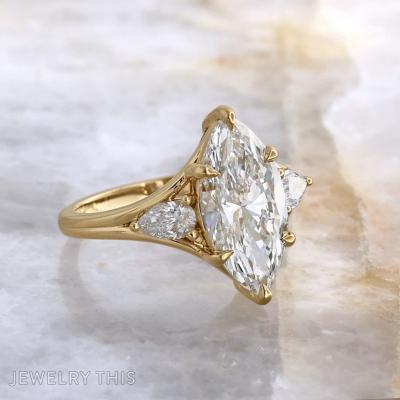
This engagement ring centers a 3.03 carat marquise-cut lab-grown diamond, flanked by two pear-shaped lab ...
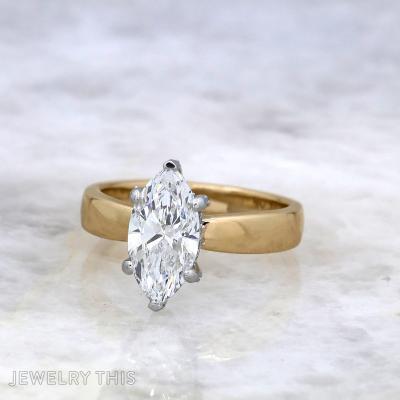
This stunning yellow gold engagement ring masterfully blends traditional warmth with modern brilliance. The centerpiece ...

This elegant white gold engagement ring features a stunning princess cut moissanite center stone. The ...

Introducing our breathtaking 14k Rose Gold Marquise Cluster Engagement Ring. A timeless expression of love ...
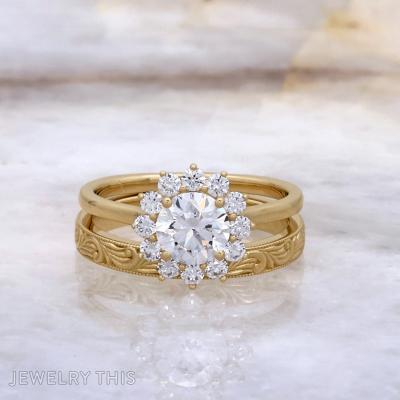
This exquisite 14K yellow gold wedding set seamlessly blends timeless romanticism with modern ethical luxury. ...
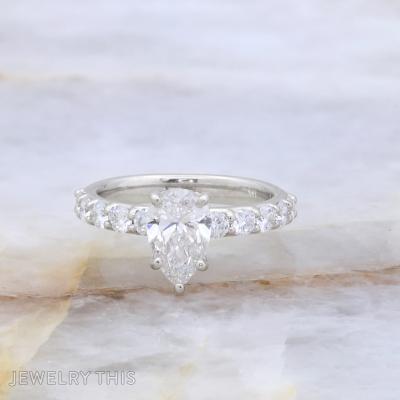
This engagement ring centers a pear-shaped lab-grown diamond set high above a hidden halo, with ...



