


Vintage-Style Platinum Ring Recreated From a Single Photo
$$$
Platinum, lab diamond, lab diamond accents
A client lost a family ring and had only a few old photographs to work from — no appraisal, no paperwork, just a strong memory of how light and delicate it felt on her hand. Working from those photos alone, the team identified a double-prong set stone and four flower clusters, each hiding a small diamond at its center that hadn't been visible in the original images. When it arrived, she wrote: 'I received the ring and absolutely love it. It's better than I imagined possible.'
'I received the ring and absolutely love it. It's better than I imagined possible. Thank you so much, I am so grateful.' — on delivery
Quick specs
Design type
Primary Metal
Shape / Cut
Primary Stone
Accent Stones
Design Complexity
Intent: Certainty
Size
Ring size 6.5 US (16.92mm). Band tapers to approximately 1.5mm at the back shank.
How they made it distinctive
-
01
Recreated entirely from a handful of old photographs with no appraisal or paperwork to reference
-
02
Double-prong setting chosen specifically to replicate the slightly squared look common to the original's era
-
03
Band deliberately tapered from just over 2mm to 1.5mm at the back to match the original's worn, asymmetrical feel
-
04
Four flower clusters each hide a small diamond at the center — a detail not obvious until the design was reviewed closely
-
05
Platinum chosen to match the lightness and delicacy the client specifically remembered from the original
How you'd make it yours
Stone: this piece uses a lab diamond; a new commission could use a natural diamond for the same look at a different price point
Metal: this piece is platinum; the same floral vintage design works equally well in 14k or 18k white gold
Band taper: this piece tapers to 1.5mm at the back; a new piece could use a uniform width throughout
Accent stones: this piece uses four diamonds in the flower clusters; a new commission could use colored stones or birthstones instead
One of a kind: this exact ring was recreated for one client's lost family piece and is not reproduced — a new commission is an original piece inspired by its vintage, floral design language
Design changes made
After seeing the first render, the client asked for the band to be thinned and tapered to match the original's gentle asymmetry — the team narrowed the back shank from just over 2mm to 1.5mm. She also caught that the flower clusters each held a small diamond, a detail not obvious from the photos until the render review, so two additional accent stones were added to match.
Who this is for
This piece is for someone who wants a ring that carries real history, not just a vintage look pulled from a catalog. It's especially right if you're working from limited documentation — a few old photos, no appraisal, no physical piece in hand — because that is exactly the kind of puzzle this process is built to solve.
How it's made
Once the tapered design was approved, the ring was 3D printed in wax and attached to a tree for casting. The tree was invested in plaster and fired in a kiln to burn out the wax, leaving a hollow mold that molten platinum was poured into under pressure. After cooling, the raw casting was removed from the mold and prepared for cleanup before finishing began.
The band was refined to taper smoothly from just over 2mm at the top to 1.5mm at the back, matching the worn asymmetry of the original. The center diamond was set into a double-prong setting designed to echo the squared-off look common to antique settings of this style, while the four small accent diamonds were hand-set into the center of each flower cluster. The piece was then polished to its final finish.
Key note
The double-prong setting style was chosen specifically because it makes a round stone read as slightly squared — a detail true to rings of the original piece's era.
Pricing guidance
A platinum engagement ring with a floral vintage-inspired setting and a lab diamond center sits in the mid range for custom engagement work. Platinum itself carries a higher baseline cost than gold due to its density and sourcing, and the hand-finishing required for the flower clusters and milgrain detail adds labor on top of that. Stone quality and carat weight are what move the price most from there.
Moves price up ↑
- ↑ Choosing a natural diamond instead of a lab diamond for the center stone
- ↑ Increasing the center stone's carat weight beyond .75ct
- ↑ Upgrading the center diamond's color and clarity grade
- ↑ Adding more accent diamonds beyond the four flower-set stones
- ↑ Extending the milgrain or floral detailing further around the band
Moves price down ↓
- ↓ Choosing 14k white gold instead of platinum for the setting
- ↓ Selecting a smaller center stone
- ↓ Reducing the number of flower clusters or accent stones
- ↓ Choosing a lower clarity grade for the center diamond
- ↓ Simplifying the shank taper to a uniform width
Questions people ask
Yes. This ring was rebuilt using only a handful of old photographs, with no appraisal or paperwork to reference. The process starts with a 3D render based on what's visible in the photos, and details that aren't fully clear — like stone size or hidden accent stones — get refined as the client reviews and gives feedback. It takes some back and forth, but a faithful recreation is possible even without the original piece in hand.
Lab-grown and natural diamonds are chemically, physically, and optically identical — the same hardness, the same brilliance, the same structure. The only differences are origin and price, with lab diamonds typically costing significantly less than natural diamonds of the same size and grade. For a center stone like this one, choosing lab versus natural comes down to budget and personal preference, not visual difference.
Platinum is denser and heavier than gold, so a ring made in platinum uses more raw metal by weight than the same design in white gold. It's also a naturally white metal that doesn't require rhodium plating to stay bright, unlike white gold. Platinum is more durable and hypoallergenic, which makes it a common choice for heirloom-style pieces meant to last for decades.
The design phase typically takes about a week, during which a 3D render is created and refined based on feedback. Once the design is approved and a majority of the balance is paid, production takes roughly three to four weeks, covering wax printing, casting, stone setting, and finishing. Total timeline from deposit to delivery is usually five to eight weeks depending on how many rounds of design revisions are needed.
Yes, a tapered band — wider at the top near the center stone and narrower toward the back — was a common feature of antique rings, often a result of decades of wear rather than original design. When recreating a vintage piece, that taper can be deliberately built into the new design to replicate the original's feel and comfort. On this ring, the band was thinned from just over 2mm to 1.5mm at the back specifically to match this detail.
A double-prong setting uses two wider prongs instead of four thin ones to hold the center stone, which was a common style in antique and early-20th-century rings. This setting style tends to make a round stone appear slightly more square or cushioned in outline because the wider prongs cover more of the stone's edge. It's a deliberate design choice for anyone recreating or drawing inspiration from a vintage piece.
Yes, small accent diamonds are commonly set into the center of flower or leaf details flanking a center stone, which is exactly what was done on this ring with four tiny diamonds — one in the center of each flower cluster. These accent stones add sparkle without competing with the center stone and are typically bead- or bezel-set to stay secure during daily wear. This kind of detail works well on vintage-inspired designs where floral motifs are already part of the aesthetic.
Platinum is one of the most durable metals used in fine jewelry and holds up very well to daily wear. Unlike white gold, it doesn't need periodic rhodium replating to stay white, and it's naturally hypoallergenic, making it a solid choice for sensitive skin. Over time platinum develops a soft patina rather than losing metal the way softer alloys might, which many people find appealing on an heirloom-style piece.
Explore Similar Creations
Every masterpiece starts with a spark. Explore how our clients raw ideas - sketches, heirlooms, inspirations - were transformed into bespoke works of arts.
Elegance meets affordability in this custom engagement ring designed to be a replacement for a ...

This yellow gold ring is a heartfelt recreation of a cherished, lost engagement ring. At ...

This engagement ring centers a 1.5 carat emerald-cut moissanite, flanked on each side by a ...

Behold this stunning custom wedding ring set, meticulously crafted to capture the essence of eternal ...

Cat said Yes! This stunning 1.50ct round diamond six claw set in 18ct white gold ...
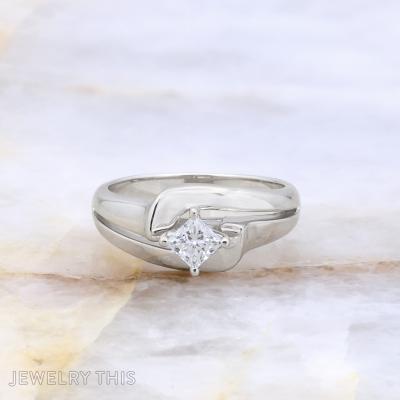
This engagement ring recreates a bypass-style solitaire that was lost two decades earlier, rebuilt entirely ...

This engagement ring was recreated to resemble a vintage three-ring set from the early 1980s, ...

Crafted in white gold, this enchanting engagement ring features an oval diamond at its center, ...
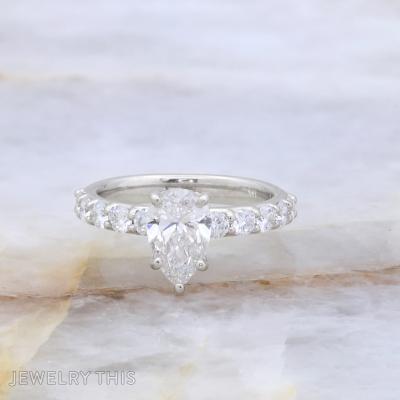
This engagement ring centers a pear-shaped lab-grown diamond set high above a hidden halo, with ...

This stunning rose gold ring features a captivating center oval-shaped opal cabochon that’s perfectly bezel ...

Dazzle in celestial allure with this custom engagement ring. Crafted in sterling silver, it features ...
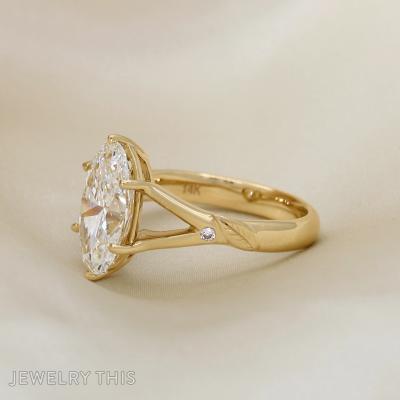
This engagement ring pairs a bold elongated oval center diamond with a softly split yellow ...



