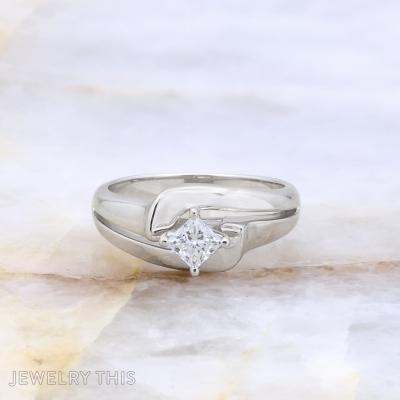
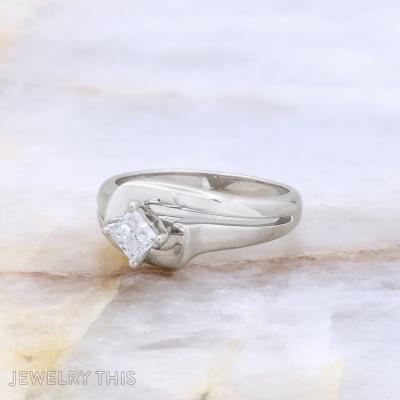
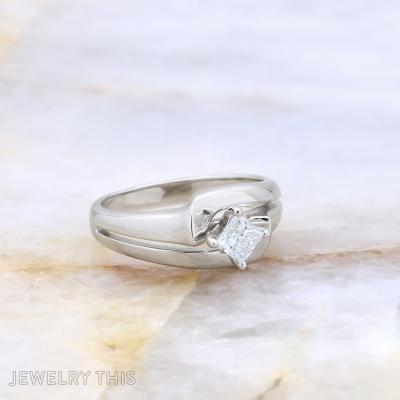
Recreated Swirl Engagement Ring in White Gold
$$$
14k white gold, lab-grown diamond
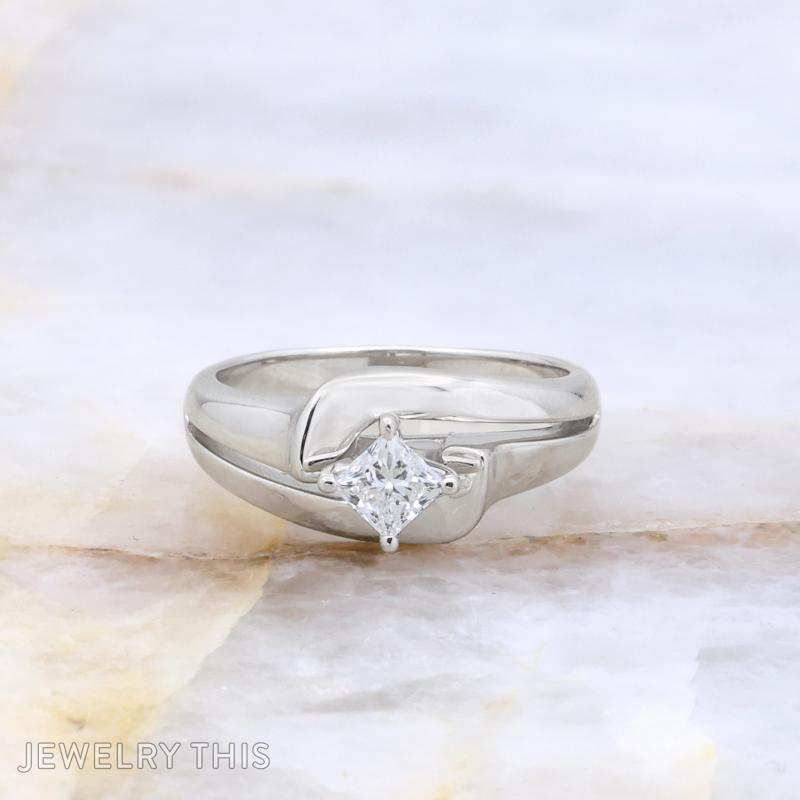
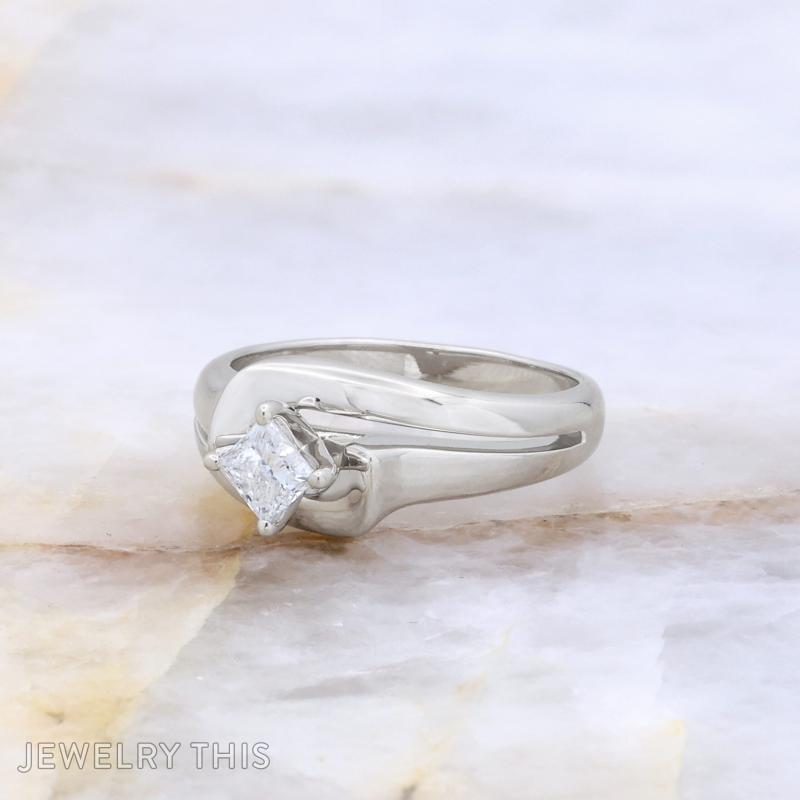
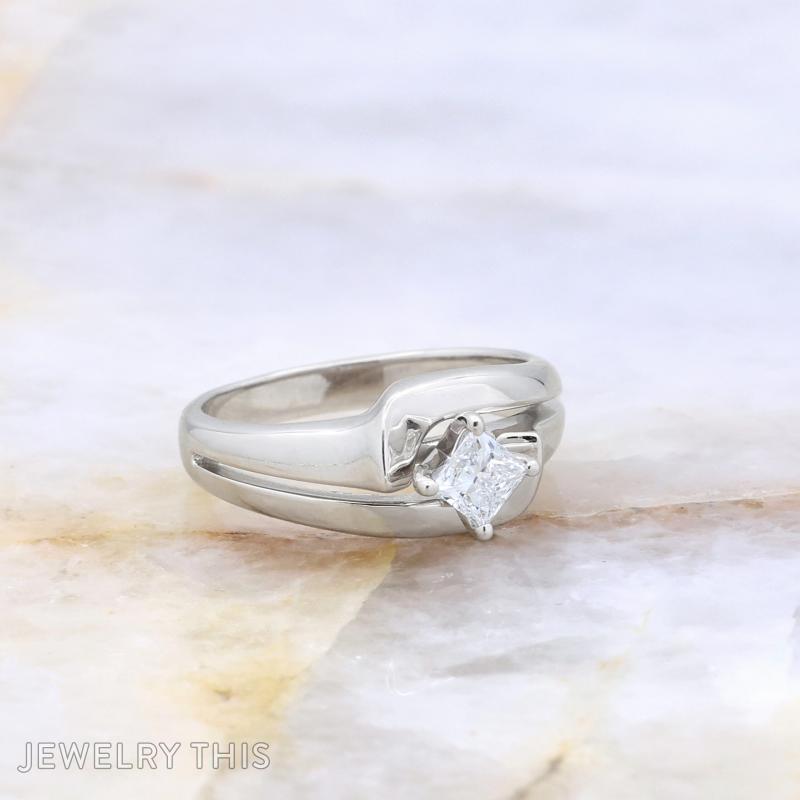
A husband set out to recreate his wife's engagement ring, lost twenty years earlier, in time for their 20th wedding anniversary. Working only from photographs and her general memory of the stone size, the piece was rebuilt as a bypass-style princess-cut solitaire in white gold. When it arrived just before the anniversary, he wrote: 'It looks amazing. I can't thank you enough for making this happen for us in time.'
'Looks beautiful!' — on seeing the first render
'It looks amazing. I can't thank you enough for making this happen for us in time for the anniversary.' — on delivery
Quick specs
Design type
Primary Metal
Shape / Cut
Primary Stone
Accent Stones
Style
Design Complexity
Intent: Certainty
Size
Ring size 7 US (17.35mm). Band width approximately 3mm at shank tapering to a wider bypass profile at the setting.
How they made it distinctive
-
01
Bypass swirl band recreated from photographs of a ring lost twenty years earlier, with no appraisal or paperwork to reference
-
02
Princess-cut lab diamond set at an angled, off-axis position within the setting, matching the original's distinctive look
-
03
Band and prong head modeled as separate components specifically to achieve the swirl's crossing geometry
-
04
Stone sourced within a tight .25–.30 carat range to preserve the original ring's proportions rather than sizing up
-
05
14k white gold chosen to match the cool-toned metal of the original piece
How you'd make it yours
Stone: this piece uses a lab-grown princess-cut diamond; a new commission could use a natural diamond or a different cut such as cushion or radiant
Metal: this piece is 14k white gold; the same bypass design works in 18k white gold, yellow gold, or rose gold
Stone size: this piece was kept near a quarter carat to match a specific original; a new commission can be sized to any preference
Band width: this piece has a moderate-width swirl profile; a new commission could use a slimmer or bolder band
Engraving: the inside of the band can carry a date or initials on a new piece
One of a kind: this exact ring was recreated for one specific couple and is not reproduced — a new commission is an original piece inspired by this one, not a copy
Design changes made
The ring size was corrected from 8 to 7 US after the client confirmed the original sizing with the piece's original retailer. The client considered increasing the stone from approximately .25 carats to .45 carats but ultimately kept the original scale to stay within budget and timeline.
Who this is for
This piece is for someone who has a very specific ring in mind — not a new design, but a faithful return to something that mattered before. It's especially right if you're working from limited documentation, like old photos and a rough stone size, and want a team that can bridge that gap into a finished piece for a meaningful date.
How it's made
Once the bypass design was modeled in 3D and approved, the file was used to guide casting in 14k white gold — the band and the prong head that holds the diamond were modeled as separate components before being joined. A wax or resin pattern was produced from the model, invested, and cast, with the metal weight and labor calculated directly from the finished 3D file rather than estimated.
After casting, the band was cleaned up and polished to a mirror finish along the full swirl profile, including the crossing bypass sections where two arms of metal pass each other beneath the stone. The princess-cut lab diamond, sourced to fall within the .25–.30 carat range to match the original ring's scale, was then set by hand into the four-prong head at its signature angled orientation before final quality inspection.
Key note
The band and the diamond's prong head were modeled and cast as two separate components before being joined, which is what allows the stone to sit at its angled, off-axis position within the bypass swirl.
Pricing guidance
A bypass-style solitaire engagement ring in 14k white gold with a princess-cut lab diamond sits in the mid range for custom engagement work of this complexity. Recreating a design from photographs rather than a physical reference or existing CAD file adds labor at the modeling stage, since the swirl and prong-head geometry has to be built from scratch. Stone size and any last-minute design changes are the main levers that move the price from there.
Moves price up ↑
- ↑ Increasing the center stone size beyond roughly a third of a carat, which requires a newly modeled prong head
- ↑ Switching from a lab-grown to a natural diamond of the same size and cut
- ↑ Upgrading from 14k to 18k white gold
- ↑ Adding pave or accent diamonds along the bypass shoulders
- ↑ Requesting a rush timeline that requires expedited casting or stone sourcing
Moves price down ↓
- ↓ Keeping the center stone within the smallest workable range for the setting
- ↓ Choosing a smaller or simpler prong style instead of a fully custom bypass swirl
- ↓ Selecting sterling silver or gold-plated silver instead of solid white gold
- ↓ Reducing band width or simplifying the shank profile
- ↓ Skipping any structural reinforcement beyond what is required for durability
Questions people ask
Yes, a ring can be rebuilt using only photographs and an approximate stone size when no appraisal or paperwork exists. The design team builds a 3D model based on the visible proportions in the photos and any measurements the client can provide, such as an approximate carat weight. This model is refined through a rendered preview that the client reviews before anything is cast. It won't be identical down to the micron, but a well-referenced recreation typically comes very close to the original in scale and detail.
Lab-grown and natural diamonds are chemically and optically identical — the same hardness, clarity potential, and sparkle. The primary difference is origin and cost, with lab-grown diamonds typically running less expensive than a natural diamond of equivalent size and cut. In a princess-cut solitaire like this, most people cannot tell the two apart without lab certification. Choosing lab-grown is purely a cost and origin preference, not a quality tradeoff.
A jump from around a quarter carat to roughly a third of a carat is a small enough size difference that it's barely noticeable to the eye — often less than half a millimeter in dimension. To create a visibly larger stone, you typically need to move up to somewhere around four to five tenths of a carat, which is enough of an increase that it may require a newly modeled prong setting to accommodate the larger stone. Smaller increases within the same size range usually fit an existing setting design without modification.
A bypass or swirl-style solitaire in 14k white gold with a princess-cut lab diamond falls in the mid range for custom engagement rings. The main cost driver is the labor of modeling a custom band shape from scratch, since a swirl or bypass silhouette requires more design time than a straight shank. Stone size and metal choice are the next biggest factors that shift the price up or down.
A standard custom engagement ring typically takes around five to six weeks from design approval to shipping, though rush timelines are sometimes possible depending on production schedules. The process starts with a sketch and 3D render for approval, then moves into casting, stone sourcing, setting, and final polishing. Holiday season and other high-volume periods can affect how tight a rush timeline can be. Clients working toward a specific date should communicate that deadline as early as possible.
Yes, ring size can typically be adjusted before production begins, especially if the correct size is confirmed early. Once the size is finalized, it's built into the 3D model so the finished ring matches without any additional resizing needed later. It's best to confirm sizing through a professional measurement or a prior retailer's records rather than an estimate, since a wrong size caught late can affect the timeline.
A bypass or swirl setting like this works well in 14k or 18k white gold, yellow gold, or rose gold, since the crossing band shapes are formed during casting regardless of metal choice. White gold is a common choice for a bright, cool-toned look that complements a colorless diamond. Platinum is also an option, though it is heavier and typically increases the overall cost. The choice mostly comes down to color preference and durability needs.
It's possible to reset a larger stone into a similar setting later, but it often requires rebuilding the prong head to properly secure and proportion the larger diamond. This is different from a simple stone swap, since the prongs need to be sized to the new stone's dimensions. If a future upgrade is a possibility, it's worth mentioning early so the design can anticipate that flexibility where practical.
Explore Similar Creations
Every masterpiece starts with a spark. Explore how our clients raw ideas - sketches, heirlooms, inspirations - were transformed into bespoke works of arts.
Exquisite and timeless, this ring boasts a captivating design featuring two marquise-shaped stones set in ...

This beautiful, handmade 14k yellow gold engagement ring is a classic and timeless piece that ...

This modern 14k rose gold ring features a unique wrapping design that splits at the ...

This stunning 14k yellow gold ring features a beautiful heart-shaped sapphire cabochon at its center, ...
This enchanting engagement ring is a celebration of timeless love and individuality. At its heart ...

Introducing our captivating Vintage-Inspired 14k White Gold Custom Oval Engagement Ring, a timeless embodiment of ...

Introducing our elegant Gold-Plated Silver Oval Engagement Ring, adorned with a stunning 7x5mm oval lab-grown ...
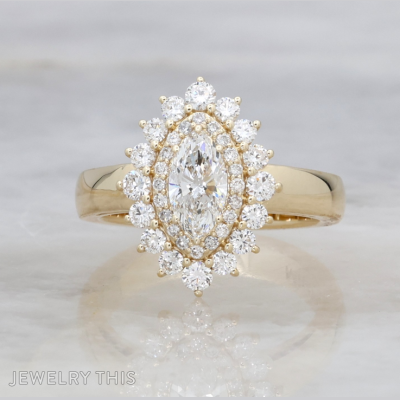
This magnificent yellow gold engagement ring offers breathtaking sparkle and substantial presence. At its heart ...

This elegant white gold engagement ring features a stunning round moissanite center stone, set in ...
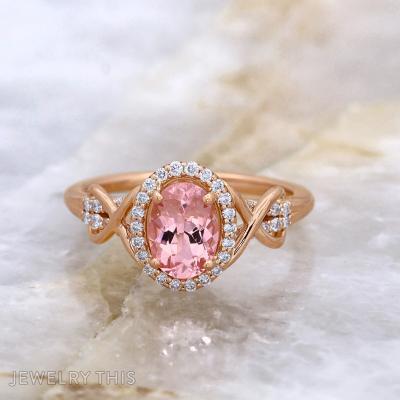
This engagement ring recreates a discontinued design the client’s wife once owned, rebuilt from photographs ...

Elevate your love story with this exquisite custom engagement ring, a testament to timeless beauty ...

This engagement ring centers a 7x5mm oval amethyst in a four-prong setting, flanked on each ...