Rose Gold Morganite Halo Ring — Recreated Engagement Style
$$$
14k rose gold, morganite, lab-grown diamonds
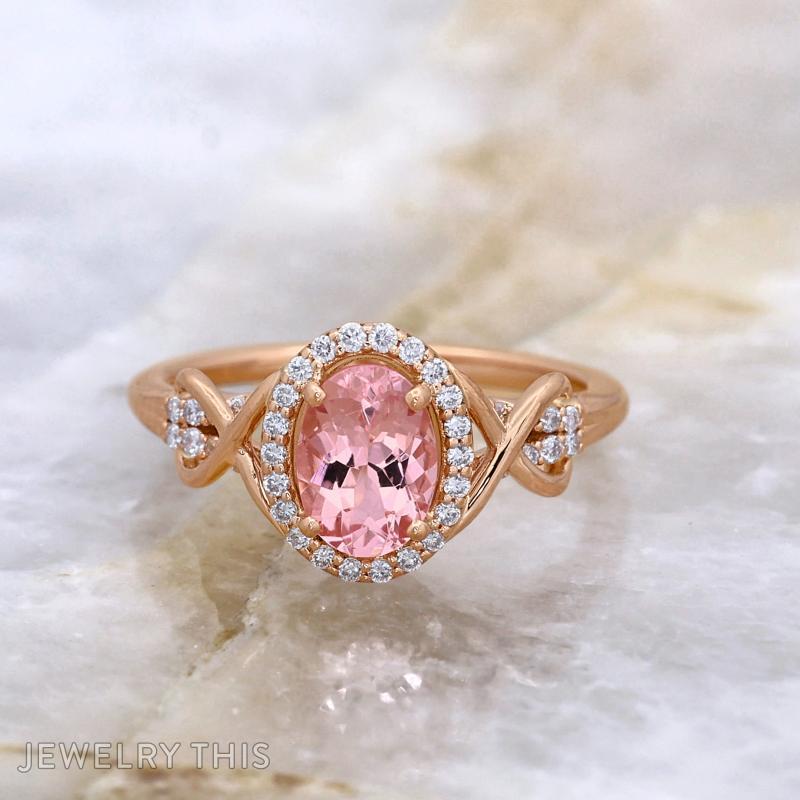
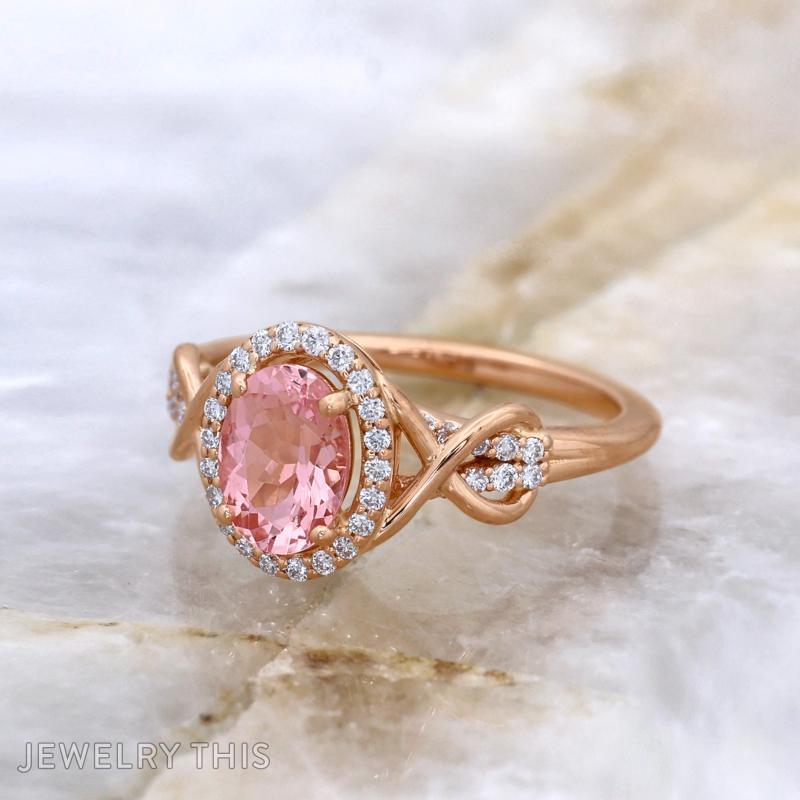
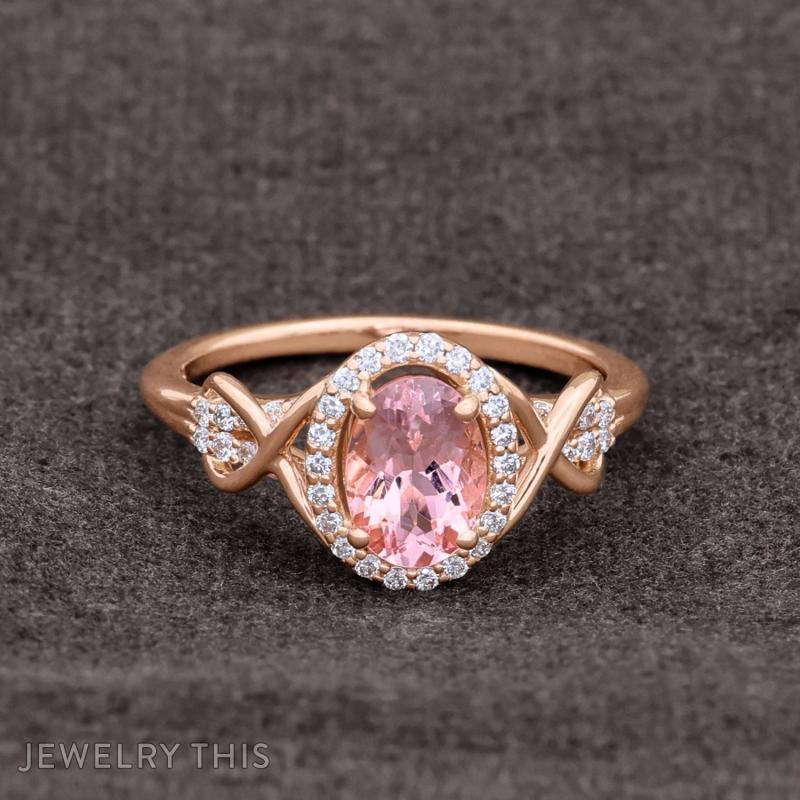
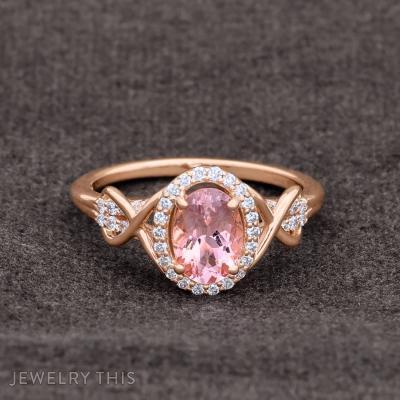
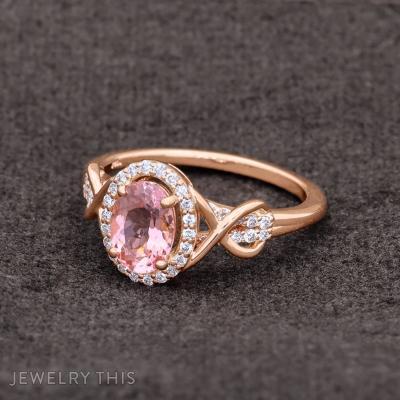
A discontinued ring his wife had loved could no longer be replaced through the original retailer, so he set out to recreate it from photographs alone. Working from images and a stone-size guide since no appraisal existed, the design came together with an oval morganite center stone and diamond-set infinity shoulders. When the render arrived, he wrote: 'It looks amazing! Gives me chills!'
'It looks amazing! Gives me chills!' — on seeing the first render
Quick specs
Design type
Primary Metal
Shape / Cut
Primary Stone
Accent Stones
Style
Design Complexity
Intent: Certainty
Size
Ring size 5 US (15.7mm). Center stone approximately 0.75ct, oval 7.5x5mm.
How they made it distinctive
-
01
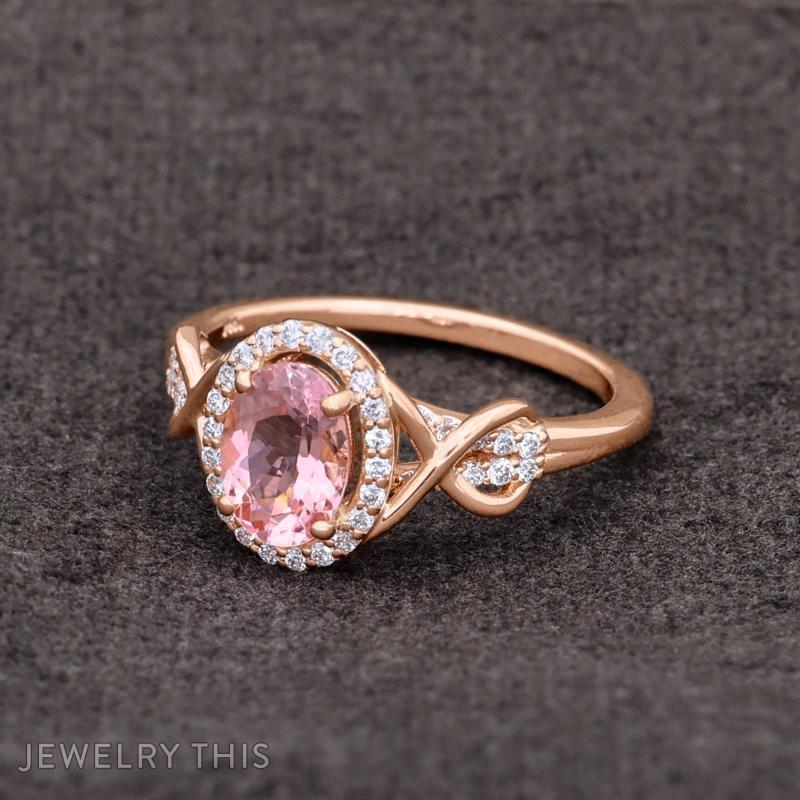
Oval morganite center stone chosen to match the soft pink tone of a discontinued ring the client's wife had loved
-
02
Diamond halo surrounds the center stone, adding sparkle and a layer of setting protection
-
03
Infinity crossover detail on each shoulder, set with small diamonds, echoes the original ring's silhouette
-
04
Stone size estimated from photographs and a reference guide since no appraisal existed for the original
-
05
Lab-grown diamonds used throughout the accent stones for the same look at a lower cost than natural stones
How you'd make it yours
Center stone: this piece uses morganite; a new commission could use a sapphire, natural diamond, or another colored gem for a different look
Diamond origin: this piece uses lab-grown accents; a new piece could use natural diamonds instead
Metal: this piece is 14k rose gold; the same halo-and-infinity design works well in yellow gold, white gold, or platinum
Shoulder detail: the infinity crossover motif could be simplified to a plain band or swapped for a different accent pattern
Engraving: the inside of the band can carry a date, initials, or short phrase on a new piece
Design changes made
Design matched the initial brief without major changes.
Who this is for
This piece is for someone recreating a ring that can no longer be bought again — a discontinued design, a retailer that no longer carries it, nothing left but photos. It's especially right if you want a colored center stone with a romantic, halo-framed look rather than a traditional diamond solitaire.
How it's made
Once the design was approved, a 3D-printed resin model was produced and shared with the client as a preview before casting. The resin was attached to a wax tree, invested in plaster, and fired in a kiln to burn out the pattern, leaving a hollow mold. Molten 14k rose gold was then cast into the mold, cooled, and separated from the tree for finishing.
After casting, the band was cleaned up and polished to a bright finish throughout. The oval morganite was set into its prong setting at the center, surrounded by the small round diamonds forming the halo, and the diamond accents were then set into the infinity crossover details on each shoulder. All stone setting was completed after the polish stage to avoid damaging the finish.
Key note
The center stone size was estimated from photographs using a stone-size reference guide, since no original appraisal or paperwork existed to confirm the morganite's exact dimensions.
Pricing guidance
A rose gold engagement ring with a colored center stone and diamond-accented halo and shoulders sits in the mid range for custom engagement work of this complexity. Labor for the halo setting and the infinity crossover detail on each shoulder is the main cost driver beyond the stones themselves. Center stone choice and diamond origin are where the price shifts most from there.
Moves price up ↑
- ↑ Upgrading the center stone from morganite to a natural sapphire or diamond of comparable size
- ↑ Switching the accent diamonds from lab-grown to natural
- ↑ Increasing the total diamond count in the halo and shoulder details
- ↑ Upgrading from 14k to 18k rose gold
- ↑ Adding milgrain or engraving detail to the band
Moves price down ↓
- ↓ Reducing the halo diamond count or using a smaller halo
- ↓ Choosing a smaller center stone size
- ↓ Simplifying the shoulder detail from the infinity crossover to a plain band
- ↓ Using a lower carat gold, such as 10k rose gold
Questions people ask
Morganite ranks 7.5 to 8 on the Mohs hardness scale, which is durable enough for everyday wear but softer than sapphire or diamond. It can develop surface scratches over years of daily use, particularly if worn during manual tasks. A halo setting like this one offers some protection by surrounding the stone with metal and smaller diamonds. Regular jeweler check-ups are recommended to confirm prongs remain secure over time.
Lab-grown and natural diamonds are chemically and optically identical — both are crystallized carbon with the same hardness, fire, and brilliance. The only real differences are origin and price, with lab-grown diamonds typically costing less than natural stones of comparable size and grade. Neither option is visually distinguishable from the other without specialized equipment. Many clients choose lab-grown accent diamonds specifically to allocate more of the budget toward the center stone.
Yes, recreation from photographs is a standard part of custom design work when the original piece or its paperwork is no longer available. The process typically starts with photo analysis to estimate stone size and proportions, followed by a sketch and 3D render for approval before anything is cast. Without an appraisal, stone dimensions are approximate rather than exact, and this is disclosed upfront. Most clients find the render captures the spirit of the original closely enough to move forward confidently.
A rose gold engagement ring with a colored center stone, diamond halo, and detailed shoulder work typically falls in the mid range for custom engagement pieces. The main cost driver is the labor involved in setting the halo and the decorative shoulder details, rather than the center stone itself when a stone like morganite is chosen. Diamond origin, stone size, and gold karat are the variables that move the price most from there. Simpler settings or smaller stone counts bring the cost down.
A standard custom engagement ring typically takes about five to six weeks from approved design to completion, including roughly one week for design and four to five weeks for production. This includes sketch approval, 3D rendering, casting, stone setting, and finishing. Rush timelines are sometimes possible but depend on the complexity of the design and current production schedule. Clients are kept updated with photos at key stages, including the resin preview before casting.
Yes, a halo setting can be adapted to frame a variety of center stone shapes, including round, cushion, or pear, though the halo's outline would need to be redesigned to match the new stone's silhouette. An oval center stone like the one in this design pairs well with an oval or slightly elongated halo outline. Changing the stone shape typically does not affect the difficulty of the setting process significantly. The infinity shoulder detail would remain compatible with most center stone shape changes.
If a stone becomes loose or falls out, the ring should be sent back to the maker for inspection and repair rather than attempting a fix at home or with a local jeweler, since local repairs can affect warranty coverage. A full quality inspection is typically performed to check for any other underlying setting issues beyond the reported problem. Most reputable custom jewelers will repair a stone-related issue at no charge if it occurs shortly after delivery. This kind of issue is uncommon when prongs are properly finished and closed during the setting process.
Yes, the same halo-and-infinity design translates well to yellow gold, white gold, or platinum, though the warm tone of morganite is traditionally paired with rose gold for a complementary look. Switching to white gold or platinum would give the piece a cooler, more contrasted appearance against the pink center stone. Platinum would also increase the overall weight and cost of the piece compared to gold. The structural design of the halo and shoulders would not need to change based on metal choice.
Explore Similar Creations
Every masterpiece starts with a spark. Explore how our clients raw ideas - sketches, heirlooms, inspirations - were transformed into bespoke works of arts.
Look at this radiant 14k Yellow Gold Heart Shaped Moissanite Solitaire Engagement Ring. It showcases ...
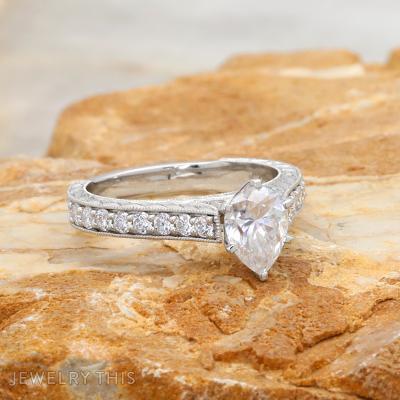
This engagement ring replica was built to stand in for a treasured original the client ...
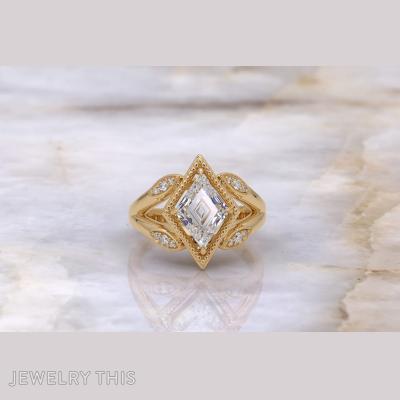
This engagement ring centers a 2.01-carat kite-shaped lab-grown diamond, set in a milgrain-edged bezel that ...
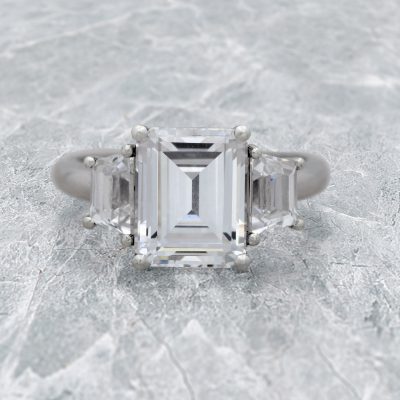
Modern three stone engagement ring set with a center 10 x 8 mm emerald cut ...

This engagement ring centers a 1.12-carat pear-shaped morganite in a soft pink hue, set in ...

This white gold wedding band is a masterful fusion of elegance and individuality. The U-shaped ...
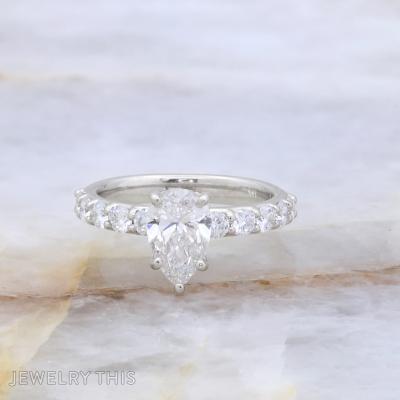
This engagement ring centers a pear-shaped lab-grown diamond set high above a hidden halo, with ...

This timeless three stone engagement ring is crafted in 14k white gold and features a ...
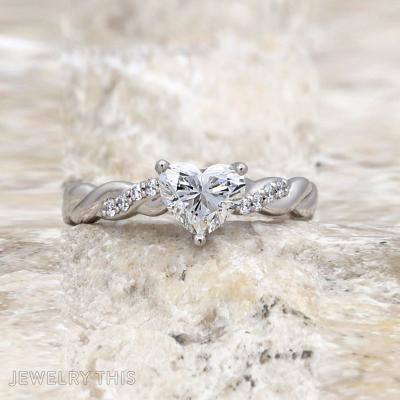
This engagement ring centers on a one-carat heart-shaped lab diamond, held in a four-prong setting ...

This 14k yellow gold ring reinterprets the traditional Claddagh design — hands cradling a crowned ...
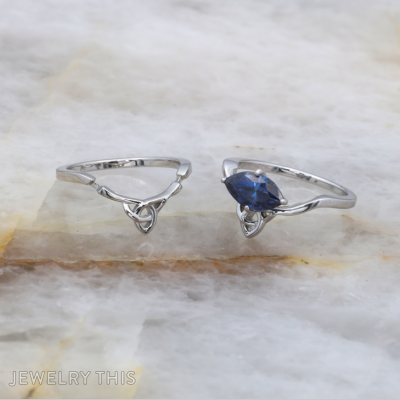
This captivating white gold wedding set features a harmonious design rich in meaning and artistry. ...
Exquisitely unique, this white gold wedding set weaves a tale of contrast. The engagement ring ...