


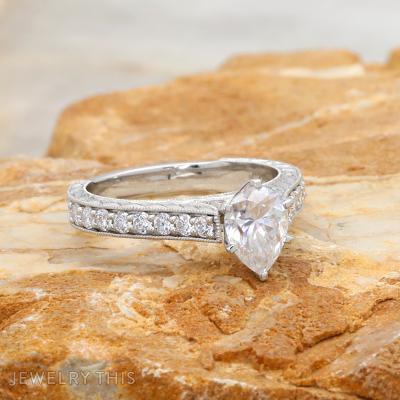


Everyday Replica Engagement Ring — Pear Moissanite Solitaire
$$
Sterling silver, moissanite, lab-grown diamonds
A client wanted a wearable stand-in for her engagement ring — one she could wear day to day while keeping the original safe in a safe at home, away from the risks of caring for a baby and riding ATVs. Working from the center stone's measurements and a shared vision for a cost-conscious build, the design settled on a pear-shaped moissanite with lab-grown diamond accents in sterling silver. When it arrived, she wrote that it was beautiful.
'It looks amazing!' — on seeing the first render
'Yes it's beautiful.' — on delivery
Quick specs
Design type
Primary Metal
Shape / Cut
Primary Stone
Accent Stones
Design Complexity
Intent: Certainty
Size
Ring size 7 US (17.32mm). Center stone approximately 8.81x5.09x3.40mm.
How they made it distinctive
-
01
Pear-shaped moissanite chosen to match the scale and shape of a cherished original ring's center stone
-
02
Sterling silver and moissanite combination selected specifically to keep the piece cost-conscious while preserving the vintage look
-
03
Milgrain and filigree detailing along the shank echoes the character of the antique-style original
-
04
Designed explicitly as a durable everyday alternative meant to be worn during hands-on activities like childcare and ATV riding
-
05
Accent stone sizing was based on the original center stone's exact photographed measurements
How you'd make it yours
Stone: this piece uses moissanite; a new commission could use lab-grown or natural diamond for a closer diamond match
Metal: this piece is sterling silver; the same vintage design language works in 14k white gold or platinum
Center stone shape: this piece uses a pear cut; a new commission could use oval, round, or cushion for a different silhouette
Accent stones: this piece uses lab-grown diamond accents; a new commission could use moissanite or cubic zirconia accents to match the center stone
One of a kind: this exact ring was designed to this wearer's stone measurements and is not reproduced — a new commission is an original piece inspired by this one, not a copy
Design changes made
The client requested a more cost-conscious build partway through discovery, which shifted the design from white gold with lab diamonds to sterling silver with moissanite and lab-grown diamond accents — the same look at a lower cost.
Who this is for
This piece is for someone who has a ring they love too much to risk wearing every day — around a baby, at work, or out on an ATV — and wants a faithful stand-in instead. It's especially right if you want the same look and shape as your original piece without the worry of losing or damaging it during daily life.
How it's made
Once the design was approved through a photorealistic render, the piece moved into a detailed design quality check to confirm every stone size and detail before sourcing began. A resin (wax) model was then produced as the first physical preview of the ring, arranged on a wax tree and set into a kiln to create the casting mold. Molten sterling silver was cast into that mold to produce the raw ring.
After casting, the band was cleaned up and polished to bring out its shine, with hand-finishing applied to the engraved filigree detailing along the gallery and shank. The pear-shaped moissanite center stone was set into a prong setting, and the round lab-grown diamond accents were set one by one into the milgrain-trimmed band on either side of the center stone.
Key note
The prongs are intentionally left slightly longer during the render stage and are trimmed down during the actual setting process — a step that can make the finished ring look different from the preview image even though nothing else changed.
Pricing guidance
A vintage-style engagement ring setting in sterling silver with a moissanite center and diamond accents sits toward the lower end of the price range for custom engagement rings. Choosing silver over gold and moissanite over lab diamond keeps the baseline cost down, since metal type and stone type are the two biggest cost drivers on a ring like this. The hand-finishing on the filigree and milgrain detailing adds some labor cost regardless of material choice.
Moves price up ↑
- ↑ Upgrading the band metal from sterling silver to 14k white gold or platinum
- ↑ Replacing the moissanite center stone with a natural or lab-grown diamond of similar size
- ↑ Increasing the number or size of the round accent stones in the band
- ↑ Adding more intricate hand engraving across the full shank rather than partial detailing
- ↑ Choosing a larger center stone size than the current approximate 1 carat
Moves price down ↓
- ↓ Reducing the number of accent stones set into the band
- ↓ Simplifying the milgrain and filigree detailing to a plain polished band
- ↓ Choosing a smaller center stone size
- ↓ Using a round or oval cut center stone instead of a custom pear shape
- ↓ Selecting cubic zirconia accent stones instead of lab-grown diamonds
Questions people ask
Moissanite is a diamond simulant that is optically and chemically different from diamond, but to the naked eye it presents a similar bright, colorless sparkle. It actually has more fire and rainbow flash than a diamond due to its higher refractive index, which some wearers love and others find too flashy. It is also very durable, ranking 9.25 on the Mohs hardness scale, just below diamond's 10. For a ring meant for daily wear, moissanite holds up extremely well against scratching and everyday wear and tear.
Lab-grown diamonds are chemically and optically identical to natural mined diamonds — the only difference is where they come from and their price. Lab-grown diamonds are typically significantly less expensive than natural diamonds of the same size and quality. For small accent stones set into a band, this makes lab-grown diamonds a practical choice since the visual difference from natural stones is undetectable to the eye. Durability and daily wearability are the same for both types.
A vintage-inspired engagement ring setting with milgrain and filigree detailing typically falls toward the lower end of custom engagement ring pricing when built in sterling silver with a moissanite center stone. The cost is driven primarily by the labor involved in hand-finishing the engraved details and setting each accent stone individually. Choosing gold instead of silver, or diamond instead of moissanite, would raise the price noticeably from that baseline.
The process typically starts with about one week for design — a sketch, a 3D CAD model, and a photorealistic render for approval. Once the design is approved and materials are sourced, production runs about four to six weeks depending on stone availability and casting scheduling. Adding a resin model preview step, as was done for this piece, can add a short amount of time but gives a tangible preview before the metal is cast.
Sterling silver is softer than gold or platinum and will show wear, scratching, and some tarnishing over years of daily use, but it holds up reasonably well for a ring intended as a lower-cost or everyday alternative to a primary piece. Regular polishing keeps the shine consistent. For a ring meant to be worn actively — around water, work, or physical activity — sterling silver is a reasonable trade-off between cost and durability compared to gold or platinum.
Yes. A replica can be built from stone measurements, verbal descriptions, and photos when the original piece is not available for direct reference. The center stone's millimeter dimensions are the most useful piece of information for scaling the design accurately. A photorealistic render is shared before production so the design can be reviewed and approved before any metal is cast.
Yes, a band like this can typically be resized after production, though resizing a ring with continuous stone-set shoulders is more involved than resizing a plain band because the stones near the sizing point need to be handled carefully during the process. It is best to confirm your ring size as precisely as possible before production to avoid the need for a resize. If a resize is needed after delivery, the ring can be shipped back for adjustment.
Moissanite and cubic zirconia are both diamond simulants, but moissanite is significantly harder and more durable, ranking 9.25 on the Mohs scale compared to cubic zirconia's 8. Moissanite also has more brilliance and fire due to its higher refractive index, giving it a livelier sparkle than cubic zirconia. Cubic zirconia is the less expensive of the two options but tends to cloud or scratch more easily over years of wear. For a piece meant for regular daily wear, moissanite is the more durable choice between the two.
Explore Similar Creations
Every masterpiece starts with a spark. Explore how our clients raw ideas - sketches, heirlooms, inspirations - were transformed into bespoke works of arts.
Introducing this Nature Lover’s Engagement Ring. The ultimate dream engagement ring for nature lovers. Crafted ...

This striking wide yellow gold engagement ring showcases a bold and sophisticated design, centered around ...

This elegant white gold engagement ring features a stunning princess cut moissanite center stone. The ...

This engagement ring replaces one that was lost, recreated as closely as possible to the ...

This enchanting rose gold engagement ring features a mesmerizing center stone embraced by a band ...

This engagement ring pairs a 1.05-carat oval lab-grown diamond with two symmetrical clusters of accent ...

Celebrate your unique love story with this exquisite custom wedding set in radiant 14k yellow ...

This exquisite white gold ring captures the timeless elegance of a three-stone design with a ...
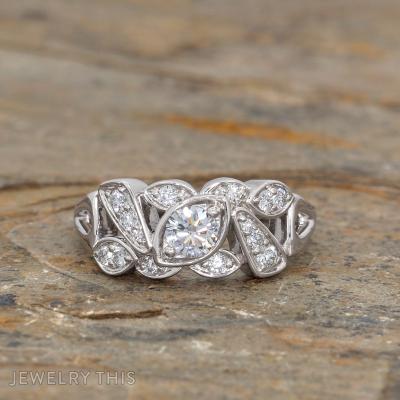
This exquisite engagement ring is a heartfelt recreation of a cherished vintage heirloom from 1925, ...
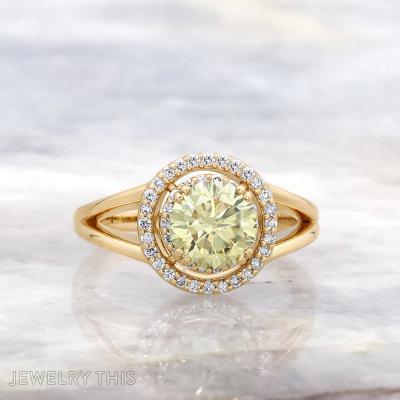
Crafted as a beautiful and cost-effective tribute to a cherished original, this yellow gold engagement ...

This white gold engagement ring celebrates timeless love and exquisite design. At its heart lies ...
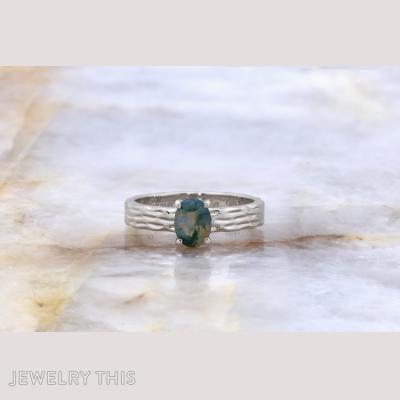
This custom sterling silver engagement ring is both meaningful and deeply personal, crafted to reflect ...



