


Recreated Oval Diamond Ring — Wood-Grain Rose Gold Band
$$
14k rose gold, lab-grown diamond
A client lost her engagement ring after wearing it for years and wanted it rebuilt as closely as possible to the original her husband had chosen — an oval diamond in rose gold with wood-grain detailing along the band. She worked from a few close-up photos to guide the recreation, narrowing the band from its original thickness for a better fit on her hand. When it arrived, she wrote: "it's stunning, thank you so much."
'It looks great! Is there any way to make the band to have a thinner thickness?' — on seeing the first render
'it's stunning, thank you so much' — on delivery
Quick specs
Design type
Primary Metal
Shape / Cut
Primary Stone
Accent Stones
Style
Design Complexity
Intent: Certainty
Size
Ring size 7 US (17.32mm). Band width approximately 1.5mm.
How they made it distinctive
-
01
Oval diamond chosen specifically because its flatter profile keeps the ring from sitting too high off the hand
-
02
Band narrowed to 1.5mm at the client's request after she felt the original's thickness made her fingers look shorter
-
03
Wood-grain ridge detailing carried around the band to closely match the look of the ring it replaces
-
04
Rose gold retained specifically to honor the metal her husband originally chose
-
05
1.05 carat D color/VS1 lab diamond selected for a clear, colorless look at high clarity
How you'd make it yours
Stone: this piece uses a lab-grown diamond; a new commission could use a natural diamond, moissanite, or a colored stone like moss agate
Band width: this piece is 1.5mm; the same wood-grain design language works at a slightly wider width for more durability
Metal: this piece is 14k rose gold; the same design works in white gold or yellow gold
Ridge detailing: the wood-grain texture can be carried partway or fully around the band on a new piece
One of a kind: this exact ring was designed to recreate one client's lost original and is not reproduced — a new commission is an original piece inspired by this one, not a copy
Design changes made
The band was narrowed from a thicker starting point to about 1.5mm after the client felt the original's width made her fingers look shorter, while keeping the wood-grain ridge detail intact around the shoulders.
Who this is for
This piece is for someone rebuilding something they lost and want back close to how it was, without necessarily copying every detail exactly. It's especially right if you know precisely what mattered about the original — the stone shape, the metal tone, a specific texture — and want room to make small practical adjustments, like a narrower band, along the way.
How it's made
Once the design was approved, a 3D-printed resin model was produced as the first physical version of the ring, giving the client a preview of the exact geometry before any metal was involved. That model was used to create a negative mold, which was then filled with molten 14k rose gold to cast the piece. After cooling, the raw casting was extracted from the mold for cleanup and finishing.
The band was finished with a high polish across the surface while the wood-grain ridges along the shoulders were kept crisp and defined to preserve the textured detail from the original design. The oval lab-grown diamond was then set into a four-prong setting sized to hold the stone securely while keeping the profile low. The narrow 1.5mm band width required careful attention during setting to maintain structural integrity around the prongs.
Key note
The band was kept right at 1.5mm — the thinnest width the studio will cast without compromising the ring's structural integrity.
Pricing guidance
An oval lab diamond solitaire in 14k rose gold with a narrow, detailed band sits toward the lower-to-mid range for custom engagement rings. Most of the cost comes from the diamond itself and the hand-finishing needed to carry a decorative ridge pattern on such a thin band. Carat weight and metal choice are what move the price most from there.
Moves price up ↑
- ↑ Choosing a natural diamond instead of a lab-grown diamond of the same size and grade
- ↑ Increasing the carat weight beyond approximately 1 carat
- ↑ Selecting a higher color and clarity grade diamond
- ↑ Adding accent diamonds along the band or in a hidden halo
- ↑ Widening the band beyond the minimum structural width, which increases metal and finishing time
Moves price down ↓
- ↓ Choosing a smaller center stone size
- ↓ Selecting a lower diamond color grade where the difference is less visible to the naked eye
- ↓ Simplifying or removing the wood-grain ridge detailing
- ↓ Choosing a moissanite center stone instead of a diamond
- ↓ Selecting a plain polished band without texture
Questions people ask
Yes, recreation from photos is a common request and can produce a very close match to the original. The process starts with a technical drawing, followed by a 3D model and a photorealistic render for approval before anything is cast. Some minor differences from the original are expected because the piece is handmade and the original is not available for direct reference. Close-up photos showing detail like ridge patterns or texture significantly improve the accuracy of the recreation.
Lab-grown and natural diamonds are chemically and optically identical — the same hardness, brilliance, and structure. The only real differences are origin and price, with lab-grown diamonds generally costing less for the same carat, color, and clarity. Both can be graded on the same 4Cs scale (cut, color, clarity, carat). Choosing between them typically comes down to personal preference and budget rather than any visible quality difference.
Most jewelers, including this studio, will not cast a band thinner than about 1.5mm because going narrower starts to compromise the ring's structural integrity and durability. At 1.5mm, a band can still hold decorative detail like ridges or texture, but very fine engraving patterns may need to be simplified. A narrower band also concentrates more stress around the stone-setting area, so the prongs and setting need to be designed carefully to compensate. Daily wear and metal type also affect how thin a band can safely go.
A ring like this — a roughly 1-carat oval lab diamond solitaire in 14k rose gold with decorative band detailing — sits toward the lower-to-mid range for custom engagement rings. The diamond itself is usually the largest cost driver, followed by the hand-finishing required to execute detail work like ridge texturing on a narrow band. Choosing a lab-grown stone over a natural one of the same specifications typically keeps the price lower. Band width, metal karat, and diamond grade are the main variables that shift the total.
Moss agate can be used in engagement rings but it is considerably softer than diamond, which makes it more prone to chipping with daily wear, especially in smaller-cut stones. It's better suited to settings where the wearer is willing to take the ring off during active or hands-on tasks. Because of its softness, moss agate is also harder to find in very small sizes, since cutting it that small increases the risk of breakage during shaping. Many people choose to save colored, softer stones like moss agate for a complementary band rather than the main engagement ring.
The design phase — sketch, 3D model, and photorealistic render — typically takes about one week from deposit to a design the client can approve. Once the design is approved and the majority of the balance is paid, production including casting, finishing, and stone setting generally takes another 3 to 4 weeks. Sourcing a specific diamond can add a few extra days if multiple options are being compared before a final choice. Total turnaround from first approval to shipping is typically around four to five weeks.
Yes, band width is one of the more common adjustments requested after seeing an initial render, since it's easier to judge proportion once you can see the design on a rendered hand or finger comparison. A jeweler can usually show a side-by-side comparison at different widths so the client can choose before anything is cast. There are limits, though — most studios will not go below approximately 1.5mm for structural reasons. Adjusting width after the first render but before casting does not typically add significant time to the process.
Rose gold, white gold, and yellow gold all wear similarly in terms of scratch resistance since the karat and alloy composition matter more than the color. Platinum is technically more scratch-resistant in terms of not losing metal, but it is a softer metal so it develops a matte patina with wear rather than resisting marks entirely. Any precious metal ring will pick up fine scratches with daily wear, which is a normal part of owning jewelry rather than a flaw. Regular polishing by a jeweler can restore shine if a mirror finish is preferred over time.
Explore Similar Creations
Every masterpiece starts with a spark. Explore how our clients raw ideas - sketches, heirlooms, inspirations - were transformed into bespoke works of arts.
This custom engagement ring showcases exquisite craftsmanship with a delicately carved poppy design that gracefully ...

This Cushion Cut Double Halo Double Diamond Band Engagement Ring is a stunning symbol of ...

This exquisite wedding set consists of three rose gold rings that fit together seamlessly. The ...
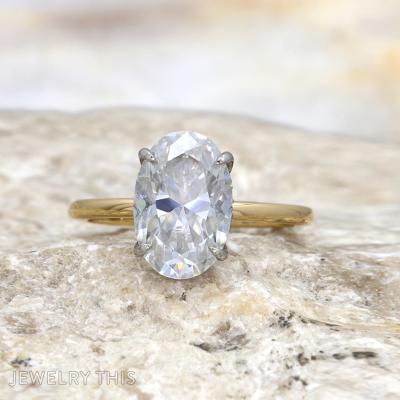
This engagement ring centers a large oval moissanite, chosen for its brilliance and elongated shape, ...
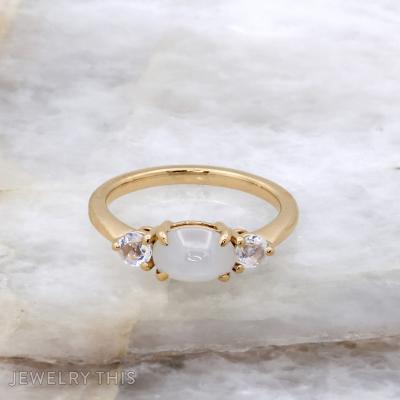
This elegant yellow gold ring features a mesmerizing oval white star sapphire cabochon set horizontally ...
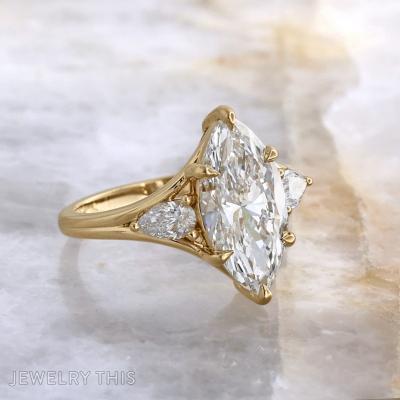
This engagement ring centers a 3.03 carat marquise-cut lab-grown diamond, flanked by two pear-shaped lab ...
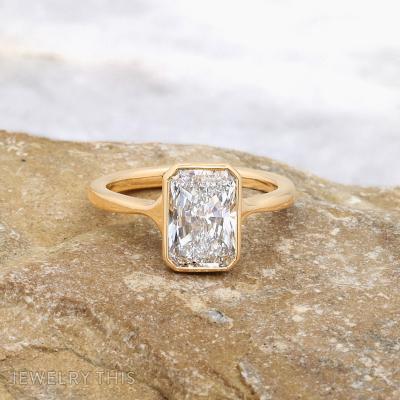
This stunning engagement ring features a 2.10-carat radiant cut lab-grown diamond of exceptional clarity (IF) ...

This captivating yellow gold engagement ring features a stunning pear-shaped diamond as its centerpiece. The ...

This engagement ring recreates a stolen original as closely as possible from photographs alone — ...

This stunning 14K yellow gold engagement ring features a round brilliant moissanite center stone and ...

This exquisite engagement ring showcases a striking teal-colored emerald-cut sapphire as its centerpiece. The vibrant ...
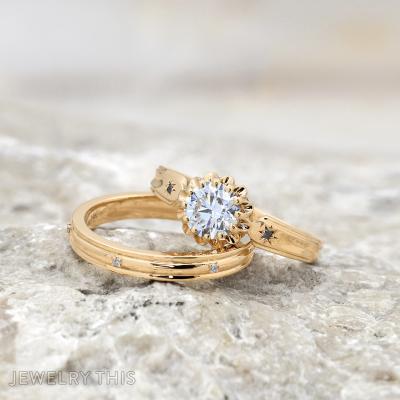
This 14k yellow gold engagement ring and wedding band set takes its cue from an ...



