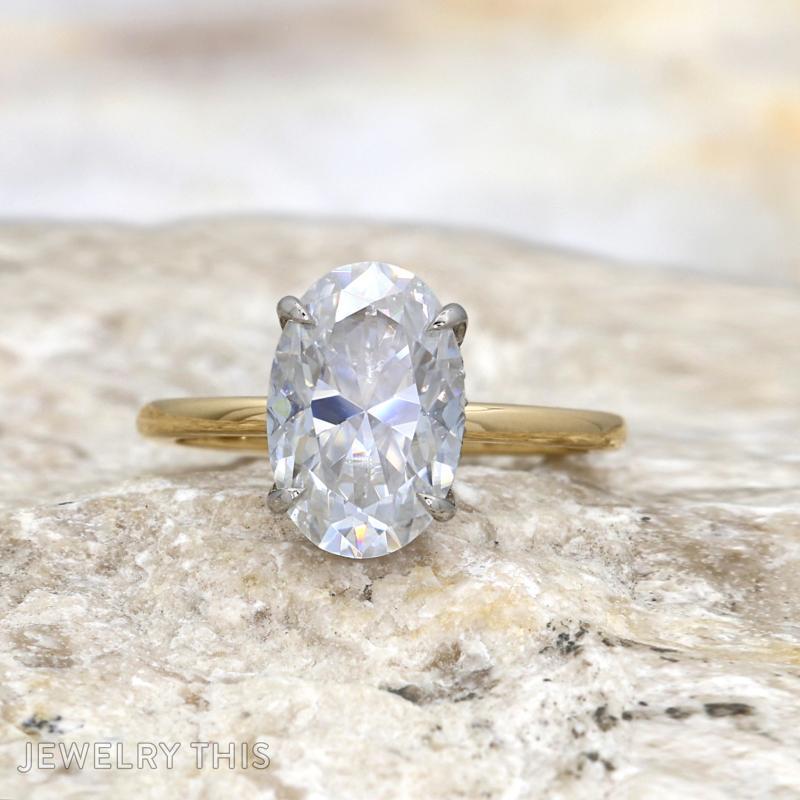
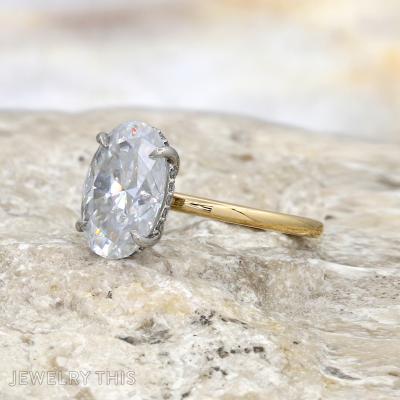
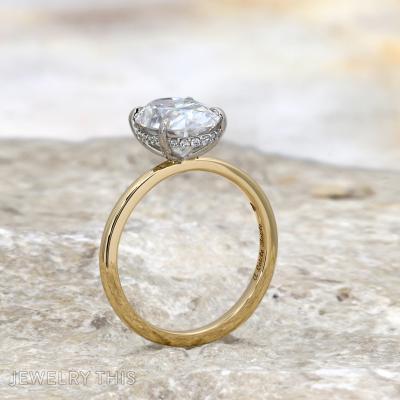
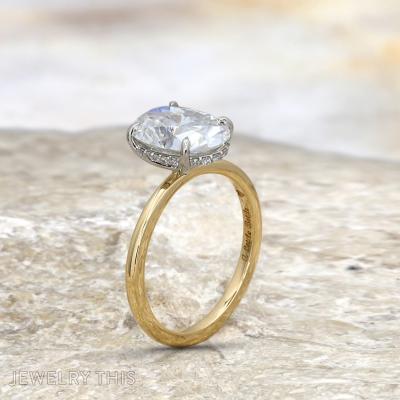
Hidden Halo Oval Moissanite Ring in Yellow Gold & Platinum
$$$
14k yellow gold, platinum, moissanite, lab-grown diamonds
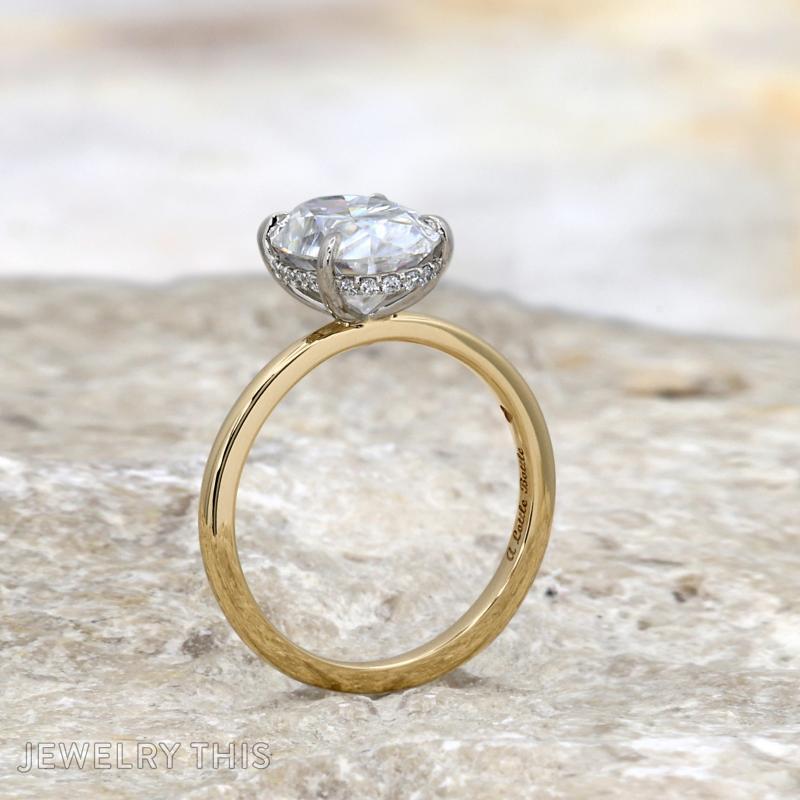
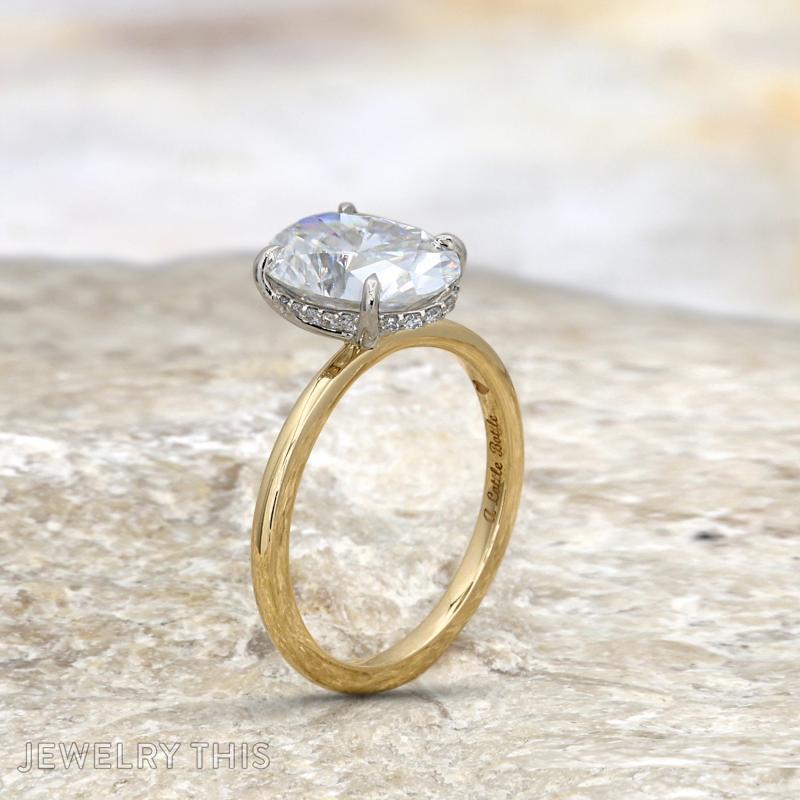
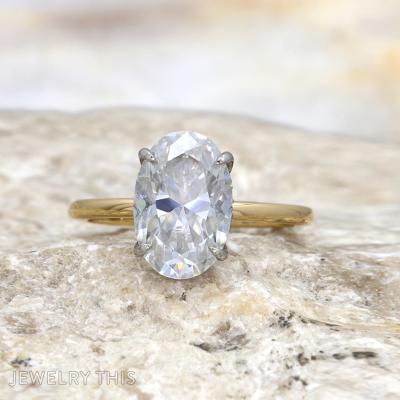
A partner set out to build an engagement ring around a large oval moissanite his girlfriend had specifically requested, working from photos she'd shared to nail down the exact stone shape she wanted. The design went through a full remake after the first version arrived with setting issues, and the center stone was carefully transferred into a new, improved hidden halo setting before the proposal. He wrote that the finished ring 'looks so much better' and that he was 'very pleased with the way it looks now.'
'It looks amazing! She's going to absolutely love it!' — on seeing the first render
'The ring looks so much better! I'm very pleased with the way it looks now.' — on receiving the remade ring
Quick specs
Design type
Primary Metal
Secondary Metal
Shape / Cut
Primary Stone
Accent Stones
Design Complexity
Intent: Certainty
Size
Ring size 6.5 US (17.15mm). Center stone 3.5ct oval moissanite.
How they made it distinctive
-
01
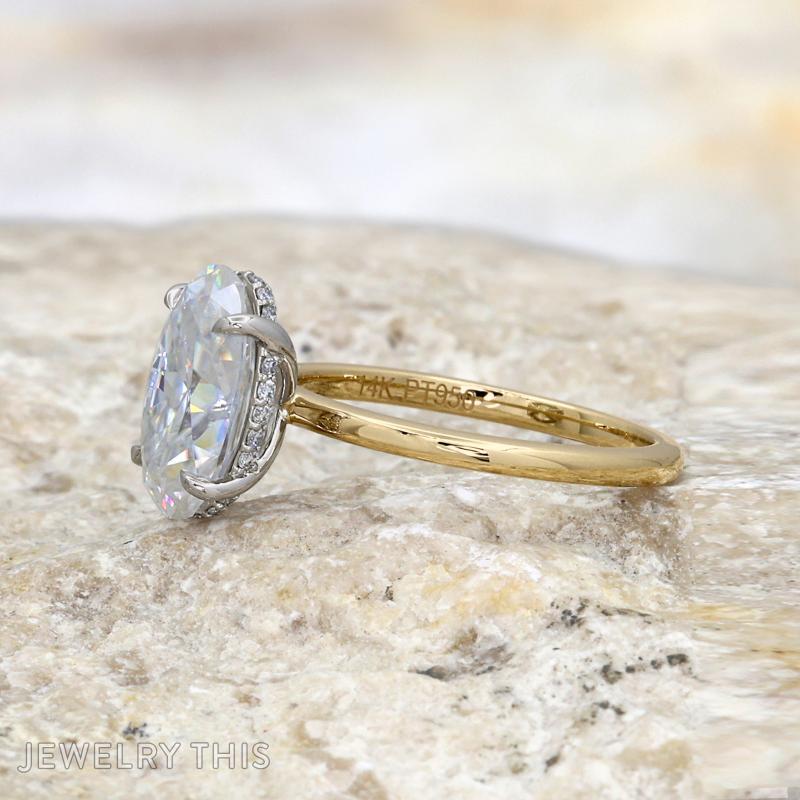
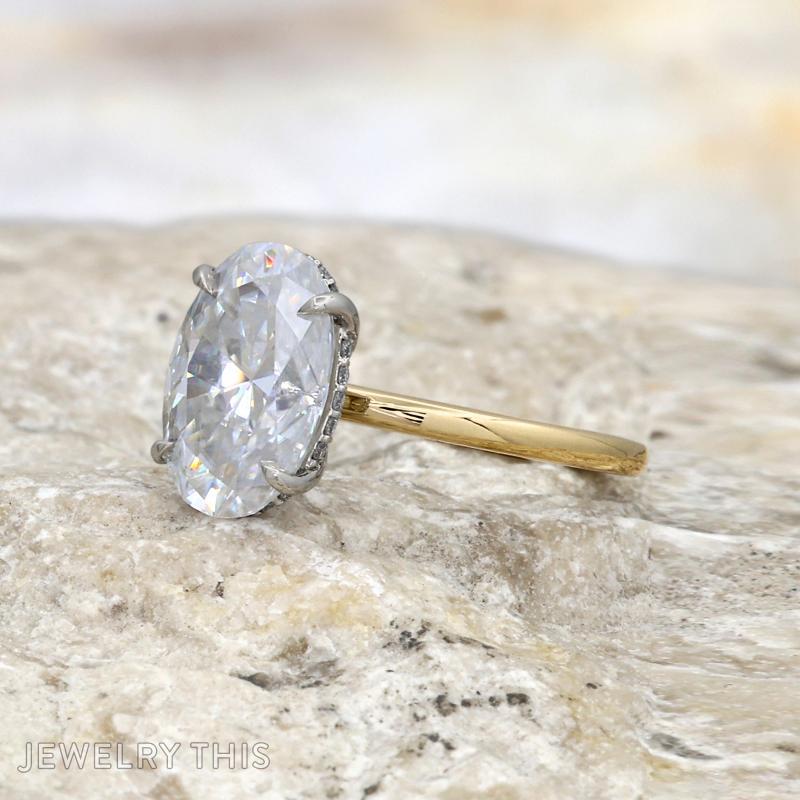
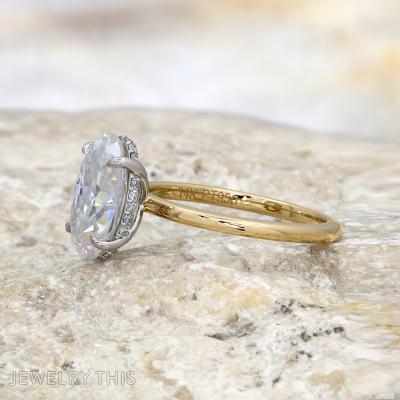
Hidden halo setting chosen so the ring reads as a clean solitaire from above but reveals sparkle from an angled view
-
02
Platinum prong head selected over white gold specifically for its resistance to fading and no need for replating
-
03
Bridge height increased by 0.2mm during design specifically to allow a future slim wedding band to sit flush
-
04
Oval moissanite shape chosen from reference photos to be more elongated rather than rounded, per the recipient's stated preference
-
05
Center stone re-set into an improved, larger hidden halo after the original setting did not meet quality standards
-
06
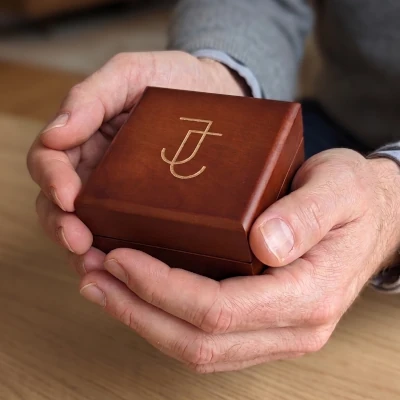
Private laser engraving added to the inside of the band, kept short to fit the narrow shank width
How you'd make it yours
Center stone: this piece uses a 3.5ct oval moissanite; a new commission could use a natural or lab diamond in the same shape for a different look
Halo style: this piece uses a hidden halo; a new commission could use a visible halo for more surface sparkle
Metal: this piece pairs 14k yellow gold with platinum prongs; the same design works in white or rose gold with matching or contrasting prong metal
Engraving: the inside of the band can carry a different phrase, date, or initials on a new piece
Bridge height: built up slightly here for a future wedding band; a new piece can be designed with a flat bridge if no band pairing is planned
One of a kind: this exact ring was designed for one client and is not reproduced — a new commission is an original piece inspired by this one, not a copy
Design changes made
The halo setting was rebuilt with slightly larger accent stones for a fuller look after quality issues were found in the first setting, and the bridge height was increased by 0.2mm early in the design phase so a future wedding band could sit flush against the ring.
Who this is for
This piece is for someone who wants a classic, elongated solitaire look from the front with an unexpected layer of sparkle hidden underneath. It's especially right for a partner planning a proposal who wants durable, fade-resistant metal at the center setting and is already thinking ahead to how a wedding band will pair with the ring.
How it's made
Once the design was approved, a resin model was produced as the first physical preview of the ring before any metal was cast. The design was then cast in 14k yellow gold for the band, with a separate platinum head fabricated to hold the center stone and hidden halo — platinum was chosen over white gold for the prongs specifically because it resists fading and stays white without replating. After casting, the pieces were assembled, polished, and prepared for stone setting.
The oval moissanite center stone was set into the platinum head using a hidden halo technique, with small pave lab-grown diamonds set beneath the girdle of the center stone so they are not visible from a direct top-down view. The band received a final mirror polish, and the inside of the shank was laser-engraved with a short personal inscription, since the narrow band width made hand engraving impractical.
Key note
The hidden halo's accent diamonds are set beneath the center stone's girdle rather than around it, so the halo is only visible from an angled side view and not from directly above.
Pricing guidance
An oval moissanite engagement ring with a hidden halo and platinum prong details sits in the mid range for engagement rings of this complexity. Most of the cost comes from the two-metal construction (gold band plus a separately fabricated platinum head) and the hand-setting required for the hidden halo's small pave stones. Center stone size and prong metal are the two variables that move the price most from there.
Moves price up ↑
- ↑ Increasing the center stone carat weight beyond 3.5ct
- ↑ Using a natural diamond instead of moissanite for the center stone
- ↑ Adding more pave diamonds to extend the halo further around the setting
- ↑ Choosing platinum for the entire band rather than just the prong head
- ↑ Adding a matching wedding band with pave diamonds ordered as a set
Moves price down ↓
- ↓ Reducing the center stone size
- ↓ Using white gold instead of platinum for the prong head
- ↓ Simplifying to a visible halo instead of a hidden halo, which reduces setting labor
- ↓ Choosing a plain polished band with no engraving
- ↓ Using a smaller accent stone count in the halo
Questions people ask
Yes, moissanite is a popular choice for center stones because it is extremely hard — a 9.25 on the Mohs scale, just below diamond — making it very resistant to scratching with daily wear. It also has a higher refractive index than diamond, which gives it noticeably more fire and sparkle in direct light. At larger sizes, like 3 to 3.5 carats, moissanite offers significant visual presence at a lower cost than an equivalent natural diamond. The main tradeoff some people notice is that moissanite can show more rainbow-colored flashes than a diamond, especially in bright sunlight.
A hidden halo setting places small accent stones underneath the girdle of the center stone rather than visibly surrounding it. From a direct top-down view, the ring looks like a clean solitaire, but from an angled or side view, a ring of sparkle becomes visible beneath the center stone. It's a popular choice for people who want a simple, classic look from the front but extra detail and dimension when the ring catches the light. It requires precise stone setting since the accent stones sit in a tighter, less visible space than a standard halo.
Yes, this is a common and practical combination. Small lab-grown diamonds are cut to more consistent and precise dimensions than very small moissanite stones, which makes for a cleaner, more even setting process in tight areas like a hidden halo. There is typically no significant price difference between tiny lab-grown diamonds and tiny moissanite at that scale. The visual result is a bright white sparkle from the accents that complements the larger center stone.
A moissanite engagement ring with a hidden halo and a two-metal build (gold band, platinum prong head) generally falls in the mid range for custom engagement rings. The main cost drivers are the center stone size, the labor involved in hand-setting a hidden halo, and the use of a second precious metal for the prongs. Simpler halo designs or a single-metal build would typically cost less, while a larger center stone or an all-platinum band would push the price higher.
The design phase typically takes about one to two weeks to finalize a render the client approves, and production runs another four to six weeks depending on stone sourcing and setting complexity. Custom-cut or specially sourced center stones can add extra time if a recut or replacement is needed to get the quality right. Total turnaround from deposit to delivery is usually five to eight weeks for a ring of this type. Rings requiring rework or a full remake will take longer than this standard estimate.
Yes, most rings can be resized within a range of about one to one and a half sizes without significant issues, especially with a straightforward band shape like a slim solitaire style. A ring with a hidden halo or a built-up bridge area for a future wedding band may require slightly more care during resizing to avoid disturbing the setting. It's common for a couple to discover a size adjustment is needed after the recipient wears the ring for the first time, since finger size can shift with temperature and season. Getting an accurate measurement close to the proposal date helps minimize the need for a later resize.
It depends on the height of the bridge area beneath the center setting, which can be adjusted during the design phase specifically to accommodate a future wedding band. A slightly taller bridge gives more clearance for a wedding band to tuck up against the engagement ring without gapping. This is worth discussing with your jeweler before finalizing the engagement ring design if you already know you want a slim, flush-fitting wedding band later. Wider or chunkier wedding bands may require additional bridge height compared to a delicate band.
White gold's natural color is a warm, slightly buttery tone, and it's typically plated with rhodium to achieve the bright white look most people expect — that plating wears down over time and needs periodic replating. Platinum, on the other hand, is naturally bright white and does not require plating, so it maintains its color permanently with normal wear. Platinum is also a more durable metal, making it a common choice for prongs holding a valuable center stone. The price difference between white gold and platinum prongs on a ring like this is typically small relative to the overall cost.
Explore Similar Creations
Every masterpiece starts with a spark. Explore how our clients raw ideas - sketches, heirlooms, inspirations - were transformed into bespoke works of arts.
This engagement ring is a bold yet elegant statement piece. It features a 1-carat central ...

These exquisite wedding sets, each carefully customized, reflect the unique journey of the couple. They ...

This unique set of wedding rings is designed for golf lovers, symbolizing a shared passion ...

This vintage-style 14 karat yellow gold engagement ring showcases a horizontally set oval emerald nestled ...

This elegant rose gold engagement ring features a round brilliant-cut moissanite as its centerpiece. Surrounding ...

Inspired by the enchanting tale of The Little Prince, this yellow gold wedding band is ...
This exquisite engagement ring tells a story of love that is as deep and vibrant ...

This custom engagement ring features a stunning pear-shaped light pink morganite at its center, elegantly ...

This black rhodium plated white gold wedding set is a bold and distinctive expression of ...


This engagement ring centers a marquise-cut lab-grown diamond flanked by an oval and a pear-shaped ...

This yellow gold ring features a captivating oval rose cut diamond at its center, delicately ...