

Marquise Cluster Engagement Ring in Yellow Gold
$$$
14k yellow gold, lab-grown diamonds
A client came to us wanting to reimagine a ring design he'd found, swapping the round center stone for a marquise and reworking the accent stones around it. After reviewing the first render with his girlfriend, he asked to trade the square accent stones for scattered round diamonds in varied sizes, then refined it again to balance three stones evenly on each side. When the finished ring arrived, he confirmed it was exactly what he and his girlfriend had pictured.
'I love it!' — on design approval
Quick specs
Design type
Primary Metal
Shape / Cut
Primary Stone
Accent Stones
Style
Design Complexity
Intent: Certainty
Size
Ring size 8.5 US (18.54mm). Center stone 0.77ct marquise.
How they made it distinctive
-
01
Marquise center stone substituted for the originally pictured round diamond, per client request
-
02
Cluster of oval and pear diamonds flanking the marquise creates a layered shape rather than a single stone with accents
-
03
Round accent diamonds scattered asymmetrically in varied sizes instead of a uniform pattern, following client feedback after his girlfriend reviewed the render
-
04
Three round accent diamonds balanced on each side for visual symmetry despite the varied, scattered placement
-
05
Square and princess-cut accent stones from the first render were dropped entirely in favor of an all-round accent palette
How you'd make it yours
Center stone: this piece uses a marquise-cut lab diamond; a new commission could use an oval, pear, or round center stone in the same cluster layout
Stone origin: this piece uses lab-grown diamonds; a new commission could use natural diamonds for the same look at a higher cost
Metal: this piece is 14k yellow gold; the same cluster design works in white or rose gold
Accent arrangement: the scattered round diamond pattern on this piece could be made more symmetrical or denser on a new commission
Engraving: the inside of the band can carry a new inscription on a fresh commission
One of a kind: this exact ring was designed for one client and is not reproduced — a new commission is an original piece inspired by this one, not a copy
Design changes made
The square accent diamonds from the first render were replaced with round diamonds scattered asymmetrically in varying sizes, and the layout was adjusted to three round accents on each side for visual balance — both changes came from client feedback after reviewing the render with his girlfriend.
Who this is for
This piece is for someone who had a design in mind but wanted the freedom to reshape it — swapping stone shapes and rethinking the accent layout until it felt right. It's especially suited to a couple who wants to be hands-on in the design process, reviewing renders together and asking for real changes rather than approving the first draft.
How it's made
Once the design was approved, a wax model was produced using a 3D printer and attached to a wax tree inside a flask. The flask was placed in a kiln to burn out the wax, leaving a hollow mold, and molten 14k yellow gold was cast into the mold. After cooling, the piece was extracted from the mold and cleaned in preparation for finishing.
The cast band and cluster setting were polished to a uniform, high-shine finish typical of yellow gold. The marquise center stone was prong-set first to establish the cluster's central axis, followed by the oval and pear diamonds on either side, with the small round accent diamonds set last in their scattered, varied-size arrangement around the three larger stones.
Key note
The round accent diamonds were deliberately set at varying sizes and irregular spacing rather than a uniform pattern, so the cluster reads as one organic shape instead of a symmetrical accent arrangement.
Pricing guidance
A yellow gold cluster engagement ring with a marquise center stone and multiple accent diamonds sits in the mid range for custom engagement rings of moderate complexity. Most of the baseline cost comes from the number of stones being individually set rather than the metal itself. Center stone carat weight and the total accent diamond count are what move the price most from there.
Moves price up ↑
- ↑ Increasing the marquise center stone above 1 carat
- ↑ Upgrading center stone color/clarity grade beyond F/VS1
- ↑ Adding more round accent diamonds to the scattered cluster
- ↑ Choosing natural diamonds instead of lab-grown for the center and accents
- ↑ Upgrading to 18k gold from 14k
Moves price down ↓
- ↓ Reducing the marquise center stone size below 0.75 carats
- ↓ Using fewer accent diamonds in the cluster
- ↓ Choosing a lower color/clarity grade on the accent stones
- ↓ Simplifying to a symmetrical accent pattern rather than a scattered cluster
- ↓ Using sterling silver or gold vermeil instead of solid 14k gold
Questions people ask
Yes, a marquise cut can replace a round center stone in most cluster or halo-style settings, though the surrounding accent stones may need to be resized to keep proportions balanced. Marquise diamonds tend to look larger per carat than round diamonds because of their elongated shape. The setting needs prongs positioned to protect the two pointed tips of the marquise, which are more prone to chipping than a round stone's edges. This ring uses a marquise center flanked by an oval and pear diamond in a cluster arrangement.
Lab-grown and natural diamonds are chemically, physically, and optically identical — the only differences are origin and price. Lab-grown diamonds are created in a controlled environment rather than mined from the earth, and they typically cost significantly less than a natural diamond of the same size and grade. Both are graded using the same color and clarity scales. This ring uses lab-grown diamonds throughout, including the marquise center stone.
14k yellow gold is a common and durable choice for daily-wear engagement rings, striking a balance between gold purity and hardness. It's more resistant to scratching and bending than 18k gold, which contains a higher percentage of pure gold and is therefore softer. Over years of daily wear, minor surface scratches are normal and can be professionally polished out. It does not require rhodium plating or re-plating maintenance the way white gold does.
A cluster-style engagement ring with a marquise center stone and multiple accent diamonds in 14k gold typically falls in the mid range for custom engagement rings. The main cost driver is the number of individually set stones rather than the metal used. Center stone carat weight and total accent diamond count are the biggest variables affecting the final price. Choosing lab-grown diamonds instead of natural stones keeps the cost lower for the same visual size and clarity grade.
The design phase typically takes about a week from the first sketch to an approved render, though it can take longer if revisions are requested. Once the design is approved and stones are confirmed, production takes about 4 weeks from casting through final stone setting and polishing. In total, most custom engagement rings are completed within 5 to 8 weeks from deposit to shipping, depending on how many rounds of design revision are needed. This particular ring went through two rounds of render revisions before final approval.
Yes, an intentionally scattered or varied-size accent stone arrangement is a legitimate design choice rather than a flaw — it creates a more organic, cluster-like appearance instead of a rigid symmetrical pattern. This works well around an elongated center stone like a marquise or oval, where a perfectly even accent pattern can look overly formal. The key is still balancing the overall visual weight from side to side even if the individual stones vary in size and placement. This ring uses three round accent diamonds per side, varied in size, rather than a mirrored uniform pattern.
Most gold rings, including cluster and halo-style engagement rings, can be resized within a limited range after production, typically one to two sizes up or down. Resizing becomes more complex when stones are set close to or below the shank, since the band's structural integrity near the setting affects how much it can be adjusted. It's best to confirm your ring size before final casting rather than relying on resizing after the fact. Cast pieces with multiple prong-set stones close to the band may have more limited resizing range than a plain band.
A cluster setting groups multiple diamonds of different shapes and sizes together so they read visually as one larger shape rather than a single center stone with small accents. It's a popular alternative to a traditional solitaire or halo for buyers who want more visual presence and detail without one single large stone. Cluster settings often mix stone shapes — such as marquise, oval, and pear — for a layered, dimensional look. This ring's cluster combines a marquise center with oval and pear side stones plus scattered round accents.
Explore Similar Creations
Every masterpiece starts with a spark. Explore how our clients raw ideas - sketches, heirlooms, inspirations - were transformed into bespoke works of arts.
This custom engagement ring exudes elegance and sophistication with its unique design. At its center ...

This yellow gold ring centers on a brilliant marquise diamond, elegantly framed by two smaller ...
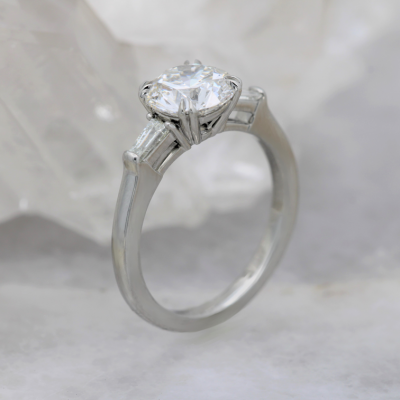
Presenting an extraordinary custom three stone engagement ring, a masterpiece of refined elegance. This enchanting ...

This enchanting 14 karat rose gold ring captures the beauty of nature and the promise ...
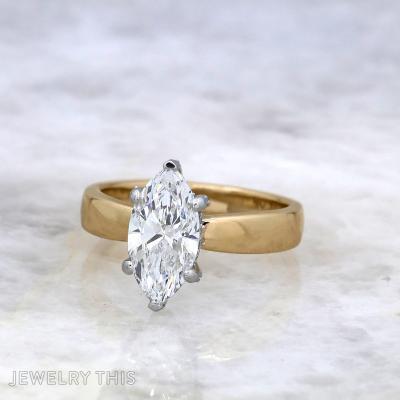
This stunning yellow gold engagement ring masterfully blends traditional warmth with modern brilliance. The centerpiece ...
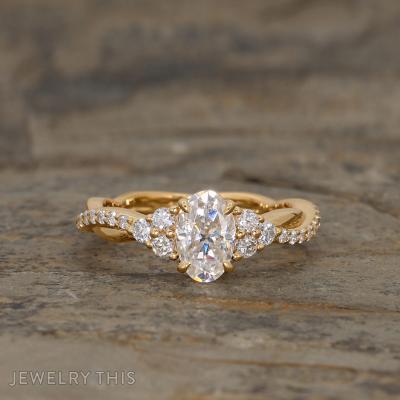
This exquisite engagement ring features a 1-carat oval moissanite center stone, beautifully complemented by delicate ...
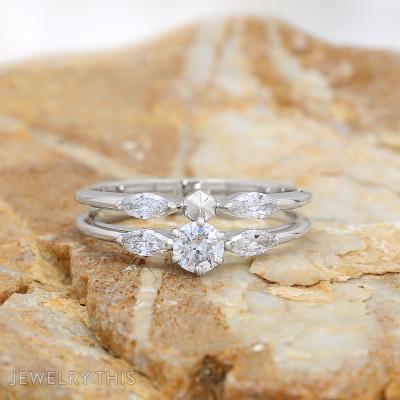
This two-band engagement and wedding set was recreated in 14k white gold from a single ...
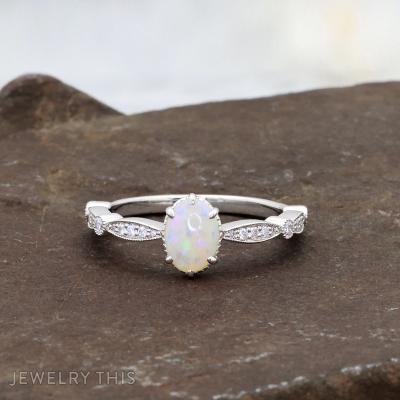
This exquisite engagement ring showcases a stunning 0.81-carat round moissanite center stone, surrounded by a ...
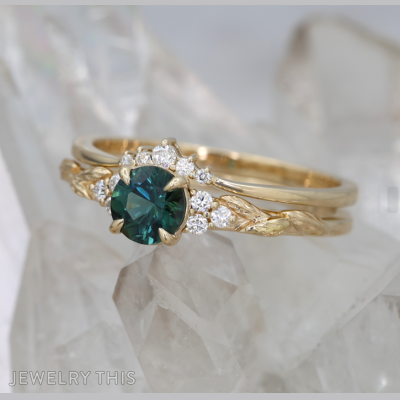
This enchanting engagement ring is a celebration of timeless love and individuality. At its heart ...

This men’s wedding band is a bold and elegant statement of commitment. Crafted from black ...

A contemporary masterpiece the Multi-Row Crossover Wedding Ring. A stunning symbol of love and commitment ...
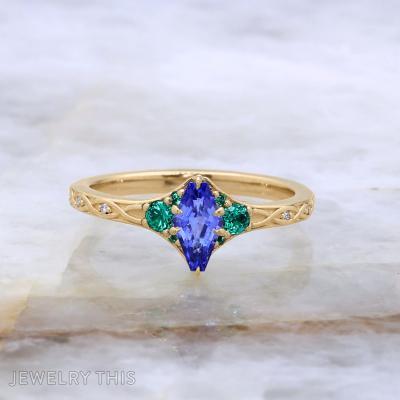
This engagement ring centers a kite-shaped tanzanite in a deep violet-blue, flanked on either side ...