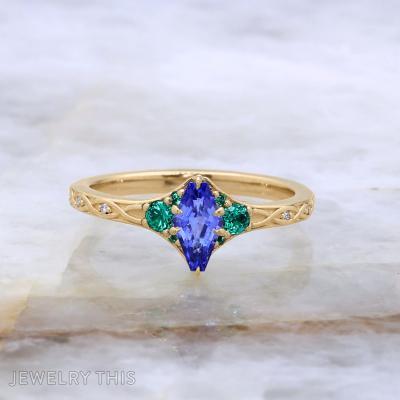
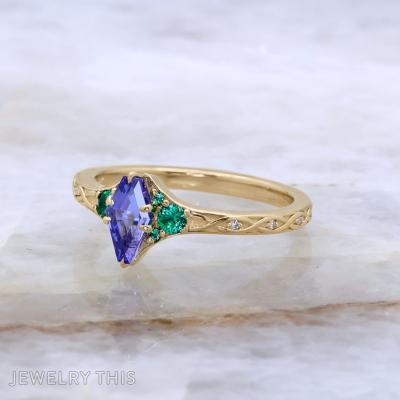
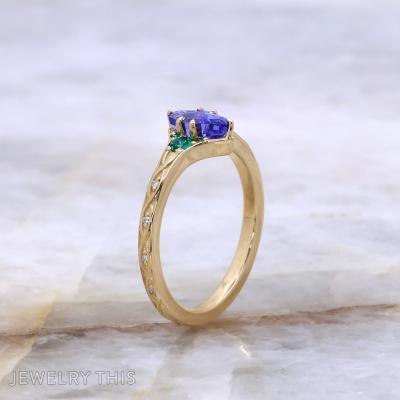
Tanzanite Engagement Ring with Emerald Accents in Gold
$$
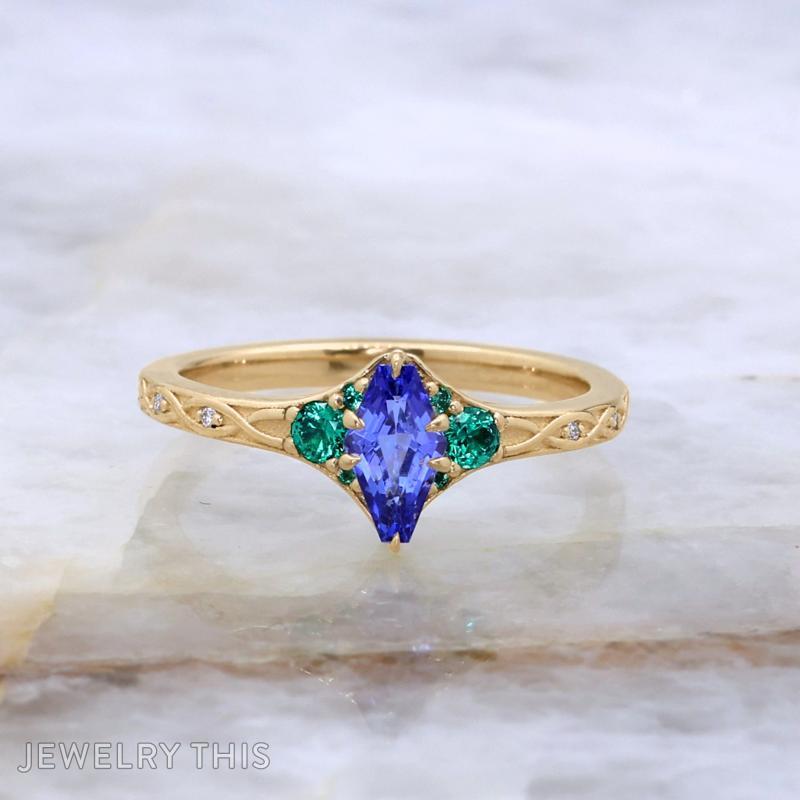
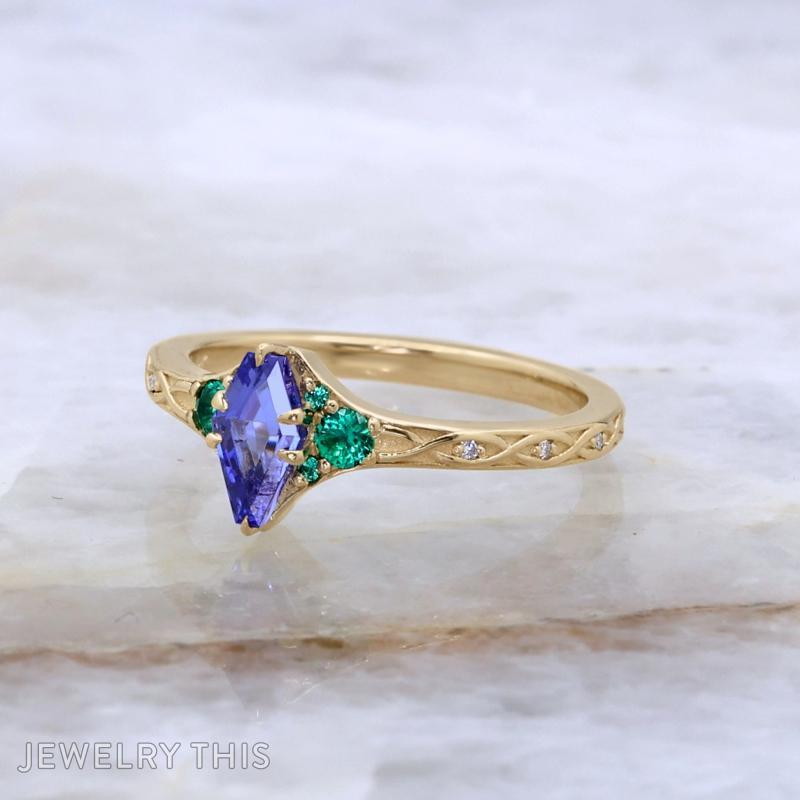
14k yellow gold, tanzanite, emeralds, diamonds
P. commissioned this ring as the second piece in a three-ring set built around a love story he was writing through jewelry, centering it on a coffin-cut tanzanite he had already sourced himself. He was still holding onto the first ring in the set, waiting for the right moment to give it to her, when this one arrived. When it landed, he wrote: 'Absolutely amazing... I can't wait to see it in person,' and after receiving it: 'It looks even more incredible in person.'
'Oh my! It's stunning so far I'm thrilled to see it taking physical form.' — on seeing the resin model
'Absolutely amazing! Thank you... I can't wait to see it in person.' — on final photos before shipping
'I have received my ring! Thank you so much it looks even more incredible in person.' — on delivery
Quick specs
Design type
Primary Metal
Shape / Cut
Primary Stone
Design Complexity
Intent: Certainty
Size
Ring size 6.5 US (16.92mm).
How they made it distinctive
-
01
Center stone is a coffin/kite-cut tanzanite the client sourced and supplied himself, requiring a custom-fitted prong setting
-
02
Round emeralds flank the center stone rather than diamonds, carrying the deep blue-green forest-inspired palette described for the project
-
03
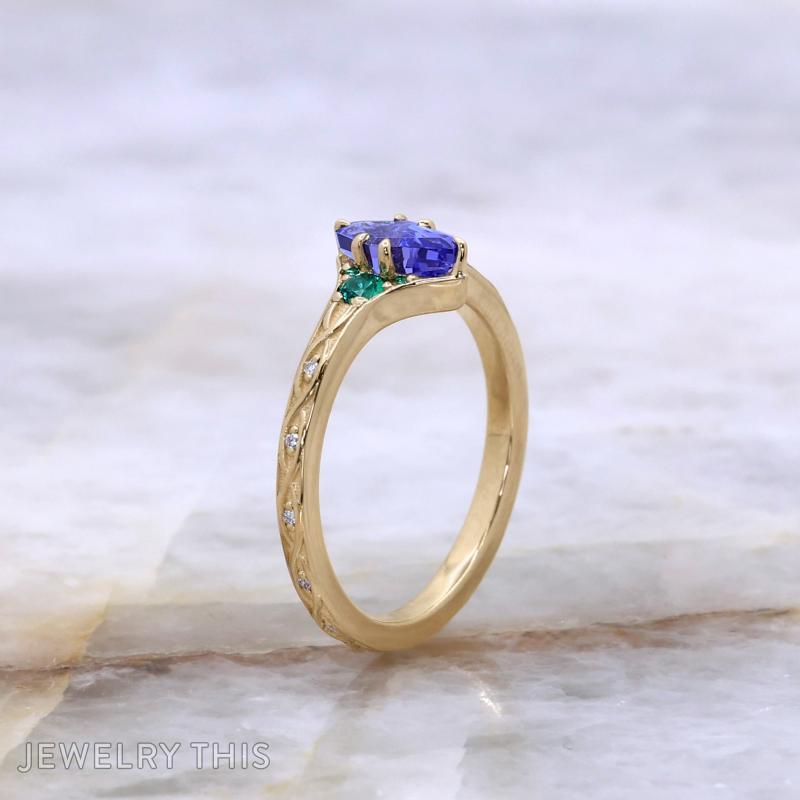
Knotwork-style texture runs along the shoulders rather than a plain polished band, adding tactile detail without a center-stone halo
-
04
Designed as the middle piece of a three-ring stacking set, so band width and profile were built to sit flush against two companion bands
-
05
Small diamond accents are worked into the textured band itself rather than set in a separate row
How you'd make it yours
Stone: this piece uses a client-supplied tanzanite; a new commission could use a lab-grown alternative or a different colored gem in the same kite cut
Metal: this piece is 14k yellow gold; the same knotwork and vine language works in 18k gold, rose gold, or white gold
Accent stones: currently round emeralds and diamonds; a new commission could substitute sapphires or other colored stones for a different palette
Band texture: the knotwork detailing on this piece could be extended further around the shank or simplified on a new design
Engraving: the interior of the band can carry a new inscription on a fresh commission
One of a kind: this exact ring was designed as part of one client's three-ring set and is not reproduced — a new commission is an original piece inspired by this one, not a copy
Design changes made
Design matched the initial brief without major changes.
Who this is for
This piece is for someone planning a proposal or engagement who wants a center stone with real color and personality rather than a standard diamond solitaire. It's especially right if you already have a specific gemstone in mind — whether sourced yourself or chosen for its meaning — and want a band with hand-worked texture that feels grown rather than manufactured.
How it's made
Once the design was approved, a resin model was produced first — the initial physical preview of the ring shared with the client before any metal was cast. From there the model was invested and cast in 14k yellow gold using the lost-wax method, producing the raw band with its knotwork-textured shoulders and stone-ready settings.
After casting, the band was cleaned up and the textured shoulder pattern was refined by hand to keep the knotwork crisp along the curve of the ring. The center tanzanite was set into a prong setting shaped to its kite outline, with the two round emeralds set to either side in matching prongs. The small diamond accents were then set individually into the textured band, finishing the piece before final polishing.
Key note
The center stone's kite-shaped prong setting had to be custom-fitted to the client's own tanzanite rather than a stock stone, since the stone was purchased and supplied ahead of the design phase.
Pricing guidance
A colored-center engagement ring with emerald accents and textured shoulder detailing sits in the mid range for custom engagement rings of moderate complexity. Much of the cost comes from the hand-finishing on the textured band and the precision prong work needed for the kite-shaped center stone. Stone choice and accent stone count are what move the price most from there.
Moves price up ↑
- ↑ Upgrading the center stone to a larger or higher-clarity tanzanite
- ↑ Adding more diamond accents along the full circumference of the band
- ↑ Extending the knotwork texture to cover the entire shank rather than just the shoulders
- ↑ Using platinum or 18k gold instead of 14k yellow gold
- ↑ Adding matching side stones in a rarer gem than emerald
Moves price down ↓
- ↓ Using lab-created emeralds instead of natural emeralds
- ↓ Reducing the diamond accent count
- ↓ Choosing a smaller center stone size
- ↓ Simplifying the shoulder texture to a plain polished band
- ↓ Using 10k gold instead of 14k
Questions people ask
Tanzanite rates around 6 to 7 on the Mohs hardness scale, which is softer than sapphire or diamond and means it can scratch or chip more easily with daily impact. It's a reasonable choice for an engagement ring if the wearer is mindful of activities like heavy manual work or sports, but a protective setting with prongs shielding the edges helps a lot. Many people wear tanzanite rings daily for years without issue as long as they avoid harsh knocks. Regular gentle cleaning and periodic prong checks are recommended to keep the stone secure.
Yes, emeralds pair well as side or accent stones next to another colored center stone like tanzanite, especially when the color palette is intentional rather than random. Emeralds are typically rated 7.5 to 8 on the Mohs scale, making them a bit more durable than tanzanite but still softer than sapphire or diamond. Because emeralds often have natural inclusions, they should be set with some protection, such as prongs that shield the girdle. Lab-created emeralds are also widely available and offer the same color and hardness at a lower cost.
A moderate-complexity engagement ring with a colored center stone, accent stones, and some hand-finished band detailing generally falls in the mid range for custom engagement work. The price is driven mainly by the labor for the textured band and precision stone setting, not just the stone itself. Center stone size and quality, accent stone count, and metal karat are the primary variables that move the cost up or down. Simpler bands or fewer accents bring the price down significantly.
A custom engagement ring with this level of detail typically takes around six to eight weeks from design approval to delivery on a standard timeline. The process usually starts with a resin model preview so the client can see the design in physical form before any metal is cast. From there, casting, stone setting, and finishing generally take another four to five weeks. Rings with a client-supplied center stone can sometimes take a bit longer if the setting needs custom fitting to that specific stone's exact shape.
Yes, client-supplied center stones are a common request, and the setting is custom-built around the stone's actual dimensions rather than a standard size. The stone typically needs to be shipped to the studio and inspected before the final design is locked in, since photos alone can't confirm exact carat weight or millimeter measurements. This adds a short amount of time to the process but ensures the prongs and setting fit the real stone precisely. It's a good option for anyone who already owns or has sourced a specific gemstone they want to build a ring around.
A kite cut, sometimes called a coffin cut when elongated, is a four-sided stone shape that's wider in the middle and comes to a point at both ends, similar to a marquise but with straighter sides. It creates a distinctive silhouette that stands out from more common round or oval center stones. This cut is often chosen for its elongated, elegant look and works well as either a center stone or an accent. Because it's a less common shape, sourcing and setting can take slightly longer than a standard round stone.
Yes, rings can absolutely be designed with stacking in mind, where the band profile and stone placement are planned so multiple rings sit flush together when worn. This usually requires coordinating the design of all the rings in the stack at the same time, since the width, shoulder height, and stone position all affect how well they nest together. A textured or vine-patterned band, like the one on this ring, can be designed to flow visually into a companion band. It's best to plan a stacking set from the start rather than adding a matching band later, though it's still possible with careful measurement.
14k yellow gold is a popular and durable choice for engagement ring bands, offering a good balance of gold content and hardness for daily wear. It's more resistant to scratching and bending than 18k gold, which contains more pure gold and is slightly softer. Yellow gold also complements colored center stones like tanzanite and emerald particularly well, since the warm tone contrasts nicely with cool blue-violet and green hues. It requires minimal maintenance beyond occasional cleaning and does not need replating, unlike white gold.
Explore Similar Creations
Every masterpiece starts with a spark. Explore how our clients raw ideas - sketches, heirlooms, inspirations - were transformed into bespoke works of arts.
This exquisite engagement ring features a 1-carat oval moissanite center stone, beautifully complemented by delicate ...

This striking white gold engagement ring showcases a captivating marquise-shaped black diamond at its center, ...

This custom 14k white gold engagement ring exudes elegance and charm with a timeless high-polish ...

This elegant 18karat gold engagement ring features a mesmerizing oval shaped 2.5carat Aquamarine at the ...

This Cushion Cut Double Halo Double Diamond Band Engagement Ring is a stunning symbol of ...

This elegant three-stone engagement ring features a classic design. A dazzling round diamond sits at ...

Elegance takes center stage in this custom 14k white gold engagement ring, showcasing a brilliant ...


The ocean-inspired Swirl Diamond Engagement Ring is characterized by its design. A stunning testament to ...
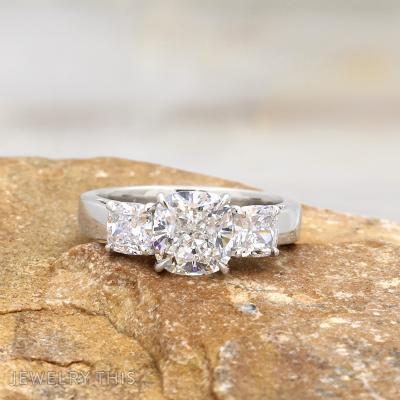
This exquisite custom engagement ring features a stunning 2-carat lab-created cushion cut diamond as the ...
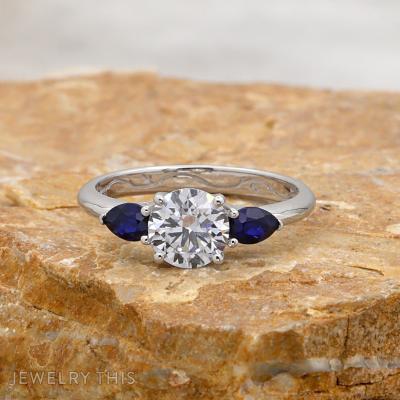
This engagement ring centers a round lab-grown diamond flanked by two pear-shaped sapphires, chosen in ...
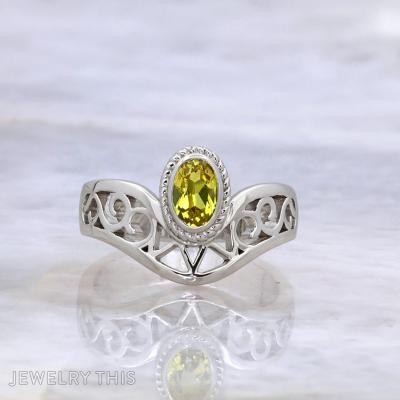
This stunning white gold engagement ring features an oval yellow brilliant-cut sapphire, radiating warmth and ...