


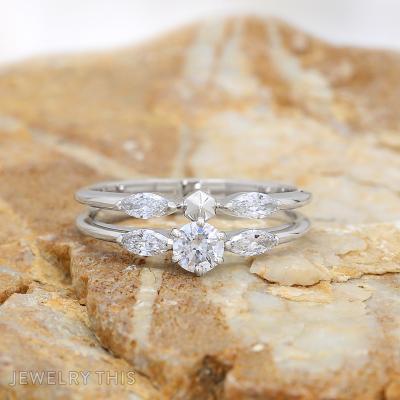


Recreated Heirloom Bridal Set with Hexagon Detail
$$$
14k white gold, natural diamonds
A ring passed down through the family was lost during a move, and the partner who wore it wanted it recreated as closely as possible from a single photo. Over many months, the design was refined detail by detail — the hexagon shape, the spacing between the two bands, the exact marquise stone size — with the couple providing hand-drawn sketches to clarify what a photo alone couldn't show. The diamonds were deliberately sourced at a lower clarity to match the cloudy, well-worn look of the original rather than upgrading to clearer stones.
'I'm very nervous but that really looks like it.' — on seeing the render with the taller center setting
'Thank you. Final payment has been made, please proceed to shipping.' — on approving the finished piece for shipping
Quick specs
Design type
Primary Metal
Shape / Cut
Primary Stone
Accent Stones
Style
Design Complexity
Intent: Certainty
Size
Ring size 7.5 US. Center stone approximately 4mm round; side stones 4mm x 2mm marquise (4 total, two per band).
How they made it distinctive
-
01
Two interlocking bands connected permanently at the base but with a deliberate gap at the top — a construction style specific to 1960s-era jewelry
-
02
Hexagonal connector piece positioned off-center and narrowed where it meets the diamonds, rebuilt from a family sketch rather than a clear photo
-
03
Diamonds intentionally sourced at lower clarity and warmer color to match the cloudy, well-worn look of the original stones
-
04
Hexagon corners softened by hand during polishing rather than left sharp, echoing the worn character of the decades-old original
-
05
Tall six-prong head with straight prongs specifically requested to raise the center stone's profile higher than a standard setting
How you'd make it yours
Stone quality: this piece uses deliberately lower-clarity natural diamonds; a new commission could use higher-clarity stones or lab diamonds for more brilliance
Metal: this piece is 14k white gold; the same two-band design works in yellow or rose gold, or platinum for extra durability
Center stone size: this piece uses a small round diamond; a new commission could scale the center stone up or down
Connector design: the hexagonal linking piece is a specific heirloom detail; a new commission could use a different geometric shape in the same construction style
One of a kind: this exact ring set was designed to recreate one family's lost heirloom and is not reproduced — a new commission is an original piece inspired by this one, not a copy
Design changes made
The side stones were adjusted from an initially discussed 5x2mm marquise down to 4x2mm after reviewing mock-ups, and the hexagonal connector was moved off-center along the horizontal axis and given softened rather than sharp corners to match the client's memory of the original ring.
Who this is for
This piece is for someone trying to bring back a specific ring that mattered to their family, working from limited photos and memory rather than the physical piece itself. It's especially right if getting the details authentically right — even down to matching a lower stone clarity — matters more to you than having the clearest, most modern-looking diamonds available.
How it's made
Once the final design was approved, the diamonds were sourced first — a round center stone and four marquise side stones selected specifically for lower clarity and warmer color to match the original ring's cloudy, well-worn appearance. After the client approved the diamonds, the design was adjusted to fit their exact measurements, and a wax model was 3D printed and attached to a wax tree inside a flask. The flask was fired in a kiln to burn out the wax, leaving a hollow mold, and molten 14k white gold was cast into the mold.
After casting, the two interlocking bands were cleaned and polished to a mirror finish, with the hexagonal connector's edges softened by hand rather than left sharp and angular, matching the worn character of the original piece. The center diamond was set into a tall six-prong head with straight prongs bent over the stone by hand, while the four marquise diamonds were set into the two bands flanking the hexagonal connector.
Key note
The hexagon connector's crisp, angular edges in the render were intentionally softened by hand during polishing — a detail that can only be shaped after casting, not previewed digitally.
Pricing guidance
A two-band interlocking engagement and wedding set in 14k white gold with natural diamond accents sits in the mid range for custom recreation work of this complexity. Multi-band designs with an integrated connector piece require more hand-finishing and precision stone-setting than a single-band ring, which raises the labor cost. Diamond clarity and color selection also shift the price, since lower-clarity stones sourced to match a specific look can take longer to find than standard inventory.
Moves price up ↑
- ↑ Upgrading the four marquise side stones and center diamond to higher clarity and whiter color grades
- ↑ Increasing the center stone size beyond the current small round diamond
- ↑ Adding more intricate hand-finishing to the hexagonal connector, such as engraving or milgrain detail
- ↑ Choosing platinum instead of 14k white gold for the band
Moves price down ↓
- ↓ Switching from natural diamonds to lab-grown diamonds for the same look at a lower cost
- ↓ Using cubic zirconia or moissanite instead of natural diamonds
- ↓ Simplifying to a single band rather than the two-band interlocking design
- ↓ Choosing sterling silver rather than white gold (not recommended for a design with this much stone-setting stress)
Questions people ask
Yes, though it requires close collaboration since a single photo can't show every angle or detail. The process typically starts with a technical sketch, moves to a 3D render for review, and then to a physical model — with adjustments made at each stage as memory and description fill in what the photo can't show. Small details like connector shapes, stone spacing, and setting height often take several rounds of feedback to get right. The more description and any additional sketches you can provide, the closer the final piece can get to the original.
When recreating an older piece, especially one from decades ago, the original stones often have a distinct cloudy or milky appearance due to the diamond quality available or used at the time. Sourcing lower-clarity stones intentionally — rather than upgrading to clearer, more modern-looking diamonds — helps the recreation actually resemble the original rather than looking like a newer, different ring. This means the diamonds may show visible inclusions or a warmer color, which is the point rather than a flaw. It's a deliberate trade-off between sparkle and authenticity.
A two-band white gold set with a connecting design element and multiple diamond accents falls in the mid range for custom recreation work. The cost reflects the extra hand-finishing required for two bands and a connector piece, plus the labor of setting five or more stones total across both bands. Sourcing diamonds to a specific clarity and color target, rather than using standard inventory, can also add to the cost and timeline. Choosing lab diamonds or a single-band design instead of two interlocking bands are the main ways to bring the price down.
14k white gold is a durable choice for a design like this, more rigid than sterling silver, which was specifically not recommended for this piece because the stone settings need a stiffer metal to hold securely over time. The permanent connection at the base of the two bands helps keep them aligned during wear. As with any ring with multiple prong-set stones, periodic prong checks are a good idea to make sure nothing has loosened. Platinum is a heavier, even more durable alternative if long-term durability is the top priority.
The design phase alone can take anywhere from a few weeks to several months, depending on how many rounds of feedback are needed to match remembered details from a single photo. Once the design and stones are approved, production — casting, polishing, and stone setting — typically takes three to four weeks. Sourcing specific-quality diamonds, especially lower-clarity stones to match an older piece, can add extra time if the right match isn't found immediately. Most of the timeline variability comes from the design refinement stage rather than the physical production stage.
Yes, prong style and height are both adjustable during the design phase. In this design, straight prongs were specifically requested to sit on top of the band, giving the center stone a taller, more raised profile. Prong angles often look different in a render or wax model than in the finished piece, since the metal is bent and trimmed by hand over the stone during setting. If you have a reference photo of the prong style you want, sharing it early in the design process helps avoid back-and-forth later.
Natural and lab-grown diamonds are chemically and visually identical, so either can achieve the cloudy, lower-clarity look used to match an older piece. Lab-grown diamonds are generally more affordable, which makes them a practical option when the goal is matching a specific appearance rather than maximizing natural rarity. For a recreation project, where sourcing stones with visible inclusions or warmer color takes deliberate searching either way, lab-grown stones can sometimes be easier to source to a specific spec. The choice mostly comes down to preference and budget rather than any visual difference.
A connector element between two bands works best when the design is planned around it from the start, since it affects how the bands align, how stones are spaced, and how much metal thickness is needed at the connection point. Retrofitting a connector onto an existing single ring is more complex and not always structurally advisable. In this design, the connector was made intentionally slightly recessed and narrower where it met the diamonds, based on the client's memory of the original — a detail that took several rounds of adjustment to get right. If you're interested in a similar element, starting the design with that feature in mind from day one gives the best result.
Explore Similar Creations
Every masterpiece starts with a spark. Explore how our clients raw ideas - sketches, heirlooms, inspirations - were transformed into bespoke works of arts.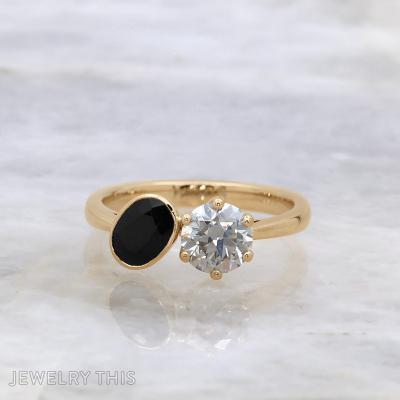
This meaningful yellow gold engagement ring showcases a beautiful combination of heirloom stones, thoughtfully incorporated ...
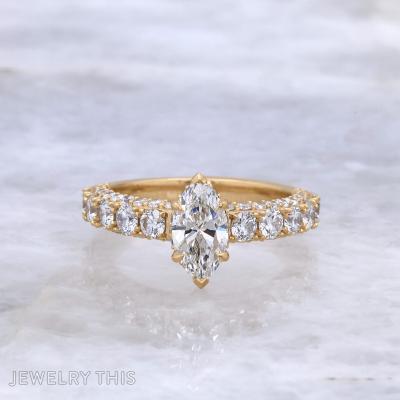
This breathtaking 14K yellow gold engagement ring is a true masterpiece of light and luxury. ...

This harmonious heart ring is an exquisite fusion of colors and meaningful design. The heart-shaped ...

Embrace the timeless beauty of this custom engagement ring, that features a 6mm cushion-cut amethyst. ...

This elegant white gold engagement ring features a stunning round moissanite center stone, set in ...

Inspired by the enchanting tale of The Little Prince, this yellow gold wedding band is ...
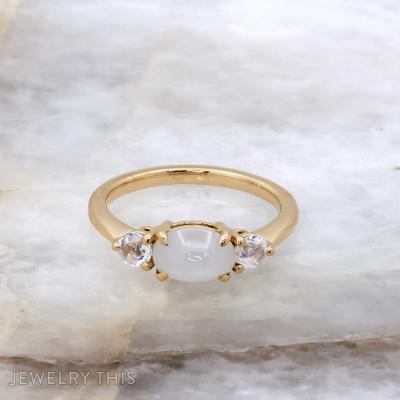
This elegant yellow gold ring features a mesmerizing oval white star sapphire cabochon set horizontally ...

Crafted in white gold, this enchanting engagement ring features an oval diamond at its center, ...
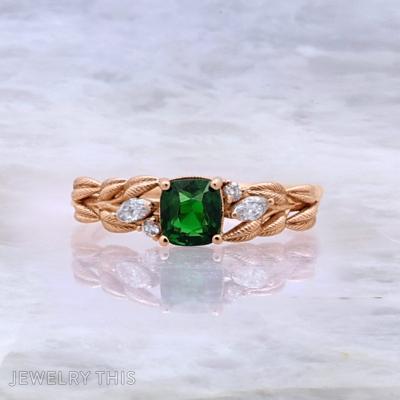
This exquisite rose gold engagement ring is a celebration of vibrant color and intricate craftsmanship. ...

This engagement ring is crafted with white gold, featuring an emerald-cut moissanite center stone and ...


Embrace the ethereal elegance of this custom engagement ring, a radiant tribute to love. Fashioned ...



