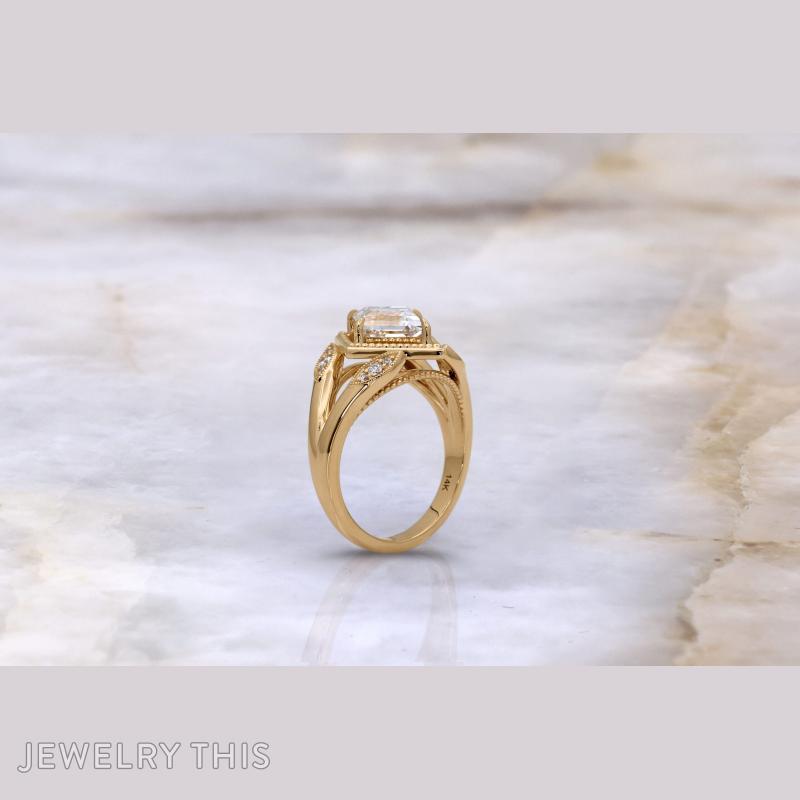
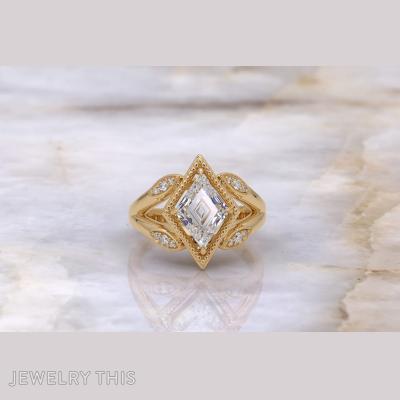
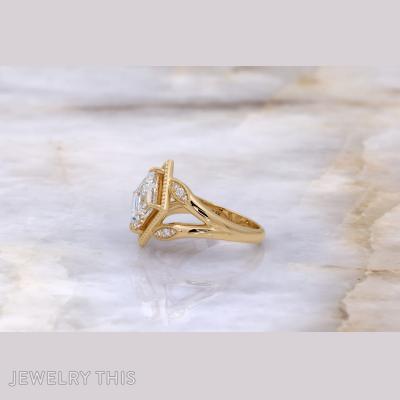


Kite-Cut Diamond Engagement Ring in 14k Yellow Gold
$$$
14k yellow gold, lab-grown diamond, lab-grown diamonds
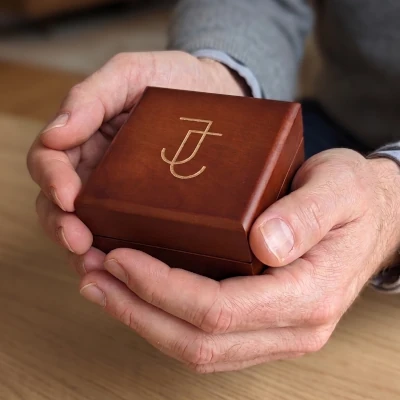
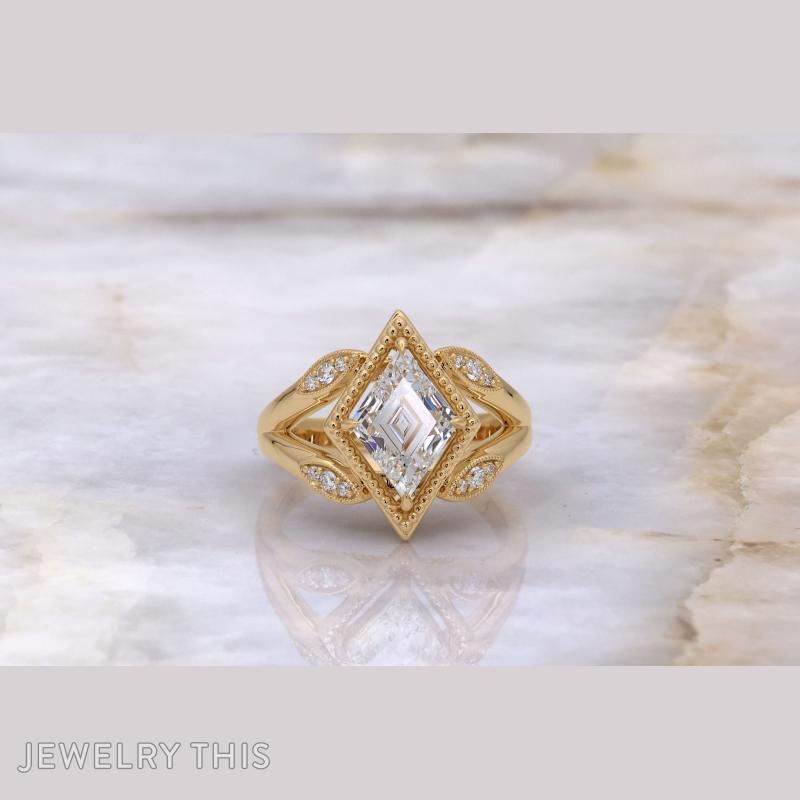
A client came to us wanting an engagement ring built around an unusual stone shape — a kite or lozenge cut — after seeing it in inspiration photos he'd gathered. Over several rounds of sketches he narrowed the direction from organic toward something more modern, eventually landing on a design where the band fully wraps around the base of the stone with leaf-shaped diamond accents on either side. He had a friend of his girlfriend's review the design before finalizing it, and when it arrived he wrote simply: 'It's awesome! Thanks so much!'
'It's awesome! Thanks so much!' — on delivery
Quick specs
Design type
Primary Metal
Shape / Cut
Primary Stone
Accent Stones
Design Complexity
Intent: Certainty
Size
Ring size 5½ US (16.1mm). Center stone 2.01 carat kite/lozenge cut.
How they made it distinctive
-
01
Kite/lozenge-shaped center stone chosen specifically for its unconventional geometry, a deliberate departure from standard round or oval shapes
-
02
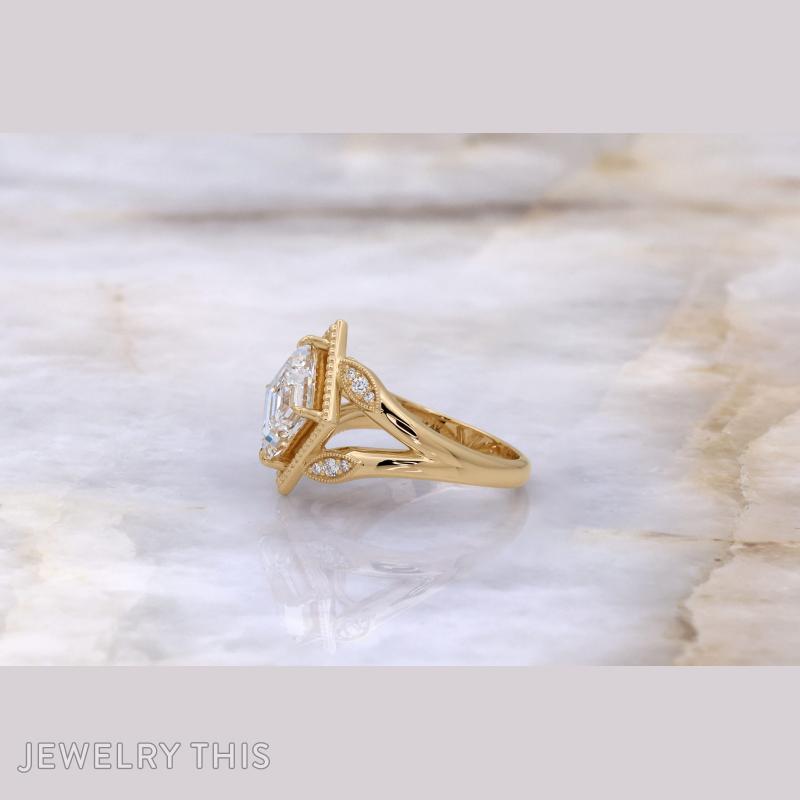
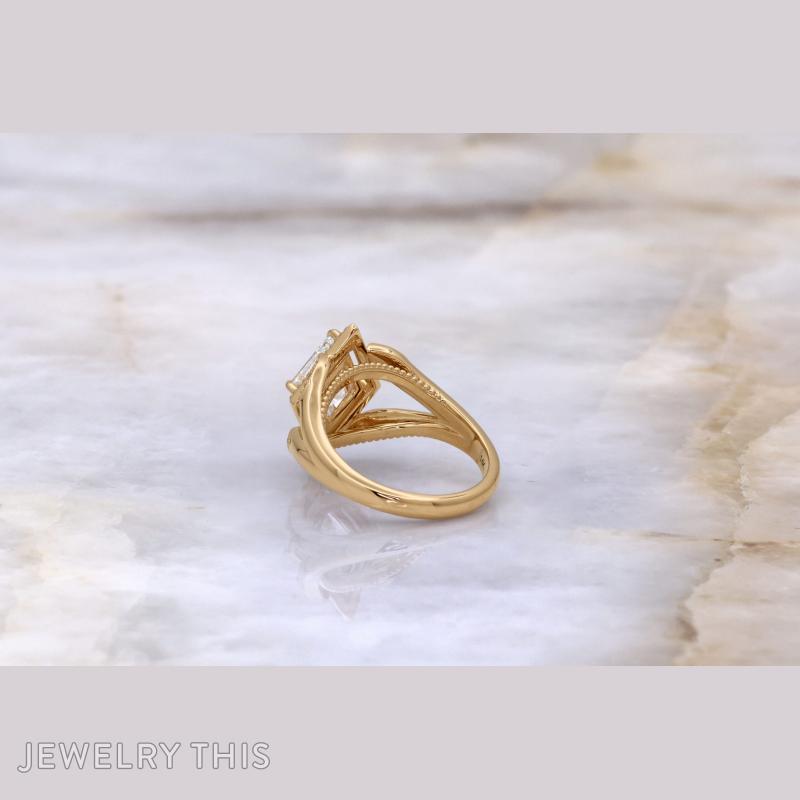
Bypass shank fully envelops the base of the center stone, an element the client specifically requested after seeing it in a reference design
-
03
Leaf-shaped accent settings with round diamonds soften the sharp geometry of the kite cut without competing with it
-
04
Milgrain edging around the bezel retained after comparing simplified and detailed framing options side by side
-
05
Design direction shifted from organic to modern specifically because the crisp lines of the kite cut suited a cleaner aesthetic better
How you'd make it yours
Stone shape: this piece uses a kite/lozenge cut; a new commission could use a marquise, elongated hexagon, or trillion cut for a different silhouette
Stone type: this piece uses a lab diamond; a new commission could use a natural diamond or moissanite for a different look or price point
Metal: this piece is 14k yellow gold; the same bypass and bezel design language works well in white gold, rose gold, or platinum
Accent detail: the leaf-shaped diamond accents could be simplified to plain bypass arms or expanded with more stones on a new piece
Band structure: the split/bypass shank is central to how this design frames the stone and would need to be redesigned to change substantially
One of a kind: this exact ring was designed for one client and is not reproduced — a new commission is an original piece inspired by this one, not a copy
Design changes made
The center stone grew from an initial 1–1.5 carat range to a 2 carat lozenge cut once budget allowed, and the design shifted from an organic sketch toward a cleaner modern one after the client felt the modern lines suited the kite cut better. The band gap was also tightened and a simpler frame around the center stone was tested before the client chose to keep the original milgrain beading.
Who this is for
This piece is for someone who wants an engagement ring built around an unconventional stone shape but still wants the overall design to feel considered rather than experimental. It's especially right if you're drawn to geometric or Art Deco-adjacent lines but want warmth from yellow gold and a setting that protects the stone's pointed edges for daily wear.
How it's made
Once the design was approved, a 3D-printed wax model was built and affixed to a wax tree inside a flask, then placed in a kiln so the wax burned away and left a mold. Melted 14k yellow gold was cast into that mold in multiple pieces to achieve the cleanest possible finish on a design this detailed, then extracted, cleaned, and polished before stone setting began.
The kite-shaped center diamond was set into a bezel finished with delicate milgrain edging along its border, while the leaf-shaped elements flanking the stone were set by hand with small round diamonds. The bypass shank was polished to a high shine, contrasting with the textured milgrain detail around the bezel and leaves.
Key note
This design was cast in multiple separate pieces rather than as a single casting, specifically to achieve a cleaner finish on the fine milgrain and leaf detailing than a one-piece casting could produce.
Pricing guidance
An engagement ring built around a large kite-cut center stone with a bezel setting, milgrain detailing, and diamond accent work sits in the mid-to-upper range for custom engagement pieces. Most of the cost comes from the size of the center stone and the hand-finishing required for the milgrain and leaf-shaped accent settings. Metal karat and center stone size are the two levers that move the price most.
Moves price up ↑
- ↑ Increasing the center stone size beyond 2 carats
- ↑ Choosing a natural diamond instead of a lab-grown diamond for the center stone
- ↑ Upgrading to 18k gold or platinum
- ↑ Adding more accent diamonds along the shank
- ↑ Requesting a fully hand-fabricated build rather than a cast base
Moves price down ↓
- ↓ Reducing the center stone size below 1.5 carats
- ↓ Choosing moissanite instead of a lab diamond for the center stone
- ↓ Simplifying the leaf accent detailing to a plain bypass shank
- ↓ Removing the milgrain edging
- ↓ Selecting 10k gold instead of 14k
Questions people ask
A kite cut, sometimes called a lozenge cut, is a four-sided elongated diamond shape that is wider in the middle and tapers to a point at both ends, similar to a rotated square with elongated proportions. It's distinct from a marquise cut, which curves on both long sides, and from a pear cut, which has one rounded end and one point. Because it's a less common shape, kite-cut stones are usually sourced individually from a cutter rather than pulled from standard inventory. The cut creates a striking, geometric look that pairs well with modern or Art Deco-inspired settings.
Lab-grown and natural diamonds are chemically, physically, and optically identical — both are pure carbon with the same hardness (10 on the Mohs scale) and the same brilliance. The only real difference is origin: natural diamonds form underground over millions of years, while lab-grown diamonds are created in a controlled environment in a matter of weeks. Lab-grown diamonds typically cost significantly less than natural diamonds of the same size and grade, which is why they're increasingly popular for larger center stones. Both grade the same way on the standard color, clarity, cut, and carat scale.
A custom engagement ring built around a kite or lozenge-cut center stone with accent diamonds and detailed metalwork like milgrain or bezel framing typically falls in the mid-to-upper range for custom engagement work. The center stone size is usually the biggest cost driver, followed by the labor required for hand-finished details like milgrain edging or leaf-shaped accent settings. Choosing a lab-grown diamond over a natural one for the center stone can meaningfully reduce the total cost without changing the appearance.
The full process typically takes around six to eight weeks from approved design to finished ring, though unusual stone shapes or multi-piece castings can extend that. Design usually takes one to two weeks, including sketches, a 3D render for approval, and any revisions. Sourcing a specific center stone, especially an uncommon cut, can add several days to a couple of weeks depending on availability. Production — casting, finishing, and stone setting — typically takes four to five weeks once the design and stone are finalized.
Yes, a bezel-set ring can generally be resized within a standard range of one to two sizes without disturbing the setting, though the process requires more care than resizing a simple band because the bezel and any surrounding milgrain detail need to be protected during the resizing work. Larger resizes on a ring with a split or bypass shank, like this one, may require more extensive rework since the band's shape changes along its full length rather than just at the back. It's best to have any significant resize done by the original jeweler or someone experienced with bypass and bezel designs.
Yes, small round diamonds are commonly set into sculpted leaf or petal-shaped elements as accent details flanking a center stone. Each stone is typically set individually by hand into a small recess or prong within the leaf shape, which requires more precision than setting stones in a straight line along a band. This kind of detail work adds to the hand-finishing time but doesn't significantly change the durability of the piece as long as the settings are properly secured. It's a common way to add sparkle and shape around an unconventional center stone without competing with it.
Diamonds are the hardest natural material, rating a 10 on the Mohs hardness scale, so the stone itself holds up extremely well to daily wear regardless of cut. The more relevant durability question for a kite or lozenge cut is the setting — pointed corners on elongated shapes can be more vulnerable to chipping than rounded cuts if not protected. A bezel setting, like the one used here, is one of the most protective setting styles because it wraps metal around the stone's edge rather than relying on prongs alone, which helps guard the pointed tips.
This style works well in yellow, white, or rose gold, or platinum, since the bypass shank and bezel setting are structural design choices rather than metal-dependent ones. Yellow gold, as used here, gives the milgrain and leaf detailing a warm, slightly vintage-adjacent look even within a modern silhouette. White gold or platinum would give the same design a cooler, more contemporary feel, while platinum would also add weight and durability at a higher cost. The choice mostly comes down to personal preference and skin tone, since the setting style itself doesn't change based on metal.
Explore Similar Creations
Every masterpiece starts with a spark. Explore how our clients raw ideas - sketches, heirlooms, inspirations - were transformed into bespoke works of arts.
This platinum engagement ring set began as a single, structurally compromised ring — a thin ...
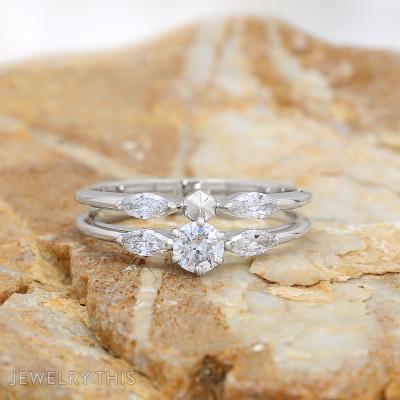
This two-band engagement and wedding set was recreated in 14k white gold from a single ...

This unique engagement ring embodies contemporary elegance with its mesmerizing hexagonal black diamond center stone. ...

Elegance and sophistication converge in this platinum ring where a magnificent large Aquamarine takes center ...

A contemporary masterpiece the Multi-Row Crossover Wedding Ring. A stunning symbol of love and commitment ...

This extraordinary Yellow gold ring features a breathtaking 1 carat Round Moissanite stone set at ...

This sterling silver ring is timeless in style, exudes beauty and elegance. With its classic ...
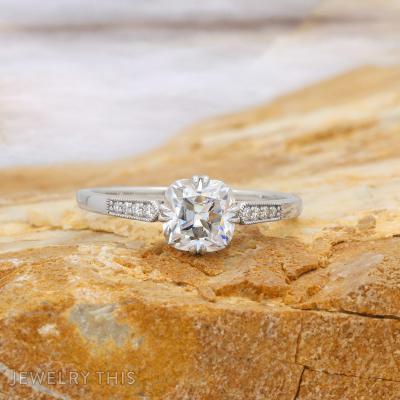
Rooted in Victorian elegance, this white gold ring captures the romance of a bygone era. ...

These exquisite wedding sets, each carefully customized, reflect the unique journey of the couple. They ...
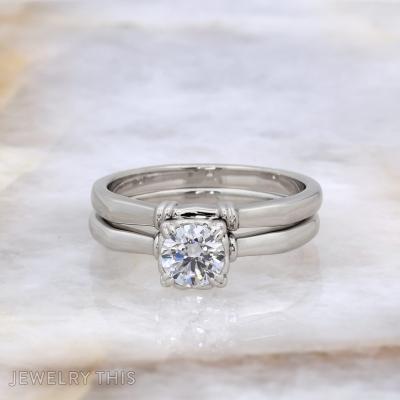
This engagement ring and wedding band were recreated as a single soldered piece in 14k ...

Celebrate the union of past and present with this extraordinary custom engagement ring. At its ...
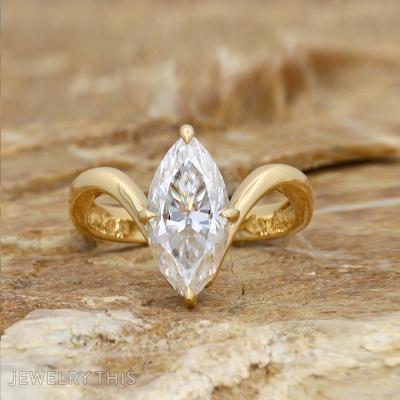
This engagement ring centers a marquise-cut moissanite in a four-prong setting, with pointed claw-style prongs ...