


Double Halo Platinum Ring Set with Twisted Pave Shank
$$$$
Platinum, natural diamond, natural diamonds
A client wanted her existing engagement ring rebuilt from the ground up: a thin, delicate shank that had been dropping pave stones, and a center diamond held by prongs so loose it spun in place. She sent in her own stones and asked for a new platinum double-halo setting with two matching bands soldered on either side, keeping every band as thin as the original twisted shank. When it arrived, she wrote: 'It's absolutely perfect, thank you!'
'Yay! Yes beautiful! Perfect!' — on seeing the revised render
'Its absolutely perfect, thank you!' — on delivery
Quick specs
Design type
Primary Metal
Shape / Cut
Primary Stone
Accent Stones
Design Complexity
Intent: Certainty
Size
Ring size 10 US (18.34mm inner diameter, as originally recorded at size 8¼). Center stone reported as approximately 1ct per client paperwork, exact weight not specified.
How they made it distinctive
-
01
Built entirely around the client's own center diamond and accent stones rather than new sourced gemstones
-
02
Three separate platinum pieces soldered into one unit so the ring reads as a single cohesive design
-
03
Double halo chosen to add sparkle and apparent size around a modest center stone
-
04
Outer bands revised mid-design to remove a visible metal wall so all three pieces match in width and setting style
-
05
Twisted pave shank kept as thin as the original design that inspired the whole rebuild
How you'd make it yours
Halo: this piece uses a double halo; a new commission could use a single halo for a simpler look or a hidden halo for a lower profile
Metal: this piece is platinum; the same soldered three-band design works in 18k white or yellow gold
Band count: this piece solders three bands into one unit; a new commission could use a single band or two instead of three
Stone setting: this piece uses pave and channel styles; a new commission could use bead-set or micro-pave for a different texture
One of a kind: this exact ring was built around one client's own gemstones and is not reproduced — a new commission is an original piece inspired by this one, not a copy
Design changes made
After seeing the first render, the client asked for the outer bands' visible metal wall to be removed so their channel-set profile would match the pave setting of the inner shank — a change that made all three soldered bands appear consistent in width and style.
Who this is for
This piece is for someone whose original ring no longer holds up structurally but whose center stone still matters enormously. It's especially right if you've been told a setting can't be fixed and are looking for a full rebuild that keeps what you love and corrects everything that was fragile the first time around.
How it's made
Because the design was built around the client's own gemstones, the original ring was shipped in and scanned so the master jeweler could measure the center stone and accent diamonds before any modeling began. From there, the double-halo setting and twisted pave shank were built as a 3D digital design, 3D-printed in resin for a pre-casting preview, then cast in platinum from an investment mold. The two companion bands were modeled and cast at the same time so all three pieces would align precisely for assembly.
After casting, each piece was pre-polished individually. The accent diamonds were matched as a full replacement set for consistent color and clarity, then set by hand into the pave halo, twisted shank, and both outer bands. Once the stones were set, all three rings were soldered together into a single unit and given a final high polish.
Key note
The accent diamonds visible in the finished ring are not the client's original stones — they were replaced with a matched set to ensure uniform color and clarity across the halo, shank, and both bands, while the center diamond stayed the same stone throughout.
Pricing guidance
A soldered three-piece platinum ring set with a double halo and twisted pave shank sits toward the higher end for custom engagement ring work, largely because platinum and the labor of aligning and soldering three separate pieces into one unit both add cost beyond a single-band setting. Reusing a client-provided center stone reduces cost relative to sourcing a new center diamond, though replacing the smaller accent stones as a matched set adds back some of that savings.
Moves price up ↑
- ↑ Soldering three separate pieces into a single unit rather than producing one band
- ↑ Using platinum rather than gold, which is heavier and more labor-intensive to work with
- ↑ Replacing all accent diamonds as a matched set rather than reusing mismatched originals
- ↑ Adding a double halo rather than a single halo around the center stone
- ↑ Choosing a larger or higher-clarity center diamond
Moves price down ↓
- ↓ Using 14k or 18k white gold instead of platinum
- ↓ Reducing to a single band rather than a three-piece soldered set
- ↓ Reusing the original accent diamonds without matching or replacing them
- ↓ Simplifying to a single halo instead of a double halo
- ↓ Choosing a lower pave stone count on the shank and bands
Questions people ask
Yes. This ring was rebuilt entirely around the client's own center diamond and accent stones, which were shipped in so the master jeweler could scan and measure them before any design work began. The original mounting is not reused — a new setting is built from scratch around the measurements of your actual stones. This is common when an existing ring has structural problems, like loose prongs or a shank that is shedding stones, that can't be fixed without a full rebuild.
The center stone is usually the highest-value and most identity-defining part of a ring, so it is kept even when everything around it is rebuilt. Smaller accent diamonds, on the other hand, are often replaced as a matched set so the color and clarity read consistently across the whole piece — especially when the ring combines multiple sections, like a halo, a shank, and companion bands. Mismatched accent stones from an older piece can create visible color or clarity differences under closer inspection, which a matched replacement set avoids.
Platinum is one of the most durable metals used in fine jewelry and holds pave and halo settings securely over decades of daily wear, which makes it a strong choice for a piece with this much stone density. It is naturally white and does not require rhodium replating the way white gold does, so the color stays consistent over time. It is heavier than gold, which some wearers notice, but that added weight also comes with added durability. It is a common choice for rings meant to be worn every day for life.
A soldered three-piece platinum set with a double halo and pave detailing typically falls toward the higher end of custom engagement ring pricing, mainly because of the platinum metal cost and the labor of aligning and soldering three separate bands into one unit. Reusing an existing center stone helps offset some of that cost compared to sourcing a new center diamond. Exact pricing depends on the final stone count, metal weight, and whether accent stones are reused or replaced as a matched set.
After your stones are received and scanned, the design phase typically takes about a week to produce a 3D render for your approval. Once the design is approved and production begins, casting, stone setting, and finishing generally take another three to four weeks. Because the piece involves matching accent stones and soldering multiple bands together, it can run slightly longer than a single simple band.
A twisted pave design can generally be resized within a modest range, but because the pave stones run along the twist, larger resizes carry more risk of disturbing the stone settings than they would on a plain band. When multiple bands are soldered together, as in a three-piece set like this, resizing becomes more complex because all three pieces need to move together. It's worth discussing your expected long-term size needs during the design phase so the ring is built to the right size from the start.
A double halo is two concentric rings of small pave-set diamonds surrounding a center stone, rather than the single ring of stones used in a standard halo. It adds extra sparkle and visually increases the apparent size of the center stone more than a single halo does. It also adds more hand-setting labor than a single halo, since two full rows of small stones must be set precisely around the center setting. It pairs well with a twisted or pave-set shank, since the repeating stone pattern carries through the whole ring.
It depends on the condition and consistency of the stones once they're removed and inspected. In this case, the smaller accent stones were replaced with a fresh matched set to ensure consistent color and clarity, while the center stone was kept and reused. A jeweler can only confirm whether existing stones are suitable for reuse after physically receiving and inspecting them, since sizing, chips, and color variation aren't always visible from photos alone.
Explore Similar Creations
Every masterpiece starts with a spark. Explore how our clients raw ideas - sketches, heirlooms, inspirations - were transformed into bespoke works of arts.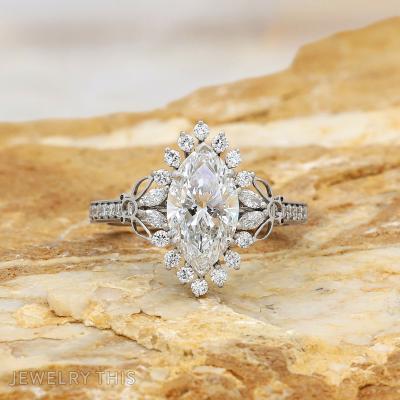
This engagement ring centers a marquise-cut lab diamond, colorless and just under two carats, surrounded ...

This captivating set of rings is designed to symbolize unity and individuality. One ring is ...

This Rose gold engagement ring is a mesmerizing ode to nature and personal connection. The ...

This exquisite wedding set consists of three rose gold rings that fit together seamlessly. The ...

A modern marvel is found in the striking three-stone engagement ring. At its center is ...

This is a custom-designed travel ring created to replicate the client’s original engagement ring. The ...

Inspired by the enchanting tale of The Little Prince, this yellow gold wedding band is ...
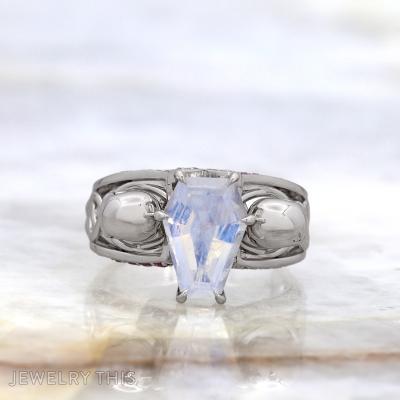
This hauntingly beautiful white gold ring is a masterpiece of dark romance and intricate symbolism. ...

This stunning Yellow gold ring features a magnificent 1.5-carat marquise-shaped moissanite in the center. The ...

This unique engagement ring embodies contemporary elegance with its mesmerizing hexagonal black diamond center stone. ...

This engagement ring centers a 1.5 carat emerald-cut moissanite, flanked on each side by a ...

This exquisite art-deco inspired engagement ring features a beautiful round Diamond as its focal point. ...



