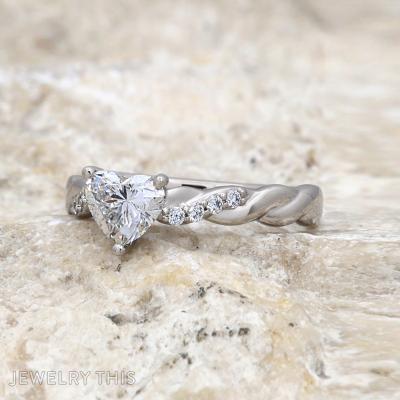
Twisted Platinum Heart Diamond Engagement Ring
$$$
Platinum, lab diamond, lab diamonds
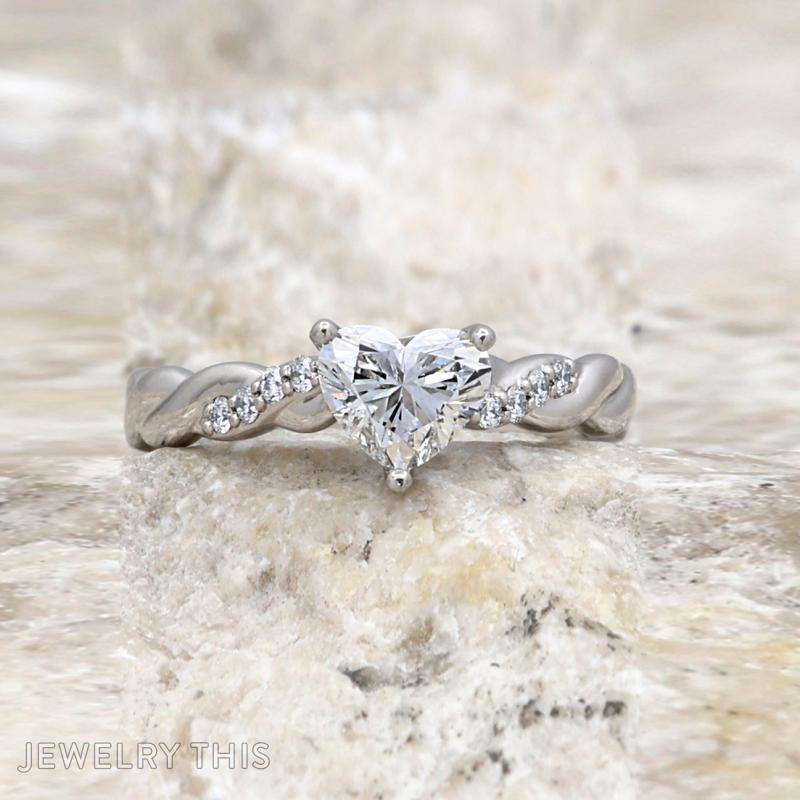
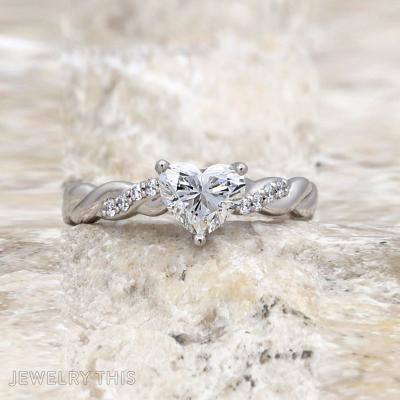
A father designing an engagement ring for his partner wanted to fold both of their blended family's six children into the piece, one birthstone for each. Over several rounds of design he and his partner reworked the idea until they landed on something simpler: a heart-diamond solitaire on a twisted platinum band, saving the birthstone concept for a wedding band still to come. When it arrived, he wrote: "I love the ring. Thank you for working with us to make the design unique to us."
'It's beautiful. That's what I was thinking.' — on seeing the first sketch
'I love the ring. Thank you for working with us to make the design unique to us.' — on delivery
Quick specs
Design type
Primary Metal
Shape / Cut
Primary Stone
Design Complexity
Intent: Certainty
Size
Ring size 7½ US (17.73mm).
How they made it distinctive
-
01
Heart-shaped center stone chosen as the singular focal point after the design was simplified from a more elaborate multi-stone concept
-
02
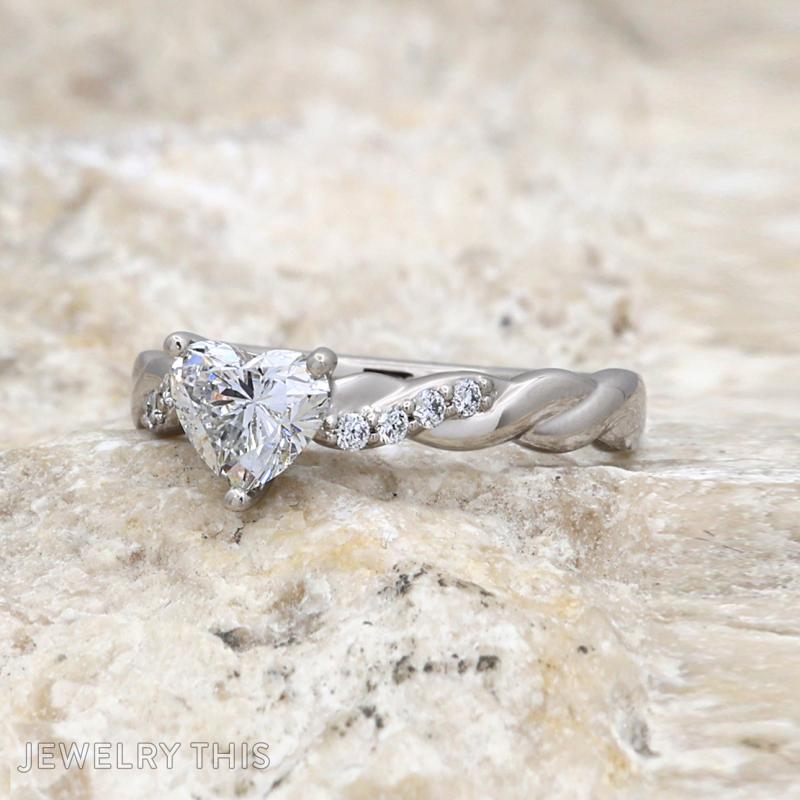
Twisted platinum band gives the piece texture and movement without competing with the heart silhouette
-
03
Accent diamonds set to follow the curve of the twist rather than sitting in a straight channel
-
04
Design was deliberately split across two future pieces — engagement ring and wedding band — so each carries its own distinct symbolism
-
05
Platinum chosen for its durability and naturally white color, well suited to a ring meant for daily wear
How you'd make it yours
Center stone: this piece uses a heart-shaped lab diamond; a new commission could use a round, oval, or cushion cut, or a natural diamond
Metal: this piece is platinum; the same twisted band design works in 18k white or yellow gold
Accent stones: this piece uses lab diamonds on either side; a new commission could use colored gemstones or birthstones instead
Band style: the twist pattern could be extended further around the band or kept to the front section only
One of a kind: this exact ring was designed for one client's proposal and is not reproduced — a new commission is an original piece inspired by this one, not a copy
Design changes made
The design moved from a birthstone-heavy halo with six colored gemstones flanking the center diamond to a simpler twist band with only diamonds on either side of the heart center stone, with the birthstone concept moved to a future wedding band. The couple also adjusted stone placement order twice during review to get the birthstone sequence correct before settling on the final simplified version.
Who this is for
This piece is for someone who wants a heart-shaped center stone to be the clear star of the ring, without a lot of competing detail. It's especially right for someone drawn to texture in the band itself — a twist rather than a plain shank — and who wants a piece built to be worn every day for the long haul.
How it's made
Once the design was approved, a 3D-printed resin model was produced and shared with the client as a preview of the ring's exact form before any metal was committed. The resin was then attached to a wax tree, invested in plaster, and fired in a kiln to burn out the pattern, leaving a hollow mold. Molten platinum was poured into the mold, and once cooled, the raw ring was extracted for finishing.
After casting, the band was cleaned and polished to a mirror finish along its full twisting profile. The heart-shaped lab diamond was then set into a prong setting positioned at the front of the twist, and the four small round diamonds on each side were set by hand into the recesses of the twisting band, following the curve of the platinum rather than a straight line.
Key note
The accent diamonds are set directly into the twisting contour of the band rather than a flat channel, so each stone follows the platinum's curve instead of sitting on a straight line.
Pricing guidance
A platinum engagement ring with a heart-shaped center diamond and a twisted, diamond-accented band sits in the mid-to-upper range for custom engagement work. Platinum itself carries a higher material cost than gold, and the heart cut requires more precise prong placement than a round or oval stone. Center stone carat weight and the number of accent stones are the biggest levers on price from there.
Moves price up ↑
- ↑ Increasing the center diamond from 1 carat to a larger size
- ↑ Choosing a natural diamond instead of a lab-grown diamond for the center stone
- ↑ Adding more accent stones or extending the twist pattern further around the band
- ↑ Upgrading accent stones to natural diamonds or colored gemstones instead of lab diamonds
Moves price down ↓
- ↓ Reducing the center stone to 0.75 carat
- ↓ Switching the band metal from platinum to 14k white gold
- ↓ Reducing the number of accent diamonds on the band
- ↓ Choosing a simpler round or oval center stone instead of a heart cut, which requires less precise prong work
Questions people ask
Yes, heart-shaped diamonds require more precise prong placement because the point and the cleft between the two lobes are both vulnerable spots that need protection. A well-set heart diamond typically uses a prong at the point, one at each lobe, and one or two along the sides to secure the outline. This makes labor a bigger factor in the price of a heart-cut engagement ring compared to a round or oval stone. The extra setting time doesn't affect the diamond's durability once it's properly secured.
Lab-grown and natural diamonds are chemically, physically, and optically identical — both score a 10 on the Mohs hardness scale and reflect light the same way. The only real difference is origin: one forms in the earth over millions of years, the other is grown in a controlled lab environment in a matter of weeks. Lab-grown diamonds typically cost significantly less than natural diamonds of the same size and quality. For a center stone like a 1-carat heart cut, that price difference can be substantial.
Platinum is one of the most durable precious metals used in fine jewelry and is naturally white, so it never needs rhodium replating like white gold does. It's also denser and heavier than gold, which gives it a substantial feel on the hand. Platinum does develop a soft patina with wear over time, which some people polish out and others prefer to keep as a sign of a well-loved ring. It's hypoallergenic, making it a good choice for anyone with sensitive skin.
A platinum engagement ring with a heart-shaped center diamond and a twisted band with diamond accents falls in the mid-to-upper range for custom engagement work. The center stone's carat weight is one factor, but the labor involved in hand-finishing a twisted band and precisely setting a heart-shaped stone plays an even larger role in the total cost. Choosing a lab-grown center diamond instead of natural keeps the cost more moderate without changing the stone's appearance or durability.
The design phase, from initial sketch through 3D render and approval, typically takes about one week once a deposit is placed. Once the design is approved and the majority of the balance is paid, production takes approximately four additional weeks, covering casting, finishing, and stone setting. Total turnaround from deposit to shipment is typically five to six weeks for a standard timeline. Rings with more complex customization or design revisions may take a bit longer.
Accent diamonds can be set directly into a twisted band by following the contour of the twist rather than forcing the stones into a straight line. This requires more precise hand-setting than a flat channel would, since each stone sits at a slightly different angle as the band curves. The result is a continuous line of sparkle that moves with the twist instead of interrupting it. It's a detail that's more time-intensive to execute but doesn't compromise the security of the stones.
Yes, birthstones representing family members are commonly incorporated into a companion wedding band designed to pair with an existing engagement ring, rather than being added to the engagement ring itself. This lets the engagement ring stay focused on the center stone while the wedding band carries additional personal symbolism. The two pieces are designed to complement each other stylistically, usually matching the metal and band style. This approach also allows more room for multiple stones without crowding the engagement ring.
A twisted band with accent stones set into the curve can generally be resized within one to two sizes without disturbing the heart-shaped center stone or the accent diamonds, since the resizing is typically done at the back of the band away from the stones. Larger resizes may require more careful work to preserve the twist pattern and stone spacing. It's best to have resizing done by the original jeweler or someone experienced with twisted band designs. The heart-shaped center stone itself is not affected by a standard resize.
Explore Similar Creations
Every masterpiece starts with a spark. Explore how our clients raw ideas - sketches, heirlooms, inspirations - were transformed into bespoke works of arts.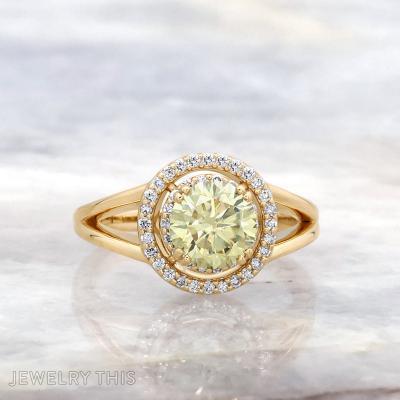
Crafted as a beautiful and cost-effective tribute to a cherished original, this yellow gold engagement ...

This exquisite white gold ring captures the timeless elegance of a three-stone design with a ...

This yellow gold ring centers on a brilliant marquise diamond, elegantly framed by two smaller ...

This engagement ring is crafted with white gold, featuring an emerald-cut moissanite center stone and ...
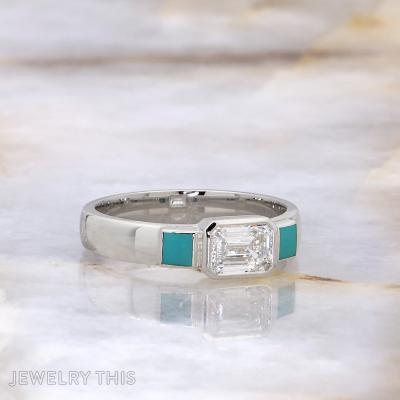
This elegant custom ring beautifully combines a .75 carat emerald cut lab diamond centerpiece with ...

This sterling silver ring blends delicate beauty with symbolic meaning. The ring features a heart-shaped ...
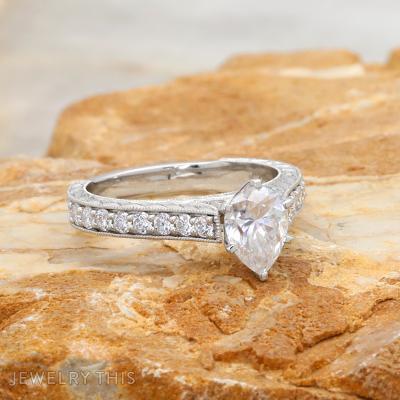
This custom sterling silver engagement ring is a meaningful recreation designed to restore the cherished ...

This elegant white gold ring features a timeless three-stone design centered around a brilliant 2.75 ...

This raw diamond custom engagement ring is an absolute masterpiece. Crafted in 14k yellow gold ...

In this 14-karat white gold engagement ring, the centerpiece is a stunning 1.2 carat pear-shaped ...

Elegance and sophistication converge in this platinum ring where a magnificent large Aquamarine takes center ...