

Moon & Star Engraved Double-Band Engagement Ring
$$$
14k white gold, lab-grown diamond
A client wanted an engagement ring with real presence on the hand, inspired by cigar bands but softened with a whimsical celestial motif of moons and stars. After learning that a specific branded diamond cut was out of reach for the budget, she pivoted to a lab-grown radiant cut set horizontally across a wide double band, adding a short inside engraving to the final design. When it arrived, she wrote: 'It's beautiful! Absolutely stunning! It's everything we talked about and more.' The ring debuted at a proposal weeks later, where it was met with a yes.
'It's beautiful! Absolutely stunning! It's everything we talked about and more.' — on delivery
Quick specs
Design type
Primary Metal
Shape / Cut
Primary Stone
Accent Stones
Design Complexity
Intent: Certainty
Size
Ring size 7.5 US (17.73mm). Center stone 1.99 carat radiant cut, set horizontally (east-west).
How they made it distinctive
-
01
Radiant cut diamond set horizontally (east-west) rather than the standard vertical orientation, for a distinctive, non-traditional look
-
02
Split double band structure gives visual substance on the hand without a thin, delicate profile
-
03
Moon and star engravings carried across both bands for a whimsical celestial motif inspired by cigar band styling
-
04
Wide solid section at the back of the shank doubles as the only surface wide enough to carry a legible inside engraving
-
05
Center stone sized to just under 2 carats to maximize presence on the finger while staying within budget
How you'd make it yours
Stone type: this piece uses a lab-grown radiant cut diamond — a new commission could use a natural diamond or a colored gem like sapphire for a different look
Metal: this piece is 14k white gold — the same double-band design works in yellow or rose gold
Engraving: the solid back portion of the band can carry a new short inscription on a fresh commission
Band width: the wide cigar-band-inspired profile could be narrowed for a more delicate feel on a new piece
Motif: the moon-and-star engraving could be swapped for a different repeating pattern while keeping the same band structure
One of a kind: this exact ring was designed for one client's proposal and is not reproduced — a new commission is an original piece inspired by this one, not a copy
Design changes made
The center stone shifted from a branded Ashoka cut to a lab-grown radiant cut after the original stone proved cost-prohibitive, and the carat weight grew from an initial 1–1.5 carat estimate to just under 2 carats. A short inside engraving was also added to the solid back portion of the band after the design render was approved.
Who this is for
This design is for someone who wants an engagement ring with real presence on the hand but doesn't want it to read as delicate or overly traditional. It's especially right if you're drawn to non-standard stone orientations and a bit of whimsy — celestial details, an unconventional band structure — over a classic solitaire look.
How it's made
Once the design was approved, a 3D-printed resin model was produced first — a preview of the ring's exact form, shared with the client before any metal was committed. The resin was then set in investment plaster and fired to burn out the model, leaving a hollow mold. Molten 14k white gold was cast into the mold, then the piece was extracted, cleaned, and prepared for finishing.
The split double band was polished to a bright, even finish across both halves, with the moon and star details left crisp against the smooth metal so the engraved pattern reads clearly rather than blending into a brushed surface. The radiant-cut lab diamond was set horizontally in a four-prong setting to hold the elongated stone securely in its east-west orientation. The inside engraving was added to the solid back portion of the shank, chosen specifically because the split bands were too narrow to carry legible lettering.
Key note
The inside engraving had to be placed on the solid back portion of the band rather than the decorative split sections, because the narrow width of the twin bands couldn't hold legible lettering.
Pricing guidance
A wide, double-band engagement ring with a large horizontally-set center stone and hand-engraved detailing sits in the mid range for custom engagement rings of this complexity. Most of the baseline cost comes from the setting labor for an east-west stone and the engraving work across two band surfaces, with the center stone carat weight being the largest single variable. Metal choice and stone sourcing (natural vs. lab) are where the price moves most from there.
Moves price up ↑
- ↑ Choosing a natural diamond instead of a lab-grown diamond at the same carat weight
- ↑ Increasing the center stone above 2 carats
- ↑ Requesting a branded or patented diamond cut, which carries licensing and sourcing premiums
- ↑ Adding engraving or stone accents to both split bands rather than a single inside inscription
- ↑ Upgrading from 14k to 18k white gold or platinum
Moves price down ↓
- ↓ Reducing the center stone size below 1.5 carats
- ↓ Choosing a standard cut (round, princess) instead of a fancy shape like radiant or emerald
- ↓ Simplifying the band to a single shank rather than a split double band
- ↓ Omitting the engraved moon and star pattern
- ↓ Choosing a slightly lower clarity grade, which is not visible to the naked eye at this carat range
Questions people ask
Both are rectangular step-style shapes, but a radiant cut uses brilliant faceting that produces significantly more sparkle, while an emerald cut uses a stepped facet pattern that creates a more subtle, mirror-like flash. Radiant cuts can also be square or rectangular, while emerald cuts are always rectangular. For a stone set horizontally in an east-west orientation, the extra brilliance of a radiant cut tends to catch more light across its width. The choice generally comes down to whether you want maximum sparkle or a more understated, elegant look.
Yes, lab-grown diamonds are chemically, physically, and optically identical to natural diamonds — they have the same hardness, clarity potential, and brilliance. The only real difference is origin: one is grown in a controlled lab environment and the other is mined from the earth. Lab-grown diamonds are typically priced significantly lower than natural diamonds of the same carat, cut, and clarity. At the microscopic clarity differences some grading reports show, the naked eye cannot tell the difference between grades like VS1 and VS2.
A ring with a 2-carat lab-grown diamond in a mid-complexity white gold setting typically falls in the mid range for custom engagement rings. The center stone size and cut style are the biggest cost drivers at this carat weight, with setting complexity (like an east-west orientation or a double band) adding to the base labor cost. Choosing natural over lab-grown at the same carat weight would push the price meaningfully higher. Setting style, metal karat, and engraving detail are the next-biggest variables.
Yes, this is called an east-west setting, and it's a deliberate design choice rather than a technical limitation. It works especially well with elongated shapes like radiant, emerald, or marquise cuts because the horizontal orientation shows off the stone's length across the finger rather than its width. The prong setting has to be adjusted to properly secure the stone in this rotated position. It's a popular choice for clients who want a distinctive, non-traditional look.
The full process typically takes around five to six weeks from design approval to completion. The first week covers the sketch, 3D model, and photorealistic render for approval. Once the design and diamond are confirmed, casting and hand-finishing take about four to five weeks, including wax modeling, metal casting, stone setting, and final polishing. Sourcing a specific carat-weight diamond can add a few extra days if the exact stone needs to be located.
It depends on the width of the bands. Very narrow split bands often can't hold legible lettering, so engraving is usually placed on a solid or wider portion of the shank instead. If your design has a wider back section or a single solid band area, that's typically the best spot for an inscription. It's worth discussing engraving placement early in the design process so the band width can accommodate it if needed.
A radiant cut offers a distinctive rectangular or square silhouette with brilliant faceting, giving it more visual presence on the finger than a round cut of the same carat weight, since more of the stone is visible from the top. It's also considered less common than round or princess cuts, appealing to those who want a diamond that stands out. The brilliant facet pattern gives it significant sparkle despite its more angular shape. It pairs particularly well with elongated or horizontal settings.
Yes, a wider band distributes weight differently across the finger and tends to feel more substantial without necessarily feeling heavy, especially in a split or double-band design where some of the width is open space rather than solid metal. Wider bands can also be a practical choice for someone who wants a ring with visual presence but doesn't want a delicate, thin profile. The tradeoff is that wider bands may need more careful sizing since they contact more of the finger's surface.
Explore Similar Creations
Every masterpiece starts with a spark. Explore how our clients raw ideas - sketches, heirlooms, inspirations - were transformed into bespoke works of arts.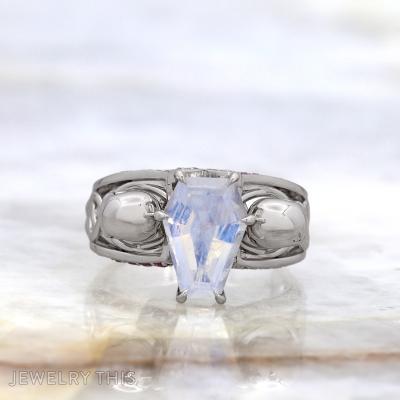
This hauntingly beautiful white gold ring is a masterpiece of dark romance and intricate symbolism. ...

This Platinum ring is a symbol of life’s vibrant connections. At its heart, a 1 ...

Elegance and grace converge in this exquisite yellow gold engagement ring, showcasing a 1.2carat marquise ...

Recreating the lost engagement set of a beloved grandmother, this set is sure to evoke ...

This elegant white gold engagement ring features a stunning round moissanite center stone, set in ...

Introducing our breathtaking 14k Rose Gold Marquise Cluster Engagement Ring. A timeless expression of love ...

This custom engagement ring showcases exquisite craftsmanship with a delicately carved poppy design that gracefully ...
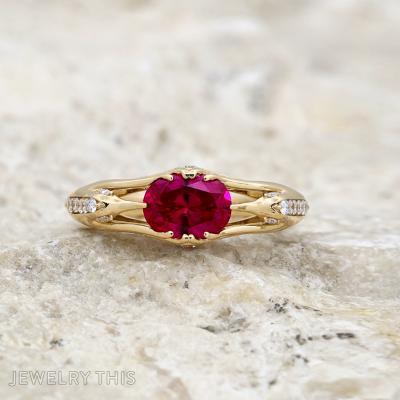
This engagement ring reimagines a hummingbird in flight, with sculpted wing forms wrapping around a ...

This 5mm wide 14k rose gold anniversary ring is a one-of-a-kind piece. It features three ...
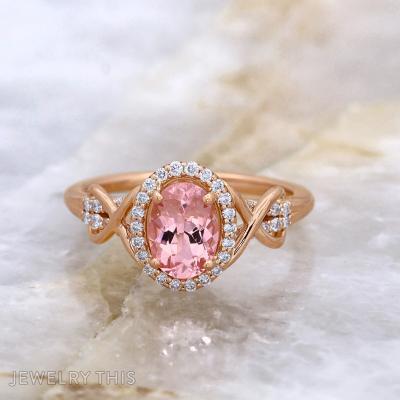
This engagement ring recreates a discontinued design the client’s wife once owned, rebuilt from photographs ...

This timeless three stone engagement ring is crafted in 14k white gold and features a ...

Cat said Yes! This stunning 1.50ct round diamond six claw set in 18ct white gold ...