


Pear Morganite Engagement Ring in Rose Gold
$$
14k rose gold, morganite, diamond accents
G. came to us wanting to recreate the feel of a salt-and-pepper diamond cluster ring he'd seen, but with a warmer center stone for his partner. He landed on a 1.12ct pear-shaped morganite after reviewing options with the team, and approved the first render without any changes: 'I love it! Continue away!'
'I love it! Continue away!' — on seeing the first render
Quick specs
Design type
Primary Metal
Shape / Cut
Primary Stone
Accent Stones
Style
Design Complexity
Intent: Certainty
Size
Ring size 6 US.
How they made it distinctive
-
01
Pear-shaped morganite chosen specifically to keep the pear silhouette of the original inspiration ring while swapping in a warmer, colored center stone
-
02
Two-stone cluster on each shoulder (one pear, one round) tapers the design down from the center point rather than using a single accent on each side
-
03
Hammered texture on the rose gold band adds a hand-finished quality distinct from a plain polished shank
-
04
Five-prong basket setting supports the pear point of the morganite, an area more prone to chipping in softer stones
-
05
Rose gold chosen to complement the warm pink-peach tone of the morganite rather than a cooler white metal
How you'd make it yours
Center stone: this piece uses morganite; a new commission could use champagne sapphire, pink sapphire, or a diamond for more durability
Accent stones: this piece uses paired pear-and-round clusters; a new commission could use a single stone per side or a different shape pairing
Metal: this piece is 14k rose gold; the same clustered design works in yellow gold, white gold, or platinum
Center stone shape: this piece uses a pear cut; the same cluster styling adapts to oval or cushion center stones
One of a kind: this exact ring was designed for one client's partner and is not reproduced — a new commission is an original piece inspired by this one, not a copy
Design changes made
Design matched the initial brief without major changes.
Who this is for
This piece is for someone drawn to an asymmetric, clustered engagement ring rather than a traditional solitaire, and who wants a colored center stone with warmth instead of a clear diamond. It especially fits a partner who loved the look of a salt-and-pepper diamond cluster design but wanted something softer and more personal in tone.
How it's made
Once the design was approved, a 3D digital model was built to map out the metal volume and stone placement, and a resin model was 3D-printed from that file as a preview before any metal was committed. The resin was reviewed internally to confirm proportions, then used to create an investment mold. Molten 14k rose gold was cast into the mold, producing the raw ring ready for finishing.
After casting, the band was cleaned up and given a lightly hammered texture along its surface, then polished so the texture catches light without looking uniformly flat. The five-prong basket was shaped to hold the pear-shaped morganite securely at the point where the two accent clusters meet, and the pear and round accent stones were set by hand into their prongs on each shoulder before final quality control.
Key note
The hammered texture is applied to the band before final polishing, so the finish catches light in an uneven, hand-worked way rather than reading as a smooth mirror surface.
Pricing guidance
A morganite engagement ring with a clustered pear and round accent design in 14k rose gold sits toward the lower end of the mid range for custom engagement rings. Colored center stones like morganite cost less than natural diamonds of comparable size, which keeps the baseline down even with a two-stone accent cluster on each shoulder. Accent stone choice and metal karat are what move the price most from there.
Moves price up ↑
- ↑ Upgrading the accent stones from moissanite or lab diamonds to natural diamonds
- ↑ Choosing a larger center stone above 2 carats
- ↑ Switching from 14k to 18k rose gold
- ↑ Adding a matching wedding band to complete the set
- ↑ Requesting a milgrain or filigree detail along the basket
Moves price down ↓
- ↓ Reducing the accent stone count from two clusters to a single stone per side
- ↓ Choosing a smaller center stone under 1 carat
- ↓ Using lab-created moissanite accents instead of diamonds
- ↓ Selecting a round or cushion center stone instead of a custom-sourced pear shape
- ↓ Choosing sterling silver with rose gold plating instead of solid 14k gold
Questions people ask
Morganite rates 7.5 to 8 on the Mohs hardness scale, which is durable enough for daily wear but softer than sapphire or diamond. It can develop small scratches over years of regular use, especially if knocked against hard surfaces. A protective setting like a basket with supportive prongs, as used here, helps reduce chipping risk at the point of a pear shape. Most morganite engagement rings hold up well for years with normal care and occasional professional cleaning.
Morganite is a pink-to-peach beryl that is softer (7.5-8 Mohs) and typically less expensive per carat than sapphire. Champagne sapphire rates 9 on the Mohs scale, making it significantly more scratch-resistant and better suited to an active daily-wear lifestyle. Morganite tends to have a softer, more pastel color saturation, while champagne sapphire reads warmer and more golden-brown. The choice usually comes down to color preference and how much durability matters to the wearer.
A morganite center stone with a clustered pear and round accent design in 14k rose gold sits toward the lower end of the mid-range for custom engagement rings. The center stone itself is a major cost driver since colored gemstones of this cut and size need to be sourced individually. Accent stone material, metal karat, and the number of stones in the cluster all shift the price from there. Choosing lab-created accent stones over natural ones is one of the more effective ways to keep the cost down without changing the ring's appearance.
When a center stone needs to be sourced first, add several days to a couple of weeks before design work can even begin, since the ring is built around the stone's exact proportions. Once the stone is confirmed, the 3D design and render process typically takes about a week. After the design is approved, production including casting, stone setting, and finishing usually takes four to five weeks. Altogether, a project like this from stone sourcing to delivery typically spans six to eight weeks.
Yes, pear-shaped center stones are commonly set with the point angled toward one side rather than straight up the finger, especially in cluster or east-west designs. In this design the pear points downward with accent clusters tapering along each shoulder, creating an asymmetric, flowing look rather than a strictly symmetrical solitaire. The setting angle is finalized during the 3D render stage, so it can be adjusted based on how the stone's proportions look in the mockup. This kind of asymmetric cluster setting works especially well with pear and marquise shapes.
Yes, a matching wedding band can be designed at any point after the engagement ring is complete, and many clients choose to wait until closer to the wedding date to do so. The band is typically designed to complement the curve and metal of the engagement ring, often with a slight contour to nest against the clustered accent stones. Because the engagement ring already exists as a reference, the design process for a matching band tends to move faster than starting from scratch. It's worth mentioning the existing ring's specs when starting that conversation so the new piece is designed to sit flush against it.
Moissanite is a common alternative that offers similar brilliance to diamond at a lower cost and rates 9.25 on the Mohs hardness scale, making it very durable for accent stones. Lab-grown diamonds are chemically identical to natural diamonds and cost less, offering another way to keep the accent stones bright and colorless without the natural-diamond price premium. White sapphire is a third, less common option that provides a slightly softer sparkle than diamond or moissanite. The choice mostly comes down to budget and how much brilliance versus subtlety the wearer prefers.
Explore Similar Creations
Every masterpiece starts with a spark. Explore how our clients raw ideas - sketches, heirlooms, inspirations - were transformed into bespoke works of arts.
Elegance takes center stage in this custom 14k white gold engagement ring, showcasing a brilliant ...

Introducing this stunning Jade Halo Engagement Ring. A mesmerizing blend of elegance and sophistication. At ...

This stunning sapphire and diamond wedding band combines timeless elegance with a touch of color. ...
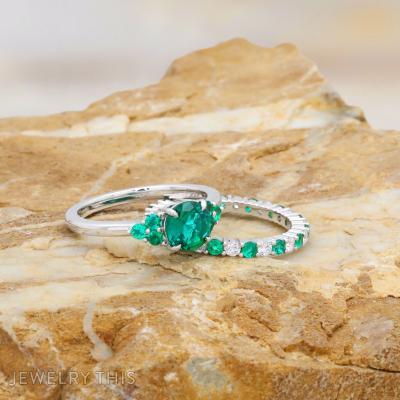
This elegant white gold wedding set features a vibrant round brilliant-cut lab-grown emerald at the ...


This beautiful, handmade 14k yellow gold engagement ring is a classic and timeless piece that ...
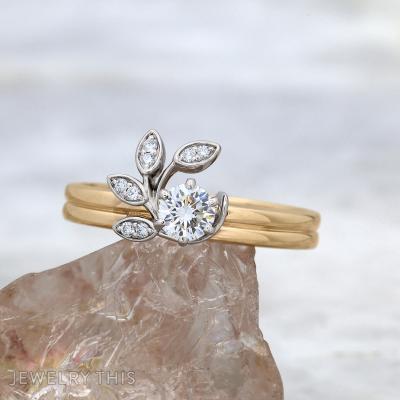
This ring rebuilds a 1970s engagement ring from a client’s memory, a handful of screenshots ...

This platinum engagement ring centers a large oval lab-grown diamond in a raised cathedral setting, ...

This custom engagement ring exudes elegance and sophistication with its unique design. At its center ...

This white gold ring is a bold and captivating statement piece designed to allure and ...

This exquisite platinum art-deco inspired engagement ring features a stunning 2.02carat asscher cut diamond set ...

Embrace the promise of forever with this captivating custom engagement ring set. Crafted in 14k ...



