


Recreated 70s Leaf Wedding Ring — Lost Heirloom Restored
$$$
14k yellow gold, 14k white gold, lab diamond, lab diamonds
A daughter came to us to rebuild her mother's wedding ring, lost two years earlier after 50 years of marriage. All she had to work from was a blurry close-up in an old home video and her own sketches of what she remembered. When it arrived just in time for the couple's 51st anniversary, she wrote: 'It arrived with time to spare, she'll get to wear it as they celebrate their 51st wedding anniversary. Look at the joy on her face!'
'Beautiful, we are 95% there!' — on seeing the design sketch
'Wow! The model looks just like how we remember!' — on production payment
'It arrived with time to spare, she'll get to wear it as they celebrate their 51st wedding anniversary tonight and tomorrow. Look at the joy on her face!' — on delivery
Quick specs
Design type
Primary Metal
Secondary Metal
Shape / Cut
Primary Stone
Accent Stones
Design Complexity
Intent: Certainty
Size
Ring size 9 US (19.05mm).
How they made it distinctive
-
01
Center stone set in a deliberately tall prong setting to recreate the visible air gap the client remembered from the 1970s original
-
02
Crescent-shaped diamond leaf spray changed to white gold mid-design specifically to match the client's memory of metal contrast
-
03
Four leaf shapes each hand-set with two small diamonds, totaling eight accent stones in a nature-inspired but non-literal motif
-
04
Double-band yellow gold shank reproduces the specific two-band detail the client remembered most vividly
-
05
Recreated entirely from a home video screenshot and hand-drawn sketches with no original ring, appraisal, or paperwork to reference
How you'd make it yours
Center stone: this piece uses a round lab diamond; a new commission could use a natural diamond, moissanite, or a colored gemstone for a different look
Metal: this piece is two-tone 14k yellow and white gold; the same leaf-spray design works in 18k gold or a single metal tone
Accent stones: this piece uses eight small diamonds across four leaf shapes; a new commission could adjust the leaf count or stone size
Setting height: this piece uses a tall vintage-style prong setting; a new commission could use a lower, more contemporary profile
Engraving: the inside of the band can carry a new inscription on a fresh commission
One of a kind: this exact ring was recreated for one family's specific memory of a lost piece and is not reproduced — a new commission is an original piece inspired by this one, not a copy
Design changes made
The center stone setting was raised higher after the client recalled that the original had visible air beneath the stone, a detail specific to its 1970s styling, and the crescent-shaped diamond spray was changed from yellow gold to white gold to match her memory of the metal contrast.
Who this is for
This piece is for someone trying to bring back a ring that no longer exists, working from nothing more than a memory, an old photo, or a few seconds of home video. It's especially right if the original had a distinctive mixed-metal look or a vintage design detail that a store-bought replacement could never capture.
How it's made
Once the sketch was approved, the design moved into a 3D CAD model, which was rendered as a photorealistic image for review before any metal was committed. After final approval, a resin model was 3D printed as the last checkpoint before casting, giving a physical preview of scale and proportion. The approved model was then invested and cast in 14k yellow gold for the double-band shank, with the crescent leaf spray cast separately in white gold.
After casting, the yellow gold bands were polished to a bright finish while the white gold leaf spray was finished separately before assembly, preserving the crisp separation between the two metal tones. The center round stone was set into a tall prong setting engineered to leave visible space beneath it, recreating the lifted, larger-looking profile the client remembered. The eight small diamonds were then hand-set into the four leaf shapes, two per leaf, completing the crescent spray.
Key note
The center stone's prongs were deliberately built taller than a standard setting so a gap of visible light remains beneath the stone, a specific detail carried over from the 1970s original rather than a modern styling choice.
Pricing guidance
A two-tone vintage-style engagement ring recreation with a diamond leaf spray and a raised center setting sits in the mid range for custom work of this complexity. Most of the cost comes from the mixed-metal construction, which requires casting and finishing two metal tones separately before assembly, plus the hand-setting of the eight small accent diamonds. Center stone choice and total carat weight are the next biggest factors in the final price.
Moves price up ↑
- ↑ Upgrading the center stone or accent diamonds from lab-grown to natural
- ↑ Increasing the number of accent diamonds beyond eight or enlarging them
- ↑ Using 18k gold instead of 14k for either metal tone
- ↑ Adding hand engraving to the inside of the band
- ↑ Increasing the center stone size beyond roughly a third of a carat
Moves price down ↓
- ↓ Using a single metal tone instead of a two-tone yellow and white gold construction
- ↓ Choosing moissanite instead of lab diamond for the center stone
- ↓ Reducing the accent stone count from eight to four
- ↓ Simplifying the leaf spray to a single leaf motif instead of four
- ↓ Using a standard prong height instead of the raised vintage-style setting
Questions people ask
Yes. This ring was rebuilt using only a close-up frame pulled from a decades-old home video and hand-drawn sketches from the client's memory. The design team works through an iterative sketch and render process, refining details like stone shape, metal contrast, and setting height until the client confirms it matches what they remember. It typically takes a few rounds of feedback to get proportions and small details right when there's no original piece or paperwork to reference.
Lab-grown and natural diamonds share the same chemical composition, hardness, and optical properties — the only difference is where they were formed. Lab-grown diamonds are created in controlled environments in a matter of weeks, while natural diamonds form underground over billions of years. Because lab-grown diamonds cost less to produce, they're typically priced significantly lower than natural diamonds of the same size and quality. Visually, a trained gemologist with specialized equipment is needed to tell them apart.
This ring uses a taller prong setting that lifts the center stone slightly above the surface of the band, leaving a visible gap of light underneath. This was a common styling choice in vintage jewelry design and makes the stone appear larger and more prominent than a flush, low-set stone would. It's a deliberate design decision rather than a structural necessity, and it can be adjusted taller or shorter depending on the look a client wants.
A two-tone engagement ring with a diamond accent spray and a raised center setting of this complexity typically falls in the mid range for custom work. The main cost driver is the labor of casting and finishing two separate metal tones and then hand-setting multiple small accent stones. Center stone choice, whether lab-grown or natural, and total carat weight are the factors that move the price most from there.
The full process typically takes about one week for design — sketches and a 3D rendered model for approval — followed by roughly four to five weeks for production once the design is approved. Production includes a 3D-printed resin checkpoint before casting, then casting, finishing, and hand-setting of the stones. Total turnaround from first conversation to delivery is usually around five to six weeks.
A ring like this, with a double-band shank and a raised center setting, can generally be resized within a modest range using standard jewelry techniques. Because the leaf spray and prong setting are separate elements attached to the band, larger resizes may require more careful work to preserve the proportions of the design. It's best to have any resizing done by a jeweler experienced with mixed-metal, multi-element rings.
White gold and yellow gold are both made from a gold alloy, but white gold is mixed with white metals like palladium or nickel and typically finished with rhodium plating for its bright white color, while yellow gold keeps gold's natural warm tone. In a two-tone ring like this, the two metals are cast and finished separately, then assembled, so the contrast stays crisp rather than blending together. Over time, rhodium plating on white gold elements may need reapplication to keep its brightest white appearance, while the yellow gold requires only standard polishing.
Yes. Vintage-era design cues — like taller prong settings, nature-inspired but abstract motifs, and mixed-metal contrast — can be recreated by translating the visual details a client remembers into a modern CAD model. The process relies on the client's description and any available reference images or video, refined through sketches before moving to a 3D render. The result won't be an exact physical match to a decades-old handmade piece, but it can closely capture the design language and proportions.
Explore Similar Creations
Every masterpiece starts with a spark. Explore how our clients raw ideas - sketches, heirlooms, inspirations - were transformed into bespoke works of arts.
This exquisite platinum wedding set showcases a harmonious blend of elegance and vibrant color. The ...

This stunning rose gold ring features a captivating center oval-shaped opal cabochon that’s perfectly bezel ...
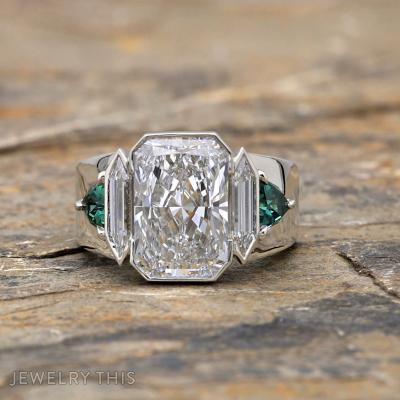
This engagement ring pairs a large elongated radiant center stone with a pair of custom ...

This enchanting 14 karat rose gold ring captures the beauty of nature and the promise ...

This striking 14K yellow gold engagement ring offers a beautiful blend of organic fluidity and ...

This Rose gold engagement ring is a mesmerizing ode to nature and personal connection. The ...
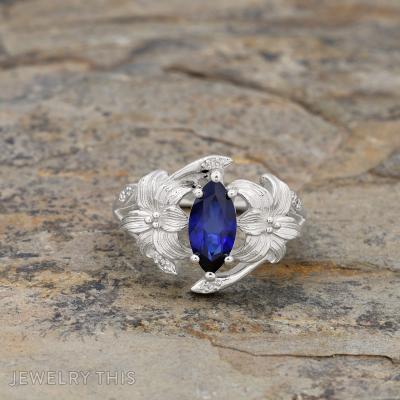
This exquisite engagement ring showcases a stunning marquise cut lab created blue sapphire as its ...

This engagement ring centers a 7x5mm oval amethyst in a four-prong setting, flanked on each ...

This sterling silver ring is timeless in style, exudes beauty and elegance. With its classic ...

This striking engagement ring and wedding band set showcases a unique and modern design. The ...

This elegant white gold engagement ring features a stunning princess cut moissanite center stone. The ...
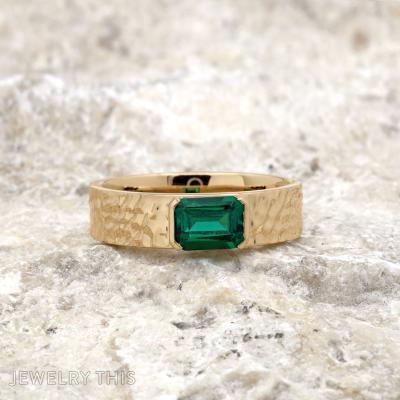
This striking 14-karat yellow gold band offers a bold, handcrafted aesthetic that balances rugged texture ...



