


Amethyst Engagement Ring with Diamond Side Stones
$$
14k yellow gold, amethyst, lab diamonds
B. wanted an engagement ring that put a colored stone front and center instead of a traditional diamond, choosing an oval amethyst framed by rows of tightly set side stones on a gold band. Partway through, the side stones meant to flank the amethyst had to be switched to lab diamonds after a shortage of the requested material — a swap made at no extra cost that ended up looking exactly the way she wanted. She had the inside of the band engraved with a meaningful date, and when it arrived she wrote: 'It is BEAUTIFUL, I couldn't have asked for anything more.'
'The render is absolutely beautiful. I don't see anything that needs changing. It's the perfect simple ring for myself!' — on seeing the render
'Oh my gosh it is BEAUTIFUL, I couldn't have asked for anything more!' — on delivery
Quick specs
Design type
Primary Metal
Shape / Cut
Primary Stone
Accent Stones
Design Complexity
Intent: Certainty
Size
Ring size 5 US (15.7mm). Center stone 7x5mm oval. Three round accent stones set side by side on each side of center, running approximately halfway down the band.
How they made it distinctive
-
01
Amethyst chosen as the center stone instead of a traditional diamond, for a personal color preference on a self-designed ring
-
02
Accent stones set flush side-by-side rather than spaced apart, for better setting security and a continuous line of sparkle
-
03
Six accent stones split evenly across both sides, running about halfway down the band for a balanced look
-
04
Interior engraving with a meaningful date, built into the casting rather than added afterward
-
05
Accent stone material switched from moissanite to lab diamonds mid-production with no change to the design or added cost
How you'd make it yours
Center stone: this piece uses amethyst; a new commission could use sapphire, moissanite, or a diamond for a different look
Metal: this piece is 14k yellow gold; the same design works in white or rose gold
Accent stone count: this piece uses three stones per side; a new piece could use more or fewer along the band
Engraving: the interior of the band can carry a new date, initials, or short phrase on a fresh commission
One of a kind: this exact ring was designed for one client's size and stone choices and is not reproduced — a new commission is an original piece inspired by this one
Design changes made
The side stones were changed from a spaced-out prong setting to a flush, side-by-side arrangement after a discussion about setting security, and the material was switched from moissanite to lab diamonds mid-production after a supply shortage of that stone size.
Who this is for
This ring is for someone designing their own engagement ring who wants a personal color statement instead of a traditional diamond solitaire. It fits someone who prefers a clean, low-profile silhouette with sparkle concentrated along the band rather than a large single stone, and who wants the ring finished with a private, meaningful detail only they know is there.
How it's made
Once the design was approved, a wax model was 3D-printed and attached to a wax tree inside a flask. The flask was placed in a kiln to burn out the wax, leaving a hollow mold, and molten 14k yellow gold was cast into that mold. After cooling, the piece was extracted from the mold and cleaned in preparation for finishing.
The cast band was polished to a mirror finish, and the interior was engraved with the client's chosen date before the stones were set. The oval amethyst was secured in a four-prong setting at the center, and the six round accent stones were set flush against each other in two rows of three, positioned to run about halfway down each side of the band.
Key note
The accent stones were originally planned as moissanite but were set as lab diamonds instead after a supply shortage — a swap made without any change to the design or additional cost.
Pricing guidance
An engagement ring with a colored center stone and flush-set side diamonds like this one sits toward the lower end of custom engagement ring pricing. Much of the baseline cost comes from the stone-setting labor for the side stones rather than the center stone itself, since a colored stone like amethyst costs less than a diamond of comparable size. Metal karat and the total number of accent stones are what move the price most from there.
Moves price up ↑
- ↑ Upgrading the band from 14k to 18k gold
- ↑ Increasing the number of accent stones per side beyond three
- ↑ Choosing a larger center stone above one carat
- ↑ Using natural diamonds instead of lab-grown for the accent stones
- ↑ Adding a matching wedding band designed to nest against this ring
Moves price down ↓
- ↓ Reducing the accent stone count to one or two per side
- ↓ Choosing a smaller center stone under half a carat
- ↓ Switching to a lower-karat gold such as 10k
- ↓ Selecting moissanite instead of lab diamonds for the accent stones
- ↓ Skipping the interior engraving
Questions people ask
Amethyst rates about 7 on the Mohs hardness scale, which is durable enough for regular wear but softer than diamond or moissanite. It can hold up well to daily use as long as it's protected from hard knocks, like against countertops or during manual work. A four-prong setting like the one used here helps secure the stone while still showing off its color. Amethyst can also fade slightly with prolonged direct sunlight exposure, so it's worth avoiding leaving the ring in direct sun for extended periods.
Moissanite and lab diamonds are both lab-created, but they're chemically different minerals — moissanite is silicon carbide, while lab diamonds are pure carbon, identical to natural diamonds. Moissanite has more fire and rainbow-colored flash under light, while lab diamonds have a whiter, more classic sparkle. Lab diamonds are harder, rating a 10 on the Mohs scale versus moissanite's 9.25, though both are durable enough for daily wear as accent stones. Either option is a budget-conscious alternative to natural diamonds without sacrificing durability.
Yes, this is often called a shared-prong or side-by-side setting, and it's what was used for the accent stones on this ring. Each stone typically needs at least four prongs total, often shared between neighboring stones, rather than the two-prong-per-stone approach sometimes used for spaced-out stones. This flush arrangement is generally more secure than a widely spaced single-prong design, because more metal is holding each stone in place. It also creates a continuous line of sparkle along the band rather than individual points of light.
An engagement ring with a colored gemstone like amethyst at the center generally costs less than an equivalent diamond center stone ring, since colored stones like amethyst are more affordable per carat. For a ring in this style — 14k gold, an oval center stone, and six lab-grown or moissanite accent stones — pricing tends to sit toward the lower end of the custom engagement ring range. The bulk of the cost comes from labor: the hand-finishing and stone-setting work required for the accent stones adds more to the price than the center stone choice does.
The full process typically takes around five to six weeks from approved design to finished ring, though this can shift if a specific stone size needs to be sourced or restocked. The first week or so covers the sketch, 3D model, and render for client approval. Once approved, casting and stone setting generally take another four to five weeks. Supply issues with a specific stone size or cut can add extra time, so it's worth asking about stone availability early if a specific accent stone type matters to you.
Yes, engraving on the interior of the band is a common request and is typically done at no additional cost. The engraving is built into the 3D model before casting so it comes out crisp and permanent rather than being added afterward. Common choices include a meaningful date, initials, or a short phrase. It's best to confirm exactly what you want engraved before the model is finalized, since changes after casting are much more difficult.
Yes, a custom wedding band can be designed afterward to complement an existing engagement ring like this one, using the same metal and stone-setting style for a cohesive look. Because the original ring's specifications are kept on file, the design details can be referenced to make sure the new band pairs well. This is typically handled as a separate project rather than an alteration to the original ring. It's worth reaching out whenever you're ready to start that design so the two pieces can be planned to sit well together.
Yes, a four-prong setting is a standard and secure choice for an oval stone, as long as the prongs are positioned to support the stone's curve rather than just its length. Oval stones can sometimes need extra reinforcement at the corners of the curve where they're more vulnerable to chipping, so prong placement matters more than prong count alone. For everyday wear, it's worth having prongs checked periodically by a jeweler to make sure they haven't loosened over time. This applies to any prong-set stone regardless of shape.
Explore Similar Creations
Every masterpiece starts with a spark. Explore how our clients raw ideas - sketches, heirlooms, inspirations - were transformed into bespoke works of arts.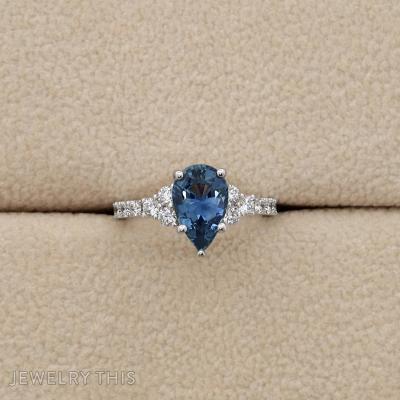
This exquisite white gold engagement ring captures the deep, enchanting beauty of the sea. The ...

This unique set of wedding rings is designed for golf lovers, symbolizing a shared passion ...
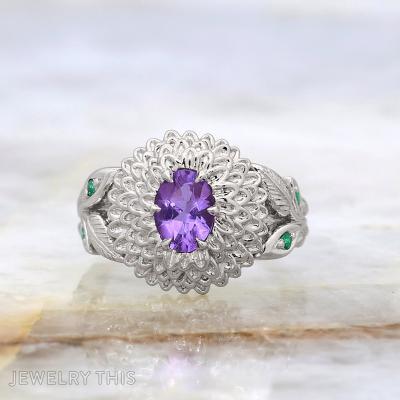
This engagement ring was designed around a lavender amethyst center stone, set within a densely ...
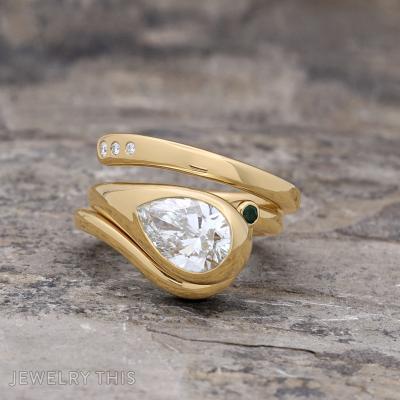
This breathtaking yellow gold wedding set is a masterclass in organic, bypass-style design. The engagement ...

This Oval Hidden Halo Engagement Ring stands as a timeless yet personalized masterpiece. Crafted in ...
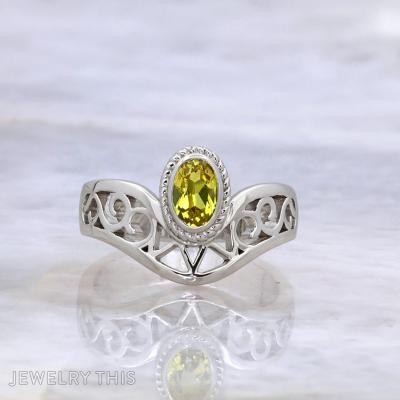
This stunning white gold engagement ring features an oval yellow brilliant-cut sapphire, radiating warmth and ...

A modern marvel is found in the striking three-stone engagement ring. At its center is ...
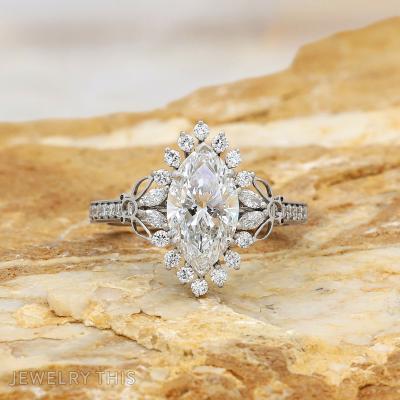
This engagement ring centers a marquise-cut lab diamond, colorless and just under two carats, surrounded ...

This exquisite platinum engagement ring showcases a captivating radiant-cut yellow diamond at its center, set ...

This stunning 14k yellow gold ring features a beautiful heart-shaped sapphire cabochon at its center, ...

Elegance meets romance in this custom 14k rose gold engagement ring. At its heart, a ...

This 18karat yellow gold engagement ring exudes elegance and vintage charm. At the heart of ...



