

Three-Band Diamond Ring Recreated From a 1983 Original
$$$
14k yellow gold, natural diamond, natural diamonds
C. came to us with a photo of a three-ring wedding set from 1983 that she wanted recreated as a single ring. She'd lost weight since her original sizing and worked with the team to land on the right fit and a slightly larger center diamond than the original. When the first version arrived, the stones sat flatter than she wanted, so the team reworked the setting to raise the center diamond and the side clusters higher off the band. When the revised ring arrived, she wrote: 'It is beautiful! It's perfect! Thank you and your team so much for being willing to work with me.'
'It is beautiful! It's perfect! Thank you and your team so much for being willing to work with me. You have all been awesome.' — on delivery
Quick specs
Design type
Primary Metal
Shape / Cut
Primary Stone
Accent Stones
Style
Design Complexity
Intent: Certainty
Size
Ring size 8.5 US.
How they made it distinctive
-
01
Multi-line ridged shank designed to mimic the look of three separate rings soldered together, matching a 1983 original
-
02
Center diamond upgraded to half a carat at the client's request, larger than the quarter-carat original
-
03
Setting redesigned a second time to raise the center stone and side clusters higher off the band for more visible dimension
-
04
Ten round accent diamonds arranged in pyramid-shaped clusters flanking the center stone
-
05
Ring size confirmed through direct client communication rather than a generic estimate, accounting for a recent size change
How you'd make it yours
Stone: this piece uses a natural diamond; a new commission could use a lab diamond for the same look at lower cost
Center stone size: this piece uses a half-carat diamond; a new piece could use a different carat weight to match a different budget or hand size
Metal: this piece is 14k yellow gold; the same multi-band design works in 18k gold or white gold
Setting height: this piece has a raised, dimensional cluster setting; a new commission could use a lower-profile setting instead
One of a kind: this exact ring was designed for one client and is not reproduced — a new commission is an original piece inspired by this one, not a copy
Design changes made
After the first cast ring arrived sitting flat against the finger, the setting was redesigned to raise the center diamond and the side diamond clusters higher off the band, giving the stones more visible dimension from the side. The ring's overall shank thickness was kept intact at the base to maintain durability through the change.
Who this is for
This piece is for someone recreating a meaningful ring from photos alone, with no original piece or paperwork to work from. It's especially right for someone who has a strong, specific memory of how the original looked and is willing to go through a design process to get the details — like stone height and dimension — truly right.
How it's made
Once the client approved the 3D render, the design was 3D-printed in wax and attached to a wax tree inside a flask. The flask was fired in a kiln to burn out the wax, leaving a hollow mold, and molten 14k yellow gold was cast into that mold. After cooling, the raw ring was removed from the mold and prepared for the next stage of cleaning and polishing.
The cast band was pre-polished before the diamonds were set, then the round center diamond and the ten round accent diamonds were set by hand into their prong clusters on either side. The ring received a final polish after setting, followed by quality control. On the second version, the setting was reworked and recast so the center stone and side clusters sit higher off the band, and the stones were reset into the new mounting after the original ring was returned.
Key note
The second version of this ring required casting three different test iterations of the setting before the master jeweler approved the height and angle of the diamond clusters.
Pricing guidance
A three-stone-style engagement ring recreated from a vintage original, with a center diamond and clustered round accent stones, sits in the mid range for custom engagement work of this complexity. Most of the baseline cost comes from the center diamond size and clarity, plus the hand-setting required for ten individual accent stones. Metal choice and diamond quality are what move the price most from there.
Moves price up ↑
- ↑ Increasing the center diamond carat weight beyond half a carat
- ↑ Upgrading diamond clarity or color grade across the center and accent stones
- ↑ Switching from 14k to 18k gold
- ↑ Adding more accent diamonds or enlarging the side clusters
- ↑ Requesting a dimensional, raised setting that requires additional hand-finishing
Moves price down ↓
- ↓ Choosing a smaller center diamond, such as a third of a carat
- ↓ Using lab-grown diamonds instead of natural for the center and accent stones
- ↓ Reducing the number of accent diamonds in the side clusters
- ↓ Choosing a lower clarity grade such as SI2 for the accent stones
- ↓ Simplifying the shank to a single smooth band rather than a multi-line texture
Questions people ask
Yes. This ring was rebuilt entirely from a single photo of a three-ring wedding set from the early 1980s, with no paperwork or appraisal available. The process starts with a 3D render for approval before anything is cast, so you can review the design and request changes before any metal or stones are committed. Minor differences from the original are normal since the recreation is based on a photo rather than the physical piece, but major design elements like stone placement and the overall silhouette can be matched closely.
SI1 stands for Slightly Included, grade 1, meaning the diamond has minor inclusions that are typically not visible to the naked eye at normal viewing distance. It's a common and practical clarity grade for engagement rings because it balances appearance with cost. In this ring, both the center and accent diamonds were sourced at SI1 clarity, and one of the diamonds considered was ultimately slightly upgraded to VS2 when the original selection became unavailable. For a ring like this, SI1 or better is generally a solid choice when you want a clean look without paying for flawless clarity.
A ring in this style — a center diamond around a third to a half carat with ten round accent diamonds set in clusters — typically falls in the mid range for custom engagement work. The center diamond's size and clarity usually drive the baseline cost, with the hand-setting of multiple small accent stones adding to that. Metal karat, such as choosing 18k over 14k, is another factor that shifts the price from there.
The standard process runs about one week for the design phase, where a 3D render is created and refined based on your feedback, followed by roughly three to four weeks for production once the design is approved. If a redesign is needed after you see the first physical piece, that adds additional weeks for a new render, casting, and resetting the stones. Sourcing a specific diamond can also add time if the first choice becomes unavailable.
A render is a close approximation, but small differences in depth and dimension can be hard to judge from a flat image, especially from the side. If the finished piece doesn't match what you pictured, it's worth communicating specifically what's off — for example, whether stones sit too flat or need more height off the band — so the team can address the actual issue rather than guessing. In some cases, a physical resin model can be sent so you can compare it to your original piece in person before any changes are finalized.
Yes, this is a common adjustment when a client wants more visible dimension or wants stones to catch more light. It typically requires sending the ring back so the stones can be removed and reset into a redesigned mounting with taller prongs or a raised cluster arrangement. The base thickness of the band is usually kept the same to preserve durability even as the stone height is increased.
Yes, lab-grown diamonds can be used in place of natural diamonds for both the center stone and the accent stones in a design like this. They are chemically and visually identical to natural diamonds, graded on the same clarity and color scales, but typically cost less for the same specifications. Swapping to lab-grown is one of the more effective ways to reduce the overall cost of a ring like this without changing its appearance.
Yes, a multi-band or three-ring silhouette remains a popular vintage-inspired style, especially for clients recreating or modernizing an older wedding set. The ridged, multi-line shank gives the appearance of three separate rings stacked and soldered together while functioning as a single, more durable band. This style pairs well with a center stone flanked by smaller clustered accents, as seen in this piece.
Explore Similar Creations
Every masterpiece starts with a spark. Explore how our clients raw ideas - sketches, heirlooms, inspirations - were transformed into bespoke works of arts.
This elegant white gold wedding set features a vibrant round brilliant-cut lab-grown emerald at the ...

This engagement ring centers a marquise-cut lab-grown diamond flanked by an oval and a pear-shaped ...

This striking 14K yellow gold engagement ring offers a beautiful blend of organic fluidity and ...

A contemporary masterpiece the Multi-Row Crossover Wedding Ring. A stunning symbol of love and commitment ...

This ring was built to bring back a one-of-a-kind piece that had been lost — ...

This 18karat yellow gold engagement ring exudes elegance and vintage charm. At the heart of ...

This captivating 14K white gold engagement ring features a center 0.75 carat round moissanite.The center ...

This engagement ring is a truly unique design, characterized by its multi-band structure. Multiple polished ...
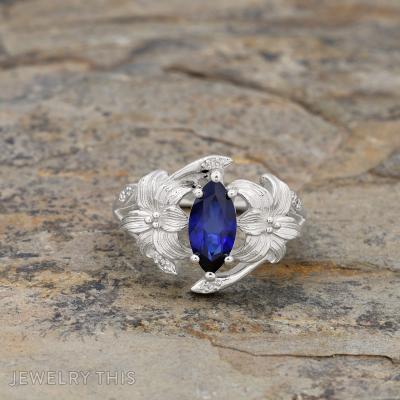
This exquisite engagement ring showcases a stunning marquise cut lab created blue sapphire as its ...

This exquisite 14k white gold ring is adorned with a stunning center oval aquamarine stone, ...

This beautiful engagement ring features a brilliant 2carat Radiant Diamond at its center. The Diamond ...

This engagement ring featuring an oval Australian opal, nestled within an 18k yellow gold setting. ...



