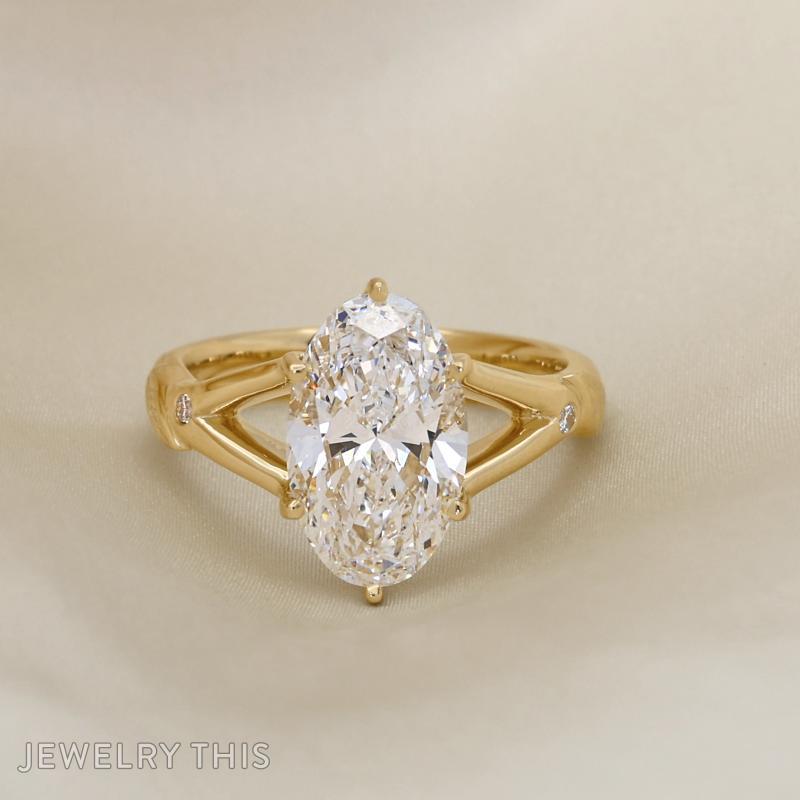
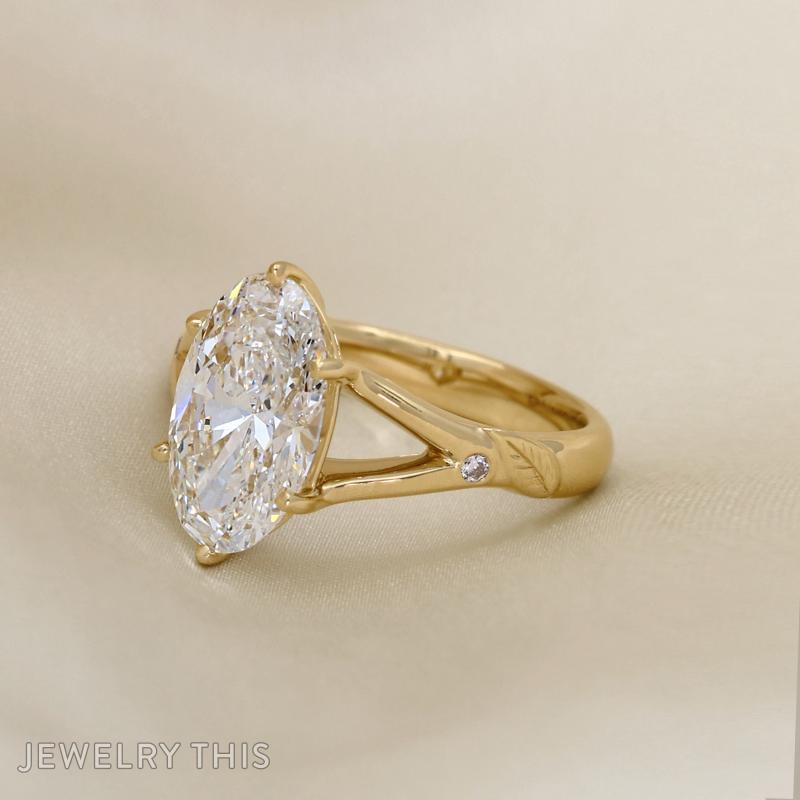
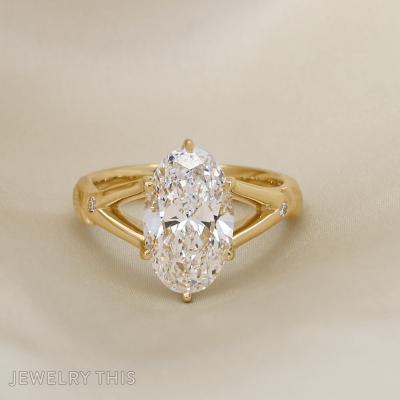
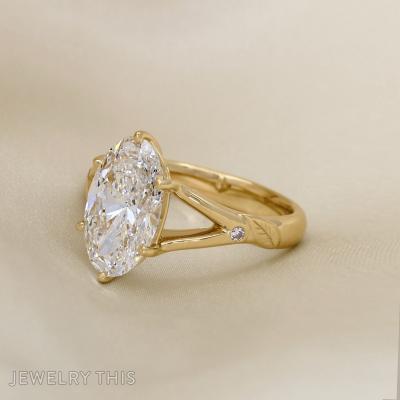
Elongated Oval Diamond Ring — Leaf-Detail Split Band
$$$$
14k yellow gold, lab diamond, lab diamond accents
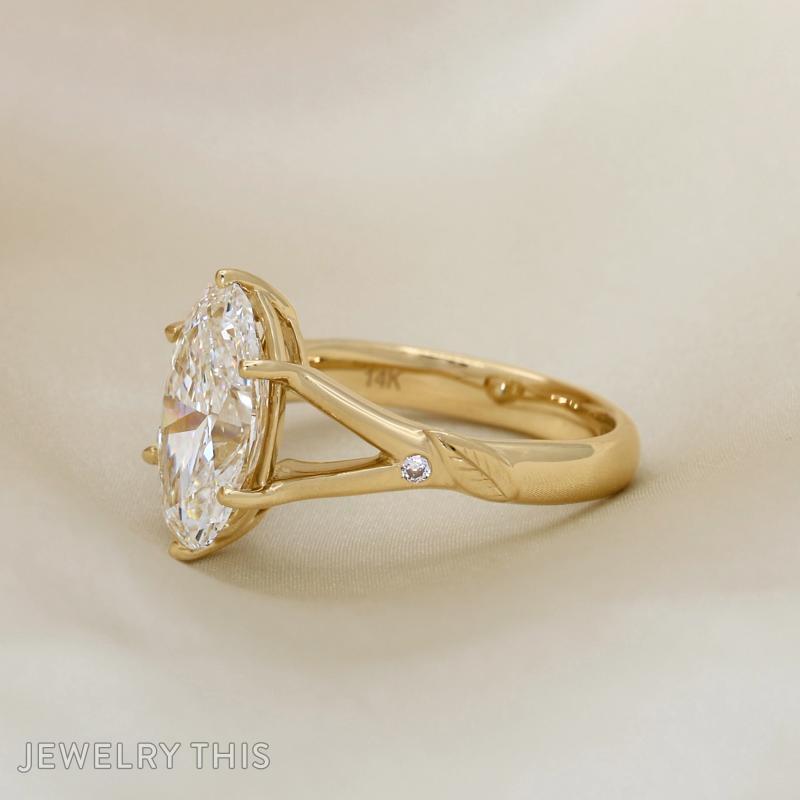
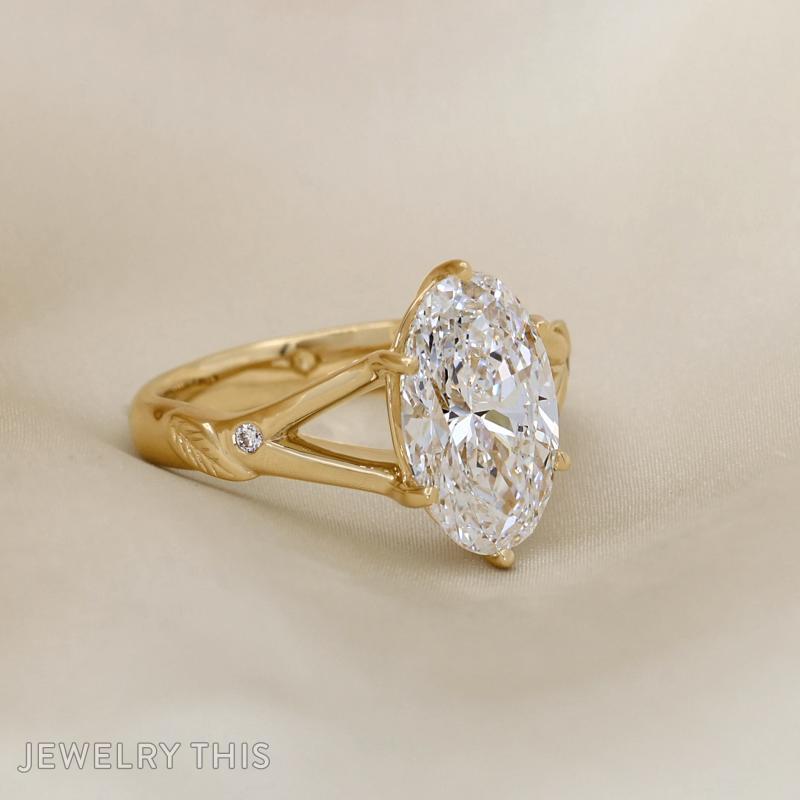
A client came to us wanting an engagement ring built around a bold oval center stone, working through several rounds of sketches to get the leaf detailing just right — subtle rather than prominent. She tried on two resin models before landing on the fit and elongated stone shape she wanted, adjusting size and stone proportions along the way. When it arrived, she wrote: 'I received my package and I love it so much.'
'I received my package and I love it so much.' — on delivery
Quick specs
Design type
Primary Metal
Shape / Cut
Primary Stone
Accent Stones
Design Complexity
Intent: Certainty
Size
Ring size 8 US. Center stone 4.09 carat elongated oval (length-to-width ratio approximately 1.5).
How they made it distinctive
-
01
Elongated oval cut chosen specifically for a length-to-width ratio near 1.5, giving a dramatic silhouette while minimizing the bowtie effect
-
02
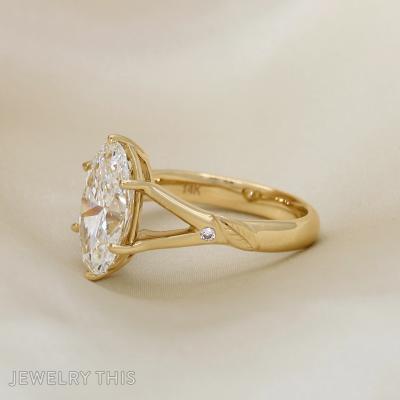
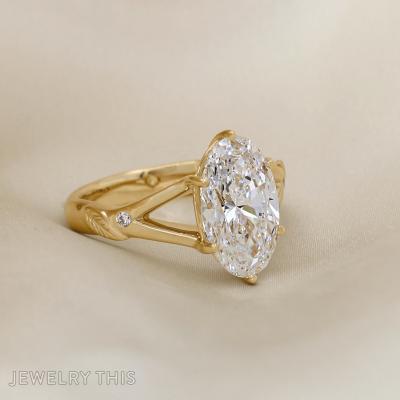
Leaf engraving kept intentionally subtle after the client felt an earlier version was too prominent
-
03
Band built thicker than a standard profile to match the feel of a ring the client already owns and likes
-
04
Small diamonds set flush into the band at the point where the split shank meets, adding sparkle without a full accent cluster
-
05
Two resin models tried on before finalizing fit and stone proportions, ensuring the final ring matched expectations before casting
How you'd make it yours
Stone type: this piece uses a lab diamond — a new commission could use a natural diamond or a colored stone like sapphire for the same silhouette
Stone shape: this piece uses an elongated oval — the same split-shank design works well with a pear or marquise cut too
Metal: this piece is 14k yellow gold — the same leaf-and-split-shank language works in white or rose gold
Band thickness: this piece uses a thicker profile to match an existing ring — a new commission can be made in a slimmer standard profile
Accent stones: this piece has two small diamonds set into the band — a new commission could add more, or omit them for a plainer band
One of a kind: this exact ring was designed for one client's stone and sizing and is not reproduced — a new commission is an original piece inspired by this one, not a copy
Design changes made
The leaf detailing was simplified from a more prominent design to a single subtle leaf per arm after the client felt the first sketch was too heavy. The center stone grew from an initial 1-1.5 carat estimate to a 4.09 carat elongated oval, and the band was thickened to match a ring the client already owned.
Who this is for
This ring is for someone who wants a large, statement center stone without sacrificing comfort or a low profile in daily wear. It's especially right for someone who has a clear picture of a specific silhouette — an elongated stone shape, a subtle rather than showy band detail — and wants to work through the details until it matches exactly what they pictured.
How it's made
Once the design was approved, a resin model was built and 3D printed so the client could confirm fit before any metal was committed — two versions were sent as the center stone size and ring size were finalized. The resin was then affixed to a wax tree, invested in plaster, and fired in a kiln to burn out the wax, leaving a hollow mold. Molten 14k yellow gold was cast into the mold, producing the raw split-shank band.
After casting, the band was cleaned up and the leaf engraving on each arm was hand-finished to keep the detail subtle rather than raised or heavy. The elongated oval lab diamond was set into a four-prong setting positioned low against the split shank, and the small round accent diamonds were set by hand into the band near the point where the split meets. The piece was then polished to its final finish.
Key note
The center stone was sourced only after a resin model confirmed fit and proportions, so the final diamond's elongated measurements could be matched as closely as possible to the model the client had already approved.
Pricing guidance
An engagement ring built around a large elongated oval lab diamond with a split-shank band and hand-finished leaf detailing sits in the higher range for custom engagement work, largely driven by the size of the center stone. Labor for the split-shank construction and the hand-engraved leaf detail adds a moderate amount on top of the stone cost. Center stone carat weight is by far the biggest lever on price for a design like this.
Moves price up ↑
- ↑ Increasing the center stone from 4 carats to 5 carats or larger
- ↑ Choosing a natural diamond instead of a lab-grown diamond at the same carat weight and color grade
- ↑ Upgrading to a higher color grade (D vs. E/F) or higher clarity
- ↑ Adding more accent diamonds beyond the two small band-set stones
- ↑ Requesting a wider or more heavily detailed leaf pattern across the full band
Moves price down ↓
- ↓ Reducing the center stone to 2 carats or under
- ↓ Choosing a rounder length-to-width ratio, which widens the pool of available stones
- ↓ Removing the accent diamonds from the band entirely
- ↓ Choosing a lower color grade (G-H range) which is not visible to the naked eye at this size
- ↓ Simplifying the leaf detail to a plain polished band
Questions people ask
Lab grown diamonds have the exact same hardness as natural diamonds — a 10 on the Mohs scale, the hardest natural material known. They are chemically, physically, and optically identical to mined diamonds, just grown in a controlled lab environment rather than underground. This means they hold up to daily wear exactly the same way a natural diamond does. The only meaningful difference between the two is origin and price, not durability.
Yes, this comes down to the length-to-width ratio of the stone, which is something you can request when sourcing the center diamond. A ratio around 1.5 gives an oval a noticeably elongated look rather than a more rounded appearance. Going much beyond that ratio starts to increase the visibility of a bowtie effect — a dark shadow across the center of the stone — so there's a practical limit to how elongated you can go while keeping good brilliance. A gemologist can help identify stones that hit this ratio while minimizing the bowtie look.
A ring built around a 3-to-4-carat elongated oval lab diamond with a detailed band typically falls in the higher tier for custom engagement work, primarily because of the center stone size. Color grade, clarity, and the specific length-to-width ratio of the stone all affect the final price within that range. Band details like split-shank construction or hand-engraved elements add labor cost but are a smaller factor than the stone itself at this size. Moving up or down even one carat can shift the price significantly.
The full process typically runs from the initial sketch through final delivery over roughly two to three months, though it can extend if design revisions or resin fit-checks are involved. The sketch phase usually takes about a week, with the 3D model taking another five to ten days after that. Once the design is approved and the center stone is sourced, production typically takes three to four weeks. Larger or more complex center stones can add time to the sourcing stage specifically.
Yes, most rings can be resized within a reasonable range after production, though a ring with stones set into the band — like small diamonds set flush into a split shank — requires more careful handling during a resize than a plain band would. It's best to confirm your ring size as closely as possible before final production, since resin models are specifically used to test fit ahead of casting. A jeweler can typically resize a ring like this by half a size up or down without disturbing the design.
A split-shank band divides into two separate strands as it approaches the center stone, rather than staying as one continuous band, creating an open, airy look on either side of the setting. This construction also creates a natural spot to set small accent stones into the band itself, as seen where the two strands meet again beneath the setting. It's a popular choice for engagement rings because it visually lightens what could otherwise feel like a heavy setting on a large center stone. Structurally, a well-made split shank is just as durable as a solid band for everyday wear.
To an extent — a lower setting is achievable, but the height of a stone is largely determined by its depth, and larger diamonds naturally have more depth. Setting a large stone too shallow to force a lower profile can actually reduce the stone's brilliance, since depth plays a role in how light reflects through the diamond. A skilled designer can minimize height as much as possible while still preserving how the stone sparkles, which is usually the better trade-off than forcing an artificially low setting.
A subtle, hand-finished leaf engraved into the surface of the band, rather than a raised or dimensional leaf, has minimal impact on resizing compared to a plain band. Because the detail is shallow, a jeweler can resize the ring without significantly disturbing the engraving. Over years of wear, fine engraved detail can soften slightly with polishing, the same way any engraved detail does, but it does not require special maintenance beyond normal ring care.
Explore Similar Creations
Every masterpiece starts with a spark. Explore how our clients raw ideas - sketches, heirlooms, inspirations - were transformed into bespoke works of arts.
This white gold ring draws you in immediately with the captivating 9 carat rose cut ...

Elevate your love story with this exquisite custom engagement ring, a testament to timeless beauty ...
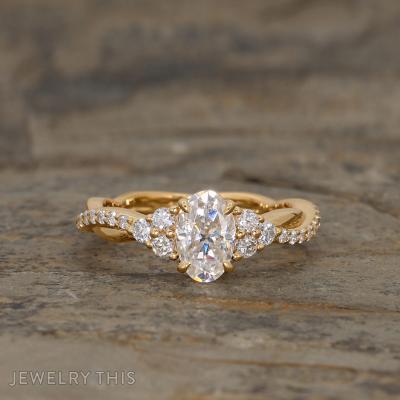
This exquisite engagement ring features a 1-carat oval moissanite center stone, beautifully complemented by delicate ...

Elegance meets heritage in this 14k white gold art deco-inspired ring. The centerpiece, a cherished ...
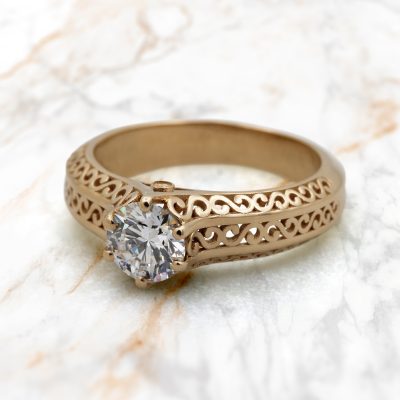
A 14k yellow gold engagement ring with filagree details set with a round lab created ...

This engagement ring was designed as a close interpretation of a ring the client admired, ...
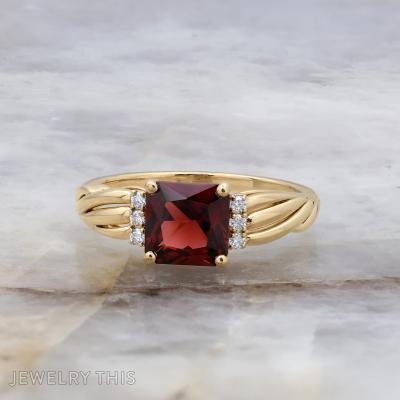
This exquisite engagement ring tells a story of love that is as deep and vibrant ...
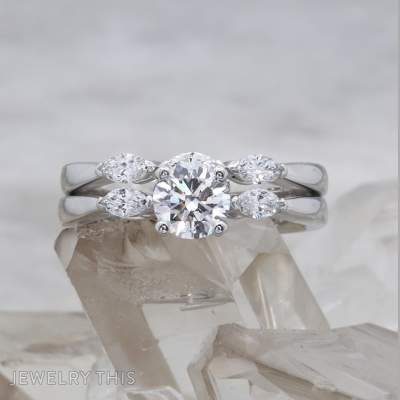
This white gold wedding set was lovingly created to replicate an original set that was ...

This custom 14k yellow gold engagement ring is a symbol of unique elegance and style. ...
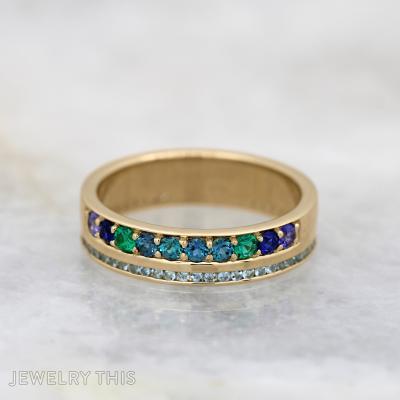
This stunning yellow-gold ring features two dazzling rows of stones. The top row showcases an ...

This exquisite white gold ring captures the timeless elegance of a three-stone design with a ...