


Reimagined Diamond Ring Set — Heirloom Stones, New Design
$$$$
Platinum, lab diamond, natural diamonds
A husband wanted to give his wife's engagement ring and anniversary band a new life — reworking both into a fresh design around a larger center diamond, while keeping every one of her original stones in place. The design shifted more than once, from a dense cluster to a curved line of stones and back again, before settling into a three-ring platinum stack that can be worn together or separately. When it arrived, he wrote: 'My wife loves the pendant and ring.'
'My wife loves the pendant and ring.' — on delivery
Quick specs
Design type
Primary Metal
Shape / Cut
Primary Stone
Accent Stones
Design Complexity
Intent: Certainty
Size
Ring size 6.75 US. Center stone approximately 9.5mm (2.52ct). Eight accent diamonds, each 4.0-4.2mm. Flanking bands approximately 2mm wide.
How they made it distinctive
-
01
All eight diamonds from the client's original engagement ring and anniversary band were reset rather than replaced, preserving the stones' history
-
02
Three rings designed to align precisely so they read as one piece when stacked, but can also be worn as two separate combinations
-
03
Straight-set stone arrangement chosen specifically to minimize visible metal compared to the original curved layout
-
04
Center diamond sized up from the original 2.5-carat target once the layout showed the eight accent stones needed more room
-
05
U-shaped open bands engineered for durability without the support of a closed shank
How you'd make it yours
Stone reuse: this piece resets the client's own diamonds; a new commission could use sourced stones instead if no heirloom stones are involved
Metal: this piece is platinum; the same three-ring stacking concept works in 14k or 18k white gold at a different cost point
Ring count: this piece is three interlocking rings; a new commission could simplify to a single band with a similar stone arrangement
Center stone size: this piece uses a 2.52-carat lab diamond; a new piece could use a different carat weight depending on the accent stone count
One of a kind: this exact three-ring set was built around one client's specific stones and sizing, and is not reproduced — a new commission is an original piece inspired by this one
Design changes made
The design moved through several directions — an initial cluster layout, a rotated pear-flanked version, a solitaire-and-guard concept — before returning to a three-ring stack with straight-set bands and minimal visible metal. The center stone also grew from approximately 2.5 to 2.52 carats once the layout confirmed the original eight diamonds needed more room around the center.
Who this is for
This piece is for someone who wants to honor the diamonds already in their life rather than start over with something new. It's especially right for a couple upgrading an engagement ring who don't want to lose what the original stones represent, and who like the idea of a design that can be worn as one piece or broken into separate combinations.
How it's made
Once the final design was approved, a 3D model was built around the scanned measurements of the client's own diamonds, and a wax model was printed from that file. The wax was attached to a tree, invested in plaster, and fired in a kiln to burn out the wax before molten platinum was cast into the resulting mold. Platinum requires higher casting temperatures than gold or silver, and one of the bands needed a second casting after the first came out with surface porosity.
After casting, each of the three rings was cleaned up and polished to a bright finish. The client's eight diamonds were hand-set into the two U-shaped bands in a curved arrangement, four per band, positioned so the stones would not contact each other when the bands are worn together. The new center diamond was prong-set into the solitaire band last, completing the stack.
Key note
Platinum's high melting point makes it more prone to casting porosity than gold or silver, which is why one of the bands required a second casting before it was ready for stone setting.
Pricing guidance
A multi-ring platinum stack incorporating a large lab-grown center diamond and eight reused accent diamonds sits toward the higher end for custom engagement pieces, largely because of the platinum metal cost and the complexity of designing three rings that must align precisely when worn together. Reusing existing stones lowers the cost versus sourcing all new diamonds, but the layout work and hand-setting required to reuse stones of a fixed size adds labor. Center stone size and metal choice are the two biggest levers on the final price.
Moves price up ↑
- ↑ Choosing platinum over gold, which requires higher casting temperatures and more careful handling
- ↑ Increasing the center stone size, which requires reworking the surrounding layout
- ↑ Designing multiple interlocking rings that must align precisely rather than a single band
- ↑ Selecting a higher color/clarity grade for the center diamond
- ↑ Adding a wider band profile that requires more hand-finishing
Moves price down ↓
- ↓ Using 14k white gold instead of platinum for the bands
- ↓ Reducing the design to a single ring rather than a three-ring stack
- ↓ Choosing a smaller center stone that requires less layout adjustment
- ↓ Selecting a lower color grade lab diamond within the eye-clean range
- ↓ Sourcing new accent stones instead of scanning and resetting existing ones
Questions people ask
Yes. The original stones are removed from their settings, then measured and scanned so the new design can be built around their exact dimensions. This is a common way to give heirloom or existing diamonds a new look without buying new stones. The main design challenge is fitting the reused stones' exact sizes into the new layout, which sometimes requires adjusting the center stone size to leave enough room.
Lab-grown and natural diamonds are chemically, physically, and optically identical — the same hardness, brilliance, and appearance to the naked eye. The only difference is origin: one is grown in a controlled lab environment, the other is mined from the earth. Lab-grown diamonds are typically available at a lower cost for the same carat weight and grade. Both are graded using the same color and clarity scales.
Platinum requires significantly higher casting temperatures than gold or silver, which means specialized equipment and more careful handling during the pour. Platinum alloys also lose heat rapidly once cast, and that temperature change can cause porosity — small irregularities in the metal that require re-casting to fix. This added complexity and occasional need for a second casting attempt is one reason platinum pieces cost more than the same design in gold.
A three-ring platinum stack with a large center diamond and multiple reused accent stones sits toward the higher end of custom engagement pricing, mainly due to the platinum metal cost and the design complexity of aligning three separate rings. Reusing existing diamonds instead of sourcing all-new stones helps offset some of the cost. Center stone carat weight and the choice between platinum and gold are the two factors that move the price the most.
A design of this complexity typically takes five to six weeks from approved design to delivery, though multi-ring sets with reused stones can take longer if a casting needs to be redone. The process starts with a technical drawing and 3D model, then a photorealistic render for approval, followed by sourcing the center stone and moving into production. Casting, cleanup, and hand-setting of all the diamonds are the final production steps before shipping.
Yes, when the set is designed as separate interlocking rings rather than one fused piece, each ring can be worn on its own or together as a stack. In this design, the two diamond-set bands can be worn together as an open cluster ring without the center solitaire, or the solitaire can be worn alone. The rings are designed to align precisely when stacked so they read as one cohesive design from the top down.
Yes, reducing visible metal is usually a matter of adjusting how the stones are set and how much of the band structure is left solid versus open. Straight-set stones with minimal prongs show less metal than a curved or clustered arrangement, though some metal is always needed at the edges of each stone to hold it securely. The tradeoff is that a more open design requires careful engineering to maintain durability, especially in a multi-band structure like this one.
Platinum rings can typically be resized within a small range, though it requires a jeweler experienced with the metal due to its high melting point and density. Multi-ring sets with U-shaped or open bands may have more limited resizing range than a traditional closed band because of the open structure. Minor adjustments, such as a quarter or half size, are usually straightforward for a jeweler familiar with the original design.
Explore Similar Creations
Every masterpiece starts with a spark. Explore how our clients raw ideas - sketches, heirlooms, inspirations - were transformed into bespoke works of arts.
Together this exquisite pieces symbolize bold love. This striking engagement ring and wedding band set, ...

This sterling silver ring blends delicate beauty with symbolic meaning. The ring features a heart-shaped ...

This timeless three stone engagement ring is crafted in 14k white gold and features a ...
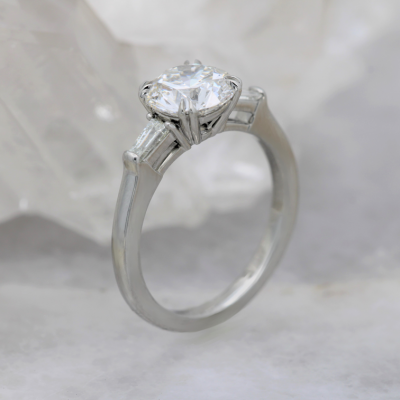
Presenting an extraordinary custom three stone engagement ring, a masterpiece of refined elegance. This enchanting ...

This recreated engagement ring is a vision of timeless elegance. Meticulously crafted in lustrous 14k ...

This captivating set of rings is designed to symbolize unity and individuality. One ring is ...

This ethereal engagement ring is a masterpiece of gothic-inspired botanical design, meticulously crafted from white ...

This sleek white gold ring features a distinctive flat rectangular top, designed for a modern, ...

This custom engagement ring is a celebration of unity, designed to symbolize the merging of ...
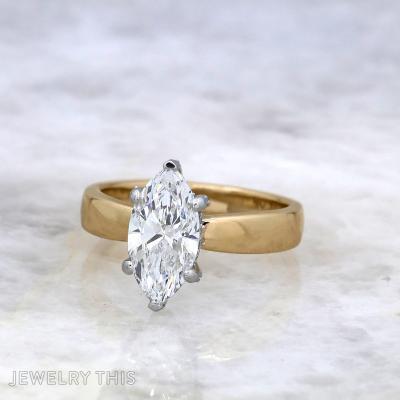
This stunning yellow gold engagement ring masterfully blends traditional warmth with modern brilliance. The centerpiece ...

What makes this ring truly unique is the hidden surprise within the gallery. Delicately crafted ...

This enchanting rose gold engagement ring features a mesmerizing center stone embraced by a band ...



