


Upgraded Engagement Ring — Black Diamond Three-Stone in White Gold
$$
14k white gold, lab diamond, black diamonds, diamonds
A. came to us wanting to upgrade his existing 1.22ct lab diamond out of its original 10k gold setting and into something more distinctive, starting with a nature-inspired concept using garnets and leaf details. Partway through the design process his circumstances changed, and he asked to redirect the ring toward a three-stone design with black diamond side stones and a cathedral setting instead. He wrote at the end: 'Looks great, thank you so much! Thank you for all your help.'
'Looks great, thank you so much! Thank you for all your help.' — on delivery
Quick specs
Design type
Primary Metal
Shape / Cut
Primary Stone
Accent Stones
Design Complexity
Intent: Certainty
Size
Ring size 6¾ US (17.12mm). Center stone 1.22ct round.
How they made it distinctive
-
01
Center stone is the client's own 1.22ct lab diamond, re-set rather than replaced, carried over from his original ring
-
02
Cathedral-style raised shoulders chosen specifically to replace the open underside indent the client disliked on his prior ring
-
03
Black diamond side stones selected after comparing visual difference against moissanite, with the client opting for diamonds despite the similar look
-
04
Design pivoted mid-project from a nature-inspired garnet and leaf concept to a cleaner three-stone black diamond layout
-
05
Flared connection added between the side stones and raised baskets as a deliberate asymmetrical detail, confirmed by the client before production
-
06
Solid, rounded underside with no cutouts specifically built for comfort based on the client's prior negative experience
How you'd make it yours
Side stones: this piece uses black diamonds; a new commission could use black moissanite for a similar look, or colored stones like garnet or alexandrite
Metal: this piece is 14k white gold; the same three-stone cathedral language works in yellow or rose gold
Band accents: the pavé diamond row on this piece could extend further around the band or be simplified to a plain shank on a new piece
Setting height: this piece uses a cathedral rise; a new commission could use a lower-profile straight setting instead
Engraving: the inside of the band can carry a short phrase or initials on a new piece
One of a kind: this exact ring was designed around one client's own diamond and is not reproduced — a new commission is an original piece inspired by this one, not a copy
Design changes made
The design shifted from an initial nature-inspired concept with garnet side stones and leaf accents to a three-stone cathedral setting with black diamond accents, following a change in the client's circumstances partway through the process. The side stones were also adjusted from a straight to a cathedral-style rise per the client's preference, and a flared detail was added connecting the side stones to the raised baskets.
Who this is for
This piece is for someone upgrading a center stone out of a setting that no longer feels right, especially if comfort and a clean underside matter as much as the look on top. It also fits someone who wants room to change their mind during the design process — the direction here shifted significantly partway through and still arrived at a cohesive, considered result.
How it's made
Once the final design was approved, the piece was 3D-printed in wax using the approved digital model, then attached to a wax tree and invested in plaster. The flask was fired in a kiln to burn out the wax, leaving a hollow mold, and molten 14k white gold was cast into the mold under pressure. After cooling, the raw ring was removed from the mold and prepared for finishing.
The client's own 1.22ct lab-grown round diamond was reset as the center stone in a raised cathedral mounting, flanked by two round black diamonds in individual prong settings. A row of smaller round colorless lab diamonds was then pavé-set along the curve of the band on each side, following the cathedral line up from the shank. The entire piece was polished to a uniform bright finish after stone setting.
Key note
The underside of the band is cast solid and rounded rather than cut out beneath the setting, specifically because the client disliked the open indent on his original ring and asked for a comfortable, gap-free profile underneath.
Pricing guidance
A three-stone engagement ring with a client-supplied center stone and pavé side accents sits in the mid range for custom engagement work of this complexity. Re-setting an existing stone keeps costs lower than sourcing a new center stone, while the cathedral shoulders and pavé diamond rows on the band add labor cost beyond a simple solitaire. Side stone material (diamond vs. moissanite) and metal karat are the biggest remaining price levers.
Moves price up ↑
- ↑ Upgrading the side stones from moissanite to natural or lab diamonds
- ↑ Adding more pavé stones further around the band
- ↑ Choosing platinum instead of 14k white gold
- ↑ Increasing the side stone size beyond a small accent scale
- ↑ Adding a matching wedding band designed to nest against the cathedral shoulders
Moves price down ↓
- ↓ Using black moissanite instead of black diamonds for the side stones
- ↓ Simplifying the band to a plain shank without pavé accents
- ↓ Choosing a straight rather than cathedral-style setting
- ↓ Using 10k gold instead of 14k
- ↓ Reducing the number of accent diamonds along the band
Questions people ask
Yes, this is a common request and it's exactly how this ring was made. The client shipped in his existing lab-grown diamond, which was received, scanned, and used as the center stone in a brand new three-stone mounting. Reusing an existing stone typically costs less than sourcing a new one of comparable size and quality, since you're only paying for the new setting and any accent stones. The original stone is inspected before the new design is finalized to confirm it fits the planned setting.
Black diamonds are natural diamonds that get their color from dense internal inclusions, giving them a deep, slightly textured black appearance. Black moissanite is a different mineral altogether with a more uniform, glassier black look. Visually the difference at small accent-stone sizes is subtle and hard to spot with the naked eye, but black diamonds typically cost more than black moissanite of a similar size. Many clients choose moissanite specifically to bring the cost down without a major visual tradeoff.
A cathedral setting refers to a style where the metal rises up from the band in arched shoulders to support the center stone, rather than the stone sitting low and flush with the band. This raises the center stone's profile and gives the ring a more dramatic silhouette when viewed from the side. It does mean the stone sits slightly higher off the finger than a flush or low-profile setting. Cathedral settings are a popular choice for three-stone and solitaire rings because the raised shoulders echo architectural arch lines.
That depends entirely on how the ring is designed — both options are possible. On this particular ring, the underside was built solid and rounded rather than cut out, specifically because the client wanted to avoid the open indent he disliked on his previous ring. A solid underside tends to feel smoother and more comfortable against the finger, while a cut-out underside uses slightly less metal. Either approach is a design choice that can be specified before the wax model is finalized.
A three-stone ring using a client's existing center stone, with black diamond or moissanite side stones and pavé diamond accents along the band, typically falls in the mid range for custom engagement work. The price is driven mainly by the metal karat, the side stone material, and how far the pavé accents extend around the band. Using an existing center stone instead of sourcing a new one helps keep the overall cost down compared to a fully new stone set.
After the stone is received and scanned, the 3D design phase typically takes about a week to produce an initial render for review. Once the design is approved, production — wax printing, casting, stone setting, and finishing — generally takes four to six weeks, sometimes longer if the design goes through several rounds of revision. This particular project took longer than a standard timeline because the design changed significantly partway through. A straightforward re-setting project without major design changes moves faster.
Yes, asymmetrical detailing is possible and can be a deliberate design choice rather than a flaw. On a cathedral-style three-stone ring, adding a flared connection between the side stones and the raised basket can cause the stones to sit slightly off-center relative to the raised shoulders. This is a known tradeoff of that specific detail and can be confirmed with a render before production so there are no surprises in the final piece. Clients who want a perfectly symmetrical look can choose a simpler cathedral structure without the flare.
Many custom jewelry projects allow the remaining balance after the design deposit to be split into multiple payments, such as two installments or four. Typically at least a portion of the balance is required before production begins, with the remainder due at a later production milestone or before shipping. The exact split depends on the project and is worked out directly between the client and the jeweler. This flexibility makes it easier to budget for a custom piece over the weeks it takes to design and produce.
Explore Similar Creations
Every masterpiece starts with a spark. Explore how our clients raw ideas - sketches, heirlooms, inspirations - were transformed into bespoke works of arts.
This custom wedding band is a sentimental recreation of the original ring, bringing back cherished ...


Elegance meets affordability in this custom engagement ring designed to be a replacement for a ...

This stunning 10k yellow gold engagement ring is a masterpiece in recreation and continuity. At ...
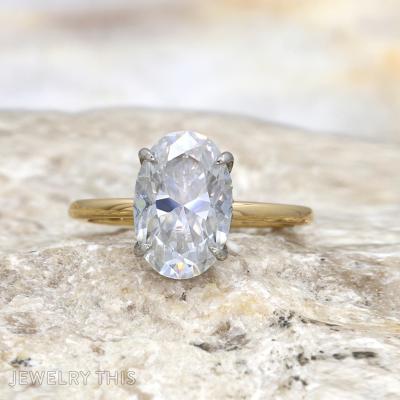
This engagement ring centers a large oval moissanite, chosen for its brilliance and elongated shape, ...
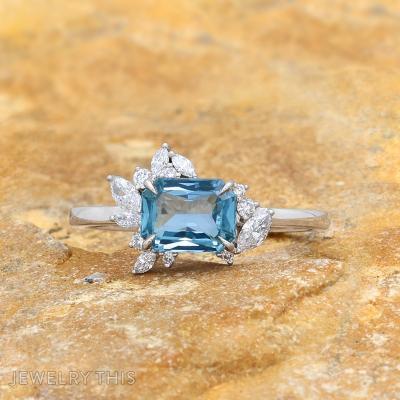
This captivating white gold engagement ring features a striking emerald-cut sapphire at its center, showcasing ...

This engagement ring was built around a center oval jade cabochon set in a bezel, ...

This Rose gold ring is a breathtaking expression of elegance and sophistication. The ring features ...
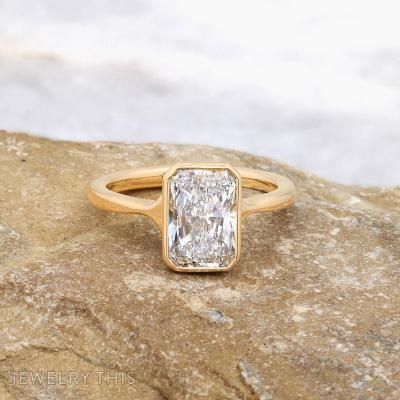
This engagement ring centers a 2.10-carat radiant-cut lab-grown diamond, set in a flat bezel that ...

This engagement ring was built to closely follow the design of a costume piece the ...

This nature-inspired 14k white gold engagement ring is the perfect symbol of everlasting love. The ...

A contemporary masterpiece the Multi-Row Crossover Wedding Ring. A stunning symbol of love and commitment ...



